题目:
Some cities have vehicle-free days, when private cars, trucks, and motorcycles are banned from the city center. Public transportation like buses, taxis and metros are advised.
To what extent do you think the advantages of this outweigh the disadvantages?
中文:
一些城市有无车日,私家车、卡车和摩托车被禁止进入市中心。建议乘坐公共汽车、出租车和地铁等公共交通工具。你认为这种方法的优点在多大程度上超过了缺点?
题目解读
题目要求我们探讨“无车日”,即禁止私家车,只使用公共交通的利弊。我们需要同时讨论只使用公共交通而不使用私家车对个人和社会的好处和坏处,并且权衡其轻重。
一方面,我们需要分析禁止私家车的好处,最直接的一定是减轻交通拥堵,其次,可以从污染、健康等角度进一步扩展和丰富观点。
另一方面,我们也需要分析禁止私家车带来的负面影响(也就是私家车本身的好处),例如影响便利性、经济活动中的必要性。最后,我们需要权衡利弊轻重,给出我们自己的判断,并进行说明
写作框架
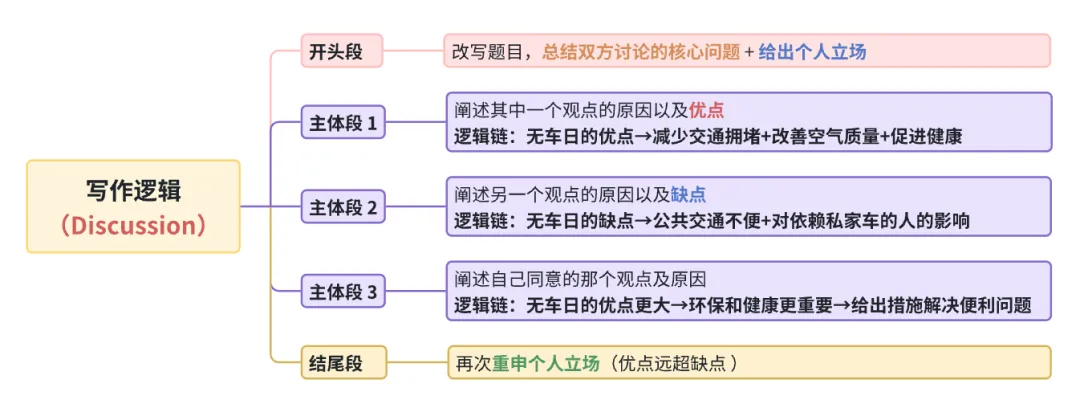
1.开头段(Introduction)
讨论两种观点并给出个人观点:许多城市实施“无车日”,禁止私家车、卡车和摩托车进入市中心,鼓励使用公共交通。本文将探讨其优缺点,并论证优点更多
In recent years, many cities have introduced "car-free days" where private cars, trucks, and motorcycles are banned from city centers. Instead, people are encouraged to use public transport, such as buses, taxis, and the subway. While this initiative has several advantages, it also presents some challenges.
2.主体段
主体段1:
主题:强力支持无车日的理由
解释1:禁止私家车辆进入市中心有助于减少交通拥堵
举例1:经常发生交通堵塞的城市,在这些日子里可以体验到更加顺畅的交通流动,从而使公共交通运行更加高效
解释2:公交车和火车等公共交通工具更加环保,因为它们每乘客排放的污染物比私家车少
解释3:无车日还可以鼓励人们步行、骑自行车或参加户外活动,促进更健康的生活方式
主体段2:
主题:无车日的一些缺点需要考虑,并非所有人都能依赖公共交通
解释1:住在郊区或乡村地区的人们可能会发现使用公共交通不方便或耗时,尤其是如果路线有限的话
解释2:一些人依赖私家车进行工作相关的出行,突然的限制可能会对他们的日程安排造成重大影响
举例1:送货卡车、紧急服务或依赖私人交通的企业主可能会面临困难
主体段3:个人观点→无车日的优点远远超过了缺点
主题:尽管有些不便,我认为无车日的环保效益和健康促进大于其缺点
举例:虽然公共交通可能并不适合每个人,但总体而言,环境和健康方面的益处使这一倡议非常值得
解释:为了解决可达性问题,城市可以改善公共交通,提供更多替代方案,例如拼车或在市中心外设置停车场
结尾段(Conclusion)
总结个人观点:尽管无车日存在挑战,但其在交通管理、减少污染和促进健康方面的益处是显著的。通过改善公共交通系统和增加灵活性,我认为其优点远超缺点。
while car-free days have some challenges, the benefits for traffic management, pollution reduction, and public health are significant. With improvements in public transport and greater flexibility, I believe the benefits outweigh the drawbacks.
范文精析版
⭐️ 蓝色部分-生动动作表达:增加写作词汇丰富程
⭐️ 黄色部分-地道名词形容词表达:增加写作词汇丰富程度
⭐️ 橙色部分-必备连接词汇:增加写作连接词的积累
⭐️ 绿色部分-高级语法积累:提高写作时语法多样性和准确性
▼
范文
In recent years, many cities have introduced "car-free days" where private cars, trucks, and motorcycles are banned from city centers. Instead, people are encouraged to use public transport, such asbuses, taxis, and the subway. While this initiative has several advantages, it also presents some challenges.
On the one hand, there are several strong reasons to support car-free days. First, banning private vehicles from city centers helps reduce traffic congestion. Cities that are often gridlocked can experience smoother traffic flow during these days, allowing public transportation to operate more efficiently.This alsoleads to cleaner air, as fewer cars on the road means less pollution. Additionally, public transport options likebuses and trains are more eco-friendly, asthey produce fewer emissions per passenger compared to private vehicles. Finally, car-free days can encourage people to walk, cycle, or engage in outdoor activities, promoting a healthier lifestyle.
However, there are some disadvantages to consider. For one, not all individuals can rely on public transport. People living in suburban areas or rural regions may find it inconvenient or time-consuming to use public transport, especially ifroutes are limited. Moreover, some people depend on their cars for work-related travel, anda sudden restriction could cause significant disruption to their schedules. For instance, delivery trucks, emergency services, or business owners who rely on private transport might face difficulties.
In my view, the advantages of car-free days far outweigh the disadvantages.Although public transport may not be ideal for everyone, the overall environmental and health benefits make this initiative worthwhile.To address accessibility issues, cities could improve public transport and offer alternatives, such ascarpooling or parking areas outside city centers.
In conclusion, whilecar-free days have some challenges, the benefits for traffic management, pollution reduction, and public health are significant. With improvements in public transport and greater flexibility, I believe the benefits outweigh the drawbacks.
高分表达
rely on 依赖,依靠
cause significant disruption 引起重大干扰
To address accessibility issues 解决可达性问题
offer alternatives 提供替代方案
strong reasons 有力的理由
private vehicles 私家车
traffic congestion 交通拥堵
gridlocked 交通完全堵塞
smoother traffic flow 更顺畅的交通流动
eco-friendly 环保的
outdoor activities 户外活动
suburban areas 郊区
rural regions 农村地区
time-consuming 耗时的
schedules 日程安排,时间表
delivery trucks 送货卡车
emergency services 紧急服务
ideal 理想的,完美的
the overall environmental and health benefits 总体的环境和健康益处
this initiative worthwhile 使这个倡议值得
carpooling 拼车
traffic management 交通管理
greater flexibility 更大的灵活性
①In recent years, many cities have introduced "car-free days" where private cars, trucks, and motorcycles are banned from city centers.
近年来,许多城市推出了“无车日”,(定语从句)禁止私家车、卡车和摩托车进入市中心
②Cities that are often gridlocked can experience smoother traffic flow during these days, allowing public transportation to operate more efficiently.
那些经常发生交通堵塞的(定语从句)城市,在这些日子里可以体验到更加顺畅的交通流动,从而(现在分词表结果)使公共交通运行更加高效
③Finally, car-free days can encourage people to walk, cycle, or engage in outdoor activities, promoting a healthier lifestyle.
最后,无车日还可以鼓励人们步行、骑自行车或参加户外活动,(现在分词表结果)促进更健康的生活方式
④For instance, delivery trucks, emergency services, or business owners who rely on private transport might face difficulties.
例如,送货卡车、紧急服务或(定语从句)依赖私人交通的企业主可能会面临困难
▼