题目:
Today companies encourage consumers to buy new models of products regularly.
Do you think it is a positive or a negative development?
中文:
如今,公司鼓励消费者定期购买新型号的产品。你认为这是积极的还是消极的发展?
题目解读
题目要求我们探讨公司鼓励消费者定期购买新型号的产品这件事的利弊,我们需要对利和弊两方都进行讨论,并且给出自己的立场。
一方面,我们可以从对消费者的经济危害角度阐述弊;另一方面,我们可以从对环境的破坏继续阐述弊;然后我们可以给出让步,使得逻辑分析更加全面。最后,我们重申个人立场
写作框架
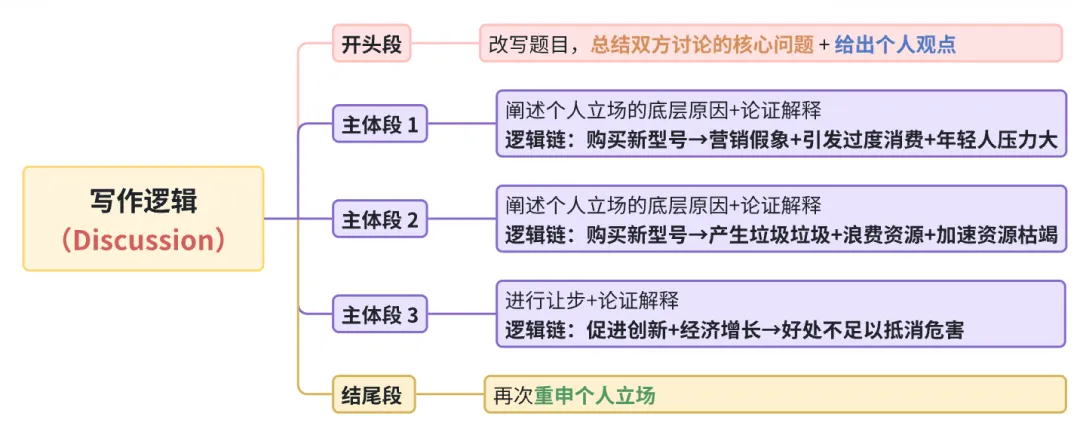
1.开头段(Introduction)
在现代消费市场中,公司越来越频繁地鼓励人们定期购买新款产品。虽然这种策略可能刺激商业增长,但我认为它对个人和社会而言弊大于利
In the modern consumer market, companies increasingly encourage people to buy new versions of products at regular intervals. While this strategy may stimulate commercial growth, I believe it brings more harm than good to individuals and society.
2.主体段
主体段1:
主题:这一做法的一个主要弊端是给消费者带来了经济压力
解释:公司通过强势营销让人们以为旧产品已经不够用,即便它们仍然运行良好
举例1:这助长了不必要的消费循环,尤其是年轻人,他们常因社会压力而不断升级设备。结果,许多人会把“升级”置于财务稳定之上,导致过度消费,甚至形成长期债务
举例2:与其维护产品、延长使用寿命,这种持续的更换文化实际上制造了不健康且不可持续的消费模式
主体段2:
主题:另一大弊端是频繁丢弃产品带来的环境破坏
解释1:短产品周期产生大量废弃物,尤其是含有有毒物质的电子垃圾
解释2:当消费者过早丢弃物品时,宝贵资源随之浪费,而制造替代品所需的能源又会增加碳排放
解释3:服装和快时尚产品进一步加重了垃圾填埋场和水资源的负担
解释4:总体而言,这种“升级驱动”的文化加速了资源枯竭,破坏了全球可持续发展努力
主体段3:
主题:诚然,鼓励定期升级确实能促进创新并推动经济增长,因为企业会通过研发提升产品竞争力;消费者也可能因此享受到更高效或更便利的技术
解释1:然而,这些好处远不足以抵消经济、社会与环境成本给个人和地球带来的长期危害
解释2:更负责任的方式应强调产品耐用性、可修复性以及真正有意义的技术提升
结尾段(Conclusion)
尽管频繁升级在短期内可能为企业和消费者带来一些益处,但其更广泛的影响表明这一趋势弊大于利。因此,推动可持续消费对于未来的社会福祉至关重要Although frequent product upgrades may provide short-term benefits for businesses and consumers, the wider consequences demonstrate that this trend brings more harm than good. Promoting sustainable consumption is therefore essential for future well-being
范文精析版
⭐️ 蓝色部分-生动动作表达:增加写作词汇丰富程
⭐️ 黄色部分-地道名词形容词表达:增加写作词汇丰富程度
⭐️ 橙色部分-必备连接词汇:增加写作连接词的积累
⭐️ 绿色部分-高级语法积累:提高写作时语法多样性和准确性
▼
范文
In the modern consumer market, companies increasingly encourage people to buy new versions of products at regular intervals. While this strategy may stimulate commercial growth, I believe it brings more harm than good to individuals and society.
One significant drawback of this practice is the financial strain it places on consumers. Companies frequently promote new models through persuasive marketing, suggesting that older products are no longer adequate even when they function perfectly well. This fuels a cycle of unnecessary spending, particularly among younger consumers who may feel social pressure to keep up with trends. As a result, many individuals prioritise upgrading over financial stability, leading to overspending and, in some cases, long-term debt. This constant push toward replacement rather than maintenance promotes an unhealthy and unsustainable consumer culture.
Another serious harm is the environmental damage caused by frequent product disposal. Short product life cycles generate vast amounts of waste, especially electronic waste that contains toxic materials. When consumers discard items prematurely, valuable resources are lost, and the energy required to manufacture replacements increases the carbon footprint. Clothing and fast-fashion items add further pressure on landfills and water resources. Overall, this upgrade-driven culture accelerates resource depletion and undermines global sustainability efforts.
Admittedly, encouraging regular upgrades can promote innovation and support economic growth, as companies invest in research and development to differentiate their products. Consumers may also enjoy improved convenience or efficiency from certain upgrades. However, these benefits do not outweigh the financial, social, and environmental costs, which collectively pose long-term risks toboth individuals and the planet. A more responsible approach would prioritise durability, repairability, and genuinely meaningful advancements.
In conclusion, although frequent product upgrades may provide short-term benefits for businesses and consumers, the wider consequences demonstrate that this trend brings more harm than good. Promoting sustainable consumption is therefore essential for future well-being.
高分表达
brings more harm than good 弊大于利
promote new models 推广/推销新款式
to keep up with 跟上,赶上
promotes an unhealthy and unsustainable consumer culture 助长了一种不健康且不可持续的消费文化
add further pressure on 给……增加更多的压力
accelerates resource depletion 加速资源枯竭
undermines global sustainability efforts 破坏/削弱全球可持续发展努力
promote innovation 促进创新
support economic growth 支持/促进经济增长
enjoy improved convenience 享受改进后的便利
pose long-term risks to 带来长期风险
promote innovation 促进创新
support economic growth 支持/促进经济增长
enjoy improved convenience 享受改进后的便利
pose long-term risks to 带来长期风险
future well-being 未来的福祉
at regular intervals 在固定的/有规律的时间间隔
persuasive marketing 有说服力的营销/广告
financial stability 财务稳定
vast amounts of waste 数量极其庞大、难以处理的废弃物
carbon footprint 碳足迹
durability 经久耐用
repairability 可维修性
①One significant drawback of this practice is the financial strainit places on consumers.
这一做法的一个主要弊端是(定语从句省略that)给消费者带来了经济压力
②As a result, many individuals prioritise upgrading over financial stability, leading to overspending and, in some cases, long-term debt.
结果,许多人会把“升级”置于财务稳定之上,(句尾comma-ing表结果)导致过度消费,甚至形成长期债务
③When consumers discard items prematurely, valuable resources are lost, and the energy required to manufacture replacements increases the carbon footprint.
当消费者过早丢弃物品时,宝贵资源随之浪费,而(过去分词表被动)制造替代品所需的能源又会增加碳排放。
④However, these benefits do not outweigh the financial, social, and environmental costs, which collectively pose long-term risks to both individuals and the planet.
然而,这些好处远不足以抵消经济、社会与环境成本给(both…and…平行)个人和地球带来的长期危害
▼