


中考英语话题复习二:兴趣与人生目标
教材单元:七上Unit9、七下Unit1、八上Unit6、九年级Unit9
核心话题:兴趣与人生目标(Interests & Life Goals)
一、教学目标
1. 熟练掌握七上U9、七下U1、八上U6、九U9所有核心词汇、短语,能准确拼写、汉译英。
2. 能灵活运用四个单元重点句型,围绕“兴趣、能力、学科、目标”进行基础口语交流与句子仿写。
3. 复习语法知识:系统掌握四单元核心语法点:情态动词can、be going to、定语从句、介词用法、冠词规则。
4.读懂“兴趣与人生目标”主题的中考难度短文,掌握细节理解、主旨大意等阅读技巧。围绕话题完成中考标准书面表达,结构清晰、要点齐全,准确运用四单元词汇、短语、语法。
二、教学重难点
重点:四单元核心词汇/短语的分类记忆;重点句型的准确运用。can表能力、be going to表计划、that定语从句、prefer的语法搭配。阅读中长难句的理解;写作中定语从句、prefer等高级表达的运用。
难点:定语从句的理解与运用。
三、教学过程:
课时结构:3课时
第1课时:词汇、短语、句型专项复习
第2课时:语法整合专项突破
第3课时:阅读与写作综合运用
第1课时:词汇、短语、句型专项复习
一、复习话题导入
由话题“兴趣与人生目标”引入复习内容。
Interests:school life,music, movies
Abilities:music and arts,languages ,other abilities
Life goals: jobs, resolutions
二、核心词汇分类复习
(一)Interests(兴趣)
1. School Subjects & School Life
favorite, subject, science, P.E., music, math, Chinese, geography, history
why, because, cool, useful, free, for sure
Monday, Tuesday, Wednesday, Thursday, Friday, Saturday
A.M., P.M., from, from…to…, hour, lesson, finish, Mrs.
2. Hobbies & Free Time
spare, weekend, on the weekend, today, hobby
3. Music & Movies(偏好类)
music, sing, dance, guitar, drum, piano, violin
play the drums, play the piano, play the violin
lyrics, electronic, smooth, Australian
prefer, suppose, in that case, plenty, plenty of
director, documentary, drama, superhero, thriller
dialog, ending, horror, intelligent
down, sadness, pain, painful, moving, sense
reflect, perform, praise, pity, total, in total, master
lifetime, by the end of, recall, wound, war, World War II
stick, stick to, shut, shut off, once in a while
(二)Abilities(能力)
1. Art & Music Skills
sing, dance, draw, play the guitar, play the drums, play the piano, play the violin,perform, musician, teach
2. Sports & Games
swim, kung fu, chess, play chess, P.E.
3. Language & Communication
speak, speak English, Chinese, tell, story, write, talk, talk to…, show, or, also
4. Social & Practical Skills
join, club, be good at…, be good with…, help (sb) with sth
make, make friends, people, home, center
5. General Ability
able, be able to
(三)Life Goals(人生目标)
1. Dream Jobs
computer programmer, cook, doctor, engineer, violinist, driver, pilot, pianist, scientist, musician, director, master
2. Study & Education
grow up, college, university, education, medicine, London, article, send, schoolwork, weekly
3. Plans & Resolutions
resolution, promise, beginning, at the beginning of
improve, write down, take up, self-improvement
be sure about, make sure, have to do with
4. Personal Development
physical, themselves, own, personal, relationship
question, meaning, discuss, agree, agree with, team, foreign
课堂活动:词汇大挑战1. 听写竞赛:重点听写易混词。
2. 英译汉抢答:快速说出单词意思。
词性变换讲解与朗读(P11-12)
重点词汇精讲精练(P13-15)
三、核心短语复习
七上 U9:
1.play games with sb 和某人做游戏
2.have math/science 上数学课/科学课
3.after that/ lunch 然后/午饭后
4.from 12:00 to 1:00 从12点到1点
5.have an art lesson上艺术(美术)课
6.for two hours两个小时
7.thank sb for…. 谢谢某人
8.on Friday afternoon在星期五下午
9.P.E. teacher 体育老师
10.the next day 第二天
11.favorite subject 最喜欢的学科
12.for sure 无疑;肯定
七下U1:
1.play the guitar/piano/violin…弹吉他/钢琴/小提琴 play the drum敲鼓
play+the+乐器
2. play+球、棋、牌 play chess下国际象棋
3.speak English说英语英语中几个含有说的单词区分:
say 强调说话内容;speak+语言; talk 谈论,talk to/with sb 和某人交谈,
talk about sth/sb 谈论某事/人 tell 讲述,告诉,tell sb to do sth 告诉某人做某事
4. want to do…想做…… want sb to do sth. 想要某人做某事
5. join the art club加入艺术俱乐部 join…… the club加入…俱乐部,
be in=join in …成为…中的一员
join+某个组织,俱乐部 take part in +活动,比赛
6. the music /swimming /sports club音乐/游泳/运动俱乐部
7.be good at .擅长于…be good at doing…擅长做…
= do well in doing sth. 擅长做某事
be good with善于应付(处理)…的;和某人相处很好
be good for 对什么有好处
8.what club /sports什么俱乐部 /运动
9 like to do … like doing sth.喜欢做…
10 what about =how about +名词/代词+doing sth ? …怎么样?
提出建议或别人相同的情况
11.tell stories讲故事 the story telling club讲故事俱乐部
write stories写小说
12.sounds good 听起来不错
13.Let`s join now Let`s +动原
14.wanted for the school show为学校表演招聘……
15. talk to跟…..说
16.after school放学后
17.do kung fu打中国功夫
18.come and show us来给我们表演 show 名词,节目. TV show
show 动词 展示,给….看show sb. sth show sth to sb 给某人看某物
19.in the music room 在音乐室
20. play games with sb.和…做游戏
21.in the school music club 在学校音乐俱乐部
22. make friends with sb.和…交朋友
23 .on the weekend在周末
24.help sb. with sth在某方面帮助某人 help with...……帮助做
help sb .do sth help sb . to do sth帮助某人做某事
25.be free /busy有空/很忙
26. call sb. at…拨打某人的……号码
27.need sb./sth. to do…需要某人/某物做……
28. English-speaking students说英语的学生
29.the old people`s home敬老院
30.come to 来到
31. the students` sports center学生体育中心
32 school music festival学校音乐节
33.teach music 教音乐 teach---teacher 教师----teaches 三单形式
八上 U6:
1.grow up长大;成熟;长大
2.practice basketball练习篮球
practice doing sth.练习做某事
3.be good at doing sth.擅长做某事
4.keep on doing sth.继续做某事
5.be sure about sth.确信,对...有把握
make sure确保
6.try one’s best= do one’s best尽某人最大努力做某事
7.worry about=be worried about担心;担忧
8.move to+地点 搬到...
9.at a university在大学
go to university去上大学
10.send sb. sth.=send sth. to sb. 把某物寄送给某人
11. learn to play the piano学习弹钢琴
12. make the soccer team成为足球队的一员
13. get good grades取得好成绩
14. eat healthier food饮食更健康
15. get lots of exercise做大量运动
16. sound+adj.听起来...
sound like+短语/句子 听起来像...
17. make resolutions下决心
18. be able to do sth.能够做某事
19. the reason for ..的原因
20. time for sth./ time to do sth.做某事的时间
21. make promises to sb.向某人许诺
22. New Year’s resolutions新年决定
23. improve our lives改善我们的生活
24. write down their resolutions写下他们的决定
25. different kinds of resolutions不同种类的决定
26. physical health身体健康
27. start an exercise program开始一个锻炼项目
28. have to do with关于;与...有关反:have nothing to do with
29. take up a hobby培养一项爱好
30. make a weekly plan for schoolwork为功课制定一项周计划
31. have one thing in common有一个共同之处
32. too…to…太...而不能...
33. the meaning of… ...的意义
34. make you a better person让你成为更好的人
35. make your life easier让你生活更轻松
36. my own personal improvement我自己的自我提高
37. make my family happy使我家人开心
9 U9:
1. dance to (music)随着(音乐)跳舞
2. sing along with随着…一起唱
3. musicians who play different kinds of music
弹奏不同类型音乐的音乐家
4. electronic music电子音乐
5. not much没什么(事)
6. suppose sb to do sth.猜想某人做某事
7. be supposed to do sth应该做某事
8. suppose sb (to be) +adj.原以为…
9. have spare time有空闲时间
10. in one’s spare time在某人的空闲时间
11. spare the time to do sth抽时间做…
12. a film director一名电影导演
13. think too much想太多
14. in that case既然那样
15. World WarII 第二次世界大战
16. smooth music悦耳的音乐
17. prefer A to B比起B来更喜欢A
18. prefer doing A to doing B
19. prefer to do sth. rather than do sth.
20. feel like doing sth想要做某事
21. stick to坚持,固守
22. be down悲哀,沮丧
23. cheer sb up使…高兴/ 振奋
24. have a happy ending有个美满的结局
25. try one’s best to do sth.尽某人最大努力做…
26. less serious不那么严重
27. a good way to do sth做某事的好办法
28. make me feel even sadder让我感觉更伤心
29. provide plenty of information about a certain subject提供了大量的关于某个主题的信息
30. shut off my brain关闭我的大脑
31. in time及时on time 按时/准时
32. once in a while偶尔的,有时
33.write one’s own lyrics自己写歌词
34.sing the words clearly歌词唱的清楚
35. take sb to sw.带某人去某地
36. Chinese folk music中国民间音乐
37.be played on the erhu由二胡演奏的
38 move sb.感动某人, sb. be moved by…
39. strangely beautiful异常的/出奇的美
40. sense a strong sadness and pain
感觉到一种强烈的伤感和痛苦
41. one of the most moving pieces of mus
最令人感动的乐曲之一
42. look up查看,查阅
43. be written by sb.由/被…写的
44. in the city of…在…市
45. play many musical instruments弹奏很多的乐器
46. by age 17到17岁的时候
47. be known for musical ability因音乐才能而出名
48. develop a serious illness得了一种很重的病
49. become blind成了盲人,变瞎
50. for several years几年
51. make money赚钱
52. get married (to sb)(和某人)结婚
53. continue to do sth.继续做某事
54.perform in this way用这种形式表演
55. during/ in one’s lifetime在某人有生之年
56. by the end of…到…末为止
57. It’s a pity that… …遗憾的是…
58. in total总共
59. be recorded for the future world to hear被记录下来供后人聆听
60. the great erhu masters很棒的二胡大师
61. master a foreign language掌握一门外语
62. praise …for…因为…赞美
63. China’s national treasures中国的国家珍宝
64. paint a picture of…描绘了一幅…画
65. recall one’s deepest wounds唤起某人最深的伤痛
66. painful experiences痛苦的经历
67. a time for spreading joy传播快乐的时间
重点语块背记(P12)
四、重点句型操练
按交际功能分类梳理四单元句型,分模块讲解并即时练习:
1.兴趣与学科询问(七上U9)
1. -What’s your favorite subject ?
-My favorite subject is Chinese .
What are your favorite subjects?
2. -What’s her/his/David`s favorite subject ?
-Her/His favorite subject is English .
3. -Why do you like English ?
-Because it’s interesting and useful .
4. -Why does he like P.E. ?
-Because it’s fun.
5. -Who is your math teacher ?
-Mrs. Chen.
6. When is your geography class? It`s on Monday.
7.How`s your day?
8.They are my favorite subjects.
9.He always plays games with us.
10.I think history is interesting.
11.What`s your favorite day?
12.That`s for sure.
13. I like Monday because I have P.E. and history.
14. I am very busy on Friday.
15. At 8:00 I have math.
16. The teacher says it is useful,but I think it is difficult.
17.It`s difficult but interesting.
18. Lunch is from 12:00 to 1:00.
19. Our Chinese teacher,Mrs.wang,is great fun.
20.My classes finish at 1:50.
21.After that I have an art lesson for two hours
22.Thank you for your E-mail.
23. I want to meet you on Friday afternoon.
24. Let’s meet on Saturday.
25.Is that OK with you?
2. 能力与社团表达(七下U1)
1. Can you draw / swim / play the guitar? Yes, I can. / No, I can’t.
2.Can Jane and Jill swim? Yes ,they can / No,they can`t.
3. What club do you want to join? I want to join the chess club.
4. What club does Lisa want to join?
She wants to join the chess club, but she can`t play chess
5.What can you / he / she do ? I/ we / He / She can …..
6.. I can speak English and I can also play soccer. I can sing and dance ,too
7.What sports can you play ?
8.Please talk to Mr Zhang after school
9.I like to talk and play games with people.
10.. Please call Mrs. Miller at 555-3721.
11.The school needs help to teach music .
12.we need you to help with sports for English-speaking students
13.Help for old people
14.Then you can be in our school music festival.
15.I can playthe violin and draw ,but I can`t sing or dance. (否定句表并列用or不用and)
3. 偏好表达(九U9)
1.I prefer movies that give me something to think about.
我更喜欢给我一些东西让我去思考的电影。
2.While some people stick to only one kind of movie, I like to watch different kinds depending on how I feel that day.
有些人坚持看一种电影,而我喜欢取决于那一天的感受去看不同种类的电影。
3.Laughing two hours is a good way to relax.=It’s a good way to relax by laughing two hours.
大笑两个小时是放松的很好的方式。
4.I’m too scared to watch them alone.我太害怕了以至于不敢独自观看。
5.It doesn’t feel so scary anymore.它不再那么令人感到害怕了。
6.It was one of the most moving pieces of music that I’ve ever heard.
它是我曾经听到过的最令人感动的音乐之一。
7.The erhu sounded so sad that I almost cried along with it as I listened.
这首二胡曲听起来如此悲伤,以至于当我听的时候也和它一起哭泣。
8.Abing’s amazing musical skills made him very popular during his lifetime.
阿炳令人惊异的音乐技巧让他在有生之年闻名于世人。
9.It is a pity that only six pieces of music in total were recorded for the future world to hear, but his popularity continues to this day.遗憾的是只有六首曲子被记录下来得以传世,但时至今日,他依然颇受欢迎。
10.Its sad beauty not only paints a piture of Abing’s own life, but also makes people recall their deepest wounds from their own sad or painful experiences.
他的凄美不仅描绘出了阿炳自己的生活,而且也让人们从他们自己的悲伤或痛苦的经历中回想起了他们最深处的悲伤。
4. 目标与计划基础(八上U6)
1.What do you want to be when you grow up?你长大后想成为什么?
2. I know why you’re so good at writing stories.我知道为什么你如此擅长写故事了。
3. How are you going to become a writer?你打算怎么成为一名作家?
4. I’m going to keep on writing stories.我会继续写故事。
4. My parents want me to be a doctor, but I’m not sure about that.我父母想让我成为一名医生,但是我对此还不确定。
5. Not everyone knows what they want to be. 不是每个人都知道自己想要成为什么。
6. Just make sure you try your best. 只要保证尽最大努力就行。
7. Then you can be anything you want!那么就能成为你想成为的人了!
8. Most of the time, we make promises to other people. 大多数时候,我们向他人许下承诺。
9. I promise I’m going to tidy my room when I get back from school.我承诺从学校回来后整理我的房间。
10. When we make resolutions at the beginning of the year, we hope that we are going to improve our lives. 在一年的开头做决定时,我们希望会改善我们的生活。
11. Some people write down their resolutions and plans for the coming year. 一些人写下他们来年的决定和计划。
12. Many resolutions have to do with self-improvement.许多决定与自我提升有关。
13. Some resolutions have to do with better planning, like making a weekly plan for schoolwork.有些决定与更好的规划相关,比如为功课制定周计划。
14. Although there are differences, most resolutions have one thing in common. 虽然决定有不同之处,但它们大多数有一个共同特点。
15. Sometimes the resolutions may be too difficult to keep. 有时这些决定可能会太难而无法遵行。
16. For this reason, some people say the best resolution is to have no resolutions! 出于这个原因,一些人说最好的决定时没有决定!
(四)课堂小结+作业
1. 小结:回顾四单元词汇分类、易混点和核心句型,强调“词汇是基础,句型是运用”。
2. 作业:(P15+作业本)
第二课时:语法整合专项突破
(一)复习导入:语法错题回顾
1. 展示上节课作业中的典型语法错误(如play the chess、because…so…、I am going to playing),学生纠错并说出正确用法。
2. 板书课题:Grammar Integration,梳理本节课要复习的4大语法点。
(二)四大语法点精讲+突破(25分钟)
1. 情态动词can(七下U1)
核心用法:表“能力”,后接动词原形;否定式can’t;疑问式把can提前。表请求、推测的用法总结。拓展:could, be able to
例句:I can swim. She can’t play the piano. Can you tell stories?
练习:用can/can’t完成句子,介绍自己的能力(至少3句)。
2. be going to(八上U6)
核心用法:表“计划、打算”,主语+am/is/are+going to+动词原形;否定式在be后加not;疑问式把be提前。
与want to do区别:want to do表“愿望”,be going to表“具体计划+行动”。
一般将来时态复习:will +动原 的各种句型(一人称可以用shall)
例句:—What do you want to be? —I want to be an engineer.
—How are you going to do that? —I’m going to study math hard.
非谓语搭配:practice doing, keep on doing, promise to do(八上U6短语语法融合)。
练习:用be going to写3句自己的梦想计划。
3. 定语从句(九U9)
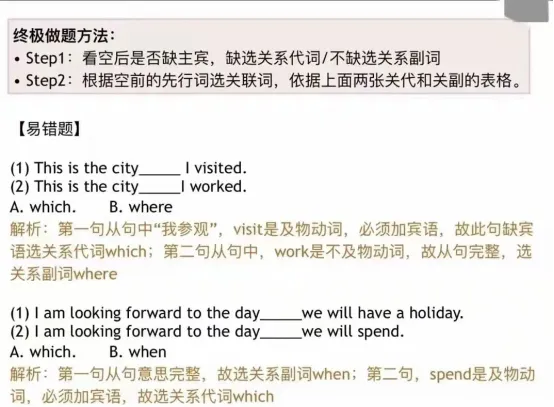
定语从句,简单来说,就是在复合句中修饰名词或代词的句子。它由三个关键部分组成:先行词、关系词和从句。先行词就像是被修饰的“主角”,它可以是名词,也可以是代词;关系词则如同桥梁,起着引导从句、代替先行词并在从句中充当成分的重要作用;而从句则是对先行词进行详细描述或限定的部分。
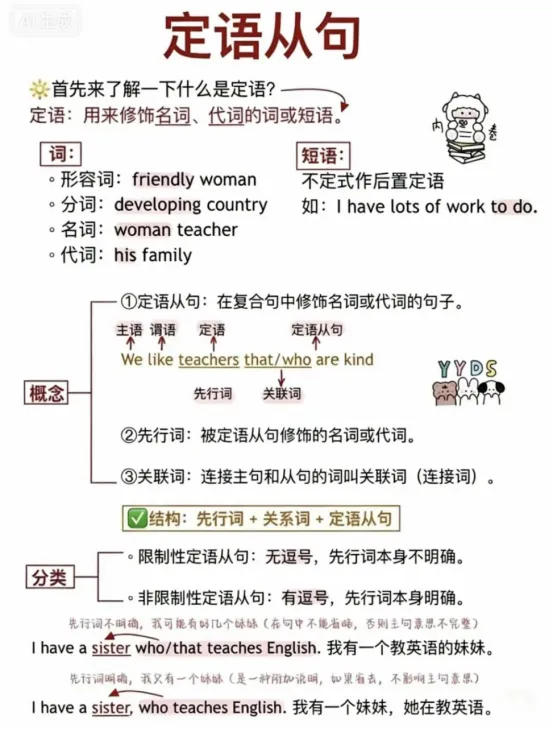
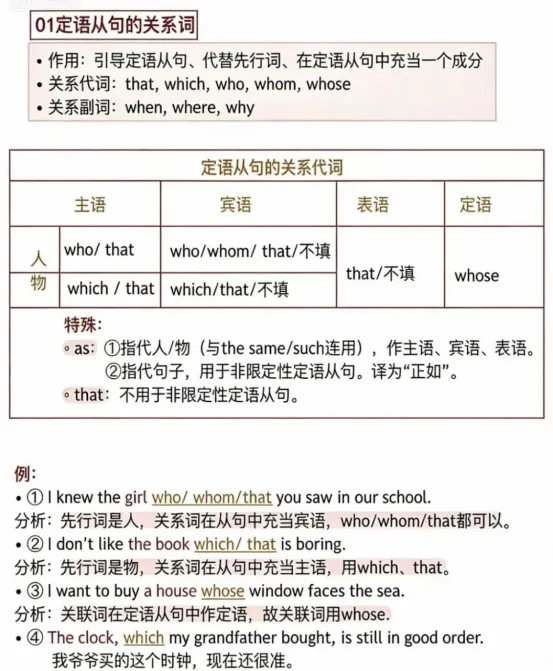
关系词分为关系代词和关系副词两大阵营。关系代词有 that、which、who、whom 等,它们在从句中可以充当主语、宾语等成分。关系副词包括 when、where、why,它们在从句中主要作状语。
使用定语从句时,有一些特殊情况需要格外留意。当先行词是不定代词,如 something、anything,或者是形容词最高级、序数词修饰的名词,以及既有人又有物的情况时,我们只能用 that 来引导定语从句。例如,“The first thing that I want to do is to have a rest.” 而当关系代词前有介词,在非限定性定语从句中表示事物,或者先行词本身是 that 时,我们则要用 which。比如,“The book, which I bought yesterday, is very interesting.”
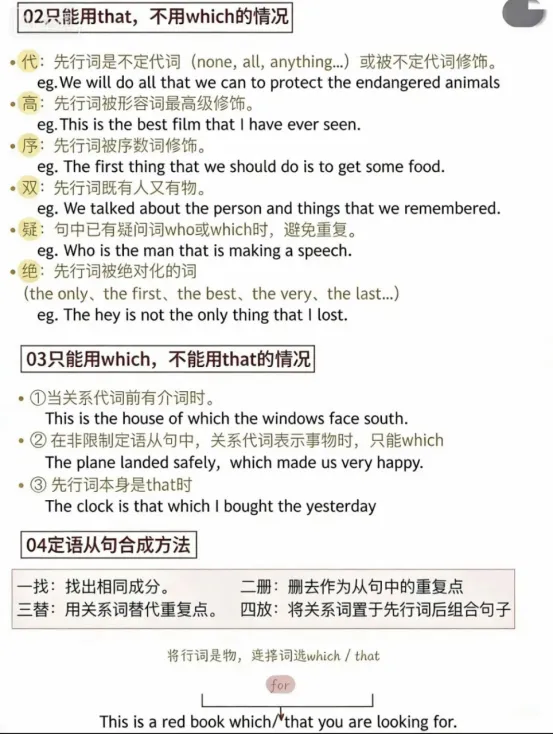
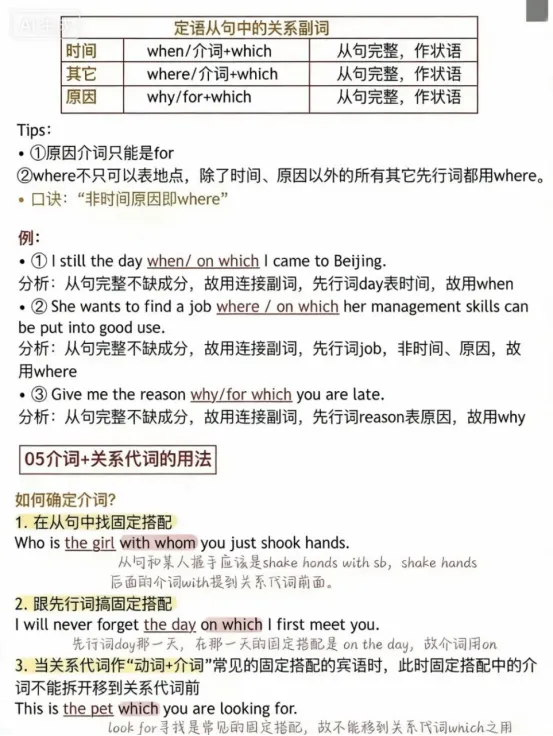
定语从句的合成也有一套清晰的步骤,一找、二删、三替、四放。先找出先行词,再删除先行词,然后用合适的关系词替换先行词,最后将关系词放在合适的位置。确定介词也有技巧,固定搭配是常见依据,原因介词常用 for,非时间原因用 where。
4. 介词&冠词规则(七上U9/七下U1)
介词:on+星期;for+时间段;in one’s spare time(九U9)。
冠词:play+棋类/球类(零冠词);play+乐器(定冠词the);a/an表“一个”(职业名词前)。
例句:We have P.E. on Friday. I have math for two hours. He wants to be a pilot.
练习:用适当介词/冠词填空,突破易混点。
(三)语法综合闯关
1. 题型训练:完成10道语法综合题(含can、be going to、定语从句、介词/冠词),学生独立完成后小组核对。
2. 错题精讲:针对高频错题,再次讲解用法,强化记忆。
(四)课堂小结+作业
1. 小结:梳理四大语法点的核心用法和易错点,总结“语法→句型→语篇”的运用逻辑。
2.作业。(语法练习作业)
第三课时:听力、阅读与写作综合运用
(一)导入:话题短文导入
板书课题:Listening、Reading & Writing,明确本节课任务。
(二)听力训练
P16
(三)读写结合训练
Grades and life
(材料话题:学业生活)
字数:308 建议阅读时间:8分钟
From an early age, we were taught that if we wanted to be successful, we had to study hard and get good results at school. In fact, good students may just end up doing jobs they don’t like, and some even lead an unhappy life. Why is it like that?
In some parents’ eyes, school grades matter most for their kids. In reality, there are many things to considerbesides the school subjects, for example, how to be a happy person, what to do to keep healthy, and how to get along well with others. That is to say, school is not just enough if you want to have a great life.
Doing well in school is different from doing well in life. Studies show that people who failed at school may not end up failing in life. You may have already known that some famous people, like Thomas Edison and Steve Jobs, didn’t do very well at school or even failed to finish school. In fact, there are a lot more than just the big shots who are successful in life without finishing school. They seize (抓住) every chance to learn and finally make it to the top.
Life is really a long lesson, so long that you can’t define (界定) a person’s success by just one section (部分) of it. If you have already finished school, keep learning because what you have learned at school will never be enough to live a satisfying life. If you are still studying, whether you are good or bad at school, don’t take your school results too seriously as long as you have put your heart into it. Keep learning to make the most of your talents (天赋). That’s how you can live a happy and successful life.
1. What’s the writer’s main purpose of writing Paragraph (段落) One?
A. To introduce a topic.
B. To give examples.
C. To provide a solution.
2. In some parents’ eyes, what’s the most important for their kids based on Paragraph Two?
A. Being happy.
B. Staying healthy.
C. Getting good grades.
3. What does the underlined expression “big shots” in the third paragraph mean?
A. 好学生B. 神枪手C. 大人物
4. According to the passage, which sentence may agree with the writer’s idea?
A. It takes money to be successful.
B. School grades aren’t everything.
C. Successful people never finish school.
5. What can we infer (推断) from the text?
A. Old habits die hard.
B. Learning is a lifelong journey.
C. Good grades always promise a successful life.
Find the words from the passage according to the tips.
1.the state of being actual or real(n.) 2. think about carefully (v.)
3.apart from sb/sth (prep.) 4.do not pass (v.)
5.catch (v.) 6.to describe or show sth accurately (v.)
7. part (n.) 8. If (conj.)
9.giving pleasure because it provides sth you need or want (adj.)
Find the phrases that appear in the passage.
1.与…和睦相处 2.也就是说
3.擅长于... 4.与…不同
5.到达顶峰 6.大人物
7.如此…以至于 8.继续学习
9.不足以做某事 10.认真对待
11.只要 12.全心投入
13.充分利用才能 14.过上…的生活
Translate , imitate and analyze the sentence structure.
原文翻译:In reality, there are many things to consider besides the school subjects.
仿写:事实上,除了获得好成绩,人的一生中有许多有意义的事可以做。
原文翻译:Life is really a long lesson, so long that you can’t define (界定) a person’s success by just one section (部分) of it.
仿写:人生是如此的精彩以至于它不应该只与成绩相关。
原文翻译:如果你已经完成了学业,继续学习,因为你在学校学到的东西永远不足以过上令人满意的生活。
仿写:如果你找不到人生的意义,继续学习,因为知识能使你的内心充盈。
结构分析:
“分分分,学生的命根”,身为学生,不可避免的会谈及成绩,你是如何看待成绩和人生的,你是否认同成绩是评判学生的标准,成绩是否能衡量一个人呢?请以“成绩与人生”为话题,根据提示,写一篇文章表达你的观点。
内容应包括:
1.你是否认同成绩能衡量人生。
2.你对成绩与人生的看法。
3.你认为成功的人生应该是什么样的。
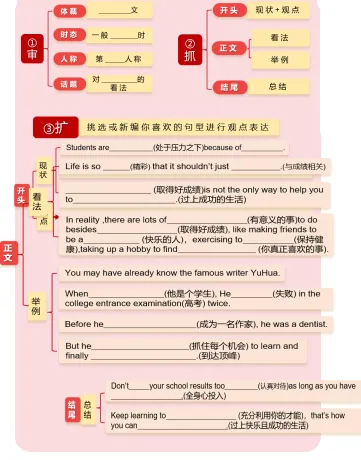
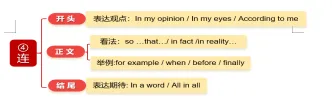
【写作脚手架】
请同学们跟着脚手架的指示,按“①审,②抓,③扩,④连”四个步骤写出满分作文吧。
4. 限时写作
学生独立完成写作,教师巡视,对基础薄弱学生进行个别指导。
(四)互评与点评
1. 互评标准:① 内容是否完整;② 语法是否正确;③ 是否运用3种以上四单元语法;④ 词汇是否丰富。
2. 教师展示2篇作文(1篇普通版、1篇高分版),标注得分点和改进建议,强调跨单元知识点的融合运用。
(五)课堂小结+作业(2分钟)
1. 小结:回顾三课时复习内容,总结“词汇短语→语法→读写”的复习逻辑,强调四单元知识点在话题中的综合运用。
2. 作业:
必做:誊写作文定稿,背诵范文句型。

注 | 来源于网络,仅供学习分享和教学交流用。版权归原作者所有。如侵权,请联系删除。


