

| 现在完成时 | |||
教学目标 | 1. 学生能理解现在完成时的含义、结构及标志词。 2. 掌握现在完成时中动词变化与句型转换规则。 3. 准确区分现在完成时与一般过去时。 4. 学会运用现在完成时相关固定句型。 | |||
重难点透视 | 1.掌握短暂性与延续性动词的转换; 2.清晰辨别现在完成时与一般过去时的差异; 3.区分时间点与段并正确用since和for填空; 4.掌握不规则动词变化及have/has相关短语用法。 | |||
知识点剖析 | ||||
序号 | 知识点 | 预估时间 | 掌握情况 | |
1 | 现在完成时知识点 | 90 min | ||
2 | 针对性练习巩固 | 30 min | ||
教 学 内 容 | ||||


01含义
1.表示动作发生在过去,对现在造成的影响/结果。汉语常用“了”或“已经”表示。
(1)动作特征:过去不确定时间发生,结果直接作用/体现到现在;(强调 “现在状态”)
例:Ihave just had my breakfast. 我已经吃了早餐。(“吃”的动作发生在过去,影响是现在不饿)
例:Hehas left his keys. 他丢了钥匙。(“丢”的动作发生在过去,影响是进不去家门)
(2)标志词及用法:
ljust、ever、never从来没有、already“已经”、yet、before连用。
 just“刚刚”(用于陈述句句中),强调刚发生的事情。(just now: 一般过去时)
already:”已经“肯定句中,可放在助动词与过去分词之间;也可放在句末
Eg.I’ve already read this book.
yet: 在疑问句中意为“已经”,在否定句中意为“还”,yet常放在句末。
Eg.Nina hasn’t found her bag yet.
ever: “曾经”,多用于否定或疑问句中
Eg.Have you ever been to Beijing?
never:从未,表示否定,常与before连用(before要放在句尾!never多放在助动词与过去分词间)
Eg. I have never been to Beijing before.
2.表示动作发生在过去,延续到现在或者延续到将来。常和these days、for a long time、since then 自那时起、during/over/in the past(last)three years (最近三年来)、so far迄今为止、up to now到现在为止、lately/recently (最近)、since等表示一段时间的时间词连用。
(1)动作特征:动作从过去开始,延续至今且未停止。(强调 “持续时长”)
(2)标志词及用法:
例:Ihave known him for five years. 我知道他5年了。(“知道”的动作发生在过去,到现在还认识)
例:Tomhas lived in Beijing since 2000. Tom自从2000年就住在北京了。
(“住”的动作发生在过去,到现在还住在北京,或许以后也住)
3.到现在为止,发生很多次(次数)
(1)动作特征:动作在过去多次发生,对现在造成影响 。(强调“过去动作多次发生对现在的影响”)
(2)标志词及用法:once一次、twice两次、many times很多次、how many times多少次。
例:It is the first time that I have met him. 这是我第一次碰见她。
例:It is the second time that he has seen the film. 这是他第二次看这个电影。
02结构:have / has + done(过去分词)
1.肯定句:主语 + have/has done (过去分词)
2.否定句:主语 + have/has not done (过去分词)
3.疑问句:Have/Has + 主语 + done (过去分词)?
4.特殊疑问句:特殊疑问词 + have/has + 主语 + done?
句子类型 | 非三单做主语 | 三单做主语 | 句子结构 |
肯定句 | I have done my work. | She has done her work. | 主语+have/has+done+其他 |
否定句 | I haven’t done my work. | She hasn’t done her work. | 主语+haven’t/hasn’t+done+其他 |
一般疑问句 | Have you done your work? | Has she done her work? | Have/Has+主语+done+其他? |
特殊疑问句 | What have you done? | What has she done? | 特殊疑问词+一般疑问句? |
【句型转换tip】:有have/has用have/has。否定后加not,疑问移到句首。
(一)句型转换
1. She has already been to Britain.(改一般疑问句)
______she been to Britain ______?
2. I have ever visited John’s house.(改否定句)
I______ ______ ______ John’s house.
3. I have borrowed two books from the library.(改一般疑问句)
____________borrowed two books from the library?
4. He hasn’t come to school because he was ill.(对划线部分提问)
____________ he ______ to school?
03动词过去分词的构成方法
1.规则变化:(同过去式)
(1)通常加ed:visit→visited,finish→finished
(2)以不发音的 e 结尾直接加d:live→lived,move→moved
(3)重读闭音节双写最后一个辅音字母再加ed:travel→travelled,plan→planned
(4)以辅音字母 + y 结尾,把 y 变为 i 再加ed:study→studied,cry→cried
2.不规则变化(需逐个记忆):
(1)AAA型:put—put—put,cut—cut—cut,let—let—let,cost—cost—cost,hurt—hurt—hurt,set—set—set,shut—shut—shut,read—read—read,(散布)spread—spread—spread,hit-hit-hit
(2)ABB型:bring—brought—brought,buy—bought—bought,fight—fought—fought,think—thought—thought,sleep—slept—slept,sweep—swept—swept,keep—kept—kept,stand—stood—stood,hear—heard—heard,hold—held—held ,win-won-won
(3)ABA型:become—became—become,come—came—come,run—ran—run,awake—awoke—awake(唤醒)bid—bid—bid (出价;投标)forbid—forbade—forbid,lie—lay—lain(躺),draw—drew—drawn
, overcome—overcame—overcome(克服)
(4)ABC型:go—went—gone,eat—ate—eaten,write—wrote—written,take—took—taken,give—gave—given
see—saw—seen,do—did—done,speak—spoke—spoken,break—broke—broken,drive—drove—driven ,be—was/were—been,begin—began—begun、fly—flew—flown,know—knew—known,throw—threw—thrown,
wear—wore—worn,ride—rode—ridden,bite—bit—bitten,eat—ate—eaten,drink—drank—drunk,
swim—swam—swum,steal—stole—stolen (偷);blow—blew—blown(吹;刮风)grow—grew—grown(生长;种植)
freeze—froze—frozen(结冰;冻结)choose—chose—chosen(选择)forget—forgot—forgotten(忘记)fall—fell—fallen ;
04标志词拓展
1. already(已经),yet(已经;仍未)
2. since(自从),for(持续)
3. never(从不),ever(曾经),just(刚刚),xxx times(…次)
4. these days(这些天),in recent years(在最近几年), lately/ recently(最近),in the past few years(过去几年),for a long time(一段时间),over the past...years(过去…年中),so far / up to now / by now(目前为止)
5. It is the first / second / third / time that 句子(现在完成时)
6. 这是第一/二/三次
【标志词区分】
1.already & yet 用法区分
标志词 | 含义 | 用法和位置 |
already | 已经 | 用在肯定句中,放在have/has和过去分词之间或句末 |
yet | l已经 l还,仍未 | yet常放在句末 |
例:I have bought this record. 我已经买了这张唱片。
例:Have you listened to the new songs yet? 你听了新歌了么?
例:I haven’t listened to it yet. 我还没听过呢.
(二)用already 和 yet 填空
1)Have you eaten your dinner ______?
2)She has ______ washed her hands.
3)I haven’t watch the new show ______.
4)We have bought some new shirts ______.
2.since & for 用法
标志词 | 含义 | 用法和位置 |
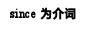
since | 自从 |
since+时间段+ago. since+句子(过去时态)➪since为连词 |
for | 持续 | for+时间段 |
例:I have read this book for three hours. 我已经读了三小时的书。
例:I have read this book since 2 p.m. 我从下午2点开始就读这本书了。
例:I have known him since I moved here. 自从我搬到这里来我就认识他了。
【区分“点”和“段”】:
时间点:能倒推到具体日期、年份、月份、小时;时间段:不能倒推到具体点。
例:4 hours ago(4个小时前),假设现在是5点,4个小时前即1点,属于时间点。
(三)用since 和 for 填空
1. ______ six weeks
2. ______ yesterday evening
3. ______ 2021
4. ______ last Monday
5. ______ seven o'clock
6. ______ a few minutes ago
7. ______ a long time
8. ______ three hours
9. ______ they arrived in the city
10. ______ they heard the news
05have/has been to、have/has gone to、have/has been in 的区别
1.have/has been to表示去过某地已回;常和just、already、before、次数等副词连用
2.have/has gone to表示去了某地未回;
3.have/has been in(at)+地点 表示一直在某地,常与for或since连用。in + 大地方;at + 小地方
例:We have been in Nanjing for 3 years. 我们在南京已经3年了。
例:My mum has been at the shop for more than two hours. 我妈妈已经在那个商店两个多小时了。
【注意】have/has been to 和 have/has gone to 这两个短语不能和一段时间(for / since+时间词)连用。
例:She has been to Beijing for 9 years.(×)
例:I have gone to the UK since I was a child.(×)
(四)用 have been to、have gone to、have been in / at 填空
1. He ________ many cities in China.
2. She ________ the zoo several times.
3. How long ________ the twins ________ this school?Six years.
4. How many times ________ you ________ the zoo?Only once.
5. My elder brother ________ another city for study for 3 years.
6. ________ your parents ever ________ the Baiyun Hill?Never.
7. They ________ the village for five years.
8. My aunt ________ never ________ London, so she doesn't know where London is.
9. He ________ just ________ Shanxi so I'm afraid you can't see him.
10. Where ________ he ________? I can't find him.
06一般过去时和现在完成时的区别
(1)现在完成时:
强调过去动作与现在关联,不具体指明动作时间,常用for、since等时间状语,结构:have/has + 过去分词;
(2)一般过去时:
单纯描述过去动作,指明具体时间,常用yesterday等状语,结构是动词过去式。
例:I have seen the film 强调现在知道内容
I saw the film three days ago强调三天前看的这个过去行为 。
现在完成时中短暂性动词与延续性动词转换:leave转为be away,borrow转为keep,buy转为have,join转为be in/ be a member of,die转为be dead等,且短暂性动词不可与for、since等表时间段的词连用。
07短暂性动词与延续性动词的转换
1.核心规则:
(1)短暂性动词(非延续性动词):表示 “一发生就结束” 的动作,如go, come, leave, arrive, lose, join, borrow, die, begin等。这类动词可用于现在完成时,但不能与表示一段时间的状语 / How long 连用;若要连用,需转换为对应的延续性动词。
(2)常见动词转换及现在完成时形式:
【非延续性动词对应延续性动词】
1.arrive/reach/get → be in/at
2.become → be
3.begin/start → be on
4.borrow → keep
5.buy → have
6.catch a cold → have a cold
7.come/go → be in/at
8.come back → be back
9.close → be closed
10.die → be dead
11.fall asleep → be asleep
12.find → have
13.get married → be married
14.get sick → be sick
15.get to know → know
16.get up → be up
17.go out → be out
18.join → be in/be a member of
19.join the army → be in the army/be a soldier
20.join the Party → be in the Party/be a Party member
21.leave → be away (from)
22.lose → be lost/keep lost
23.make friends → be friends
24.open → be open
25.put on → wear/be on
26.return → be back
27.take off → be off
28.stop/finish → be over
29.finish school → be out of school
30.begin to teach → teach
31.start to study → study
32.get well → be well
2.注意事项:
(1)非延续性动词可用于现在完成时(如The train has arrived.),但与一段时间连用时需换延续性表达(如The train has been here for two hours.)。
(2)现在完成时表 “动作持续了一段时间” 时,必须用延续性动词;短暂性动词仅能表示 “动作已发生”,不能搭配for+段时间/since+点时间。
(五)请在横线上填写对应的延续性动词/短语
1.arrive/reach/get → _______
2.become → _______
3.begin/start → _______
4.borrow → _______
5.buy → _______
6.catch a cold → _______
7.come/go → _______
8.come back → _______
9.close → _______
10. die → _______
11. fall asleep → _______
12. find → _______
13. get married → _______
14. get sick → _______
15. get to know → _______
16. get up → _______
17. go out → _______
18. join → _______
19. join the army → _______
20. join the Party → _______
21. leave → _______
22. lose → _______
23. make friends → _______
24. open → _______
25. put on → _______
26. return → _______
27. take off → _______
28. stop/finish → _______
29. finish school → _______
30. begin to teach → _______
31. start to study → _______
32. get well → _______
(六)句型转换(每空一词)
1.My brother joined the basketball club two years ago.
→My brother _______ _______ _______ _______ the basketball club for two years.
2.The film began ten minutes ago.
→The film _______ _______ _______ ten minutes.
3.He borrowed this storybook last week.
→He _______ _______ this storybook since last week.
4.My parents bought a new house in 2023.
→My parents _______ _______ a new house since 2023.
5.She left Nanjing three days ago.
→She _______ _______ _______ _______ Nanjing for three days.
【练习巩固】
一、用括号中所给词的正确时态填空
1. She ______ already ______ Thai food. (try)
2. They ______ just ______ the football match. (win)
3. ______ they ever ______ the Great Wall? (visit)
4. She ______ never ______ the film before. (see)
5. I ______ just ______ a dress for my mum. (buy)
6. China ______ a lot since 1978. (change)
7. Yesterday morning, I ______ lots of students on my way to the factory. (see)
8. I ______ (put) it right here 3 minutes ago, but now it ______ (go).
9. It is the biggest lake I ______ ever ______ (see).
10. Great changes ______ in our country in the past twenty years. (happen)
11. The workers ______ (build) up a new school recently.
12. Workers ______ (begin) to build it 3 months ago.
13. My father ______ never ______ (meet) a tiger before, but last Sunday he ______ (meet) one in the forest.
14. ______ your brother ______ the army? (join)Yes, he has.
15. He ______ (be) in the army for more than 5 years.
二、单项选择
1. ______ you ever ______ fast food?
A.Did, eatB. Have, eatenC. Are, eatD. Have, eat
2.Doctor Li ______ China for more than 8 years so she ______ Chinese since he came here.
A.has been, has studiedB. has been in, has studiedC. has gone to, studiedD. has gone to, has studied
3. I haven't finished the work ______
A.justB. alreadyC. everD. yet
4.He ____ (go) to Beijing last year and he ____ (be) there three times so far.
A. went, has beenB. goes, has beenC. went, has goneD. goes, has gone
5.— How long has your grandfather _______?— For ten years.
A.diedB. been deadC. deathD. die
6.She _______ here since she _______ to this school.
A.has been; comesB. is; cameC. has been; cameD. is; comes
7.The meeting _______ for half an hour.
A.has begunB. beganC. has been onD. was on
8. — When _______ you _______ the book?
—Last month. And I _______ it for a month.
A.did; buy; have hadB. have; bought; have hadC. did; buy; boughtD. have; bought; bought
9.He _______ the army in 2020. He _______ a soldier for three years.
A.joined; has becomeB. has joined; has been C. joined; has beenD. has joined; became
三、用所给动词的适当形式填空
1.How long _______ you _______ (be) in this city? — Since I _______ (come) here in 2021.
2.The supermarket _______ (be) closed for two hours. It _______ (close) at 2 p.m.
3.They _______ (be) married for 15 years. They _______ (get married) in 2009.
4.The little girl _______ (fall asleep) an hour ago. She _______ (be asleep) for an hour.
5.I _______ (lose) my key yesterday. I _______ (be lost) for a whole day.
四、单句改错(每句只有一处错误)
1.His father has died since 2018.
2.They have come to this town for two weeks.
3.How long has the party started?
4.I have borrowed this dictionary for a month.
5.She has left our school since last Friday.
参考答案:
(一)句型转换 1. Has; yet;2. have never visited;3. Have you;4. Why hasn’t; come
(二)1. yet2. already3. yet4. already
(三)for 2. since 3. since 4. since 5. since 6. since 7. for 8. for 9. since 10. since
(四)1. has been to2. has been to3. have; been in4. have; been to5. has been in6. Have; been to
7. have been in8. has; been to9. has; gone to10. has; gone to
(五)
- arrive/reach/get → be in/at
- become → be
- begin/start → be on
- borrow → keep
- buy → have
- catch a cold → have a cold
- come/go → be in/at
- come back → be back
- close → be closed
- die → be dead
- fall asleep → be asleep
- find → have
- get married → be married
- get sick → be sick
- get to know → know
- get up → be up
- go out → be out
- join → be in/be a member of
- join the army → be in the army/be a soldier
- join the Party → be in the Party/be a Party member
- leave → be away (from)
- lose → be lost/keep lost
- make friends → be friends
- open → be open
- put on → wear/be on
- return → be back
- take off → be off
- stop/finish → be over
- finish school → be out of school
- begin to teach → teach
- start to study → study
- get well → be well
(六)has been a member of;has been on for; has kept ;has had;has been away from
(练习巩固)
一、填空
1.has; tried
2.have; won
3.Have; visited
4.has; seen
5.have; bought
6.has changed
7.saw
8.put; has gone
9.have; seen
10.have happened
11.have built
12.began
13.has; met; met
14.Has; joined
15.has been
二、单选题:5.BBDAB;6-9:CC A C
三、用所给动词的适当形式填空
1.have; been; came
2.has been; closed
3.have been; got married
4.fell asleep; has been asleep
5.lost; have been lost
四、单句改错(每句只有一处错误)
1.died → been dead
2.have come → have been
3.started → been on
4.have borrowed → have kept
have left → have been away from


