题目:
Some people believe it’s better for students in schools to learn in groups. Others think it’s better for school students to study on their own.
Discuss both views and give your own opinions.
中文:
有些人认为,学校里的学生最好分组学习。其他人认为学生自己学习更好。讨论这两种观点,并给出自己的意见
题目解读
本题要求我们探讨学生是分组学习更好还是自己学习更好,并要求我们就两种观点进行讨论:一方认为学生分组学习更好;另一方则认为学生自己学习更好。我们不能只讨论一方观点,必须比较全面地分析二者,然后在开头和结尾明确给出自己的立场。
在结构上,采用五段式论证更为清晰合理。第一段点明背景和个人观点;第二段讨论为什么有人认为学生分组学习更好;第三段讨论为什么有人认为学生自己学习更好;第四段则展开论述为个人观点,认为两者结合最有效;最后一段总结立场
写作框架
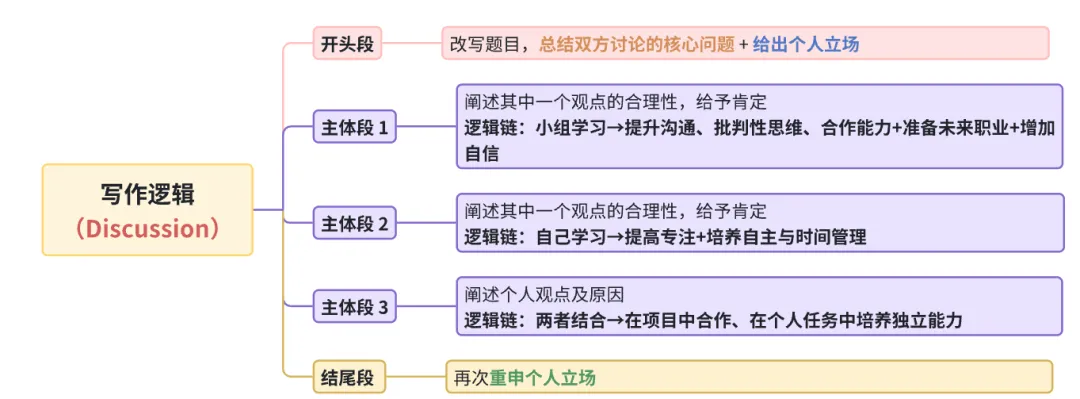
1.开头段(Introduction)
关于学校学生究竟是在小组中学习更有效,还是独立学习更高效,这一直是一个被广泛讨论的话题。虽然两种方式都各有优势,但我认为将两者结合起来最有利于学生的学业和个人发展
Whether school students learn more effectively in groups or by studying independently has long been a subject of debate. Although both approaches offer unique benefits, I believe a balanced combination is most conducive to students’ academic and personal development.
2.主体段
主体段1:
主题:支持小组学习的人认为,合作能够提升沟通能力、批判性思维与解决问题的能力
解释1:当学生交换想法时,他们能接触到不同观点,并通过同伴解释来加深理解
举例1:例如,在科学或文学课堂上的小组讨论,常常能帮助学生更深入理解复杂概念
举例2:此外,合作学习模拟了现实世界中团队合作的环境,有助于学生未来职业发展,因为许多职业高度依赖人际技能和集体智慧
解释2:小组学习还能为不太自信的学生提供支持性的氛围,从而提升学习积极性。
主体段2:
主题:另一方面,独立学习的支持者认为,独自学习能强化专注力与个人责任感
解释1:一些学生在没有小组干扰的情况下,会更高效地完成任务。独立学习还能让学生按照自己的节奏学习,并根据个人需求调整学习方式。
举例1:例如,内向或高度自律的学生在独立探索知识时往往表现更佳。
解释2:此外,独立学习培养自主性和时间管理能力,而这些在学校之外尤其重要,特别是在需要自主学习的大学阶段
主体段3:个人观点→单独依靠任何一种方式都不够;有效的教育应该将两者结合
主题:在我看来,单独依靠任何一种方式都不够;有效的教育应该将两者结合
举例:小组学习培养创造力、合作与沟通,而独立学习培养专注、自律与内在动力
解释:因此,学校应设计融合两种方式的课程,让学生在项目中合作,也在个人任务中培养独立能力
结尾段(Conclusion)
尽管小组学习促进社会和认知发展,而独立学习提升专注与自主性,但二者结合才能提供最平衡、最有效的学习体验。学生只有在兼具合作与独立的学习环境中,才能真正成长
Although group learning encourages social and cognitive growth and independent study enhances focus and autonomy, a blended approach provides the most balanced and effective educational experience. Students thrive when they have opportunities to learn both with others and on their own.
范文精析版
⭐️ 蓝色部分-生动动作表达:增加写作词汇丰富程
⭐️ 黄色部分-地道名词形容词表达:增加写作词汇丰富程度
⭐️ 橙色部分-必备连接词汇:增加写作连接词的积累
⭐️ 绿色部分-高级语法积累:提高写作时语法多样性和准确性
▼
范文
Whether school students learn more effectively in groups or by studying independently has long been a subject of debate. Although both approaches offer unique benefits, I believe a balanced combination is most conducive to students’ academic and personal development.
Supporters of group learning argue that collaboration enhances communication, critical thinking, and problem-solving skills. When students exchange ideas, they are exposed todiverse perspectives and can clarify misunderstandings through peer explanation. For instance, group discussions in science or literature classes often help students deepen their understanding of complex concepts. Moreover, cooperative learning mirrors real-world environmentswhere teamwork is essential, preparing students for future careers that rely heavily on interpersonal skills and collective intelligence. Group work can also motivate less confident learners by providing a supportive atmosphere.
On the other hand, proponents of independent study believe that learning alone strengthens concentration and personal responsibility. Some students work more efficiently without the distractions that group settings may introduce. Studying individually enables learners to progress at their own pace and tailor study methods to their specific needs. For example, introverted or highly self-disciplined students may excel when given the freedom to explore topics independently. Furthermore, independent study develops autonomy and time-management skills, which are vital foracademic success beyond school, particularly in university environments where self-directed learning is essential.
In my view, neither method alone is sufficient; effective education requires a strategic combination of both. Group learning fosters creativity, collaboration, and communication, while independent study builds discipline, focus, and self-motivation. Schools should therefore design curricula that integrate both approaches, allowing students to collaborate on projects while also completing individual tasks that develop self-reliance.
In conclusion, although group learning encourages social and cognitive growth and independent study enhances focus and autonomy, a blended approach provides the most balanced and effective educational experience. Students thrive when they have opportunities to learn both with others and on their own.
高分表达
offer unique benefits 提供独特的优势
are exposed to 接触到
deepen their understanding 加深他们的理解
mirrors real-world environments 反映真实世界的环境
providing a supportive atmosphere 营造一个支持性的氛围
strengthens concentration and personal responsibility 增强专注力和个人责任感
tailor study methods to 为...量身定制学习方法
develops autonomy 培养自主性
are vital for 对...至关重要
fosters creativity 培养创造力
builds discipline 培养自律性
integrate both approaches 整合两种方法
encourages social and cognitive growth 促进社交和认知发展
enhances focus and autonomy 增强专注力和自主性
is most conducive to 最有利于
critical thinking 批判性思维
problem-solving skills 解决问题的能力
diverse perspectives 多元的视角
peer explanation 同伴讲解
interpersonal skills 人际交往能力
collective intelligence 集体智慧
at their own pace 按照自己的节奏
academic success beyond school 超越学校范围的学业成功
self-directed learning 自主学习
a strategic combination of both 两者的战略性结合
develop self-reliance 培养自力更生的能力
a blended approach 一种混合方法
①Whether school students learn more effectively in groups or by studying independently has long been a subject of debate.
(whether名词性从句)关于学校学生究竟是在小组中学习更有效,还是独立学习更高效,这一直是一个被广泛讨论的话题
②Moreover, cooperative learning mirrors real-world environments where teamwork is essential, preparing students for future careers that rely heavily on interpersonal skills and collective intelligence.
此外,合作学习模拟了现实世界中(where定语从句)团队合作的环境,有助于学生未来职业发展,因为许多职业高度依赖人际技能和集体智慧。
③Schools should therefore design curricula that integrate both approaches, allowing students to collaborate on projects while also completing individual tasks that develop self-reliance.
因此,学校应设计融合两种方式的课程,让学生在项目中合作,也(while状语从句省略主语)在个人任务中培养独立能力
④Students thrive when they have opportunities to learn both with others and on their own.
学生只有在(both…and平行)兼具合作与独立的学习环境中,才能真正成长
▼