《Is this your pencil?》
考题回顾
考题解析
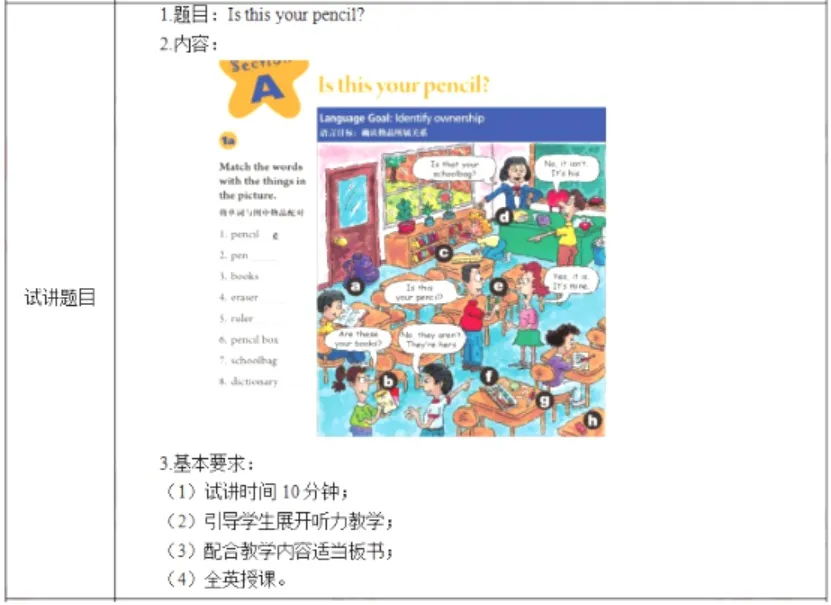
Is this your pencil?
Teaching aims:
Knowledge aims:
Students can understand the content of the listening material.
Students can be familiar with the new words and the expression about ownership.
Ability aims:
Students will develop their listening abilities of catching key words.
Students can identify the ownership in their daily life.
Emotional aims:
Students will cooperate with other group mates to complete the tasks together.
Students can foster the interest and desire of learning English, and be fond of taking part in group activities.
Key and difficult points:
Key point:
To master the key words and sentence structures.
To get to know the main content of the listening material.
Difficult point:
To improve their awareness of the importance of communication and cooperation.
To use different basic listening strategies like extensive listening and intensive listening in their listening process.
Teaching procedures:
1. Greetings.
2. Let students enjoy a song named What's This. Then ask themwhat they heard fromthe song. The song goes like this:
What's this? What's this? What's this?
What?what?
It's a hat. It's a hat. It's a hat hat hat
What's this? What's this? What's this?
What?what?
It's a bat. It's a bat. It's a bat bat bat
What's this? What's this? What's this?
What?what?
It's a pen. It's a pen. It's a pen pen pen
What's this? What's this? What's this?
What?what?
It's a pencil. It's a pencil. It's a pencil pencil pencil.
Ask students to answer the question. Then tell themthat it is related to today’s topic and lead in this class.
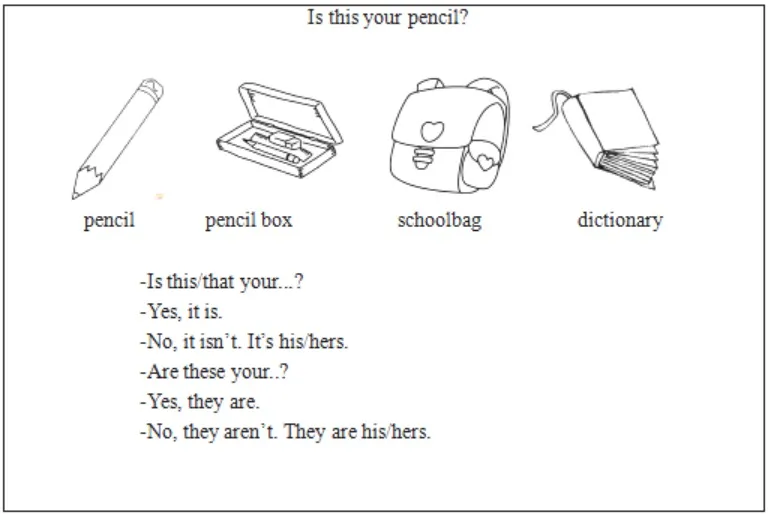
Draw some stick figures about the new words: “pencil”, “pencil”, “box”, “schoolbag”, and“dictionary” on the blackboard. Ask students to look at the pictures and teach themtwo new words.
And students will be invited to read these words by playing a game-High and Low Voice. If the teacher read the words in high voice, students should read themin low voice and vice verse.
Present sentence patterns “Is this/that your..” “Yes, it is.” “No, it isn’t. It’s his/hers.” “Are these your..?” “Yes, they are.” “No, they aren’t. They are his/hers.”
1. Extensive listening
Ask students to listen to the tape and answer the following questions of the listening material.
Q1: How many things have been mentioned in the dialogue?
Q2: How many people in the dialogue?
Then invite one student to write the answer on the blackboard.
2. Intensive listening
Play the tape again and ask students to answer the following questions and do a match on the screen.
Q1: Is this Tom’ s pencil?
Q2: Is this Anna’ s schoolbag?
Q3: Is this Lucy’ s pencil box?
Q4: Is this Linda’ s dictionary?
Q5: Are these Mary’s books?
Students will be given 5 minutes to make a new dialogue with their desk-mates. They are required to use the sentence structures. One asks question “Is this your ...”, and the other answers “Yes, it is./ No,it isn’t.”.
Summary: invite a student to be a little teacher and summarize today’s lesson.
Homework: ask students to read the conversation to their parents and draw a picture about new words and ask their parents “Is this your ...”.
Blackboard design:
Teaching reflection
考题回顾
考题解析
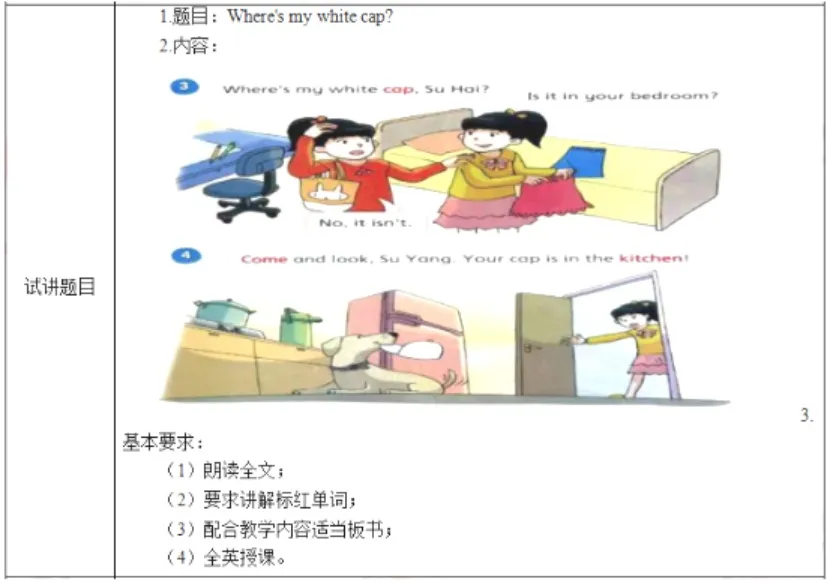
Where's my white cap?
Teaching aims:
Knowledge aims:
Students can understand the content of the listening material.
Students can be familiar with the new words such as"cap" "come"and so on.
Ability aim:
Students will develop their listening abilities of catching key words.
Emotional aim:
Students can be more interested in English and have more confidence in learning English.
Key and difficult points:
Key point:
How to understand the listening material and key words.
Difficult point:
How to be more interested in English and have more confidence in learning English.
Teaching procedures:
1. Greetings.
2. Let students enjoy a song named Getting Dressed Song and ask themto sing together. The song goes like this:
I amlearning to get dressed,
I’ mlearning what to do!
This is how I put on my shirt,
This is how I pull on my trousers,
This is how I pull up my socks,
This is how I slip on my shoes!
Ask students to answer the question "How many clothes did you hear just now". Then tell themthat today they will learn something about dressing and lead in the topic.
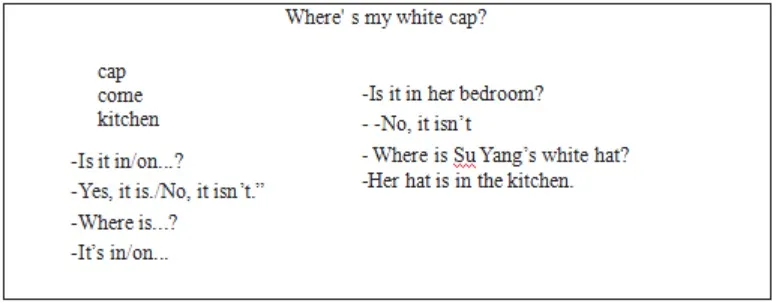
Show students some clothes to present some words about clothes such as “cap” “coat” and son on and lead in the sentence pattern “Where is...?” “It’s in/on...”Do an action to express "come" “go”
Show students a picture of a house, let students understand the meaning of some words about rooms such as “living room” “kitchen” and introduce the structure “Is it in/on...?” “Yes, it is./No, it isn’t.”
1. Extensive listening
Read the passage for students and ask themto find how many people are there in the listening material.Then invite one student to answer the question.
2. Intensive listening
Play the tape and ask students to answer two questions:
Q1: Whose white hat is lost?
Q2: Where is the white hat?
Then write these two questions on the blackboard. And tell students when they want to ask if something is in a certain location, they can use "Is it in...?", and the positive response is "Yes, it is.", the negative response is "No, it isn't."
Ask students to have a dialogue with their deskmates, one imagine something's location, and the other should guess where it is. 5 minutes are given for preparation. Then invite some groups to share.
Summary: invite a student to be a little teacher and summarize today’s lesson. Ask students to take good care of their belongings.
Homework: ask students to design a poster of their room.
Blackboard design:
考题解析
Teaching aims:
Knowledge aims:
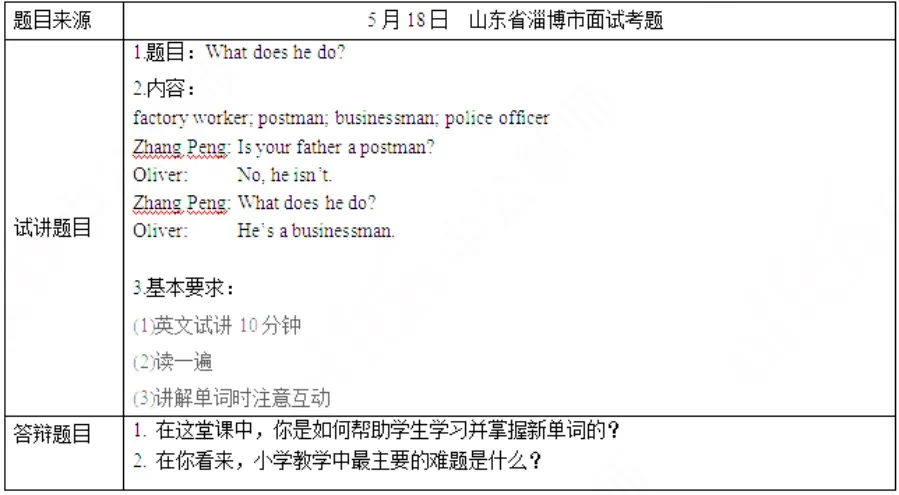
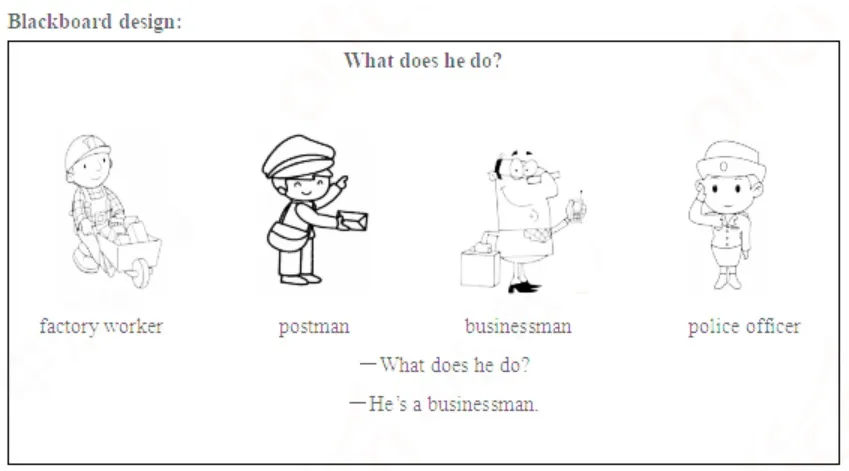
Students can master the meaning and pronunciation of the new words, “factory worker, postman,businessman, and police officer”.
Students can learn the sentence structures “What does he do?/ He’s a businessman.”
Ability aim:
Students can ask and talk about career with the new words and the sentence structures in daily life.
Emotional aim:
Students can be interested in learning English and cultivate the awareness of career and the spirit of cooperation.
Key and difficult point:
Key Point:
Students can master the meaning and usage of the new words and sentence structure.
Difficult Point:
Students can improve the interest of learning English and cultivate the awareness of career and the spirit of cooperation.
Teaching procedures:
1. Greetings. Talk about the weather.
2. Sing a song for students.
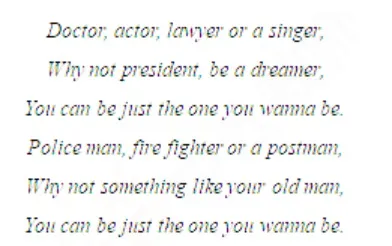
Ask themif they can figure out some different careers in this song, and they may say “doctor, actor, andsinger”. Then tell themthat today we are going to learn more new words about career.
1. Present the words and teach
Draw some pictures according to the different words and describe themsimply, and then teacher shows the words to the students and reads them.
2. Present the sentence
Read the conversation for the students. Ask themto listen carefully and find which sentence is used to ask others’ career and what’s the answer. Write themdown on the blackboard. Then ask student to do an exchange exercise using the words learned before and the sentence patterns.
—What does he do?
—He’s a businessman.
Do the guessing game. Ask students to guess the words that the teacher is acting.
Ask students to do a role play and try to make new dialogues with their desk mates according to new words. 5 minutes will be given. Then invite 2 pairs to share their dialogues and give encouragement.
Summary: Teacher summarizes the whole class.
Homework: Ask students to tell their parents what they have learned in school today and talk about their career with the sentence structures.
1. How did you help students learn and master new words in the vocabulary class?
【参考答案】
In a word, I make use of funny and vivid pictures to teach the new words. First, I draw some pictures about the new words on the blackboard and use simple sentences to describe them. Second, I lead students to try to tell me the word for each picture and then give themthe right answer. So students will know the meaning of these words by this vivid method. Third, I ask students to read these words after me, so they can know and learn the right pronunciation. What’s more, students can practice and consolidate the new knowledge by the next few activities. So I believe they will really learn and master the new words.
2. What’s the mainly difficulty in primary school teaching in your view?
【参考答案】
In my view, I think the main difficulty in primary school teaching is that pupils are easily distracted by something else, and they only can remember the new knowledge for a short time. So teachers should pay attention to their features, and take positive and active measures for that. We can make use of funny games or activities to help students memorize and consolidate what they have learned timely, and review the knowledge regularly.

面试真题



因篇幅问题,文章只放了三篇真题稿
有需要全部真题的同学
👇👇👇