
每个国家都有独特的风土人情与文化习俗。当你需要向他人介绍中国的传统礼仪时,该怎样清晰、得体地讲解相关规范呢?
今天,我们就化身“李华”,以回复美国朋友Mike的邮件为例,梳理写作思路,学习好词佳句,将中国家庭的长幼礼仪以实用、温暖的方式传递给他人,让跨文化交流更加顺畅自然。
扫描下方二维码购买中考特辑↓

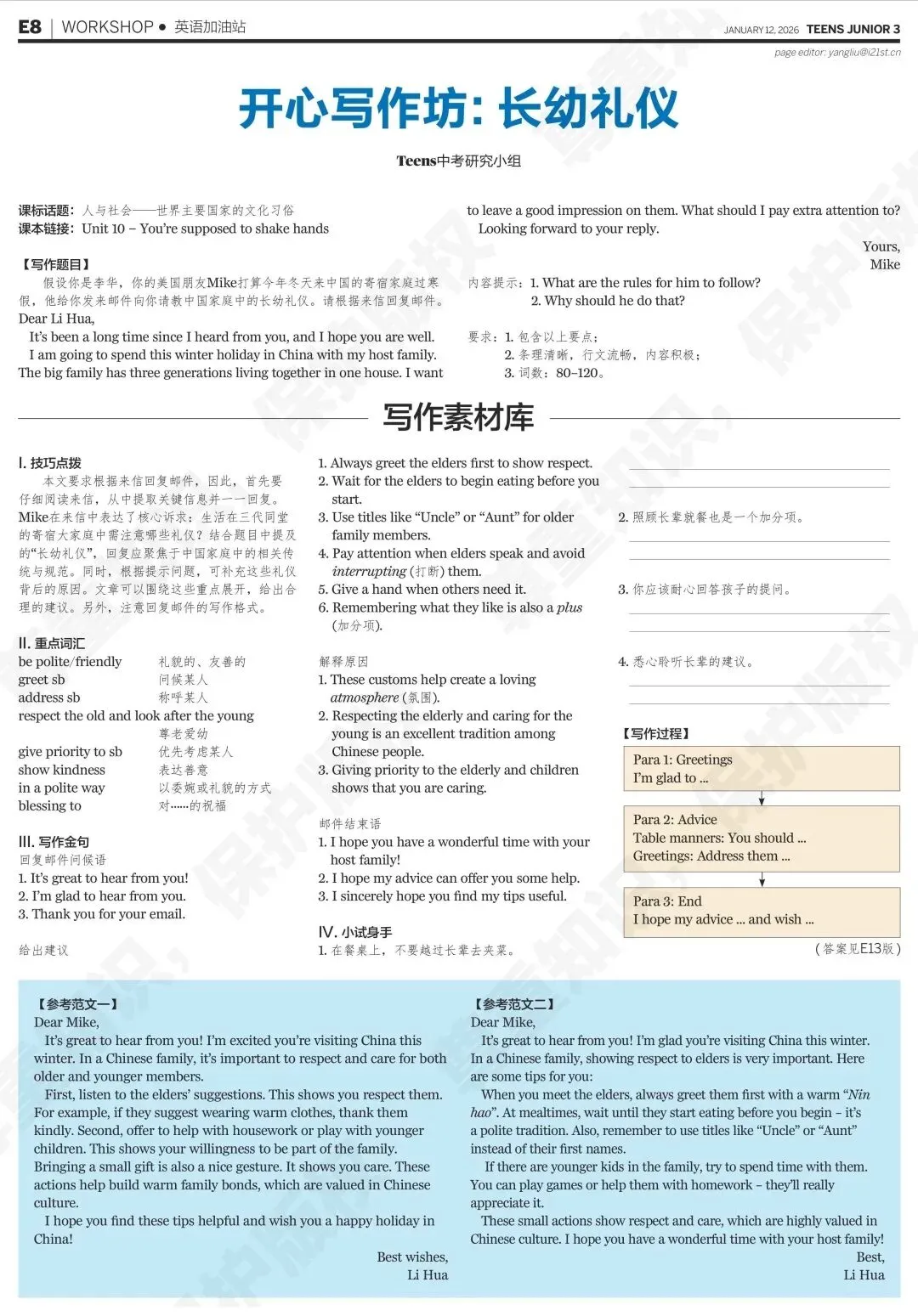
写作题目
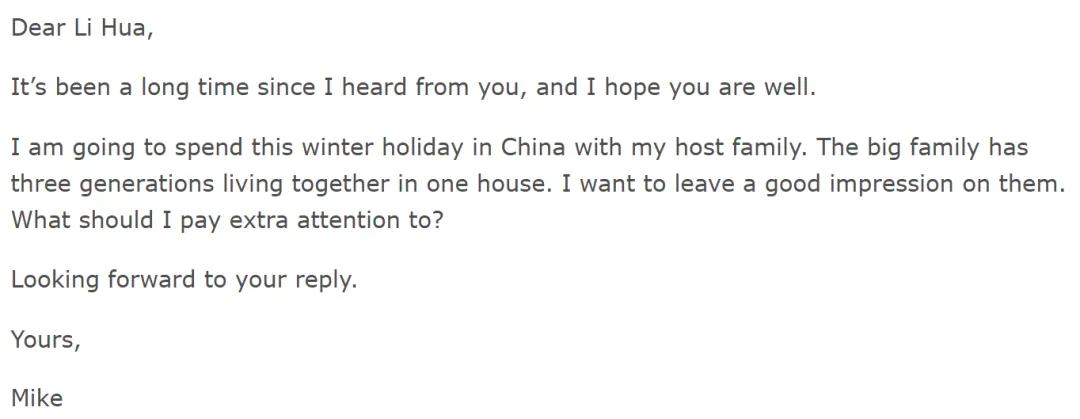
假设你是李华,你的美国朋友Mike打算今年冬天来中国的寄宿家庭过寒假,他给你发来邮件向你请教中国家庭中的长幼礼仪。请根据来信回复邮件。
内容提示:
1. What are the rules for him to follow?
2. Why should he do that?
要求:
1. 包含以上要点;
2. 条理清晰,行文流畅,内容积极;
3. 词数:80–120。
写作素材库
(一)
技
巧
点
拨
本文要求根据来信回复邮件,因此,首先要仔细阅读来信,从中提取关键信息并一一回复。
Mike在来信中表达了核心诉求:生活在三代同堂的寄宿大家庭中需注意哪些礼仪?结合题目中提及的“长幼礼仪”,回复应聚焦于中国家庭中的相关传统与规范。同时,根据提示问题,可补充这些礼仪背后的原因。文章可以围绕这些重点展开,给出合理的建议。另外,注意回复邮件的写作格式。
(二)
重
点
词
汇
be polite/friendly | 礼貌的、友善的 |
greet sb | 问候某人 |
address sb | 称呼某人 |
respect the old and look after the young | 尊老爱幼 |
give priority to sb | 优先考虑某人 |
show kindness | 表达善意 |
in a polite way | 以委婉或礼貌的方式 |
blessing to | 对......的祝福 |
(三)
写
作
金
句
回复邮件问候语
1. It’s great to hear from you!
2. I’m glad to hear from you.
3. Thank you for your email.
给出建议
Always greet the elders first to show respect.
Wait for the elders to begin eating before you start.
Use titles like “Uncle” or “Aunt” for older family members.
Pay attention when elders speak and avoid interrupting (打断) them.
Give a hand when others need it.
Remembering what they like is also a plus (加分项).
解释原因
These customs help create a loving atmosphere (氛围).
Respecting the elderly and caring for the young is an excellent tradition among Chinese people.
Giving priority to the elderly and children shows that you are caring.
邮件结束语
I hope you have a wonderful time with your host family!
I hope my advice can offer you some help.
I sincerely hope you find my tips useful.

左右滑动,查看更多
写作过程
Para 1: Greetings
I’m glad to ...
↓
Para 2: Advice
Table manners: You should ...
Greetings: Address them ...
↓
Para 3: End
I hope my advice ... and wish ...
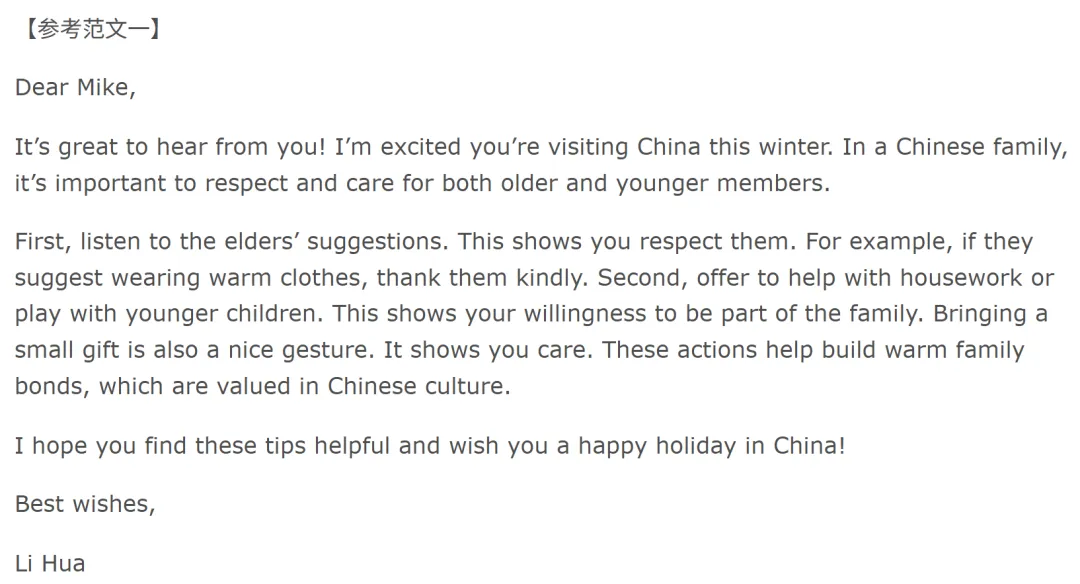
参考范文
本文出自初三版814期
扫描下方二维码购买中考特辑↓