资讯 / 正文
中考英语:九年级英语期中复习必背语法知识点!
请点击上方蓝字“英语学习小课堂”关注,获取更多知识!
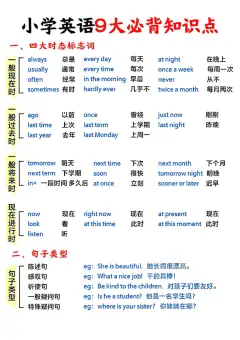
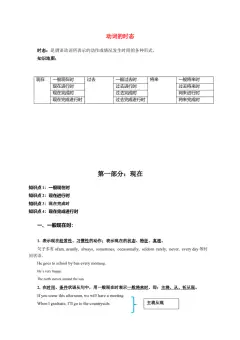
八大时态:
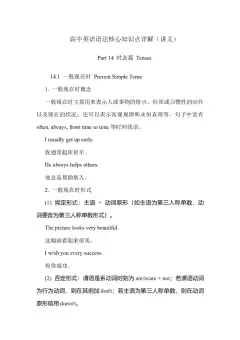
一般现在时:表示通常性、规律性、习惯性的动作或状态,常与always、often、usually等时间状语连用。
一般过去时:表示过去某个时间里发生的动作或状态,常与yesterday、last week、in 2020等时间状语连用。
一般将来时:表示将来某一时刻的动作或状态,常与tomorrow、next year、in the future等时间状语连用。
现在进行时:表示正在进行的动作,常与now、at the moment等时间状语连用,或表示近期按计划安排将发生的事。
过去进行时:表示过去某一时刻正在进行的动作,常与at 8:00 yesterday、while、when等时间状语连用。
现在完成时:表示过去发生的动作对现在造成的影响或结果,或表示从过去开始持续到现在的动作或状态,常与already、yet、just、ever、never等时间状语连用,或与for+时间段、since+时间点连用。
过去完成时:表示在过去某一时间或动作之前已经完成的动作,常与by the time、before、after等时间状语连用。
过去将来时:表示从过去的某一时间来看将来要发生的动作,常用于宾语从句中。
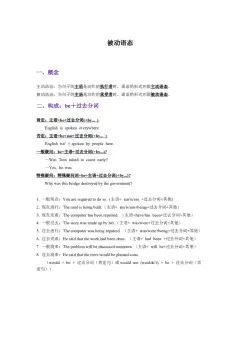
被动语态:
结构:be+过去分词(注意时态变化)。
考点:动作承受者作主语时用被动语态,如"The book was written by Lu Xun."。感官动词(feel、look)和系动词(seem、become)无被动形式。
三大从句:
宾语从句:
定义:在复合句中作宾语的从句。
结构:主句+引导词+从句(陈述语序)。
引导词:that(无意义,可省略)、if/whether(是否)、特殊疑问词(what、who、where、when等)。
时态:主句现在时,从句根据实际情况用任意时态;主句过去时,从句用相应的过去时。
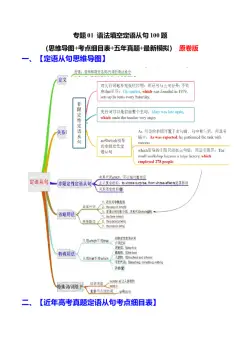
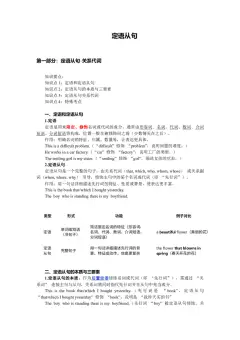
定语从句:
定义:修饰名词或代词的从句。
关系词:who/whom/that(指人)、which/that(指物)、where(指地点)、when(指时间)、why(指原因)。
分类:限制性定语从句(紧跟先行词,主句与从句不用逗号分开)和非限制性定语从句(与主句之间有逗号分开,起补充说明作用)。
状语从句:
定义:在复合句中充当状语的从句。
类型:时间状语从句(when、while、until等)、条件状语从句(if、unless等)、让步状语从句(though、although等)、目的状语从句(so that、in order that等)、结果状语从句(so...that、such...that等)。
形容词/副词比较级与最高级
规则变化:
单音节:+er/est(如tall→taller→tallest)。
辅音+y结尾:变y为i+er/est(如happy→happier→happiest)。
多音节:more/most+原级(如careful→more careful→most careful)。
不规则变化:
如good→better→best,bad→worse→worst等。
重点句型:
比较级+than(如He is taller than me.)
the+最高级+of/in(如She is the smartest in the class.)
比较级+and+比较级(如The city is becoming more and more beautiful.)
不定式(to do)
表目的或将来,如"He studies hard to enter a good school."。
动名词(doing)
作主语或宾语,如"Swimming is good for health."。
分词(doing/done)
现在分词(doing):表主动或进行,如"The boy singing is my friend."。
过去分词(done):表被动或完成,如"The broken window needs repair."。
分类与用法
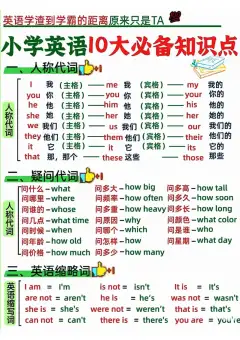
人称代词:主格(I、he)与宾格(me、him)。
物主代词:形容词性(my、his)+名词与名词性(mine、his)=形容词性+名词。
反身代词:myself、yourself(如She can dress herself.)。
不定代词:肯定句用some、someone,否定/疑问句用any、anyone;两者用both、either、neither,三者及以上用all、any、none。
易混考点
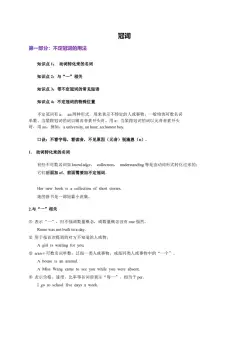
it(指代同名同物)与one(指代同名异物)的区别
如"I have a pen. It is red."(it指这支笔)与"I need a pen. I'll buy one."(one指任意一支笔)。
时间介词
in+年月/季节/早中晚(如in 2025、in spring、in the morning)
on+具体日期/星期(如on May 29th、on Monday)
at+具体时刻(如at 8:00)。
地点介词
in+大地点(如in Beijing)
on+表面/街道(如on the desk、on Green Street)
at+小地点(如at the bus stop)。
固定搭配
be good at(擅长),be interested in(感兴趣),pay attention to(注意)。
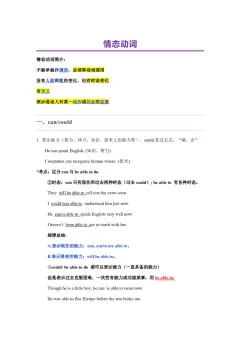
表推测用法
must(一定,可能性最大),如"The book must be his. He loves reading.";can't(不可能,否定推测),如"The man can't be Mr. Li. He's in Shanghai.";may/might(可能,可能性较小)。
基本用法
can(能)、should(应该)、need(需要)后接动词原形。
特殊句型
感叹句
What引导:What+(a/an)+形容词+名词+主谓!
如"What a beautiful girl she is!"。
How引导:How+形容词/副词+主谓!
如"How fast he runs!"。
倒装句
Only+状语放句首:Only in this way can we solve the problem.
Neither/Nor+助动词+主语:表否定也一样,如"I can't swim,neither can he."。
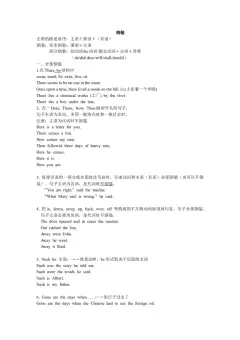
There be句型
相关文档
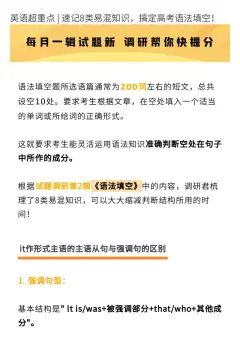
- 高考英语语法填空必背知识点
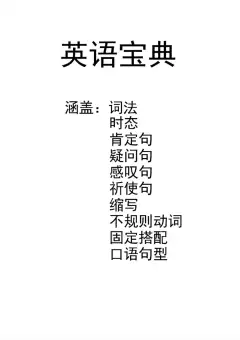
- 1-6年级英语必背知识语法宝典(小学英语语法资料汇总)
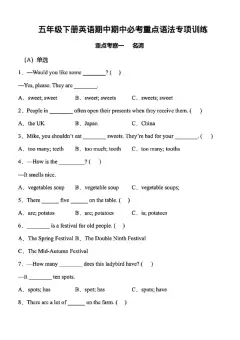
- 五年级下册英语期中期中必考重点语法专项训练
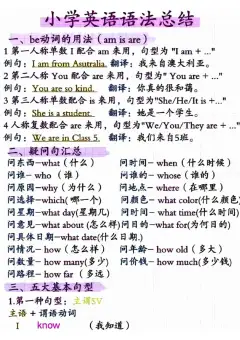
- 小学英语1-6年级必背知识语法总结
- 高中英语32张语法表格必背知识点
- 小学英语语法口诀速记(1-6年英语必背知识)
- 六年级下册英语期中复习语法知识专项训练练习卷
- 小学1-6年级英语必背知识 英语51条语法顺口溜(一)
- 小学英语语法资料汇总:1-6年级必背知识之48音标
- 小学英语必背知识 常用短语
- 1-6年级英语9大必背知识点
- 1-6年英语必背知识:单词速记秘诀(小学英语语法资料汇总)
- 小学1-6年级英语必背单词1000个及语法资料汇总
- 小学1-6年级英语必背知识 字母组合拼读口诀
- 新版音标与1-6年英语必背知识:其他小学英语语法资料汇总
- 小学1-6年级英语必背知识 英语速记三字经 小学英语语法资料汇总
- 1-6年级小学英语语法体系大全
- 小学英语1-6年级必背知识点汇总
- 译林版五年级上册英语必背知识点清单汇总
- 高考英语介词知识点与100题选择练习(2027年高考英语语法记背合集·专项更新)
- 2024年高考英语一轮复习语法知识清单专题02名词性从句语法填空100题测试解析版
- 2024年高考英语一轮复习语法知识清单:专题02语法填空之名词性从句100题测试(原卷版)
- 小学1-6年级英语必背知识音标发音口型图单词小卡片(小学英语语法资料汇总)
- 1-6年英语必背知识 元音音标小故事(其他小学英语语法资料汇总)
- 2024年高考英语一轮复习语法知识清单:专题01 语法填空定语从句100题精练(原卷版)
- 小学英语必背知识 思维导图800词汇
- 小学英语10大必备知识点 1-6年级英语必背知识
- 六年级下册英语小升初必背知识点
- 四年级上册英语必背知识点总结(人教PEP版)
- 2024年高考英语一轮复习语法知识清单:专题02名词性从句语法填空100题精练(解析版)
- 2027届高考英语一轮复习定语从句知识点整理讲义
- 2027届高考英语一轮复习冠词知识点与150题综合练习(语法记背合集)
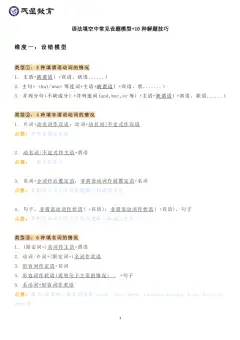
- 高中英语语法填空常见设题模型与十种解题技巧
- 三维一体过目不忘单词 1-6年级英语必背知识 小学英语语法资料汇总
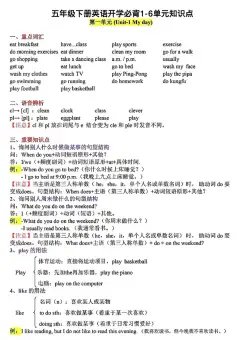
- 五年级下册英语开学必背1-6单元知识点
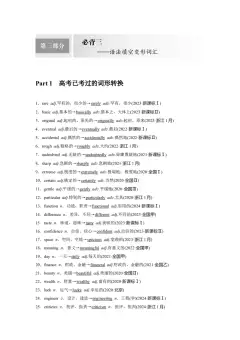
- 2025年高考英语大二轮考前必背第三部分必背三语法填空变形词汇(教师用书)
- 2025年高考英语大二轮考前必背第三部分必背三语法填空变形词汇(学生用书)
- 英语学习必背高频词汇!
- 2027届高考英语一轮复习现在分词知识点整理讲义与专项训练 含200题
- 2027届高考英语一轮复习动词不定式知识点整理讲义(含200题练习版)
- 冀教版初中英语必背知识点归纳(内蒙古中考赠品)
- 初中英语学霸完整笔记:中考英语必背重点知识点总结
- 六年级下册英语小升初必考语法练习卷
- 品优教学中考英语初中英语语法大全
- 五年级下册英语知识点汇总(人教版)
- 人教版中考生物教材核心知识必背
- 2026届高三英语一轮复习语法知识点总结:定语从句讲义
- 2026届高三英语一轮复习专项 高中英语语法知识点总结 it的用法清单
- 2026届高三英语一轮复习专项:语法知识点总结之情态动词清单
- 2026届高三英语一轮复习语法知识点总结:被动语态讲义
- 2026届高三英语一轮复习专项 高中英语语法知识点总结 冠词的用法讲义
- 2026届高三英语一轮复习专项:语法知识点总结之特殊句式倒装清单
- 2026届高三英语一轮复习专项:语法知识点总结 动词时态知识清单
- 六年级小升初英语动词语法填空专项拔尖练习(130题)
- 2026届高三英语一轮复习专项语法知识点总结:虚拟语气讲义
- 2026届高三英语一轮复习专项语法知识点总结之主谓一致清单
- 五年级下册英语(通用版)语法期中专项训练
- 小学英语三年级上册开学必背知识点归纳
- 六年级英语小升初语法易错·动词四大时态综合训练卷
- 高中英语必背必考知识点总结
- 人教版英语五年级上册知识点大全
- 2026年高三英语语法核心知识点详解讲义资料:词性篇名词Part5
- 2026届高三英语一轮复习语法知识点总结:状语从句(时间、地点状语从句)讲义
- 2026届高三英语一轮复习语法知识点总结:状语从句(原因、目的、结果状语从句)讲义
- 五年级下册英语重点知识点梳理
- 高考英语大纲3500词必背知识点
- 六年级下册英语小升初语法易错·动词四大时态综合练习卷
- 一年级上册语文必背知识点(期中复习打印版)
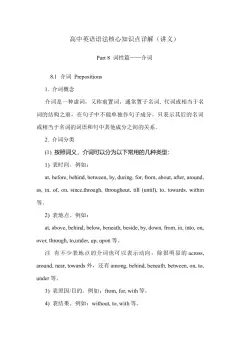
- 2026年高三英语语法核心知识点详解讲义 高考英语语法核心知识点详解Part8词性篇——介词 高考一二三轮复习
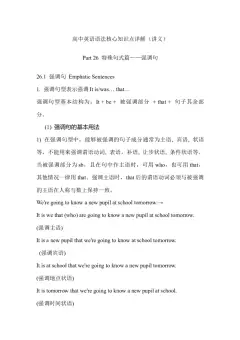
- 2026年高三英语语法核心知识点详解讲义 特殊句式篇强调句 Part26 高考专项复习
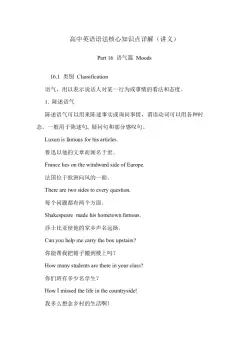
- 2026年高三英语语法核心知识点详解讲义 Part16语气篇
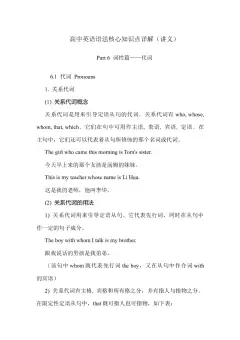
- 2026年高考英语语法核心知识点详解讲义Part6词性篇代词(一二三轮复习)
- 2026年高三英语语法核心知识点详解讲义G409 高考一二三轮复习专项 词性篇动词②
- 2026年高三英语语法核心知识点详解讲义G409 高考一二三轮复习专项 词性篇动词①
- 2026年高考英语语法核心知识点详解讲义 词性篇副词Part12 一二三轮复习专项
- 高考英语作文范文6篇必背知识点
- 2023高考英语范文审题指导
- 2026年高三英语语法核心知识点详解讲义Part24特殊句式篇There be句型(高考一二三轮复习)
- 2026年高三英语语法核心知识点详解讲义Part15语态篇Voices
- 2026年高三英语语法核心知识点详解讲义 高考一二三轮复习 词性篇Part7冠词和连词
- 2026年高三英语语法核心知识点详解讲义:高考英语语法核心知识点详解Part2构词篇Word Formation(高考一二三轮复习)
- 2026年高三英语语法核心知识点详解讲义Part25特殊句式篇倒装(高考一二三轮复习)
- 2026年高三英语语法核心知识点详解讲义(G409)Part11词性篇——形容词②
- 2026年高考英语语法核心知识点详解讲义 词性篇形容词①(高考一二三轮复习)
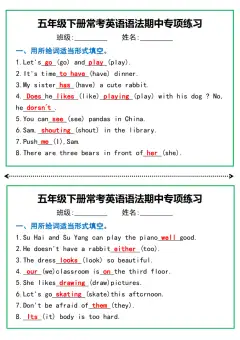
- 五年级下册常考英语语法期中专项练习
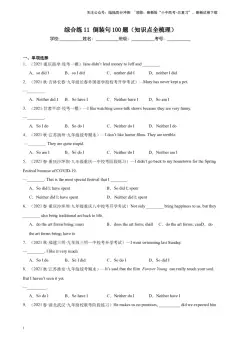
- 中考英语综合练11倒装句100题知识点全梳理解析版(语法宝典备战2024)
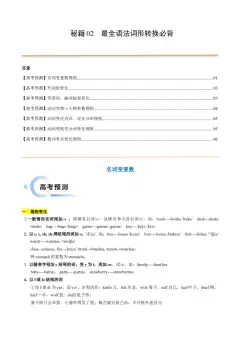
- 2025年高考英语抢分秘籍新高考专用 抢分法宝02最全语法词形转换抢分必背(名词变复数+代词变化+形容词、副词级别变化+动词+数词)教师版 2024版
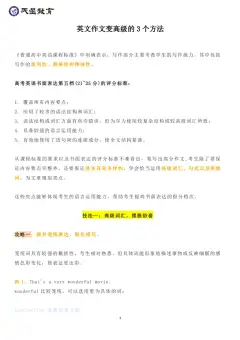
- 英语高分作文三大技法
- 二年级语文上册期中必背知识点
- 初一英语语法知识点总结复习超详细(内蒙古中考赠品)
- 英语必背知识
- 2026年高三英语语法核心知识点详解讲义Part23特殊句式篇主谓一致(高考一二三轮复习)
- 2026年高三英语语法核心知识点详解讲义Part21句式篇——状语从句
- 2026年高三英语语法核心知识点详解讲义Part20句式篇——定语从句(高考一二三轮复习)
- 2026年高三英语语法核心知识点详解讲义Part1基础篇——音标、发音和书写规则(高考一二三轮复习)
- 2026年高三英语语法核心知识点详解讲义 句式篇Part19名词性从句 高考一二三轮专项复习
- 2026年高考英语语法核心知识点详解讲义 时态篇Part14 一二三轮复习专项
- 四年级下册英语译林版必背知识点
- 高考英语读后续写5大攻略必背知识点
- 高考英语必备的5大阅读策略必背知识点