

完形填空原创题 · 「带着尊严的善意传递」
Reader's Digest 2026 年 10-11 月刊选材,约 240 词 · 15 空;附逐题官方范式解析与命题五维核验

阅读下面短文,从短文后各题所给的 A、B、C、D 四个选项中,选出可以填入空白处的最佳选项。
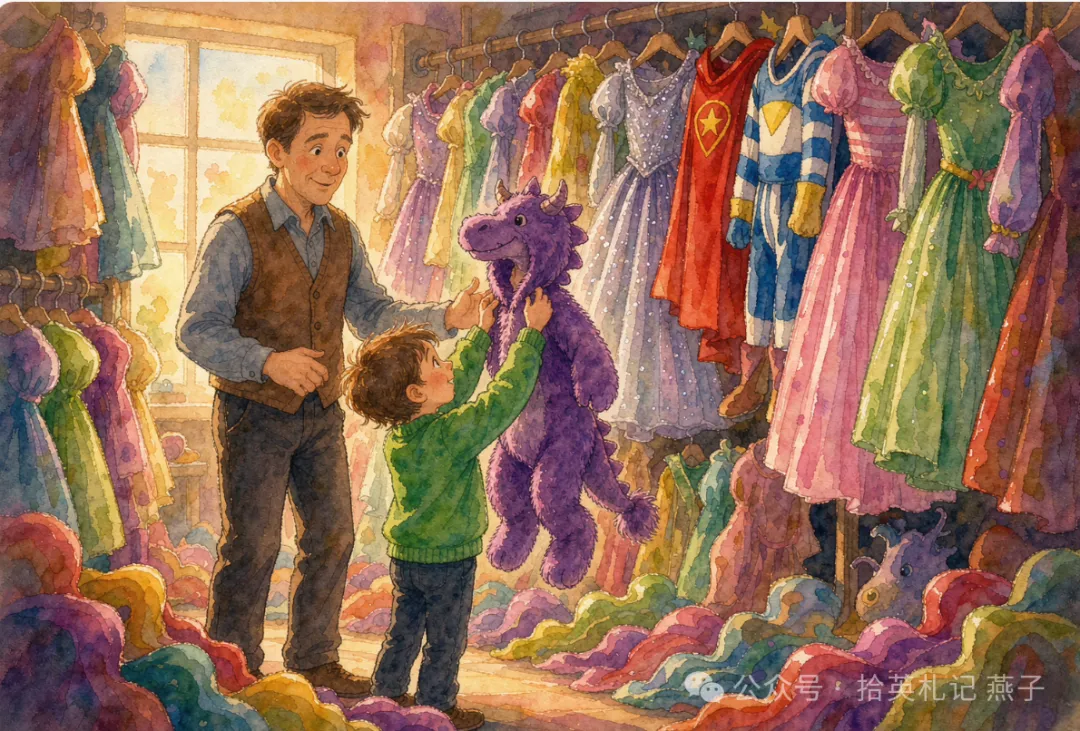
Christophe Waggoner has a shopping problem — not for himself. All year long, he searches secondhand stores for children's Halloween costumes. "Anything shiny, sparkly or furry — I'm always keeping an eye 41 ," he says.
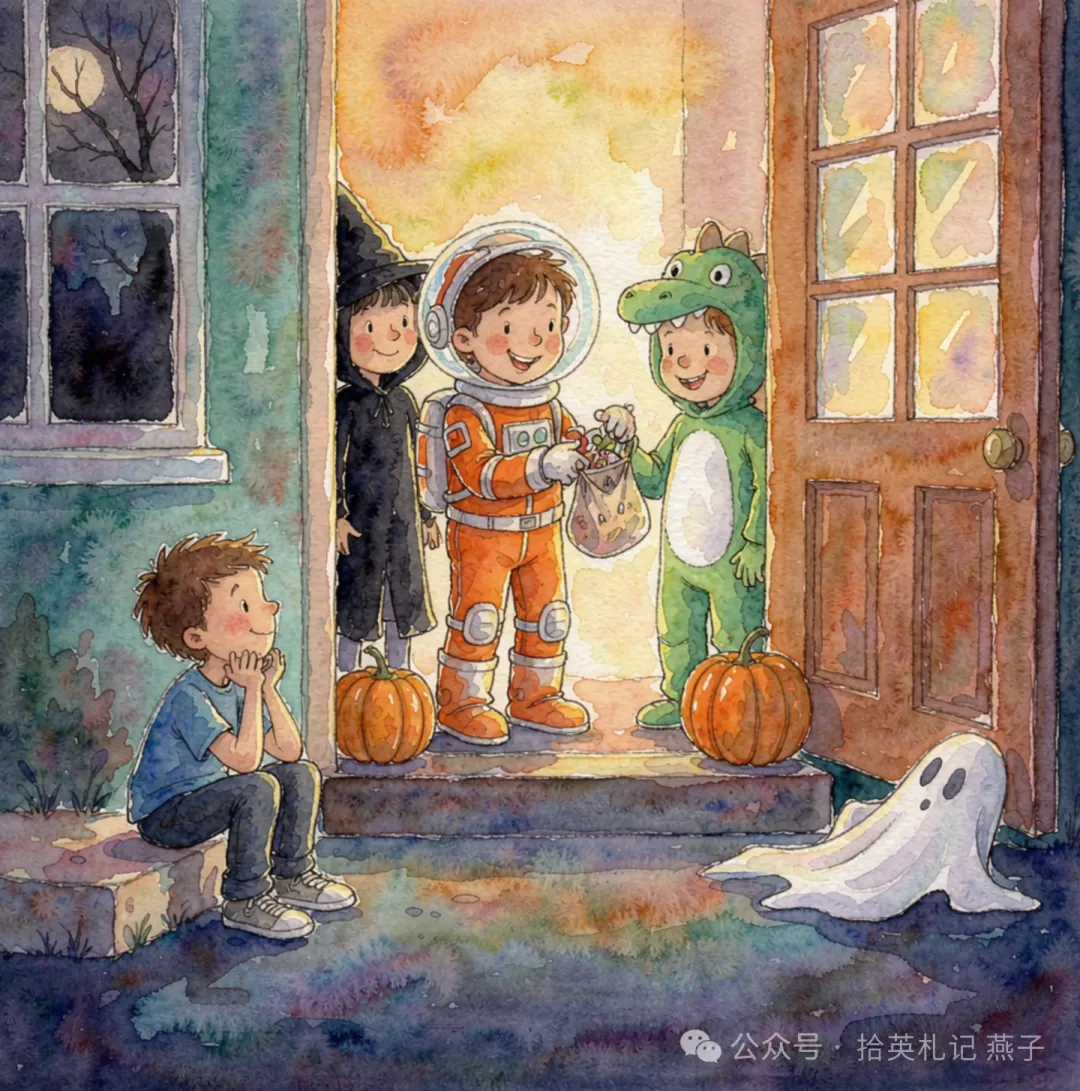
It began nine years ago, when children first came to his door on Halloween. He noticed a clear 42 : some kids wore brand-new costumes while others stood wishing and admiring. "They just don't have 43 to the same things," he says.
By the next September, Waggoner had collected over 100 costumes and 44 his first free giveaway in his garage. Six children from a children's home each handed him a thank-you card, and he decided to make it a(n) 45 event.
Named October's Child, the giveaway has grown into a major community gathering. Last year, hundreds of families came for 2,000 costumes, neatly 46 by category. Old costumes are welcome, but Waggoner 47 on washing and repairing every one himself. He even 48 garments when necessary. "I don't want kids to feel they're just getting 49 ," he says.
Waggoner's 50 comes from his childhood. The oldest of six, he grew up in homemade costumes and learned to 51 at twelve. "It's doing something for people, but it's also helping save the 52 ," he says. "Many people wear a costume once and never touch it again."
"He doesn't 53 who you are or where you come from," a volunteer says. "All he 54 are the smiles — and he wants to create more of 55 ."
41–45:A B C A D 46–50:B A D C B 51–55:A C B D A
41. 考查意图:固定搭配(keep an eye out「留神留意」),全文唯一成语空。分析:首段人物自述寻宝习惯,keep an eye out for… 为固定表达。答案 A. out;up / over / around 均不构成该短语,属于搭配层面的同质干扰。
42. 考查意图:名词 · 跨句概括提炼(语境信息整合)。分析:冒号后 some…while others… 是典型对比结构,空格词须统摄“差距”。答案 B. difference;A. problem 单句完全通顺,但下文是对比差异而非“问题”,须靠语篇排他排除 —— 本题是“单句成立、全篇不通”的代表;C / D 与对比语义无关。
43. 考查意图:名词 · 固定搭配(have access to)。分析:“the same things”复现上文 brand-new costumes,指获得途径。答案 C. access;A. exposure(接触)为常识联想强干扰,单句可通,但 exposure to 后通常接信息 / 环境影响,与“物质条件差距”不符;B / D 语义不通。
44. 考查意图:动词 · 句间与语篇角色推断。分析:在自己车库办、六个孩子向他致谢、随后“决定每年办” —— 多处线索锁定他是主办者。答案 A. hosted;B. joined / C. announced 单句通顺,但与“致谢对象”“决定延续”的叙事角色矛盾;D. missed 与决定每年办直接相悖。
45. 考查意图:形容词 · 远距离语篇线索。分析:线索在首段 All year long 与后文“九年坚持、每年秋季办” —— 一年一度。答案 D. annual;A. official / B. informal 单句皆通(语篇排他);C. optional 与“九年间成长为固定大型社区活动”矛盾。
46. 考查意图:动词过去分词 · 句内搭配+语篇常识。分析:by category(按类别)要求“分类摆放”义。答案 B. arranged;C. priced 是最强干扰 —— 单句可通,但 giveaway 前文已明示 free,“标价”与语篇直接冲突;A. washed 有吸引力(后文他确实洗),但 washed by category 搭配错位;D. folded 与 by category 语义不搭。
47. 考查意图:动词 · 固定搭配(insist on)+转折逻辑。分析:but 转折 + himself —— 别人捐来的旧衣,他偏要亲手洗净补好。答案 A. insists;C. focuses on 单句通顺,但丢失“坚持亲自做、不直接转发”的转折语义;B. depends on 与 himself 逻辑相反;D. takes 不接 on doing 此义。
48. 考查意图:动词 · 语境逻辑。分析:洗净修补之外的进一步动作,when necessary 提示“必要时改造”。答案 D. redesigns;A. resells 与 free giveaway 语篇正面冲突(影子干扰:行为方向反转);B. returns / C. removes 与“修补后送出”的主线相悖。
49.考查意图:名词 · 语篇价值锚点(本题立意所在)。分析:他坚持洗补,是“不想让孩子觉得拿到的是别人不要的旧物” —— 善意须带尊严。答案 C. leftovers;A. presents / B. rewards 表面积极、单句全通,但与全句否定语境(don't feel they're just getting…)和价值线(as close to new as possible 的留痕:洗、补、改)恰好相反;D. samples 语义无据。
50.考查意图:名词 · 全篇概括提炼。分析:九年坚持、亲力亲为、童年根源 —— 统摄全部行为的核心词是“热爱”。答案 B. passion;A. courage(勇气)/ C. curiosity(好奇)/ D. patience(耐心)各只对应局部,无法覆盖“从收集到坚持九年”的行为链 —— 概括提炼类设空的典型排他逻辑。
51. 考查意图:动词 · 词汇复现(homemade)。分析:穿手工服装长大 → 学会的是缝纫。答案 A. sew;D. design 是服装联想强干扰,但 homemade 指向“亲手缝制”的制作方式而非“设计”;B / C 与服装制作无涉。
52. 考查意图:名词 · 跨句推理。分析:破折号后“wear once and never touch it again” —— 一次性消费的浪费 → 环保。答案 C. planet;B. money 为节俭常识强干扰,但浪费的对象是物品而非金钱,语义指向错误;A / D 无法被后文例证支持。
53. 考查意图:动词 · 语篇对比。分析:紧接的“All he sees are the smiles”形成“不看身份、只看笑容”的对照。答案 B. care;A. know / C. ask / D. remember 单句可通,但都构建不出与下文“只看见笑容”的对比关系。
54. 考查意图:动词 · 词汇复现+语篇链条。分析:与第二段 wishing and admiring(孩子们“看”)遥相呼应;且“看见→想创造更多”构成逻辑链。答案 D. sees;A. wants 若成立,则与后半句 wants to create 重复且丧失“看”的呼应;B. collects 他收集的是服装而非笑容(偷换宾语);C. buys 无据。
55. 考查意图:代词 · 指代一致。分析:指代复数 the smiles。答案 A. them;B. it 单数错;C. him / D. us 人称错 —— 表面考代词,实考语篇指代追踪。
· 选材 ✅ 权威外刊(WaPo→RD);约 240 词记叙文(规范:约 230 词);“人与社会”主题语境;价值导向积极(善意·尊严·环保),踩中近三年完形“由内而外”演进线(p107);万圣节为中国考生熟悉的背景,无地域 / 城乡信息差;生词率 ≤3%,无超纲词
· 考点 ✅ 名词 5 + 动词 7 = 12/15(80% ≥ 70%);形容词 1、代词 1、固定短语 1(keep an eye out,每年固定 1 题);句内约 2 空、句间 / 语篇线索 13 空(规范 12–13);概括提炼类 3 空(42 / 49 / 50,对标 2026 I 卷“近半数概括化”趋势);首句不设空;设空均匀、选点全部在主线上(发现差距→行动→坚持→溯源→价值升华)
· 题干 ✅ 完形无题干;各空均可在句内 / 句间 / 语篇三层找到唯一线索,语境三圈法全程可用;情感语境(心酸→行动→坚持→欣慰)参与判题
· 答案 ✅ 逐空唯一性验证通过(见解析);正确项以语篇推断与概括为主,非原词复现;答案键 A / B / C / D 分布 5 / 4 / 3 / 3,无位置规律
· 干扰项 ✅ “同质化干扰+语篇排他”全落地:同词性同语义场、单句全部通顺、致命缺陷在全篇(priced↔free、resells↔free、presents↔尊严线、problem↔对比结构);含影子干扰两式(resells = 行为反转、presents = 方向反转);四选项长度句式均衡,无视觉暗示
源文 614 词(杂志三页),按“删杂枝、扶主干”压缩为约 240 词直线叙事:
· 删:神秘顾客职业背景、狗刷梳毛 / 柔顺剂泡假发等工艺细节、年储物成本 5000 美元、社交媒体宣传等枝节
· 留:发现差距(wishing and admiring)→ 车库首届(致谢卡)→ 成长为社区活动(2,000 套、分类摆放)→ 洗补改(尊严线)→ 童年溯源(homemade / sew)→ 环保与笑容(价值升华)
· 仿 2026 I 卷做法:承载情感主线的关键词(difference / access / annual / leftovers / passion…)全部转化为设空点
· 文化降负:trick-or-treater 改写为 children came to his door;mystery shopper 删除
难度预估:中等(P≈0.50–0.55,普通班适用;42 / 46 / 49 / 50 为主要区分点)。
There's nothing scary about the man who makes sure trick-or-treaters are properly dressed.
—— Reader's Digest · October/November 2026
BY Sydney Page | from The Washington Post | 614 词 · 13 段,供与成稿逐段对照
Christophe Waggoner has what he calls a shopping problem. Not for himself, though. All year long, he scours Texas thrift stores for children's Halloween costumes. “I'm looking for anything shiny, sparkly or furry,” he says. “I'm always keeping an eye out.”
For the past nine years, Waggoner has collected thousands of Halloween costumes. And every fall, he hosts an event in Austin where children can pick out Halloween costumes for free.
The annual giveaway, which Waggoner named October's Child, began in 2017. A year earlier, he had moved from an apartment into a house—his first time having trick-or-treaters at the door. “I was so excited that I was going to have trick-or-treaters, because I've always loved Halloween,” he says.
That night, he noticed a disparity in costumes. Some children arrived in brand-new Star Wars attire, while others were not as well outfitted. “You just know they don't have access to the same things,” Waggoner says. “I was looking at kids that were looking at other kids. They were just wishing and admiring.”
At the time, Waggoner was working as a mystery shopper, visiting stores as a research customer. He started to use his work shopping trips as an opportunity to buy Halloween costumes. “I just made it a point that all my purchases would be Halloween stuff,” he says.
He also began stopping by second-hand stores in search of costumes several times a week, paying out of pocket to build a collection. By the following September, Waggoner had gathered more than 100 costumes and accessories. He hosted the first event in his garage, spreading the word informally and on social media. A group came with six children from a foster home, who each gave Waggoner a thank-you card. He decided then that it would be an annual effort.
Nearly a decade later, October's Child, now a nonprofit that accepts donations, has grown into a major community event. At last year's gathering, held in September, hundreds of families showed up. There were more than 2,000 costumes available, organized by category—from princesses to superheroes. There was even a section with costumes for dogs.
“There were times I had to carry boxes over my head because it got so crowded,” Waggoner says, adding that a school gave him permission to host the event on campus.
People often bring their old costumes to the event, but Waggoner insists on washing and repairing them himself before giving them out. “I don't want people to feel like they just got hand-me-downs,” he says, preferring the costumes to be “as close to new as possible.”
Waggoner uses a dog brush to comb out costumes with fake fur, and he soaks wigs in fabric softener, which he says makes the fibers relax for easier detangling. If a garment needs restitching or even redesigning, he does that too. He spends nearly $5,000 a year on storage for the costumes.
Waggoner's commitment goes back to his childhood. The oldest of six siblings, he grew up in handmade costumes and learned how to sew at age 12. “It's doing something for people, but it's also helping save the planet,” he says. “So many people will get a costume and never wear it again.”
“He doesn't care who you are and where you come from—all he sees are the smiles, and he wants to create more smiles,” says Brenda Guitierrez-Hodgkin, an October's Child volunteer. “This man has such a big heart.”
While restoring thousands of costumes can be tedious, Waggoner said it's worth it, and that nothing makes him happier than listening to children when they're picking out a costume. “I love when you hear a kid go, ‘Whoa!’” Waggoner says. “You know they're truly excited.”
THE WASHINGTON POST (OCT. 9, 2025), COPYRIGHT © 2025 BY THE WASHINGTON POST.
感谢阅读,这份材料可直接用于课堂
如需配套学案,欢迎留言交流
您的支持是我们的动力
THANKS FOR READING


