千年苏绣读非遗,高中课标词这样记更牢
高二的理科生,一翻开英语卷子就头疼——公式能背得滚瓜烂熟,可一到完形填空和阅读理解,那些课标词像是故意跟自己捉迷藏。上周跟文山这边一位家长聊,她家孩子也是高二,理综稳得很,偏偏英语卡在90分上下,最怕那种讲传统文化、非遗工艺的说明文,词都认识,连成句子就发懵。其实不是孩子记性差,是单词脱离了语境,背了也不会用。今天这篇苏绣短文,正好把高中课标词放进真实的非遗场景里,让孩子在看得见、想得通的语境中,把词真正吃透。
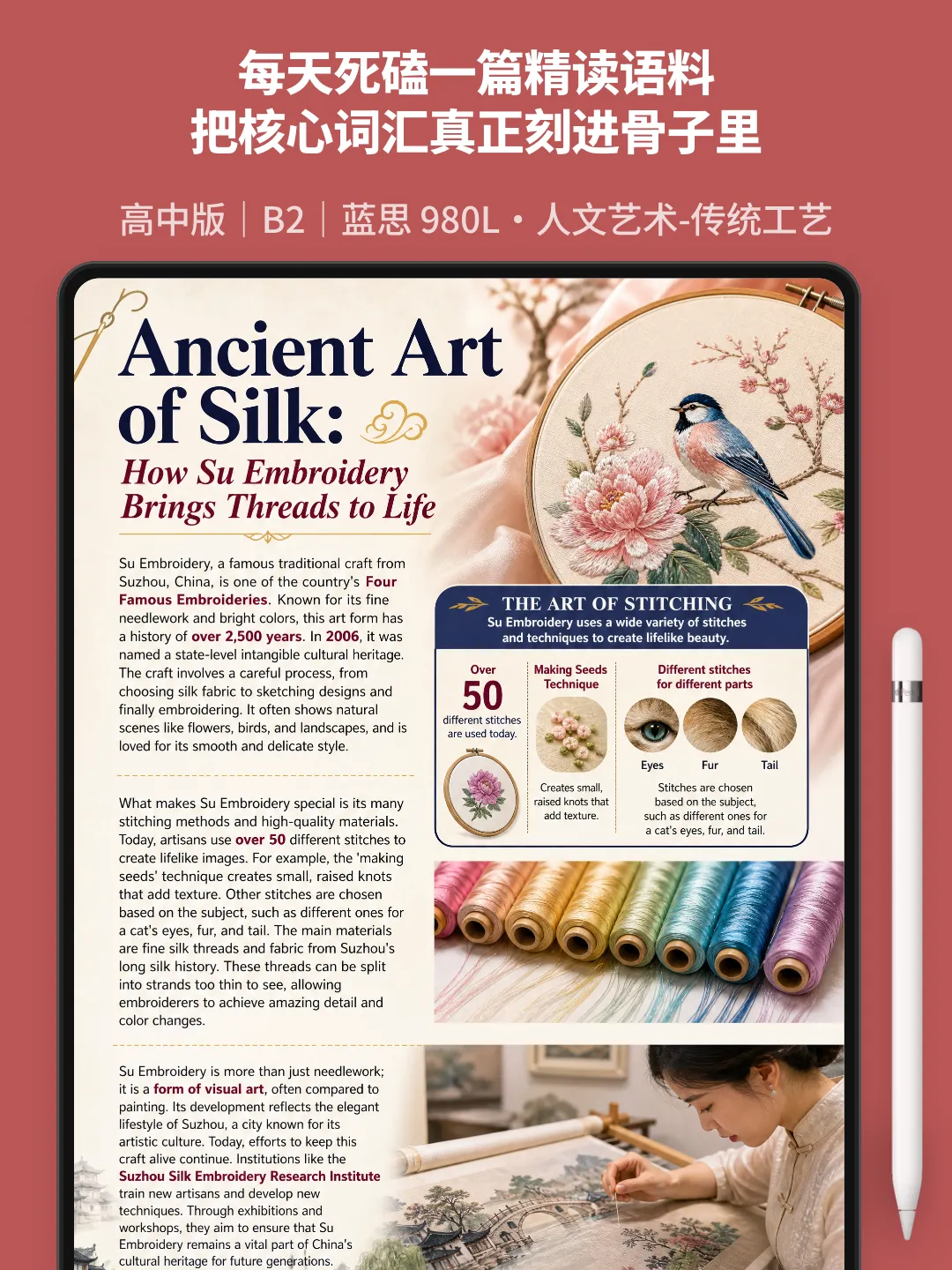
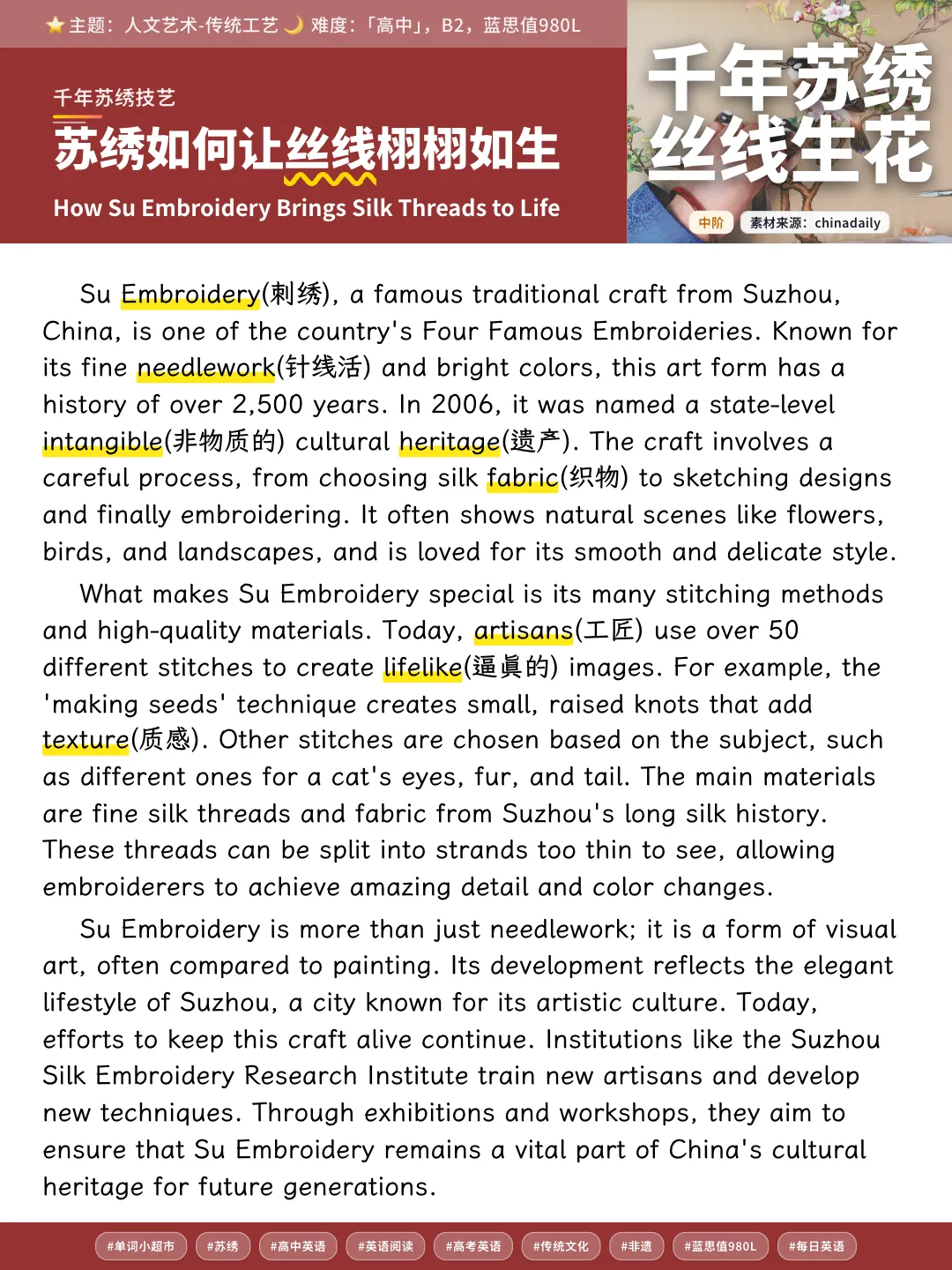
Ancient Art of Silk: How Su Embroidery Brings Threads to Life
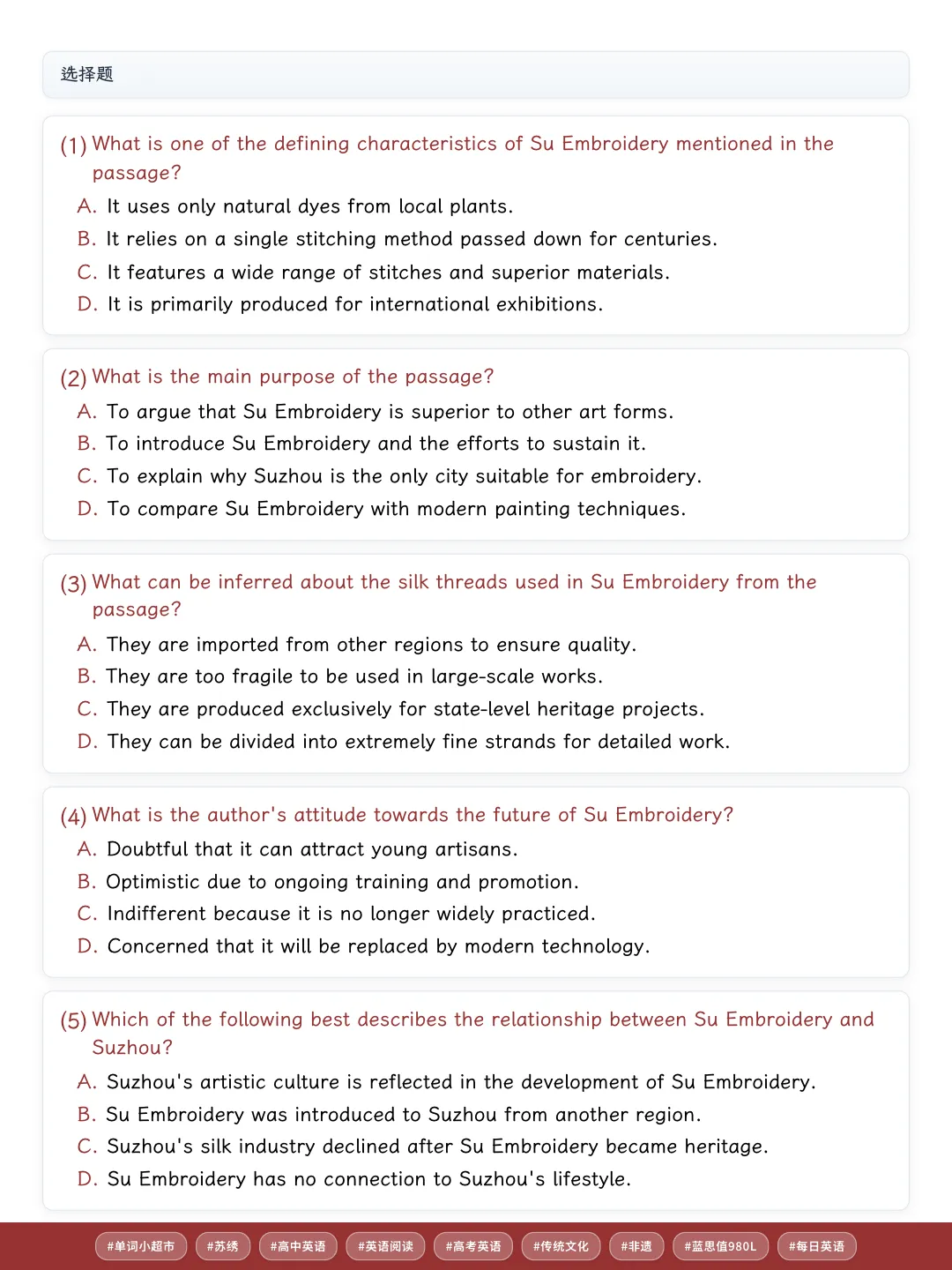
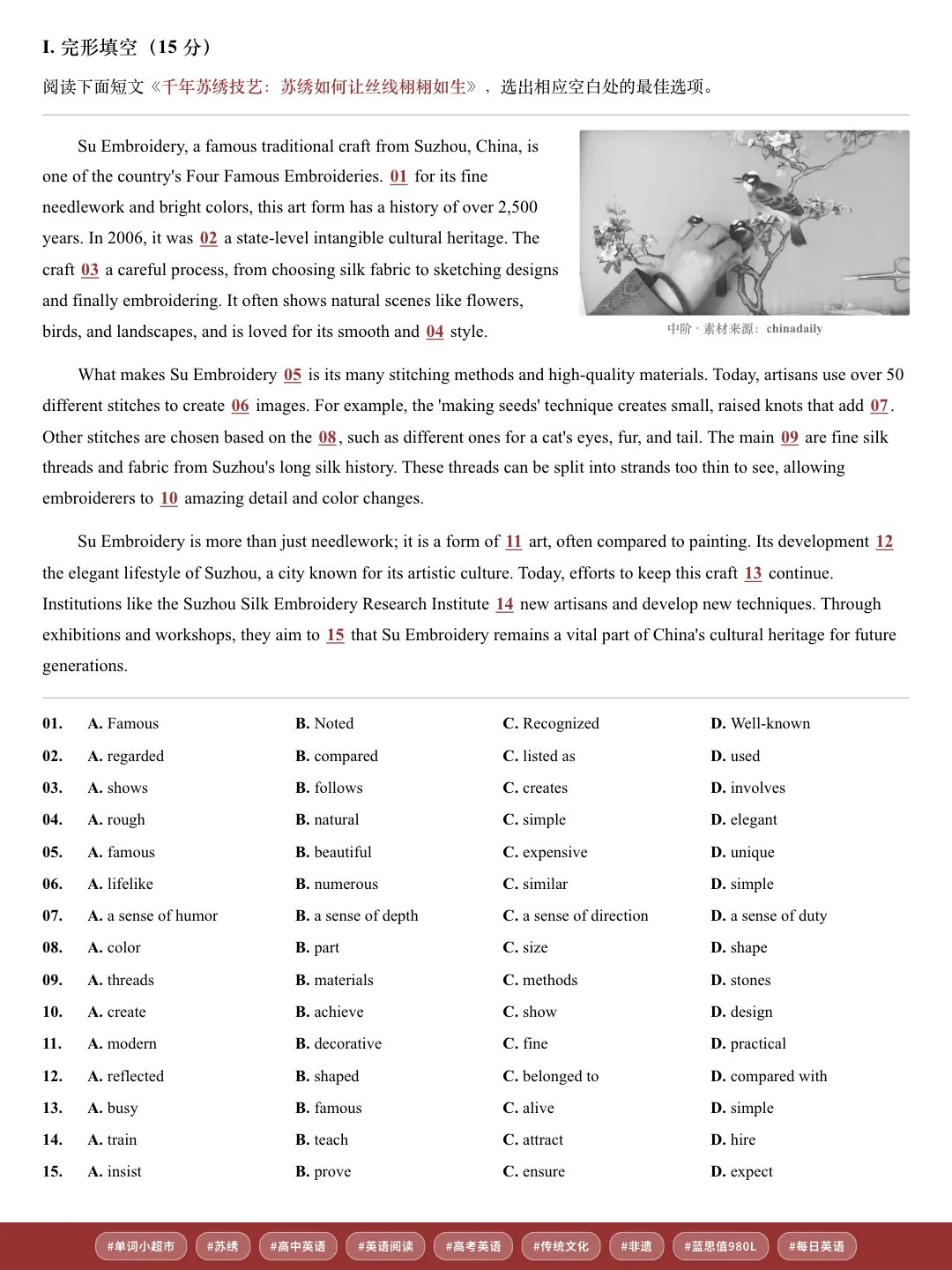
Su Embroidery(刺绣), a famous traditional craft from Suzhou, China, is one of the country's Four Famous Embroideries. Known for its fine needlework(针线活) and bright colors, this art form has a history of over 2,500 years. In 2006, it was named a state-level intangible(非物质的) cultural heritage(遗产). The craft involves a careful process, from choosing silk fabric(织物) to sketching designs and finally embroidering. It often shows natural scenes like flowers, birds, and landscapes, and is loved for its smooth and delicate style.
What makes Su Embroidery special is its many stitching methods and high-quality materials. Today, artisans(工匠) use over 50 different stitches to create lifelike(逼真的) images. For example, the 'making seeds' technique creates small, raised knots that add texture(质感). Other stitches are chosen based on the subject, such as different ones for a cat's eyes, fur, and tail. The main materials are fine silk threads and fabric from Suzhou's long silk history. These threads can be split into strands too thin to see, allowing embroiderers to achieve amazing detail and color changes.
Su Embroidery is more than just needlework; it is a form of visual art, often compared to painting. Its development reflects the elegant lifestyle of Suzhou, a city known for its artistic culture. Today, efforts to keep this craft alive continue. Institutions like the Suzhou Silk Embroidery Research Institute train new artisans and develop new techniques. Through exhibitions and workshops, they aim to ensure that Su Embroidery remains a vital part of China's cultural heritage for future generations.
古老丝线艺术:苏绣如何让丝线栩栩如生
苏绣是中国苏州的一种著名传统工艺,也是中国四大名绣之一。它以精细的针法和鲜艳的色彩闻名,至今已有2500多年的历史。2006年,苏绣被列为国家级非物质文化遗产。这门工艺需要经过从选丝、设计到最终刺绣的细致过程。它常表现花鸟、山水等自然景物,以平滑细腻的风格深受喜爱。
苏绣的独特之处在于其丰富的针法和优质的材料。如今,工匠们使用50多种不同的针法来创作生动的形象。例如,“打籽”绣法能做出细小凸起的结,增加质感。其他针法则根据主题选择,比如猫的眼睛、毛发和尾巴会使用不同的针法。主要材料是来自苏州悠久丝绸历史的优质丝线和布料。这些丝线可以劈成肉眼几乎看不见的细丝,让绣娘实现惊人的细节和色彩渐变。
苏绣不仅是针线活,更是一种视觉艺术,常被比作绘画。它的发展反映了苏州优雅的生活方式,这座城市以艺术文化闻名。如今,传承这门工艺的努力仍在继续。苏州丝绸刺绣研究所等机构正在培养新一代绣娘并开发新技法。通过展览和工作坊,他们希望确保苏绣作为中国文化遗产的重要组成部分,继续传承给后代。
高中课标词
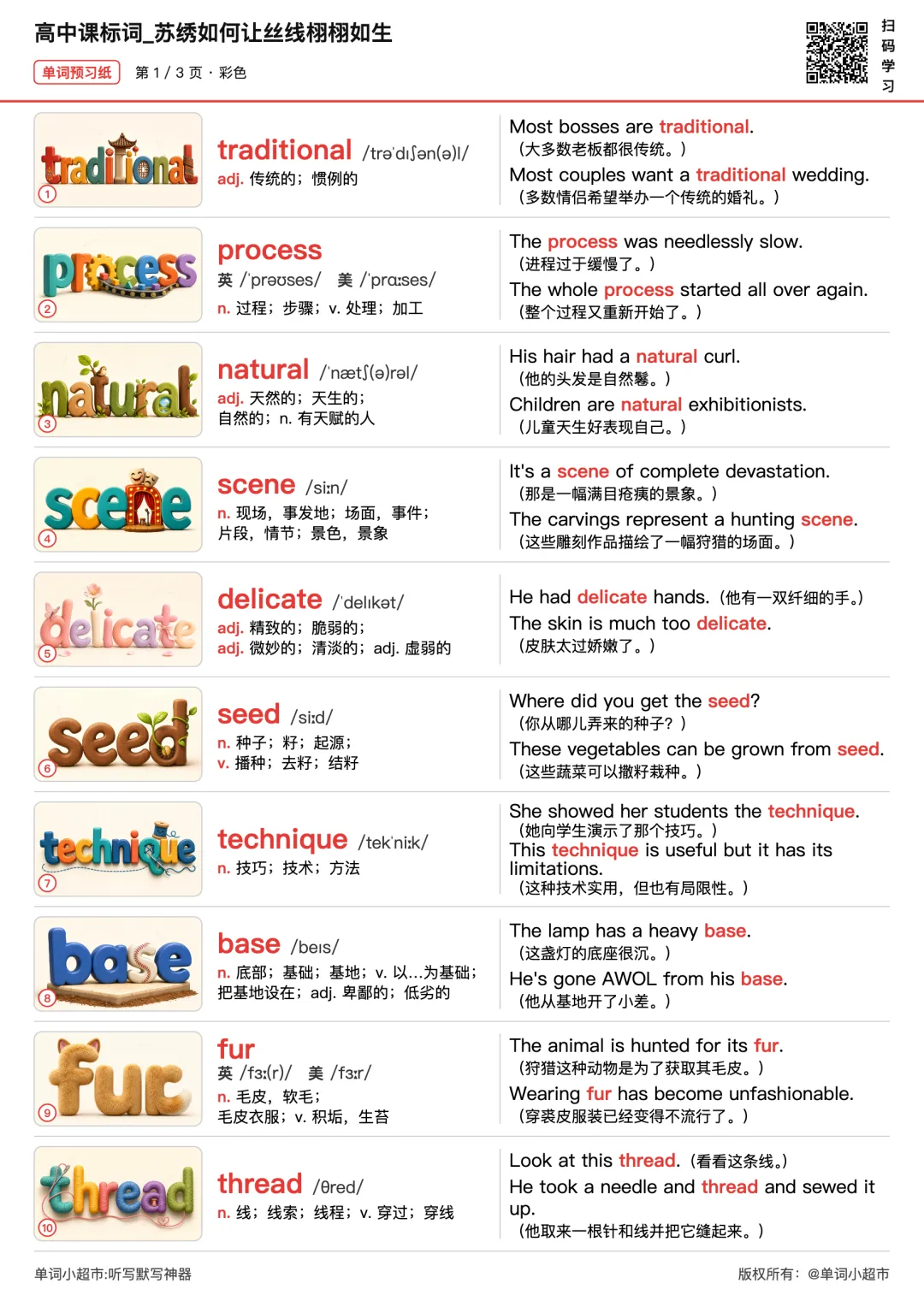
/trəˈdɪʃən(ə)l/ | |
/ˈprəʊses/ | |
/ˈnætʃ(ə)rəl/ | |
/siːn/ | |
/ˈdelɪkət/ | |
/siːd/ | |
/tekˈniːk/ | |
/beɪs/ | |
/fɜː(r)/ | |
/θred/ | |
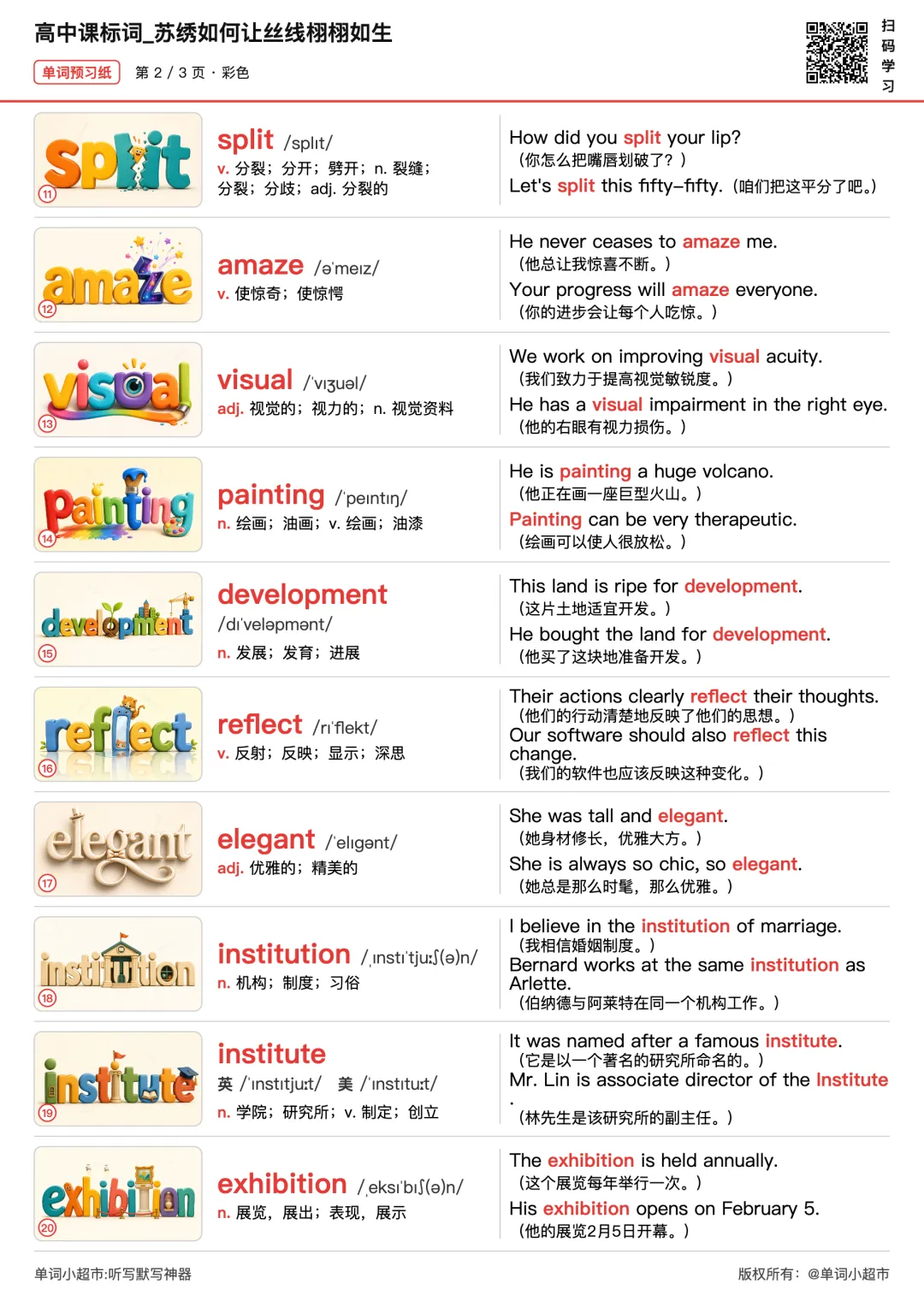
/splɪt/ | |
/əˈmeɪz/ | |
/ˈvɪʒuəl/ | |
/ˈpeɪntɪŋ/ | |
/dɪˈveləpmənt/ | |
/rɪˈflekt/ | |
/ˈelɪɡənt/ | |
/ˌɪnstɪˈtjuːʃ(ə)n/ | |
/ˈɪnstɪtjuːt/ | |
/ˌeksɪˈbɪʃ(ə)n/ | |
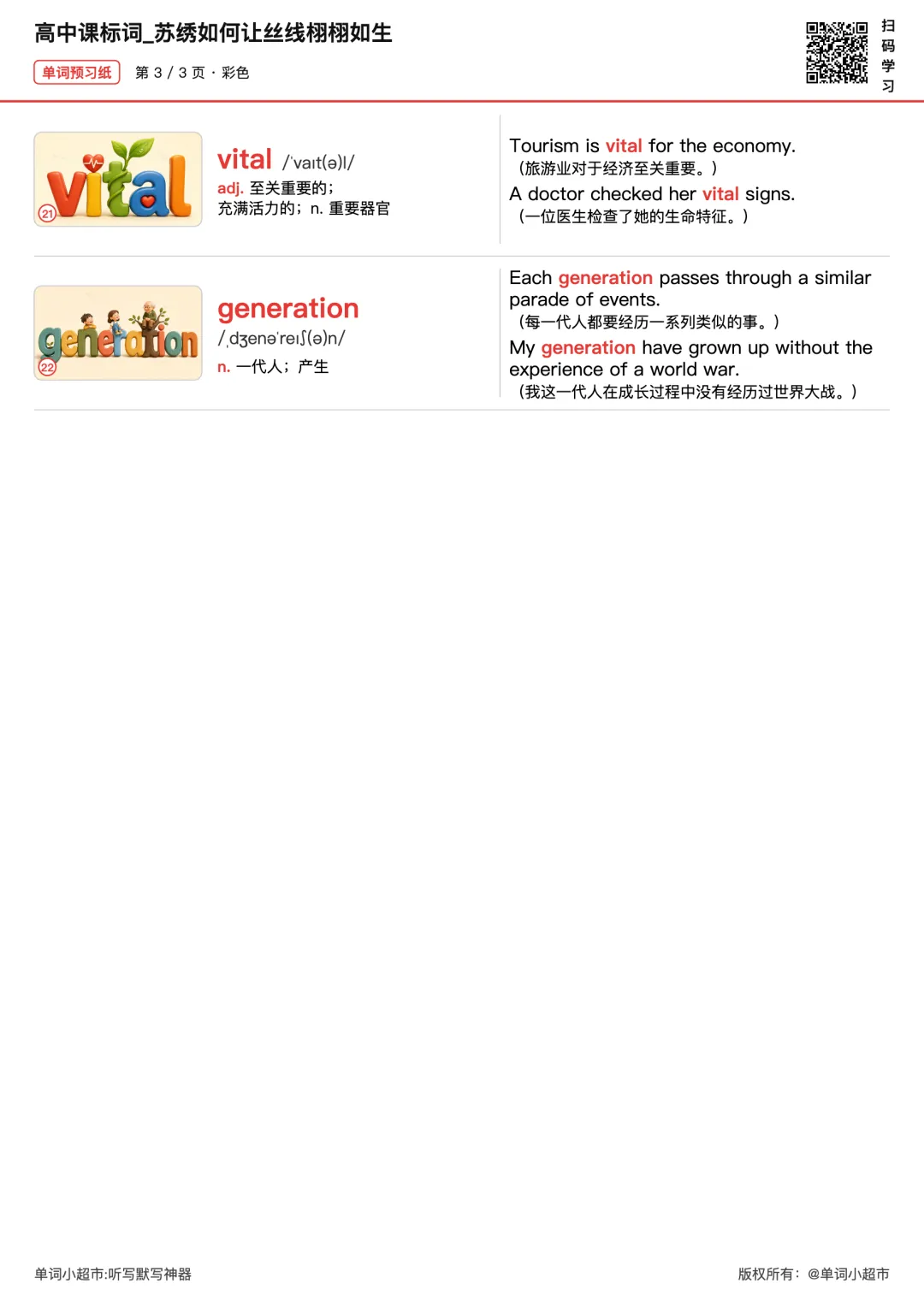
/ˈvaɪt(ə)l/ | |
/ˌdʒenəˈreɪʃ(ə)n/ |
教研精读笔记
三个课标核心词,在苏绣里活起来
process 在文中是“The craft involves a careful process, from choosing silk fabric to sketching designs and finally embroidering.”,这里的 process 是名词“过程、工序”,高考完形填空常考搭配是 in the process of(在……过程中),写作里也常用 a complex process of doing sth 来替换简单的 way。注意它还有动词“加工、处理”的用法,阅读中遇到 food processing 别卡壳。
delicate 在文中是“loved for its smooth and delicate style”,意思是“精致的、细腻的”。这个词在阅读理解里经常考辨析:delicate 强调精细、易损,而 elegant 侧重优雅。写作时想夸传统工艺,用 delicate 比用 beautiful 更精准,比如 a delicate piece of embroidery。
reflect 在文中是“Its development reflects the elegant lifestyle of Suzhou”,意思是“反映、体现”。高考写作里,reflect 是替换 show 的高级词,比如 These figures reflect a growing trend。完形填空里也常考 reflect on(反思),注意区分。
在流动语境里学词,才不白背
死记单词表,记住的是字母顺序;放进苏绣的工序、针法和传承故事里,记住的是画面和逻辑。process 连着选丝、设计、刺绣的动作链,delicate 对着针脚和丝线的质感,reflect 接着苏州城的气质——词有了上下文,阅读时才能一眼认出,写作时才能顺手用上。
今晚就能做的事
读完这篇,打开单词小超市小程序,跟着音频把短文读一遍,再对照配套的 PDF 做两道选择题和一道完形填空。先别急着查生词,靠语境猜一遍,再点读核对。坚持一周,你会发现课标词不再是孤零零的字母,而是有场景、有温度的表达。
💡 【许乃夫老师 · 本期学情诊断】
(许乃夫/UncleJack:前新东方20周年功勋教师,前剑桥KET、PET口语考官)
本期学生案例:云南文山高二理科男生,理综强、英语弱,最怕非遗说明文,课标词认识但读不懂长句。
难在哪儿:习惯用理科思维逐字翻译,缺少对语篇逻辑和语境线索的敏感,单词背了不会用。
接下来一周能做的三个建议:
1. 每天挑一篇短文,先不查词,用笔画出反复出现的课标词,猜完再核对,训练语境猜词能力。
2. 把阅读中遇到的熟词生义整理成小卡片,正面写原句,背面写释义和搭配,睡前翻一遍。
3. 如果词汇量少、想短期突破,建议每天一组我们教研组编排的中考/高考 688 高频词预习单,按话题分类,配语境例句,比按字母表背效率高得多。
别再刷三千词表了:688个高考高频词,一页十词,把义项钉进句子