

阅读单选CD篇
一、阅读理解
(2023北京海淀初三上期中)Summer 2023 has beaten heat records worldwide. On July 6, the average worldwide temperature reached the highest on record.
Scientists are still trying to work out all the reasons for this summer’s historic heat. But one thing is certain: it has a lot to do with human-caused climate(气候) change.
Much of this summer’s heat is probably related to Earth’s oceans, experts say. Oceans worldwide have been warming for decades (十年), largely because of the greenhouse gases produced by humans. The warm oceans can’t take in as much heat from the atmosphere (大气层). This leaves more heat in the air, leading to warmer summer weather.
El Nino may also have helped turn up the heat this summer. El Nino happens naturally every several years. It warms the waters of the tropical (热带的) Pacific. But Earth’s new period of El Nino only began in June and won’t be at its strongest for months. So it’s too early to say how much El Nino has added to the hot weather this summer, researchers say.
Another possible reason for the high temperatures is the heat waves. Heat waves happen when powerful winds flow more slowly through Earth’s atmosphere. This can cause hot pockets of air to stay over the same places for days or weeks at a time.
One recent study showed that human-caused climate change is making heat waves more common and more serious. Researchers made computer models of the world with and without climate change. Then, they compared how often heat waves would happen in each case. The models showed that heat waves are now expected about once every ten years in Europe and North America, but they would be almost impossible without climate change.
It’s too early to work out the cost of all that unusual weather. But hundreds of deaths have been reported around the world. And the great need for air conditioning has heightened people’s worry about power shortages. Those problems will only become more serious as climate change creates more hot summers like this one.
1.Oceans worldwide have been warming for decades largely because of ________.
A.the new period of El Nino
B.human-produced greenhouse gases
C.the strong waves of the tropical Pacific
D.powerful winds through Earth’s atmosphere
2.What can we learn from the passage?
A.Scientists have found a way to deal with climate change.
B.The hot weather in July was mainly caused by El Nino.
C.Climate change may lead to stronger heat waves.
D.People are well-prepared for hotter summers.
3.What is the passage mainly about?
A.Worries about the greenhouse effect.
B.Reasons behind the heat this summer.
C.Influences of the hot weather this summer.
D.Ways for scientists to study climate change.
(2023北京海淀初三上期中)
When someone has a sharply different viewpoint from our own, we naturally choose two common ways, either avoiding a conversation with that person or trying to convince(说服) them that they are wrong. Research shows there is another way: using receptive (接纳性的) language, showing that we are truly interested in a new point of view.
Many of us try to avoid disputed (有争议的) discussions. We prefer to talk with someone with similar opinions. This happens because we usually think that talking to someone who has disagreements will be more unpleasant than it actually is. When we do have to talk with people holding different views, we typically try to convince them to give up their belief because we think we are right and try to “win” the argument. And the other side is likely to think the same way, which leads to even more difficult problems to work through.
A more effective method is being conversationally receptive. Research shows that when we appear receptive to others’ different views, our arguments sound more convincing. Receptive language can also make those with whom we disagree more receptive in return. It makes us more likable, and others more interested in partnering with us.
Researchers suggested three tips that can help us improve conversational receptiveness in even the most heated disagreements.
Recognize (承认) the other person’s point of view. Say “I understand that ...” or “I believe what you’re saying is ...” to show that you take an active part in the conversation and find value and even trust in their points.
Hedge your statements. When we talk, we usually hold the opinion that we should be strong and confident and express our views in a direct, forceful way. But if we show that we are not so sure about our belief, our views will be likely to be better received.
Express your arguments in an acceptable way. You might say, “Let’s consider the possible benefits of having fewer people working on the project” rather than “We should not add more people to the project.” The second sentence sounds unpleasant, showing that the speaker is not open to the possibility of further discussion.
By following these tips in our communication, we’ll be more likely to have an effective conversation and bridge the differences.
4.What is Paragraph 2 mainly about?
A.Why people use two common ways when facing disagreements.
B.How people communicate to deal with difficult problems.
C.How people convince others to give up their belief.
D.Why people dislike those with different opinions.
5.According to the passage, being conversationally receptive can lead to _________.
A.productive communicationB.creative statements
C.increased confidenceD.divided opinions
6.The words “hedge your statements” in Paragraph 6 probably mean “_________”.
A.explain your reasons clearly
B.raise your questions politely
C.voice your ideas less forcefully
D.express your excuses more directly
7.What is the writer’s main purpose in writing this passage?
A.To stress the importance of productive communication.
B.To introduce a better way to deal with disagreements.
C.To explain the reasons for using receptive language.
D.To provide three effective tips to win an argument.
(2023北京昌平初三上期中)Success is a state of happiness or satisfaction with one’s achievements and qualities. It is freedom of time, freedom of money, and freedom of passion. This level of success makes you more productive for society and creates the ability to give back to the community. What’s interesting is that most successful people have very similar qualities. The more qualities you have in common, the higher your chances for being wildly successful. Those who have become successful have these qualities:
●Clear Aim
Successful people know what they want clearly and they follow their own dream. It is this sense of direction that gives them the staying power to stick to their goals and achieve their dreams.
●Focused
People who experience success know how to concentrate. They realize that they cannot do everything and they focus on the activities that will give them the highest return on the goals they want to achieve. They know that the fastest way to finish their to-do’s is doing them one at a time.
●Masters of Time
Successful people are successful because they get a lot done. The only way to do that is by making the most out of the 24 hours we all get. Extraordinary people value their time and see the direct connection between how they spend their time and their energy.
●Confident
This is what helps successful people take action. Like the chicken and the egg situation, in which you do not know which of two connected events is the cause of the other. Confidence helps you achieve your goals which in turn makes you more confident. A great way to be confident is remembering your past successes and overcoming your fear of failure. Signs of confidence include understanding that the first time you do something is always the hardest and then it will get easier.
●Self-Control
Successful people rarely lose control. They don’t go into panics or blind anger. They have learned to control their emotions and put themselves in a resourceful state. They understand that they can’t change other people or what’s happening to them but they can change how they react to it and how they feel about it. Another sign of self-control is doing what you’re supposed to do despite how you feel about it.
So where do you stand? I hope you have either made sure many of your own qualities or have created action plans to develop the qualities you are lacking. Focus on developing one or two qualities at a time. Once your beliefs and actions are lined with those of a successful person, you’ll be amazed by how successful you become.
8.According to the paragraph 1, the writer makes the term “success” clear to the reader by _________.
A.sorting itemsB.giving suggestions
C.giving explanationsD.making a comparison
9.The writer takes the chicken and the egg as an example in Paragraph 5 to _________.
A.stress the meaning and the importance of confidence
B.explain the relationship between confidence and success
C.prove the importance of confidence for successful people
D.analyze the relation between achieving goals and success
10.The writer probably agrees that _________.
A.successful people usually make full use of their time
B.successful people can do many things at the same time
C.Controlling other people’s emotions is an important skill
D.The more dreams you have, the bright future you’ll have
11.Which of the following would be the best title for the passage?
A.Master Your Success
B.Qualities Matter a Lot
C.Similar Qualities—Different Successes
D.Same Beliefs—More Likely to Succeed
(2023北京昌平初三上期中)New Technology: Carbon Capture(捕获)
To reduce CO2 in the air, the European Union has set up strict regulations (法规) over the past few years, and most European car companies have begun to move to electric vehicle(交通工具) production under the new regulations. However, their efforts are far from enough.
Planting trees can cut down CO2 in the air, but just doing this isn’t enough to deal with climate change. Now one way discussed widely is carbon capture. It refers to the technology that can protect the earth against climate change by cutting down CO2 in the air.
Carbon capture technology is used to collect CO2that is given off by factories. For example, it can be fitted to coal-burning power stations and factories to capture the CO2 before it is given off by factories. The captured CO2 can then be liquefied(液化) and stored underground. Besides, the technology can also be used to collect the CO2 that has already gone into the air.
Then how can we deal with the CO2 we capture? Proper utilizationis truly important. It can not only help create markets for this new technology, but also make it cheaper for companies to use. Nowadays, CO2 is used in greenhouses to grow vegetables. CO2 can even be used to make useful products, such as plastics, building materials, and plants.
Carbon capture is considered to be quite helpful. However, there are many problems on the way. There’s 50 billion tons of carbon going out into the air from cars and factories every year. But even a great number of carbon capture machines now can capture only a few dozens of tons of it. The thickness of CO2, in the open air is about 300 times less than that in the power stations or factories, making it much less efficient to capture CO2. Because of this, carbon capture machines are very expensive today. So, it’s hard to make a real difference in fighting climate change now. But it will be improved quickly and will become cheaper and more efficient. It is like the mobile phones which were expensive and difficult to use 20 years ago. But now mobile phones have been greatly improved.
12.What can carbon capture technology be used for?
A.Helping protect trees widely.B.Cutting down CO2 in the air.
C.Studying the condition of the air.D.Checking signs of climate change.
13.What does the underlined word “utilization” refer to?
A.Storing CO2B.Collecting CO2
C.Using CO2D.Producing CO2
14.What can we know from the passage?
A.The market for CO2products is growing fast.
B.Carbon capture technology hasn’t been widely used.
C.The cost of fixing the carbon capture machines is high.
D.There is more CO2 in the open air than that in factories.
(2023北京陈经纶中学初三上期中)When you’re having a hard time with something, it’s natural to turn to others for help. Getting help sounds simple, but it’s not always easy to do. Sometimes certain beliefs or ways of thinking can make it hard to ask for help. Here are some kinds of attitudes that can stand in the way and ideas on how to get past them.
Some people believe that needing help is a sign of weakness. Actually, it’s a sign of strength, not weakness. You know what you need and you shouldn’t be afraid to reach out for it. Once a boy told me he wanted to ask his coach how to improve his basketball skills, but he was afraid that his coach might think he shouldn’t be on the team. In fact, when he asked his coach for help, his coach thought he was practicing hard.
Some other people think they don’t deserve(应该得到) help or support. Everyone needs help now and then. Accepting help can strengthen friendships and relationships. Everyone feels good when they can support a friend. For example, if you want to find out how Katy solves problems with her parents, you should ask Katy if she has time to talk and tell her how important her viewpoint is, instead of worrying that Katy is too busy to help you. When you ask for help, choose someone who listens and cares, not someone who judges or criticizes you. If you get refused, it's not because of you, but the other person. So tell yourself: If Katy says no, she might not be ready to talk about her own experiences.
Another wrong attitude is waiting for someone else to make the first move. It’s not always easy for other people to see when you need help. Maybe you’re putting on a cheerful face to hide the problem. Don’t wait for someone to read your mind. You have to ask.
Because it can be hard to reach out for help, don't hesitate(犹豫) to offer support to another person if you think he or she needs it. Giving and receiving help are great life skills to learn. They help us improve our abilities to understand other people.
15.In Paragraph 2, the boy was afraid to ask his coach for help because ________.
A.his coach criticized him before
B.his coach was too busy to help him
C.he wasn’t practicing as hard as other players
D.he thought it would show he was a weak player
16.What should you do if you need help?
A.Be supportive to other people first.
B.Be active to find a caring person to talk to.
C.Try to make your friends notice what you need.
D.Put on a happy face to avoid worrying other people.
17.Which of the following would be the best title for the passage?
A.Asking for Help: Everyone’s Natural Ability
B.Asking for Help: Getting Past Improper Attitudes
C.Giving and Receiving Help: Great Skills to Learn
D.Giving and Receiving Help: Strengthening Relationships
(2023北京陈经纶中学初三上期中)How GPS Weakens Memory — and What We Can Do about It
Using mobile phones to navigate (导航) has become second nature. Whether you’re heading to a new park or meeting friends at a restaurant, you just enter the address on your phone and go. Without GPS, exploring (探索) and wayfinding in new places required preparation. We had to think, check paper maps, and plan and memorize ways there. But today there is no need to think. Simply follow the turn-by-turn directions on your phone, and you’ll end up where you need to be. However, your overall sense of the place suffers. Spatial (空间的) navigation used to be a process performed by the human brain and perceptual system, but now people have surrendered it to technology.
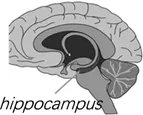
There are areas of the brain that deal with these difficult pathfinding tasks. In particular, the hippocampus is related to spatial memory, spatial navigation and mental (在脑中的) mapping. Studies show that we can exercise the hippocampus memory through exploration and spatial navigation. For example, expert navigators like London taxi drivers have larger hippocampi compared to other people.
However, when we follow a set of turn-by-turn directions, GPS navigation apps treat us as passive passengers rather than active explorers. In turn, this stops us from being able to create proper mental maps, and has an effect on the hippocampus, which is very important for brain health.
While improvements in technology clearly have many benefits, we must remain mindful that technology can influence the brain. Our question is: Can we find a way to still use GPS but reduce the harmful effects on memory?
The challenge is to create other forms of GPS navigation that will remain easy enough for the general public, and at the same time, enable people to improve their spatial sense. Our research finds that properly designed audio beacons (音频信标) offer a much more active form of GPS navigation. For example, with an audio beacon at a hospital, when we are two miles away from the hospital, we can hear a sound through our phone. In recent experiments, we discover that this type of sensory navigation through audio beacons does better than turn-by-turn navigation in the creation of mental maps. We believe these results, at least in part, come from people taking a more active role in their navigation.
GPS navigation using audio beacons offers a good example that helps humans connect more deeply with reality; perhaps instead of turning into mindless robots, we will be able to become more deeply involved with humanity, our local environment, and life itself.
18.GPS weakens people’s memory because it ______.
A.records the places people have been to
B.offers people more than one way to a place
C.takes the place of thinking process in wayfinding
D.fails to teach people how to prepare for exploring
19.The words “have surrendered it to” in Paragraph 1 probably means ______.
A.have compared it toB.have given it up to
C.have learned it fromD.have taken it away from
20.London taxi drivers are mentioned in Paragraph 2 to show that ______.
A.GPS is not widely used in London
B.the hippocampus memory can be exercised
C.hard-working drivers have larger hippocampi
D.active explorers are better than passive passengers
21.What can we learn from the passage?
A.Turn-by-turn GPS navigation helps create mental maps.
B.Audio beacons technology will be replaced in the future.
C.Users’ active role should be considered in navigation technology.
D.GPS navigation apps have come a long way in helping with our memory.
(2023北京丰台初三上期中)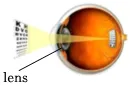
Eyes on Vision
Two years ago, Azara Mason was having trouble seeing the board in class. An eye doctor told her she had myopia(近视), or nearsightedness! People who are nearsighted have trouble seeing things that are far away. Azara now wears glasses when she needs them.
The eye works like a camera. Light passes through a lens and is turned into images. The brain then helps us understand what they are.
When people have healthy vision, their eyes focus(聚焦) light on the retina(视网膜). When people are nearsighted, their eyes focus light in front of the retina. That makes objects that are far away look blurry.
Dr Maria Liu is head of the Myopia Control Clinic at the University of California at Berkeley. She says a growing number of people have myopia, and kids are developing it at a younger age.
Many studies show a rise in myopia. The National Eye Institute(NEI) found that nearsightedness among Americans grew 66% from 1971 to 2004. Experts say that by 2020, myopia could affect(影响) one third of the world’s population.
Scientists link(联系) the rise in nearsightedness to an increase in near work, including computer and cell-phone use. Studies show that less time spent outdoors may also be adding to the increase.
What can you do to take care of your eyes? Liu advises everyone to stay away from electronic devices(设备) and spend more time outdoors to keep eyes healthy. Screen-Free Week, from May 4 to 10, is a good time to do just that. Liu also tells patients to take a 15-minute break to look at things in the distance for every 45 minutes of near work.
If you are worried about your vision, you should visit an eye-care professional. Liu often advises patients to use special contact lenses and eye drops. She says they can correct nearsightedness and slow it from progressing. Glasses and regular contact lenses improve vision but don’t have that extra benefit(益处), she says.
If you suffer(遭受) from myopia, your parents and doctor can best decide the treatment that is right for you. Azara’s mom is looking into options other than glasses. But for now, Azara continues to happily wear her glasses and clearly see the board.
22.The word “blurry” in Paragraph 3 probably means “________”.
A.largeB.brightC.disorderedD.unclear
23.What does Paragraph 6 mainly talk about?
A.The treatments for myopia.
B.The link between myopia and near work.
C.The causes of increase in myopia.
D.The electronics for studying myopia.
24.What can we learn from the passage?
A.Using eyedrops can’t slow nearsightedness from progressing.
B.The number of people who suffer from myopia is increasing.
C.People’s eyes focus light behind the retina if they are nearsighted.
D.Reading on electronic devices outdoors can help to keep eyes healthy.
(2023北京丰台初三上期中)
Laughter Therapy(疗法)
Laughter not only provides workout for your muscles(肌肉), it also produces endorphins(内啡肽)which help to reduce stress(压力). What’s more, your body can’t tell the difference between real and fake(假的)laughter.
The happiness you feel when you laugh is a great way of fighting the physical effects(影响)of stress. When we laugh, our body relaxes and endorphins are released(释放)into the blood stream.
A Laughter Therapist’s aim is to help you laugh more easily. It starts with a warm-up followed by a lot of activities designed to get you laughing. Laughter doesn’t come easily to everyone, but luckily, it’s a skill you can learn. So faking it has the same beneficial effect.
Dr Lee Berk of Loma University Medical Centre, has been doing laughter therapy research since the late 1970s. In 1989 Berk studied the effects of laughter in ten healthy males. Five experimental subjects watched an hour-long comedy while five control subjects didn’t. Blood samples taken from the ten subjects showed that cortisol(皮质醇), the hormone(荷尔蒙)our body releases when under stress, in the experimental subjects had reduced more rapidly than in the control group. Berk’s research has also shown the number of cells that fight viruses(病毒)increases through laughter. These same cells are blocked(阻碍)if the body suffers long-term stress.
The therapeutic effects of laughter have been studied since the 1970s, but Dr Madan Kataria is the one who set up the first laughter club in 1995. There are now more than 5000 laughter clubs worldwide.
Laughter therapy is suitable for everyone. Elderly groups, young people in care and mental(心理的)health patients are all thought to benefit especially from laughter therapy. If you’re undecided, remember this: children laugh about 400 times a day while adults manage only 15.
A laughter therapy may make you feel excited and tired at the same time. Muscle tone and cardiovascular(心血管的)functions may be improved and oxygen levels in the blood may be increased.
In the long term, laughter therapy teaches us that we don’t just have to laugh when we are happy. Laughing can actually improve your mood. And it’s contagious(传染的), so you can expect to see those around you benefiting from a good laugh too.
25.Laughter can help to reduce stress because ________.
A.it comes easily to everyone
B.a lot of activities can make people laugh
C.real and fake laughter can both produce endorphins
D.real and fake laughter can both provide workout for muscles
26.What can we learn from the study mentioned in Paragraph 4?
A.Laughter blocks the cells that fight viruses.
B.Laughter can help people to reduce cortisol.
C.Ten experimental subjects watched the comedy.
D.Dr Madan Kataria studied the effects of laughter in 1989.
27.What can we know about “laughter therapy” from the passage?
A.Laughter therapy is good for our physical and mental health.
B.A laughter therapy can make us feel excited for a long time.
C.Elderly people benefit the most from laughter therapy.
D.Laughter therapy can help us make more friends.
28.What is the writer’s main purpose in writing the passage?
A.To explain why people like laughter therapy.
B.To introduce the benefits of laughter therapy.
C.To advise people to laugh as much as possible.
D.To tell the difference between real and fake laughter.
(2023北京陈经纶中学初三上期中)
According to a recent report, about 18% of China’s Internet users are under 19 years old. And nearly 1/4 of them are students. While benefiting a lot from the Internet, such as education and communication, teenagers often face dangers and risks. To better protect them, the Chinese government last year launched(启动) a special system which has come to be known as the “Teenager Mode(模式).” Many live online video platforms(平台) are now using it, but how effective is it?
“Teenager Mode” seems to be a firewall to protect teenage Internet users from overuse. Platforms have their own ways to do that, such as time limits and passwords. They can also prohibit rewarding, recharging(续费) and so on.
Although there are some advantages, “Teenager Mode” still has its problems. For example, many parents complain that their children can still see something unsuitable on some platforms although they use “Teenager Mode”. And if teenagers get hold of the full password, they can enter and exit whenever they like.
Experts say the system is still very new and it takes time and energy to improve it. “‘Teenager Mode’ doesn’t have the same standard yet. For platforms, they should make every effort to truly meet the requirements of the regulatory authorities (管理当局的要求),” said Wang Sixin, the president of Beijing Net Law Society.
Others say “Teenager Mode” doesn’t really limit the time teenagers spend online. They can simply go from one app or platform to another till they use up the time limit on each. To improve it, first of all, the time spent on each app or platform needs to be shared. Second, in order to help parents control their children’s time spent online, the app or platform can trigger(触发) an alarm to warn the parents.
In all, the system is an important first step to protect young people from the dangers and risks of the Internet, but more needs to be done.
29.According to the passage, “Teenager Mode” is launched to ________.
A.keep teenagers far away from their computers
B.show teenagers the benefits of the Internet
C.stop teenagers from overusing the Internet
D.protect teenagers from the dangers in their schools
30.The word “prohibit” in Paragraph 2 probably means ________.
A.provideB.allowC.changeD.stop
31.What can you learn from the passage?
A.The “Teenager Mode” can only set passwords.
B.The “Teenager Mode” still has some problems.
C.Experts say the system will be improved soon.
D.Teenagers’ online time can be reduced successfully.
32.What is the writer’s purpose in writing this passage?
A.To tell teenagers not to use the Internet.
B.To point out the disadvantages of the Internet.
C.To discuss the effects of the “Teenager Mode”.
D.To encourage parents to use the “Teenager Mode”.
(2023北京通州初三上期中)When we think of communication, we usually think not of touch but of speech. This is because language itself happens primarily over the auditory (听力的,听觉的) channel. Since sound travels more than four times faster in water (1,480 meters per second) than in air (343 meters per second), it’s no surprise that a huge number of animals in the ocean also use sound as an efficient means of communication. The low-frequency sounds produced by larger whales can travel tens of thousands of miles underwater. Many species (物种) of fish use sound for communication.
The ocean is full of animals using the auditory channel for communication, but this may be changing. Because of human-made noise, the ocean sounds very different than it did millions of years ago. In our searching for both understanding and having communication with ocean species, we have become our own worst enemy. Ship noise and wind farms, all these activities are creating the loud and unpleasant sound in the ocean. Too much noise makes it difficult for fish to avoid enemies or for whales to hear those low-frequency calls as they now must compete with the noise of shipping traffic.
Jason Bruck and other researchers have focused their attention on the dolphins communication and the problem of ocean noise. They are looking at how even seemingly minimal (极小的) amounts of background noise might make it difficult not only for dolphins to communicate with each other but also to pay long enough attention to learning new skills.
Paige Stevens is studying the ways in which noise affects dolphins to learn living abilities. Just as we see in humans, background noise may make it difficult for dolphins to focus on the task at hand. Stevens’ research could show that it’s getting so loud in the ocean that dolphins might be losing their abilities to think clearly enough to live a normal life.
Humans feel a strong pull to communicate with ocean animals. And we have enough in common with most species in terms of (就……而言) shared communication channels to make this possible, even if it’s just a soft touch. It’s good to want to have communication with our favorite ocean species, but unless we find a way to turn down the volume, we won’t ever hear what they might want to tell us.
33.What do you know about the sound?
A.Sound travels faster in air than in water.
B.There is little loud sound in the deep ocean.
C.Some ocean animals use sound to communicate.
D.Human-made noise is good for some of the ocean animals.
34.Paige Stevens probably agrees that __________.
A.animals like using language to communicate
B.people make some ocean noise to study the animals
C.people should stop communicating with ocean species
D.the background noise can keep dolphins from living normally
35.Which of the following would be the best title for the passage?
A.Living in the OceanB.From the Ocean to the Land
C.Animal CommunicationD.Communication in the Deep
36.What is the writer’s main purpose of writing this passage?
A.To tell us some ways to talk to animals.
B.To call on people to reduce noise in the ocean.
C.To introduce the communication way between human and ocean species.
D.To encourage people to do more researches on communication in the ocean.
(2023北京通州初三上期中)Tips to Improve English Listening Skills
As an English learner, is your English listening skill progressing well? If it is still posing a problem, maybe the following tips can give you some help.
First of all, remember that you are not alone. Listening comprehension is probably the most difficult task for almost all leaners of English as a foreign language. The most important thing is to listen, and that means as often as possible.
When you begin to listen, do not translate into your native language. When you translate into your native language, you are taking the focus of your attention away from the speaker and concentrating (集中注意力) on the translation process taking place in your brain. Translation leads to a mental (精神的) block in your brain. It sometimes doesn’t allow you to understand anything at all.
Most of people repeat themselves. Think for a moment about your friends, family, and your teachers. When they speak in their native tongue, do they repeat themselves? If they are like most people, they probably do. That means that whenever you listen to someone speaking, it is very likely that they will repeat the information, giving you a second, third or even fourth chance to understand what has been said.
Use key words or key phrases to help you understand the general (大致的) ideas. If you understand “New York”, “business trip”, “last year”, you can think that the person is speaking about a business trip to New York last year. This may seem obvious (明显的,显然的) to you, but remember that understanding the general idea will help you to understand the detail (细节) as the person continues to speak.
Listen for context. Let’s imagine that your English speaking friend says, “I bought this great tuner at JR’s. It was really cheap and now I can finally listen to National Public Radiobroadcasts.” You don’t understand what a tuner is, and if you focus on the word “tuner” , you might become frustrated. If you think in context, you probably will begin to understand. For example, bought is the past of buy, listen is no problem and radio is obvious. Now you understand, he bought something—the tuner—to listen to the radio. A tuner must be a kind of radio. This is a simple example but it demonstrateswhat you need to focus on. Not the word that you don’t understand, but the words you do understand.
37.According to the passage, what is a possible way to understand the general ideas?
A.To know the key information.
B.To get more detailed information.
C.To understand all the information.
D.To remember the repetitive information.
38.What can we learn from the passage?
A.Translating creates a road between the listener and the speaker.
B.It is difficult to get the key information while listening to the materials.
C.It is useless to make a prediction about the words people don’t understand.
D.Saying what has been said again can help people understand the information.
39.The word “demonstrates” in Paragraph 6 probably means “__________” .
A.creates continuouslyB.shows clearly
C.keeps it a secret ofD.studies carelessly on
(2023北京汇文中学初三上期中)Sometimes it seems that time is flying. Perhaps it doesn’t need to feel this way. Our experience of time can be possibly changed. By understanding the psychological (心理学的) processes behind our different experiences of time, we might be able to slow down time a little.
One basic law of psychological time is that time seems to slow down when we’re exposed(接触) to new environments and experiences. The law is caused by the relationship between our experience of time and the amount of information our minds process. The more information our minds take in, the slower time seems to pass.
It follows, then, that we have different experiences of time in different situations. In some situations, our life is full of new experiences. Our minds process a lot of information and time seems to slow down. In other situations, we have fewer new experiences and the world around us becomes more and more familiar(熟悉的). We become insensitive to our experience, which means we process less information, and time seems to speed up.
How can we slow down time? Here are two suggestions.
Firstly, since we know that familiarity makes time pass faster, we can expose ourselves to as many new experiences as possible. We can give ourselves new challenges, meet new people, and expose our minds to new information, hobbies and skills. This will increase the amount of information our minds process and expand (增加) our experience of time.
Secondly, and perhaps most effectively, we can give our whole attention to an experience-to what we are seeing, feeling, tasting, smelling or hearing. This means living through our senses rather than through our thoughts. For example, on the way home, focus your attention outside of yourself, instead of thinking about the problems you have to deal with. Look at the sky, or at the buildings you pass, traveling among them. This open attitude to your experiences helps take in more information and also has a time-expanding effect.
To a certain degree, we can understand and control our experience of time passing. It’s possible for us to slow down time by expanding our experience of time.
40.According to the writer, we can expand our experience of time by .
A.going to bed on timeB.traveling to new places
C.having dinner as usualD.printing the same materials
41.What can we learn from the passage?
A.Being familiar with the world around helps us get more information.
B.Understanding psychological time makes life pass more quickly.
C.We can take in more information by living through our senses.
D.We should build a stronger relationship between time and us.
42.Which of the following would be the best title for the passage?
A.Slow Down TimeB.Only Time Will Tell
C.Race Against TimeD.Time Will Not Come Twice
(2023北京汇文中学初三上期中)Most environmental pollution comes from humans and their inventions. The electric bulbs are thought to be one of the greatest human inventions of all time. However, too much of a good thing has started to negatively impact the environment. Light pollution, the extreme or inappropriate use of outdoor artificial light, is affecting human health and wildlife behavior. There is a global movement to reduce light pollution, and everyone can help.
Light pollution is a global issue. This became particularly obvious when the World Atlas (地图册) of Night Sky Brightness, a computer-generated map based on thousands of satellite photos, was published in 2016. Vast areas of North America, Europe, the Middle East, and Asia are glowing with light, while only Siberia, the Sahara, and the Amazon are in total darkness.
Artificial light can wreak havoc on natural body rhythms in both humans and animals. It interrupts sleep and confuses the circadian rhythm (生理节奏) — the internal, twenty-four-hour clock that guides day and night activities and affects physiological processes in nearly all living organisms. One of these processes is the production of the hormone melatonin (褪黑素), which is released when it is dark and is prevented when there is light. An increased amount of light at night lowers melatonin production, which results in lack of sleep, headaches, stress, anxiety, and other health problems. Blue light, in particular, has been shown to reduce levels of melatonin in humans. It is found in cell phones and other computer devices, as well as in light-emitting diodes (LEDs), the kinds of bulbs that have become popular at home and in industrial and city lighting due to their low cost and energy efficiency.
Studies show that light pollution is also impacting animal behaviors, such as migration (迁徙) patterns and habitat formation. Because of light pollution, sea turtles guided by moonlight during migration get confused, lose their way, and often die. Large numbers of insects, a primary food source for birds and other animals, are drawn to artificial light and are instantly killed upon contact with light sources. Even animals living under the deep sea may be affected by underwater artificial lighting. One study looked at how animals in sea responded to brightly lit panels put under water off the coast of Wales. Fewer filter feeding animals (滤食性动物), such as the sea squirt (海鞘), made their homes near the lighted panels. This could mean that the artificial light is altering ocean ecosystems.
The good news is that light pollution, unlike many other forms of pollution, is reversible (可逆的) and each one of us can make a difference! Now, many people are taking action to reduce light pollution and bring back the natural night sky. Individuals are urged to use outdoor lighting only when and where it is needed, to make sure outdoor lights are properly shielded (遮挡) and direct light down instead of up into the sky, and to close window blinds, shades, and curtains at night to keep light inside.
43.What does the underlined phrase “wreak havoc on” in Para. 3 probably mean?
A.Greatly improve.B.Well maintain.C.Strictly manage.D.Seriously damage.
44.According to the passage, which would the author agree with?
A.Light pollution was first studied as a global issue in 2016.
B.Deep-sea environment can help animals avoid light pollution.
C.Artificial light affects the sense of direction and habits of animals.
D.LEDs can be used more because of low cost and energy efficiency.
45.What is the author’s attitude towards the control of light pollution?
A.Unconcerned.B.Negative.C.Neutral.D.Positive.
46.What is the main purpose of the passage?
A.To call on people to reduce light pollution.B.To discuss fors and againsts of artificial light.
C.To give suggestions to protect environment.D.To show development prospect of artificial light.


