

https://www.popsci.com/technology/teens-are-turning-to-ai-chatbots-for-emotional-support/
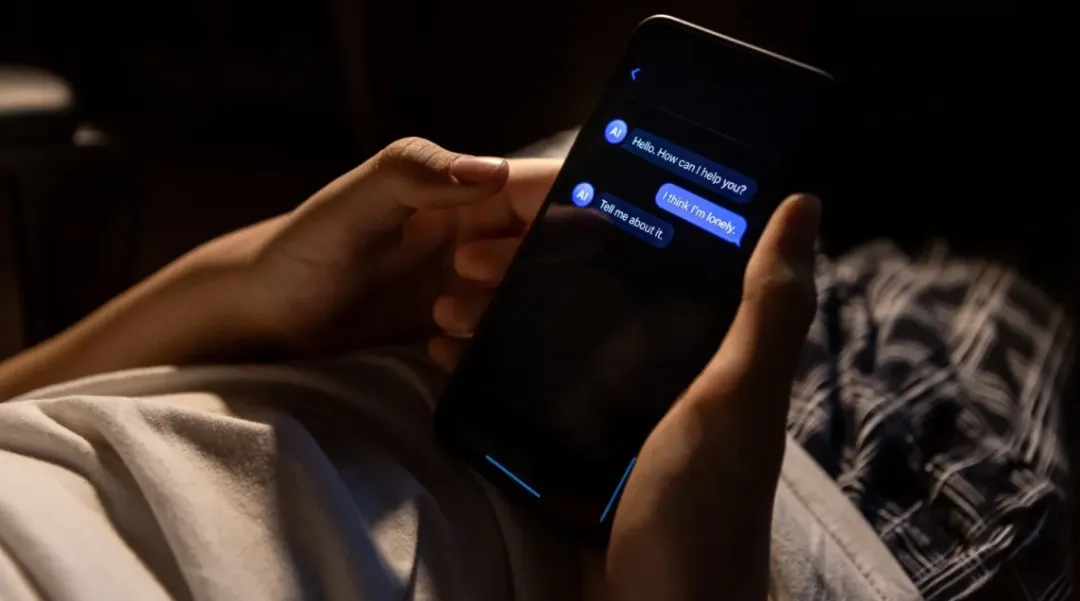
It is 2 a.m., and a teenage girl, worrying about a friend issue, lies awake. Rather than wake her parents, she picks up her phone, opens an AI app and types, "I'm so stressed out, I can't sleep." A reply arrives swiftly: "I'm sorry you're dealing with this. Want to tell me a bit about what is stressing you?" Twenty minutes later she is calmer and able to sleep. The supportive voice that calmed her is a large language model, or LLM, chatbot.
While this is a hypothetical scenario(设想、场景), it represents a very common pattern of artificial intelligence use by teenagers. Many teens are turning to AI chatbots, which are designed to simulate empathy and maintain human engagement, for companionship, emotional support and mental health advice. Research shows that this is increasingly common, with 72% of teens having interacted with AI companion chatbots, and 13% to 20% having sought support through AI for emotional concerns in a two-month period in 2025. Another recent study found that 63% of the teens and young adults who used an AI chatbot for mental health advice had not disclosed it to anyone.
Unlike social media platforms, which connect teens with peers, AI chatbots such as ChatGPT, Claude and Gemini function as simulated conversation partners, offering on-demand responses that can feel supportive and engaging. Teens, still forming their sense of self and often craving social validation, may be especially prone to experiencing these simulated relationships as real. They sometimes even prefer chatbot conversations to talking with friends.
Yet the risks are real. General-purpose chatbots can generate inaccurate or misleading advice presented with high confidence, which may create confusion or reinforce unhealthy beliefs. Adolescents, especially those experiencing loneliness, anxiety or social-communication challenges, may form strong attachments and turn to chatbots in place of human connection. This can, in turn, distort their expectations of real relationships.
Most concerning is how these systems handle thoughts that pose real risk to teens, including thoughts of self-harm or even suicide. Studies of chatbot performance in detecting and responding to such thoughts show inadequate response. Even when chatbots offer crisis resources, conversations with concerning content are often permitted to continue without a hard stop. The safety of these interactions tends to weaken over the course of long conversations.
(1) The word "this" in paragraph 2 most closely refers to ____.
A. the use of a large language model in daily life
B. a girl seeking comfort from an AI assistant late at night
C. the rapid development of artificial intelligence
D. a friend issue that worries a teenage girl
(2) What does the passage say about the teens who used AI chatbots for mental health advice?
A. Most of them kept it a secret from others
B. They all told their parents about it
C. Only a few of them found the advice helpful
D. They preferred chatbots to professional treatment
(3) What is the main function of the third paragraph?
A. to compare different AI assistant products on the market
B. to describe how these assistants are technically designed
C. to list the benefits of AI companionship
D. to explain why teens are especially drawn to these AI assistants
(4) What is the author's attitude toward teens' use of general-purpose AI chatbots for emotional support?
A. strongly supportive
B. completely indifferent
C. cautious and concerned
D. lightly humorous
(5) What is the passage mainly about?
A. how AI chatbots are built to feel human
B. the growing trend of teens seeking emotional support from AI and its risks
C. why social media harms teenagers' mental health
D. how parents can ban AI chatbots at home
词汇短语精讲
1. crave social validation 渴望得到社交认可(渴望被认同)
例句:Teens, still forming their sense of self and often craving social validation, may be especially prone to experiencing these simulated relationships as real.
提示:crave 表“渴望”,validation 本义“确认”,引申为“认可”;social validation 表“来自他人的认可”,心理话题高频
2. on-demand response 按需响应;即时回应
例句:Unlike social media platforms, which connect teens with peers, AI chatbots such as ChatGPT, Claude and Gemini function as simulated conversation partners, offering on-demand responses that can feel supportive and engaging.
示:on-demand 表“按需的、即时的”,on-demand response 指 AI 随时按需给出的回应,科技/服务话题高频
3. sense of self 自我意识;自我认知
例句:Teens, still forming their sense of self and often craving social validation, may be especially prone to experiencing these simulated relationships as real.
提示:sense 熟词生义:本义“感官”,引申为“意识、认知”;sense of self 表“自我认知”,心理/成长话题核心术语
4. in place of human connection 代替真实的人际交往
例句:Adolescents, especially those experiencing loneliness, anxiety or social-communication challenges, may form strong attachments and turn to chatbots in place of human connection.
提示:in place of 表“代替、取代”,写作中可替代 instead of,比 instead of 更书面
5. distort their expectations 扭曲他们(对关系)的预期
例句:This can, in turn, distort their expectations of real relationships.
提示:distort 表“扭曲、歪曲”,distort one's expectations 表“扭曲某人的预期”,议论文高频表达
句子精讲
1. Unlike social media platforms, which connect teens with peers, AI chatbots such as ChatGPT, Claude and Gemini function as simulated conversation partners, offering on-demand responses that can feel supportive and engaging.
翻译:与连接青少年和同龄人的社交媒体平台不同,ChatGPT、Claude 和 Gemini 等 AI 聊天机器人充当的是模拟对话伙伴,提供让人感到被支持、被吸引的即时回应。
结构:句首 Unlike social media platforms 为介词短语作状语(表对比);which connect teens with peers 为非限制性定语从句修饰 social media platforms;主干 AI chatbots function as simulated conversation partners;offering on-demand responses 为现在分词短语作伴随状语;that can feel supportive and engaging 为定语从句修饰 responses。
语法:介词短语表对比 + which 非限制性定语从句 + 现在分词作伴随状语 + that 定语从句
仿写:可用句式:Unlike ___, which ___, ___ function as ___, offering ___.(例:Unlike physical books, which take up space, e-readers serve as portable libraries, offering instant access to thousands of titles.)
2. Adolescents, especially those experiencing loneliness, anxiety or social-communication challenges, may form strong attachments and turn to chatbots in place of human connection.
翻译:青少年,尤其是那些正经历孤独、焦虑或社交障碍的人,可能会形成强烈的依恋,转而用聊天机器人代替真实的人际交往。
结构:主干 Adolescents may form strong attachments and turn to chatbots;especially those experiencing... 为插入语,其中 experiencing loneliness, anxiety or social-communication challenges 为现在分词短语作后置定语修饰 those;in place of human connection 为介词短语作状语,表“代替”。
语法:现在分词作后置定语 + 并列谓语(form...and turn to)+ 介词短语作状语
仿写:可用句式:___, especially those ___ing ___, may ___ and ___.(例:Students, especially those lacking confidence, may give up easily and avoid asking questions.)
参考答案见置顶留言
欢迎 关注 分享 和 转发


