

Section II Reading Comprehension
Part A
Directions: Read the following four texts. Answer the questions below each text by choosing A, B, C or D. Mark your answers on the ANSWER SHEET.
Text 4
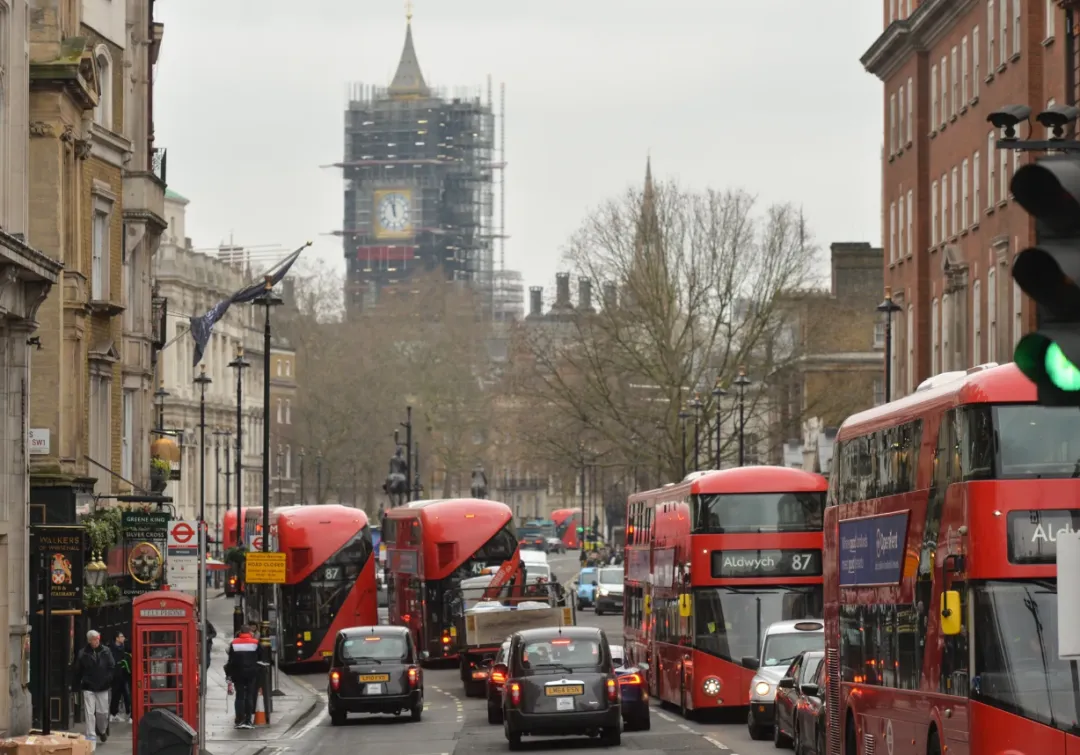
London's black-cab drivers are celebrated for navigating one of the world's most tangled street networks purely from memory, while most people now default to satellite-navigation apps. A study recently published in the Proceedings of the National Academy of Sciences suggests the human approach may hold a strategic edge—one that could eventually help make artificial-intelligence systems both smarter and less energy-hungry.
Qualifying as a London cabbie has long fascinated scientists. Aspiring drivers spend years memorising the locations of thousands of streets and landmarks to pass an exam known simply as the Knowledge. Earlier research found that this feat physically enlarges the hippocampus, the brain region governing memory and spatial awareness, and more recent work suggests the training may even lower cabbies' risk of Alzheimer's disease, a condition associated with hippocampal decline.
What remained unclear was how cabbies actually plan a route in their heads. Navigation apps solve this by evaluating vast numbers of possible paths within seconds; the human brain, faced with more than 26,000 interconnecting streets, has no such computational firepower. Hugo Spiers, a neuroscientist at University College London who co-led the study, argues that drivers instead compress the problem—rather than scanning every conceivable street, they narrow their search by anticipating which junctions they are likely to need.
Data from the study bear this out: cabbies appear to first picture the broader network, singling out major intersections before filling in the connecting stretches of road. Crucially, they discard the kind of vivid detail—shopfronts, statues, familiar buildings—that might clutter a less efficient mental map. As co-author Daniel McNamee of Portugal's Champalimaud Neuroscience Programme puts it, drivers work instead with an abstract, stripped-down representation of the city.
To probe this process, the researchers asked 43 drivers to describe routes aloud, street by street, timing how long each driver paused before naming each step. Those who deliberated longest before their very first move tended to pause far more briefly at each step thereafter—a pattern the team interprets as evidence of upfront, high-level planning, in contrast to drivers who simply called out streets as they occurred to them one at a time.
Such expertise is growing scarcer. Licensed black cabs in London fell from roughly 22,000 a decade ago to around 15,000 in 2023, even as private-hire vehicles—whose drivers face far lighter training requirements—nearly doubled to 90,000. Ironically, the satellite-navigation tools that have helped erode the cabbies' advantage carry hidden costs of their own, drawing on power-hungry data centres that are multiplying as the artificial-intelligence industry expands. The researchers hope that studying how cabbies compress and prioritise information could inspire leaner algorithms—systems that, as Spiers puts it, might one day approach the efficiency of a brain running on little more than a banana.
36. According to Paragraphs 1 and 2, prior research on London cabbies' brains found that acquiring the Knowledge ____
[A] enables cabbies to process spatial information faster than navigation software does
[B] was originally developed as a therapeutic intervention for Alzheimer's disease
[C] guarantees that cabbies will never experience any decline in spatial memory
[D] produces measurable physical changes in a brain region linked to memory and may offer some protection against a memory-related disease
37. Spiers suggests that cabbies cope with London's street network by ____
[A] relying on a simplified version of the same computational process used by navigation apps
[B] memorising every possible route in advance so that no calculation is required while driving
[C] narrowing their search to streets they anticipate needing, rather than considering every possible option
[D] focusing on the total number of streets rather than their spatial arrangement
38. What did the study find about drivers who paused longest before naming their first step?
[A] they subsequently required less time to determine each following step
[B] they required progressively more time to determine each following step
[C] they were more likely to name streets in the exact order they would be driven
[D] they tended to include more visual landmarks in their descriptions
39. It can be inferred from Paragraph 6 that satellite-navigation technology ____
[A] has proven less reliable than human memory for navigating unfamiliar cities
[B] carries environmental consequences that are not immediately apparent to most users
[C] has had little effect on the number of licensed black-cab drivers in London
[D] is primarily responsible for the recent decline in private-hire vehicle numbers
40. What is the researchers' ultimate purpose in studying how cabbies plan routes?
[A] to draw on human cognitive strategies to design more efficient artificial-intelligence systems
[B] to document the gradual decline of a historically significant profession
[C] to develop new training standards for licensing private-hire drivers
[D] to prove that human navigation is inherently more accurate than any algorithm
附注:根据历年考研英语真题阅读题源外刊等,摘选最新文章,模拟仿真出题。
参考答案见以下。
Quick look: DCABA
36.【正确答案】D
【解析】题型:细节理解题
定位:第二段"this feat physically enlarges the hippocampus, the brain region governing memory and spatial awareness...the training may even lower cabbies' risk of Alzheimer's disease, a condition associated with hippocampal decline."
分析:早期研究发现,考取"知识"资格会让海马体(负责记忆与空间认知的脑区)体积增大,最新研究进一步提示这种训练可能降低阿尔茨海默病(一种与海马体退化相关的疾病)的风险。选项D准确概括了这两层发现——脑区的物理变化,以及对记忆相关疾病可能提供的保护作用。
干扰项:[A]"使出租车司机处理空间信息的速度快于导航软件"——无中生有,原文并未在处理速度上做人机比较;[B]"最初是作为阿尔茨海默病的一种治疗手段而开发的"——张冠李戴并偷换概念,"知识"考试本身是一项出租车执照考试,只是研究发现其训练与降低患病风险存在关联,并非为治病而设计;[C]"保证出租车司机永远不会经历任何空间记忆的衰退"——程度夸大,原文只说"可能降低风险",并非"保证不会衰退"。
37.【正确答案】C
【解析】题型:细节理解题
定位:第三段"drivers instead compress the problem—rather than scanning every conceivable street, they narrow their search by anticipating which junctions they are likely to need."
分析:Spiers指出,出租车司机应对庞大街道网络的方式是"压缩"问题——不是扫描每一条可能的街道,而是通过预判自己可能需要经过的路口来缩小搜索范围。选项C准确复述了这一策略。
干扰项:[A]"依赖与导航软件相同计算过程的简化版本"——无中生有,原文恰恰强调人脑的方式与导航软件的穷举计算不同;[B]"提前记住所有可能的路线,以便开车时无需任何计算"——事实相反,原文强调的是"预判+压缩"而非"提前记住全部路线";[D]"关注街道总数而非其空间排布"——偷换概念,原文强调的正是对空间结构(路口、网络)的把握,而非单纯的数量。
38.【正确答案】A
【解析】题型:细节理解题
定位:第五段"Those who deliberated longest before their very first move tended to pause far more briefly at each step thereafter."
分析:研究发现,那些在说出第一步之前思考时间最长的司机,此后每一步所需的思考时间反而明显更短。选项A准确复述了这一发现。
干扰项:[B]"此后每一步所需的时间反而逐渐增多"——事实相反,与原文发现完全相反;[C]"更倾向于按照实际驾驶顺序报出街道名称"——无中生有,原文讨论的是思考时间的分布模式,并未涉及是否按驾驶顺序报路;[D]"更倾向于在描述中包含更多视觉地标"——无中生有并与第四段矛盾,原文明确说司机会"忽略"地标类细节。
39.【正确答案】B
【解析】题型:推理判断题
定位:第六段"the satellite-navigation tools that have helped erode the cabbies' advantage carry hidden costs of their own, drawing on power-hungry data centres."
分析:卫星导航技术在帮助新手司机的同时,也带来了"隐藏的代价"——依赖高耗能的数据中心,而这类代价通常不会被大多数使用者直接察觉。选项B准确概括了这一推论。
干扰项:[A]"在陌生城市导航方面已被证明不如人类记忆可靠"——程度夸大,原文并未做此类可靠性比较,反而说该技术"帮助"了新手司机;[C]"对伦敦持牌黑色出租车数量的影响甚微"——事实相反,第六段明确将出租车数量下降与网约车/导航技术的普及联系在一起;[D]"是网约车数量近年来下降的主要原因"——事实相反,原文说的是网约车数量"几乎翻倍"增长,而非下降。
40.【正确答案】A
【解析】题型:主旨大意题
定位:末段"The researchers hope that studying how cabbies compress and prioritise information could inspire leaner algorithms."
分析:全文最终落脚于研究者的目标——借鉴人类(尤其是出租车司机)的认知策略,来设计更高效、更节能的人工智能算法。选项A精准概括了这一研究目的。
干扰项:[B]"记录一个具有历史意义的职业逐渐衰落的过程"——以偏概全,行业衰落只是文中提及的背景信息之一,并非研究者的最终目的;[C]"为网约车司机的执照培训制定新标准"——无中生有,原文未提及此类培训标准的制定;[D]"证明人类导航天生比任何算法都更准确"——程度夸大并事实相反,全文的落脚点是"借鉴人类策略改进算法",而非证明人类"天生更准确"。
【词汇注释】
grueling: adjective (DIFFICULT) extremely tiring and demanding 累人的;艰苦的
compression: noun (REDUCTION) the action of reducing something in size, volume, or extent 压缩(文中指司机将庞大的街道网络压缩为可处理的认知策略)
dwindling: adjective (DECREASING) becoming gradually smaller in size, number, or intensity 逐渐减少的
deliberate: verb (THINK CAREFULLY) to think about or discuss something carefully in order to make a decision 仔细考虑;深思熟虑
erode: verb (WEAR AWAY) to gradually destroy or diminish something 侵蚀;削弱(文中指网约车逐渐削弱黑色出租车的市场主导地位)
omnipresent: adjective (EVERYWHERE) present, appearing, or felt everywhere 无处不在的
proliferate: verb (INCREASE RAPIDLY) to increase rapidly in number 激增;快速增长
【长难句】Those who deliberated longest before their very first move tended to pause far more briefly at each step thereafter—a pattern the team interprets as evidence of upfront, high-level planning, in contrast to drivers who simply called out streets as they occurred to them one at a time.
主干为Those...tended to pause far more briefly at each step thereafter,Those后接who引导的定语从句(who deliberated longest before their very first move)修饰Those; 破折号后a pattern为前半句内容的同位语概括,the team interprets as evidence of upfront, high-level planning为省略了that/which的定语从句修饰pattern(a pattern [that] the team interprets as...); in contrast to drivers为对比状语,drivers后接who引导的定语从句(who simply called out streets as they occurred to them one at a time)说明对比对象的具体行为特征。
【参考译文】
伦敦的黑色出租车司机因仅凭记忆就能在世界上最错综复杂的街道网络中穿梭而闻名,而如今大多数人却都依赖卫星导航应用程序。最近发表在《美国国家科学院院刊》(PNAS)上的一项研究表明,这种人类的导航方式可能具有战略优势——最终或许能帮助人工智能系统变得更智能、更节能。
成为一名合格的伦敦出租车司机一直以来都令科学家们着迷。有志成为司机的学员需要花费数年时间记忆数千条街道和地标的位置,才能通过一项名为“伦敦知识”(Knowledge)的考试。早期的研究发现,这种训练能够使大脑中负责记忆和空间感知的海马体体积增大,而最近的研究表明,这种训练甚至可能降低出租车司机患阿尔茨海默病(一种与海马体衰退相关的疾病)的风险。
然而,出租车司机究竟是如何在脑海中规划路线的,这一点仍然令人费解。导航应用程序通过在几秒钟内评估大量可能的路径来解决这个问题;面对超过26000条相互连接的街道,人脑的计算能力远不及大脑。伦敦大学学院的神经科学家雨果·斯皮尔斯(Hugo Spiers)是这项研究的共同负责人,他认为司机们会简化问题——他们不会扫描每一条可能的街道,而是通过预测可能需要经过的路口来缩小搜索范围。
研究数据证实了这一点:出租车司机似乎首先会想象出一个更大的网络,先确定主要的十字路口,然后再填充连接的道路。至关重要的是,他们会舍弃那些可能会使效率较低的心理地图变得混乱的生动细节——例如商店门面、雕像和熟悉的建筑物。正如该研究的另一位作者、葡萄牙尚帕利莫神经科学项目的丹尼尔·麦克纳米(Daniel McNamee)所说,司机们使用的是城市抽象的、精简的表征。
为了探究这一过程,研究人员要求43名司机逐条街道地描述路线,并记录每位司机在说出每个步骤之前停顿的时间。那些在迈出第一步之前深思熟虑的人,之后每一步的停顿时间往往要短得多——研究团队将这种模式解读为事先进行高层次规划的证据,这与那些想到什么就喊什么的司机形成了鲜明对比。
这种专业技能正变得越来越稀缺。十年前,伦敦的持牌黑色出租车数量约为2.2万辆,而到2023年,这一数字已降至约1.5万辆。与此同时,私家车(其司机面临的培训要求要低得多)的数量几乎翻了一番,达到9万辆。具有讽刺意味的是,那些削弱出租车司机优势的卫星导航工具,也带来了自身的隐性成本:它们依赖于耗电量巨大的数据中心,而随着人工智能行业的扩张,这些数据中心的数量也在不断增长。研究人员希望,通过研究出租车司机如何压缩和优先处理信息,能够启发人们开发出更精简的算法——正如斯皮尔斯所说,这些系统或许有一天能够达到仅靠一根香蕉就能运行的大脑的效率水平。
附注: