

1. jump at
·中文释义:欣然接受,迫不及待地抓住(机会等)
·完整语境:I jumped at the idea of taking the class because, after all, who doesn’t want to save a few dollars?
·准确出处:2018年全国I卷(完形填空)
·用法解析:jump本身是“跳跃”,jump at就像是看到好东西(如猎物或难得的机会)一下子猛扑过去,极具画面感,表示“毫不犹豫、迫不及待地抓住”。
2. off the hook
·中文释义:摆脱困境,脱身,免除责任
·完整语境:The coach is able to focus on the kids while the other parents are relieved to be off the hook for another season.
·准确出处:2019年全国II卷(阅读理解B篇)
·用法解析:hook是钓鱼钩。一条咬钩的鱼如果从鱼钩上挣脱掉(off),就重获自由了。引申为“卸下麻烦的包袱、摆脱困境或免除责任”。
3. have a way with
·中文释义:对……很有一套,善于处理
·完整语境:Monkeys seem to have a way with numbers.
·准确出处:2019年全国III卷(阅读理解D篇)
·用法解析:way在这里指“独特的方法、门道”。have a way with意为对某种事物或人有一种专属的驾驭方式,即“对……很有一套”。
4. fall for
·中文释义:倾心,爱上(也可指上当受骗)
·完整语境:In that moment, I began to fall for him.
·准确出处:2022年全国甲卷(完形填空)
·用法解析:字面意思是“为……而跌倒”。引申为心理防线崩塌,彻底沦陷于某人的魅力之中,生动表达了“坠入爱河”时那种不受控制的倾心。
5. chalk up to
·中文释义:把……归因于,归咎于
·完整语境:Older and wiser now, Burchill chalked up the incident to youthful indiscretion (随意,大意).
·准确出处:2021年全国乙卷(完形填空)
·用法解析:chalk是粉笔。在过去,酒馆老板常用粉笔(chalk)把客人的欠账记在黑板上,引申为“把某事记在某人/某因的账上”,即“归因于”。
6. come around to
·中文释义:转而接受,改变观点
·完整语境:It took her a while to come around to the opinion that using nutria fur for her creations is morally acceptable.
·准确出处:2020年全国II卷(阅读理解C篇)
·用法解析:around是“绕圈”。原本走在反方向,后来绕了个大圈(around)走向(to)了对方的观点,生动体现了思想转变、最终被说服的过程。
7. play along
·中文释义:假装配合,顺从
·完整语境:He tried it several times, but the card machine just did not play along.
·准确出处:2024年新课标I卷(读后续写语篇)
·用法解析:本意是跟着别人一起“演戏/玩(play)”。在这里真题极其巧妙地采用了拟人化的手法,指刷卡机“很不配合”人的操作。
8. round out
·中文释义:使圆满,使完美
·完整语境:The arugula was to make a nice green salad, rounding out a roast chicken dinner.
·准确出处:2022年新高考I卷(阅读理解B篇)
·用法解析:round是“圆”。把残缺的角落填补上,让一顿饭或者一个计划变得饱满、完整。例句中指沙拉“完美点缀/圆满完成了”这顿烤鸡晚餐。
9. out of pocket
·中文释义:自掏腰包,吃亏,亏本
·完整语境:But that leaves the solo customers out of pocket and disappointed.
·准确出处:2020年新课标I卷(语法填空)
·用法解析:钱硬生生从自己口袋里(pocket)掏出去了(out of),没人报销或没有得到等价的回报,意味着“吃亏、花冤枉钱”。
10. beat oneself up
·中文释义:过分自责,自怨自艾
·完整语境:Taking responsibility for mistakes is a positive step, but don’t beat yourself up about them.
·准确出处:2023年新课标I卷(七选五)
·用法解析:内疚得就像用拳头把自己痛打一顿(beat up)一样。形象地表达了人在犯错后的极度懊恼和过度自责。
11. silver lining
·中文释义:一线希望,困境中的一丝慰藉
·完整语境:She says that Western culture already pushes people to look for the silver lining behind every cloud.
·准确出处:2025年北京卷(阅读理解D篇)
·用法解析:源于英语著名谚语“Every cloud has a silver lining.” 无论乌云多密,太阳总会在其背后给云层边缘镶上一层银边。比喻绝境中的微光。
12. jump-start
·中文释义:快速启动,推动,促进
·完整语境:The likables’ plays-well-with-others qualities strengthen schoolyard friendships, jump-start interpersonal skills and, when tapped early, are employed ever after in life and work.
·准确出处:2019年全国I卷(阅读理解D篇)
·用法解析:原指汽车电瓶没电时,用接电线连上另一辆车“搭电瞬间启动”,引申为给停滞或刚起步的事物注入强心剂,使其快速发展。
13. hit home
·中文释义:击中要害,使人深有感触
·完整语境:This hit home for me as I was sitting with my 2-year-old grandson on a sofa over the Spring Festival holiday.
·准确出处:2022年全国II卷(阅读理解B篇)
·用法解析:home在这里指“靶心”。话语或事件像箭一样直击靶心,形容某事戳中心窝、令人瞬间顿悟或感同身受。
14. stick the landing
·中文释义:完美收场,精彩落地
·完整语境:If it's short stories, Peter Mountford breaks down six techniques you can try to see which one helps you stick the landing.
·准确出处:2024年全国甲卷(阅读理解D篇)
·用法解析:体操或跳水术语。运动员完成高难度动作后,双脚稳稳落地,像被“粘(stick)”在地上一样毫不摇晃,引申为文章或事情完美收尾。
15. zone out
·中文释义:走神,发呆,思想开小差
·完整语境:It’s becoming much rarer to zone out and just let the mind wander, but that’s when we think in ways that broaden our minds.
·准确出处:2026年全国I卷(阅读理解D篇)
·用法解析:zone是“区域”。人的精神仿佛飘到了当前所在的“区域”之外(out),对周围发生的事情毫无察觉,非常生动地表达了“放空、发呆”的状态。
16. tap into
·中文释义:开发,利用,发掘
·完整语境:The likables’ plays-well-with-others qualities strengthen schoolyard friendships, jump-start interpersonal skills and, when tapped early, are employed ever after in life and work.
·准确出处:2019年全国I卷(阅读理解D篇)
·用法解析:tap原意是“在树木或酒桶上打孔插龙头引水/酒”。后来引申为“接通资源、开发巨大潜能(尤指经验、技能或情绪)”。
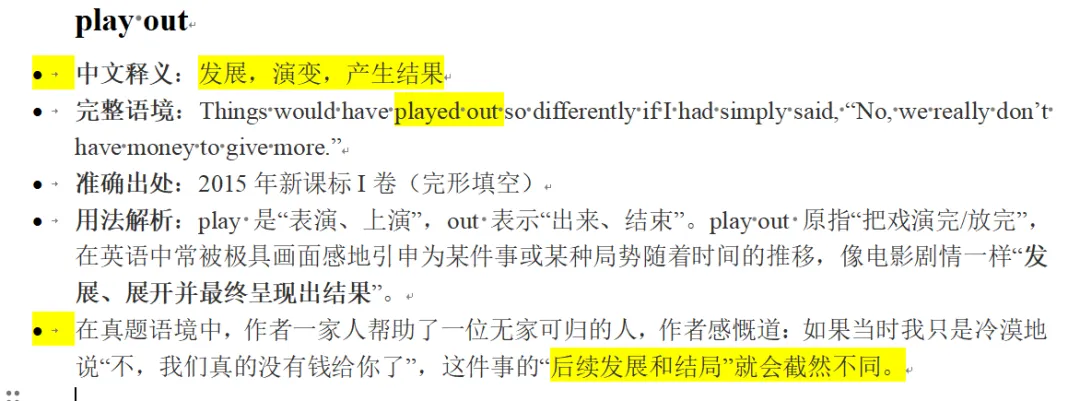
17. pan out
·中文释义:发展,有结果,成功
·完整语境:We need to consider how we want our future with AI to pan out.
·准确出处:2024年新课标II卷(阅读理解D篇)
·用法解析:源自19世纪加州淘金热。淘金者用平底锅(pan)在河水里淘洗沙子,如果有金子留下来(out),就代表“有收获、成功了”。
18. pack it all in
·中文释义:放弃,不干了
·完整语境:There were times when I found myself wondering if I should pack it all in, but the boy’s words kept ringing in my ears.
·准确出处:2026年全国I卷(完形填空)
·用法解析:字面意思是“把所有东西都打包(pack)装进去(in)”。引申为把工作或学习的工具打包收起,卷铺盖走人,彻底放弃某事。
19. take it out on
·中文释义:拿……撒气,把怨气发泄在……身上
·完整语境:Since she had found it too much to cope with, she had taken it out on other people.
·准确出处:2020年全国III卷(完形填空)
·用法解析:字面是“把(情绪)在某人身上拿出来”。指把内心的负面情绪掏出来,狠狠地砸在(on)无辜的人身上,表现了迁怒于人的动作感。
20. far and away
·中文释义:毫无疑问,绝对是,远远(超过)
·完整语境:Xiao long bao (soup dumplings), those amazing constructions of delicate dumpling wrappers, encasing hot, tasty soup and sweet, fresh meat, are far and away my favorite Chinese street food.
·准确出处:2023年新课标I卷(语法填空)
·用法解析:赛马术语。指一匹冠军马领先其他马的距离“非常远(far)”且已经“绝尘而去(away)”,用于强调“最……的、无与伦比的”。
21. opt out
·中文释义:选择退出,决定不参加
·完整语境:Now, several states are moving to tighten laws by adding new regulations for opting out.
·准确出处:2017年北京卷(阅读理解C篇)
·用法解析:opt源于拉丁语optare(选择)。opt out就是指通过主动“选择”的方式,把自己排除在圈子、计划或协议之“外(out)”。
22. rule the roost
·中文释义:当家作主,占据主导地位
·完整语境:But when it comes to embryonic learning, birds could rule the roost.
·准确出处:2017年江苏卷(阅读理解B篇)
·用法解析:roost是禽类栖息的树枝或鸡窝。在鸡窝里占据统治地位的公鸡,比喻在某个群体或领域里大权在握、独占鳌头的人或事物。
23. chicken out
·中文释义:因害怕而退缩,临阵退缩
·完整语境:I actually wanted to drop the class at one point, but stopped short because I didn't want to give him the satisfaction of my chickening out.
·准确出处:2019年全国III卷(完形填空)
·用法解析:鸡(chicken)在西方文化中常代指“胆小鬼”。chicken out就是像胆小鸡一样吓得落荒而逃(out),极其生动形象的口语表达。
24. shine through
·中文释义:显露出来,表现出来(尤指优秀的品质)
·完整语境:That way, you could exchange thoughts on what makes each of you special and the aspects of your personality that shine through.
·准确出处:2023年新课标I卷(七选五)
·用法解析:shine是发光,through是透过。指一个人内在的优秀品质像光芒一样,透过外表不可阻挡地“散发、显露出来”。
25. sweep aside
·中文释义:无视,对……不予理会,扫除(旧事物)
·完整语境:Shirley Fitzgerald, the city's official historian, told me that in its rush to modernity in the 1970s, Sydney swept aside much of its past, including many of its finest buildings.
·准确出处:2022年全国甲卷(阅读理解D篇)
·用法解析:sweep 是“打扫、扫除”,aside 是“到一边”。字面画面是“用扫帚把东西扫到一边去”。真题在这里用了一个极具动作感和破坏力的隐喻,生动地刻画出悉尼在追求现代化的狂热浪潮中,将它过去的历史和精美建筑像扫垃圾一样“无情扫除、抛诸脑后”的画面,充满了对历史流失的惋惜之情。
26. look past
·中文释义:不计较,忽视,透过现象看本质
·完整语境:Customers today look past the fact that something is secondhand and focus instead on the fact that they have something unique to wear.
·准确出处:2021年全国甲卷(阅读理解篇)
·用法解析:look是“看”,past意为“越过……”。合在一起,目光“越过”了表面的缺陷或某个既定事实,去关注更深层、更本质的东西。在句中生动刻画了如今的顾客“不再计较/忽视”衣服是二手的这个表面事实,而是去发掘其独一无二的价值。
27. trip on
·中文释义:在……上磕绊,(说话时)结巴,卡壳
·完整语境:Chris trips on the "-ld," a pronunciation difficulty for many non-native English speakers.
·准确出处:2019年全国I卷(阅读理解C篇)
·用法解析:trip原意是“绊倒”。trip on a stone是走路时被石头绊倒。真题在这里极其精妙地将其用作语言发音上的“磕绊”——Chris在发 "-ld" 这个音的时候“舌头绊了一跤”(结巴了)。用肢体动作来描绘口语发音障碍,极具画面感和语言张力。
28. weed out
·中文释义:剔除,淘汰,清除(不良的人或物)
·完整语境:Though many companies use algorithms to weed out fake reviews, it is still difficult to eliminate them completely.
·准确出处:2026年1月浙江卷(阅读理解D篇)
·用法解析:weed原意是名词“杂草”。菜园里长了杂草,自然要将其作为动词连根拔起并丢到外边(out)。因此weed out生动地比喻为“把系统、队伍或产品中像杂草一样的虚假、不良成分(如真题中的 fake reviews 虚假评论)连根拔除并无情淘汰”。
29. catch on
·中文释义:变得流行,大受欢迎(也可指“理解、懂得”)
·完整语境:The day itself is on October 21, but since it has caught on, events now spread out over most of October around Britain.
·准确出处:2016年新课标III卷(阅读理解B篇)
·用法解析:catch是“抓住”,on有“附着、依附”之意。当一种新潮流、新习惯或新事物被大众“紧紧抓住”并广泛“附着”在社会生活中时,它就“流行起来、大受欢迎”了。真题句中指英国的“苹果节”由于大受民众欢迎,庆祝活动已经蔓延到了整个十月。
30. cook up a storm
·中文释义:大显身手(尤指热情高涨、热火朝天地大量做饭)
·完整语境:With the growing popularity of TV cookery programmes, many British people are now cooking up a storm in their kitchens.
·准确出处:2019年新课标II卷(阅读理解B篇)
·用法解析:cook up意为“烹调、炮制”,而 a storm是一场风暴。闭上眼睛想象一下这个画面:一个人在厨房里做饭,煎炒烹炸锅碗瓢盆齐响,热气腾腾,场面激烈得就像在厨房里刮起了一场“风暴”。这个习语专门用来形容人充满激情、风风火火地大干一场(最常用于做饭,也可用于形容其他充满热情的行动)。
网络那头的你在做高考英语真题时,遇到的您印象最深的词组或语块有哪些?欢迎您分享在留言区。


