

第二部分阅读(共两节,满分50分)
第一节(共15小题;每小题2.5分,满分37.5分)
阅读下列短文,从每题所给的A、B、C、D四个选项中选出最佳选项。
A
Reading shouldn’t be a one-way street. With this Smart Annotation (批注) Kit, you move from being a passive reader to an active thinker.
This kit helps you:
● Capture your thoughts — write down questions, connections, and ideas as they come to you.
● Remember more — research shows that handwriting improves memory and comprehension.
● Read with purpose — use colors and notes to track themes, characters, or key arguments.
● Make books yours — turn every book you read into a personal record of your thinking journey.
Whether you’re studying for an exam, preparing for a book club, or just reading for pleasure, this kit gives you the tools to engage deeply with every page.
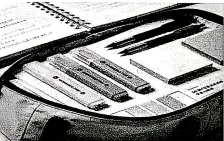
What’s Included
● 3 color-coded highlighters (yellow, pink, blue) ● 2 fine-tip pens (black, red) ● 50 repositionable sticky notes ● 1 quick-start guide |
|
How to Use
Step 1: Read actively. As you read, underline key sentences or put question marks next to confusing parts.
Step 2: Add your marks. Use different colors for different purposes. For example: yellow indicates main ideas; pink marks surprising or important facts; blue records personal reflections or unresolved questions.
Step 3: Write short notes. Brief phrases such as “definition,” “contrast,” or “see page 23” are written next to relevant passages.
Step 4: Review your notes. After each chapter, revisit annotations to strengthen long-term memory and identify patterns across the text.
Limitations
Permanent markers should not be used on borrowed or library copies. For those unwilling to write directly on pages, repositionable sticky notes offer an alternative. The kit contains small parts and must be kept away from children under three years of age.
21. What is the Smart Annotation Kit designed for?
A. Fast reading skills.B. Library book care.
C. Colourful expression.D. Active reading habits.
22. What should users do after marking puzzling parts?
A. Review each chapter.B. Write short notes nearby.
C. Ski p to the next page.D. Change highlighter colors.
23. Who are most likely to use sticky notes?
A. Book collectors.B. Library users.C. Literature explorers.D. Art learners.
B
When I first picked up a fountain pen, I couldn’t understand why anyone would bother with such an outdated instrument. My grandfather’s eyes lit up like a child discovering a hidden treasure. To him, the act of writing wasn’t just about putting words on paper — it was a sacred practice. Writing was about carefully crafting thoughts and communicating them with precision and care. As a teenager in the digital age, I found the leaking ink and the scratchy nib (笔尖) more of an annoyance than anything else.
But my view began to change when I cleaned out his roof space last summer. While sorting through boxes, I came across a wooden box filled with letters — not just letters he had received, but drafts of his own. One letter, written to the local mayor about the closure of a neighborhood park, wasn’t just a list of complaints. Instead, he had captured the scene of elderly men playing chess in the shade, the distant sound of children laughing, and the general peaceful atmosphere of the area. The writing was both elegant and firm, urging the mayor to consider the value of community spaces.
It was then that I understood. My grandfather didn’t write simply to communicate information. His letters were a labor of love and respect, intended to give the reader the time and attention they deserved. He wasn’t writing for quick exchange, as I often did with my text messages, but for lasting impact.
I began using that old fountain pen again. At first, my hand seized up, and I found it frustrating to write at the pace my thoughts raced. But gradually, the slow ink flow forced me to slow down and think deeply about every word. Writing became more than just a task — it became a way of truly reflecting on my thoughts, my emotions, and my words.
24. How did the author initially find using a fountain pen?
A. Exciting and creative.B. Troublesome and messy.
C. Fascinating but pointless.D. Confusing but acceptable.
25. What caused the author’s change of attitude toward the fountain pen?
A. The finding of valuable birthday gifts.
B. The discovery of his grandfather’s letters.
C. The realization of writing’s artistic beauty.
D. The experience of playing chess with elders.
26. What’s the significance of “slow ink flow” to the author in the last paragraph?
A. A screen for reflection.B. A cure for loneliness.
C. A source of inspiration.D. A symbol of tradition.
27. What’s a suitable title for this text?
A. The Art of Handwriting.B. The Slow Pace of Modern Life.
C. The Letters of My Grandpa.D. The Wisdom of a Fountain Pen.
C
Imagine standing in front of a supermarket shelf with 40 types of jam. You might think more choices would make you happier, but research suggests otherwise. The “Paradox of Choice” is a fascinating concept that has interested sociologists for decades. On the surface, more options seem to offer more freedom and satisfaction. We live in an age when the vast abundance of choices, from streaming services to online shopping, should, in theory, make our lives better. However, research has shown that this overwhelming variety can lead to “decision paralysis,” where we get stuck with so many options that we can hardly make up our minds. In fact, an abundance of choices can reduce overall satisfaction with our decisions.
Psychologist Barry Schwartz explains that people who are presented with too many options tend to become “maximizers” — individuals who keep trying to find the best choice. They compare every feature, price, and possibility, often fearing that they might miss out on a better option. This leads to a state of constant regret, even before the decision is made, as they worry about what they might have overlooked. In contrast, “satisfiers” look for something that meets their basic needs and are generally happier with their outcomes. They don’t need the best option; they just need one that works for them. They are content with their choices because they aren’t paralyzed by the possibility of making the wrong one. While maximizers are trapped in endless comparison, satisfiers are content because they aren’t paralyzed by the fear of making the wrong choice.
Social media has made this paradox even worse by acting as a “never-ending comparison machine.” We no longer just compare ourselves to our neighbors, but we compare our lives to edited, idealized versions of other people’s lives around the world. This constant exposure to better alternatives only increases the sense of discontent with our own decisions.
To address this, some experts recommend voluntary limitation. By consciously limiting our choices, whether it’s through a minimalist wardrobe (衣柜) or a simplified diet, we can reduce unnecessary mental pressure that stops us from deciding easily. The goal is not to haveless, but to free up space for what truly matters to us. By intentionally narrowing our options, we can make more room for meaningful experiences.
28. What is the author’s attitude to diverse choices?
A. Critical.B. Enthusiastic.C. Dismissive.D. Defensive.
29. What is a typical behavior of a “satisfier”?
A. Making quick decisions naturally.
B. Feeling satisfied with every choice.
C. Seeking the perfect option constantly.
D. Caring much about online comparisons.
30. What role does social media play in the paradox of choice?
A. It helps people find better deals online.
B. It simplifies the decision-making process.
C. It provides a realistic view of others’ lives.
D. It fuels dissatisfaction with one’s own choices.
31. What does “voluntary limitation” imply in the last paragraph?
A. A lack of digital resources.
B. A loss of personal freedom.
C. A strategic reduction of choices.
D. A temporary break from technology.
D
For many years, scientists believed that the adult brain was an unchanging organ. According to this view, once the brain reached its full developmental potential in early adulthood, its neural connections were fixed. This opinion held that the brain, like a muscle that reaches its maximum size, could not adapt or change after a certain point. However, the discovery of neuroplasticity (神经可塑性) has fundamentally altered our understanding of the brain. We now know that the brain is a dynamic, ever-changing organ that continues to reorganize itself in response to new experiences, learning and challenges.
A landmark study of London taxi drivers provides strong evidence of neuroplasticity in action. Taxi drivers in London must memorize a vast network of streets and landmarks in a test known as “The Knowledge.” Brain scans revealed that the posterior hippocampus — the area of the brain responsible for spatial memory — was significantly larger in these drivers than in thegeneral population. More interestingly, the longer a driver had been on the job, the more pronounced the changes in this area of the brain, suggesting that the brain physically adapts to intense mental activity.
However, neuroplasticity is a double-edged sword. While the brain can be rewired for positive outcomes, it can also be shaped by negative habits. For instance, constant multitasking and excessive consumption of short-form content, such as quick social media videos, can train the brain to have a shorter attention span, making it harder to engage in focused, deep work.
The implications of this discovery are profound. We now know that the brain is not a fixed organ but a changeable one, constantly being influenced by our daily habits and actions. This means we have more agency over our cognitive health than we ever realized. Lifelong learning, mental stimulation, and even unlearning unhealthy habits are not just cultural ideals, but they are biological necessities for maintaining a tough, sharp mind throughout life.
32. What is the previous view of the adult brain?
A. It is capable of lifelong development.
B. It is reshaped by learning and training.
C. It is highly responsive to daily habits.
D. It is largely unchanged after maturity.
33. How does the author support the idea of neuroplasticity?
A. By analyzing reasons.B. By comparing methods.
C. By presenting a case study.D. By describing an experiment.
34. What does the underlined word “rewired” in paragraph 3 probably mean?
A. Fixed.B. Simplified.C. Adjusted.D. Destroyed.
35. What does the author argue in the last paragraph?
A. Daily habits greatly shape our minds.
B. People can’t control cognitive health.
C. Mental health depends fully on genes.
D. Lifelong learning is far from a necessity.
第二节(共5小题;每小题2.5分,满分12.5分)
阅读下面短文,从短文后的选项中选出可以填入空白处的最佳选项。选项中有两项为多余选项。
Our planet is facing never-seen-before environmental challenges, from rising temperatures to plastic-choked oceans and disappearing forests. 36 However, the truth is that every individual action adds up to make a real difference. Environmental protection is not just a government or corporate duty, but a daily choice for all of us.
Consider plastic waste, one of the most pressing problems today. Single-use plastics take hundreds of years to decompose, harming marine life and polluting soil. 37 Simple swaps, like using reusable water bottles, cloth bags, and metal straws, can dramatically cut down our plastic footprint.
38In many countries, up to 40 percent of food ends up in landfills, releasing harmful methane (甲烷) gas as it rots. Planning meals, storing leftovers properly, and donating excess food are easy ways to fight this issue.
Energy conservation is another critical area. Small daily decisions can have a long-term impact on the health of our planet. Switching to LED bulbs, turning off lights and appliances when they are not in use, and choosing public transport, cycling, or walking over driving all reduce carbon emissions. Even planting a small tree helps — trees absorb carbon dioxide and release oxygen, improving air quality and supporting biodiversity.
Community action boosts individual efforts. 39 Joining local clean-up drives, supporting eco-friendly businesses, and educating friends and family about sustainable habits create a ripple effect. When we work together, our small steps turn into a powerful force for change.
We only have one Earth. 40 By making conscious choices every day, we can ensure a healthy, livable planet for ourselves and future generations. The time to act is now — not tomorrow, not next week, but in this very moment.
A. Protecting it is not an option but a necessity.
B. Food waste is also a major contributor to environmental damage.
C. It’s easy to feel powerless facing such huge environmental problems.
D. We can also choose to buy products with less packaging to reduce waste.
E. Working together in our community can multiply the positive effects of our actions.
F. There are plenty of small changes we can make in our daily lives to reduce plastic use.
G. Therefore, it is crucial for every individual to reflect on their daily consumption habits.
第三部分语言运用(共两节,满分30分)
第一节(共15小题;每小题1分,满分15分)
阅读下面短文,从每题所给的A、B、C、D四个选项中选出最佳选项。
In a small town in western England, Mrs. Li, who moved from Shanghai 10 years ago, runs a Chinese tea house. The shop has become a surprising 41 between two very different cultures, serving not only fragrant tea but also stories and friendship. At first, local people were 42 to enter. They knew little about Chinese tea culture and felt awkward not knowing how to drink properly.
Mrs. Li did not 43. Instead, she placed small signs explaining tea etiquette (礼仪) and left out free samples. Slowly, customers 44. An elderly man came for jasmine (茉莉花) tea every morning. A group of students started assembling after school to learn about Chinese art. She also began to 45 events: mooncake-making during Mid-Autumn Festival, calligraphy workshops, and Chinese New Year parties. Local people loved the 46 and cherished the chance to understand a culture so different from their own. Many started 47 Chinese phrases and asking about traditions.
For Mrs. Li, the experience is 48. “I came here thinking I would miss home,” she said, “but now this town 49 like home. I teach them about China; they teach me about England. We learn from each other.”
Such small cultural 50 are happening worldwide. They are not grand exhibitions or famous festivals. They are quiet, daily 51 that build trust and respect. They show that understanding arises not from big gestures but from 52 moments — over a cup of tea, a piece of mooncake, or a simple conversation.
In a world divided by differences, these little links serve as powerful reminders that we are more 53 than we think. Cultural exchange is not about changing who we are; it is about learning to respect each other’s 54 and celebrate mutual understanding. And that is how we 55 a more peaceful and connected world.
41. A. routeB. signalC. symbolD. bridge
42. A. eagerB. hesitantC. preparedD. content
43. A. pushB. changeC. actD. pass
44. A. gave upB. dropped inC. moved onD. set off
45. A. attendB. recallC. hostD. record
46. A. issuesB. challengesC. festivalsD. experiences
47. A. enquiringB. penningC. memorizingD. marking
48. A. disturbingB. amazingC. boringD. engaging
49. A. soundsB. remainsC. feelsD. appears
50. A. exchangesB. rootsC. originsD. conflicts
51. A. contactsB. connectionsC. conductsD. contributions
52. A. lostB. silencedC. relievedD. shared
53. A. distinctB. independentC. alikeD. parallel
54. A. equalityB. pursuitC. privacyD. uniqueness
55. A. buildB. inventC. affectD. picture
第二节(共10小题;每小题1.5分,满分15分)
阅读下面短文,在空白处填入1个适当的单词或括号内单词的正确形式。
China’s Rural Vitalization: Driving Economic Revival
Rural revitalization (复兴) has become a key part of China’s high-quality development, 56 aim is to build dynamic countryside and raise living standards in rural areas. This national strategy focuses on industrial development, 57 (technology) progress and urban-rural integration 58 (narrow) the gap between cities and villages.
Nowadays, smart agriculture is changing traditional farming. In many rural regions, modern greenhouses 59 digital systems allow farmers to monitor crops from their smartphones. Agricultural e-commerce and rural tourism have also grown rapidly, 60 (create) stable incomes for millions of rural families.
Local characteristic industries play an important role. Products such as fruits, tea and handmade goods 61 (promote) online, turning small businesses into popular brands. More young people have returned to the countryside to start businesses, bringing new energy and job 62 (opportunity).
63(support) by continuous government policies, China keeps strengthening rural infrastructure and improving agricultural 64 (productive). By developing modern agriculture, protecting rural culture and improving the living environment, the country is building 65 prosperous and sustainable future for its vast rural areas, benefiting hundreds of millions of farmers.
第四部分写作(共两节,满分40分)
第一节(满分15分)
假定你是某国际学校美术社社长李华,你社计划举办一次主题为“Colors of Youth”的学生绘画展,需要得到学校的批准和支持。请你给学校相关负责人Mr. Smith写一封电子邮件,内容包括:
(1)简要介绍画展;
(2)希望获批。
注意:(1)写作词数应为80个左右;
(2)请按如下格式在答题卡的相应位置作答。
Dear Mr. Smith,
I am Li Hua, president of the Art Club.
Yours sincerely,Li Hua
第二节(满分25分)
阅读下面材料,根据其内容和所给段落开头语续写两段,使之构成一篇完整的短文。
It was the busiest Saturday of the year at the “Golden Spoon” bakery. The line stretched to the door, and the air was thick with the warm, comforting smell of fresh bread and sugary pastries. Sarah, a part-time student worker, was struggling to keep up. Her hands moved quickly — boxing bread, wrapping cookies, and tapping the register — but the orders kept coming. Sweat dotted her forehead as she rushed between the counter and the display cases. She had only been working here for two months, and days like this still made her nervous. Her heart pounded every time a new customer stepped up.
In the chaos, a well-dressed gentleman stepped forward and ordered a dozen expensive macarons (马卡龙) in delicate shades of pink and green. He handed her a fifty-dollar bill with a calm, easy smile. With three customers waiting impatiently behind him, Sarah’s mind was racing. She grabbed the change automatically, her fingers moving faster than her thoughts. In her hurry, she mistook the bill for a hundred and gave him change accordingly — fifty dollars too much. The gentleman nodded politely, slipped the cash into his leather wallet, and left without a second glance, the bell on the door ringing softly behind him.
It wasn’t until an hour later, when the lunchtime rush finally died down and the bakery grew quiet, that Sarah counted the cash in the register. Her heart stopped. The drawer was fifty dollars short — nearly two days’ wages for her. She leaned against the cold counter, her mind spinning. Mrs. Higgins, the manager, was known for her strictness. She ran the bakery with military precision and tolerated few mistakes. Sarah had heard stories: a cashier once cried after being scolded for a ten-dollar error. If Mrs. Higgins found out, Sarah might lose her job, a position she desperately needed to pay for her college tuition. She stared at the register, her throat tight, trying to figure out what to do.
注意:(1)续写词数应为150个左右;
(2)请按如下格式在答题卡的相应位置作答。
In her anxiety, Sarah heard the familiar footsteps approaching.
Just then, the door was pushed open and the gentleman walked back in.
阅读
21-23 DBB24-27 BBAD28-31 AADC32-35 DCCA36-40 CFBEA41-45 DBABC46-50 DCBCA51-55 BDCDA56. whose57. technological 58. to narrow59. with60.creating
61. are promoted 62. opportunities 63. Supported64. productivity65.a
Dear Mr. Smith,
I am Li Hua, president of the Art Club. I am writing to seek your approval and support fora student art exhibition titled "Colors of Youth".
The exhibition is scheduled to be held from June 10 to June 14 in the school'sMulti-Media Hall, displaying about 60 paintings and drawings by students of all grades. Anopening ceremony is planned on the morning of June 10.
To make this exhibition a success, we respectfully request permission to use the hall andfinancial support for display materials and posters. We believe this event will encouragecreativity and enrich the school's cultural atmosphere.
Thank you for your consideration. We look forward to your positive reply.
Yours sincerely,Li Hua
In her anxiety, Sarah heard the familiar footsteps approaching. She knew it was Mrs. Higgins,and her heart sank to her stomach. She took a deep breath and decided to face the truth bravely.Looking at Mrs. Higgins' serious face, she admitted her mistake in a trembling voice, explainingthat she had given the gentleman fifty dollars too much. She told Mrs. Higgins that she waswilling to deduct the money from her salary, which made her eyes fill with tears. Although shewas still terrified of losing her job, she knew honesty was the only right choice.
Just then, the door was pushed open and the gentleman walked back in. He held out his hand withthe extra fifty dollars and apologized for not noticing the mistake earlier. Sarah stared at him insurprise, and a huge weight lifted off her shoulders. Mrs. Higgins smiled and praised both Sarah'shonesty and the gentleman's kindness. It was this small act of integrity that made Sarah realizethat even in difficult situations, doing the right thing always pays off. She left work that day witha light heart, knowing she had learned a valuable lesson about trust and responsibility.


