2026年CATTI实务真题(1)——三笔英译汉参考译文完整版(附文章来源)
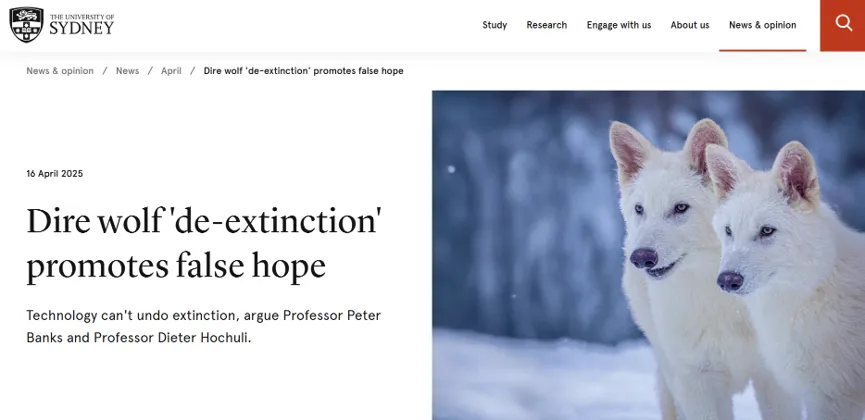
今天开始陆续分享2026年6月CATTI考试实务真题。注:本参考译文或许不是最佳译文,主要向大家分享在考场上能写出来的译文版本,提供考试参考。文章来源:https://www.sydney.edu.au/news-opinion/news/2025/04/16/dire-wolf--de-extinction--promotes-false-hope.html这篇文章的原始出处是悉尼大学(The University of Sydney)官网,最初发布于2025年4月16日,由该校的两位教授撰写。文章标题为:Dire wolf 'de-extinction' promotes false hope(恐狼“反灭绝”助长虚假希望),后被多家媒体转载。Over the past week, the media have been inundated with news of the“de-extinction" of the dire wolf (恐狼)—a species that went extinct about 13,000 years ago. The breakthrough has been achieved by Colossal Biosciences(巨神生物科学公司), a multibillion-dollar United States company that claims their goal is to restore biodiversity through the de-extinction of species. The project is being celebrated and marketed as a conservation win. But does this technology really have the best interests of conservation in mind? We argue as ecologists that genetic advancements like these, while they are major scientific and technological feats, still risk minimizing the severity of the current extinction crisis. Importantly, they take away focus from proven conservation efforts that are needed to protect the biodiversity that remains.过去一周,媒体上充斥着关于恐狼(dire wolf)“反灭绝”的消息,而这一物种实际已在约13000年前灭绝。该突破性成果由市值数十亿美元的美国公司巨神生物科学公司(Colossal Biosciences)取得,其声称公司目标是通过物种反灭绝来恢复生物多样性。这一项目被标榜为保护工作的胜利,并以此进行营销。然而,这项技术真的考虑到保护工作的最佳利益吗?身为生态学家,我们认为,此类基因技术的进步虽然堪称重大的科技壮举,却仍然有可能淡化当前物种灭绝危机的严峻性。更重要的是,公众注意力会因此偏离那些行之有效的保护行动,而这些行动,正是保护现存生物多样性的必需。First, it is important to recognize that the three“dire wolf” pups created are not actually dire wolves. Colossal carried out 20 edits in 14 genes of the grey wolf genome to create their “dire wolves” using a genetic technique called CRISPR-Cas9. The grey wolf's genome is 2,447,000,000 individual bases (碱基) long. Would we consider a chimpanzee, with which we share 98.8% of our genome, to be human after 20 edits? The reality is that there are three slightly modified grey wolves.首先,我们必须认识到,巨神公司所创造出的三只“恐狼”幼崽并非真正的恐狼。该公司利用一种名为CRISPR-Cas9的基因技术,在灰狼长达24.47亿个碱基的基因组中,对14个基因进行了20处编辑,从而制造了这些“恐狼”。试问,与我们基因组相似度高达98.8%黑猩猩,经过20处基因编辑后,就能被视作人类吗?事实上,那不过是三只经过轻微改造的灰狼而已。This de-extinction project has had millions of dollars poured into it—amounts of money mostconservation programs could only dream of. There are proven solutions to help reverse biodiversity loss: habitat protection and restoration, the control of invasive species and the phasing out of fossil fuels. However, those solutions are not slickly marketed as shiny, techno-fix packages like de-extinction. Instead, they are heavily underfunded.该反灭绝项目已投入数百万美元,这是大多数生态保护项目所难以企及的。我们已有扭转生物多样性丧失趋势的成熟方案,如栖息地保护与恢复、入侵物种控制以及逐步淘汰化石燃料。然而,这些方案并未像反灭绝项目那样,声称为华丽的高科技修复方案,反而严重缺乏资金。Promoting extinction as reversible risks downplaying its gravity and legacy. Headlines like theone that appeared on the front cover of TIME magazine—with the word “extinct” crossed out—seed a false hope that no matter what environmental damage is done, species loss can be easily undone. The risk is that de-extinction will be used as an ultimate offset for any environment impact. It is what makes fighting biodiversity loss such an urgent concern, so much so that people risk their lives to prevent it, with 150 wildlife rangers dying each year around the world in their fight to protect endangered species. Framing extinction as temporary creates false hope and undermines motivation for real conservation action.宣扬物种灭绝可以逆转,可能会淡化其严重性与深远影响。《时代》周刊(TIME)封面标题曾将“灭绝”一词划去,诸如此类的头条新闻会播下一种虚假希望,仿佛无论环境遭受何种破坏,物种消失都可以轻易挽回。其风险在于,反灭绝技术或将成为抵消一切环境破坏的终极借口。正因如此,抵御生物多样性丧失才显得如此紧迫,以至于人们不惜献出生命——全球每年有150名野生动物管理员在保护濒危物种时殉职。将物种灭绝描绘成暂时现象,会制造虚假希望,削弱人们采取实质保护行动的动力。We might already be seeing this happen in response to the“de-extinction" of the dire wolf. Interior Secretary of the US administration, Doug Burgum (道格·伯古姆), praised the new biotechnology advancement and used it as an argument for the removal of the US Endangered Species Act. What good is bringing back species if there are no protective laws to address the drivers of their declines? It is deeply ironic that while millions are being spent recreating a dire wolf proxy, its cousin, the grey wolf, is heavily persecuted globally. Other predators are affected too. In Australia, the dingo, which has been shown to suppress invasive cats and red foxes, helping native biodiversity, is also heavily persecuted.或许在恐狼“反灭绝”后,这种情况已经出现。美国内政部长道格·伯古姆(Doug Burgum)称赞了这项生物技术新进步,并以此主张废除美国《濒危物种法案》。如果没有应对物种减少根源性因素的保护法律,那么物种回归又有什么意义?极为讽刺的是,当数百万美元正用于再造恐狼替身时,其近亲灰狼却在全球范围内遭受大量捕杀。其他掠食者也未能幸免。在澳大利亚,野犬经证实能够抑制入侵的野猫和赤狐,有助于保护本土生物多样性,却仍被大量捕杀。If we can’t safeguard or protect habitat for apex predators today, in ecosystems that are already under immense pressure, what kind of world would we be bringing extinct species back into? Up to 150 species are considered to go extinct every day. No amount of genetic tech will solve this unless we address the root causes: habitat destruction, over-exploitation and climate change. The de-extinction of the dire wolf may sound like a conservation breakthrough, but it risks distracting us from the protection of our current living species. This approach turns biodiversity conservation into a billionaire's Jurassic Park fantasy instead of addressing the crisis we already know how to fix.在如今已承受巨大压力的生态系统中,我们如果无法保护顶级掠食者的栖息地,又会将灭绝物种带回一个怎样的世界?据估计,每天有多达150个物种走向灭绝。如果不解决栖息地破坏、过度开发与气候变化等根源问题,再多的基因技术也无济于事。恐狼的反灭绝听起来或许像是一项生态保护突破,但其风险在于,人们会因此忽视对现存物种的保护。这种做法将生物多样性保护变成了亿万富翁的“侏罗纪公园”式幻想,而不是去解决我们明知如何应对的危机。
版权声明:本文内容由互联网用户自发贡献,该文观点仅代表作者本人。本站仅提供信息存储空间服务,不拥有所有权,不承担相关法律责任。如发现本站有涉嫌抄袭侵权/违法违规的内容, 请发送邮件至23467321@qq.com举报,一经查实,本站将立刻删除;如已特别标注为本站原创文章的,转载时请以链接形式注明文章出处,谢谢!