

Reading Passage 3
You should spend about 20 minutes on Questions 27-40, which are based on Reading Passage 3 below.
Sign, Baby, Sign!
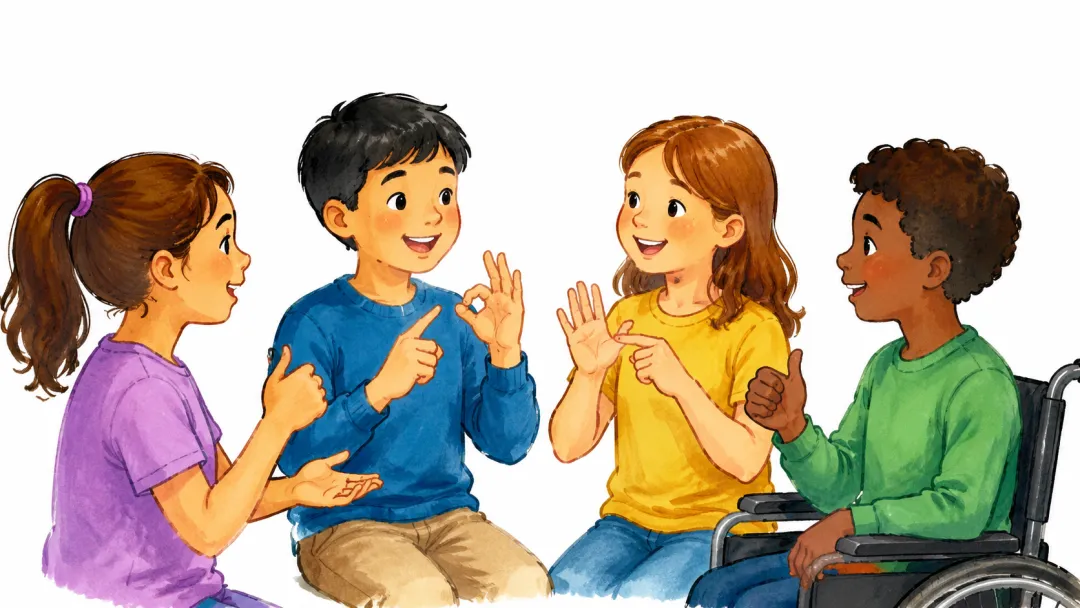
A Language is a powerful tool that humans use for a wide variety of purposes-from expressing emotions and sharing ideas to passing down cultural values and acquiring knowledge. It is not limited to spoken words; gestures, facial expressions, and even posture all contribute to how we communicate. Language, whether signed or spoken, plays a vital role in how we engage with the world around us.
B In recent years, many American schools have begun to recognize American Sign Language (ASL) as a valid foreign language credit, just like Spanish or French. This change has opened the door for hearing students to choose ASL as an academic subject, which not only gives them a practical skill but also increases their awareness of and empathy toward the Deaf community. Some educators believe this early exposure may even influence students to pursue careers in special education, speech therapy, or interpreting.
COne clear benefit of learning ASL for hearing children is the opportunity for broader social interaction. Children who understand ASL can communicate with deaf peers, making their social circles more inclusive. Additionally, they may find it easier to express complex ideas or emotions non-verbally, which is helpful in noisy environments or when verbal speech isn't possible.
D Dr. Marilyn Daniels, a researcher and advocate for baby sign language, has spent over two decades studying the impact of signing on early communication. While she promotes the use of sign language with infants, she emphasizes that there is no need for parents to invent their own signs. Instead, she suggests that parents use ASL or another standardized system to ensure consistency and eventual recognition by others.
E Very young children often develop motor skills before verbal skills. Dr. Daniels notes that even babies as young as six months can learn to use simple signs like "milk" or "more" with their hands, long before they can articulate those words. This early form of communication can reduce frustration for both babies and their parents-and may even accelerate speech development.
............................
Questions 27-33
Look at the following statements (Questions 27-33) and the list of sections (A-G) in the reading passage.
Match each statement with the correct section.
Write the correct letter, A-G, in boxes 27-33 on your answer sheet.
27 A statement about the different things people use language for. .............
28How knowing ASL may benefit students in their future subject choices. .............
29An assertion that deaf children have a right to be taught a sign language. .............
30 An observation regarding the ability of small children to use their hands. .............
31The advantage for hearing children of knowing ASL for wider social interaction. .............
32Different views on when deaf children should be taught to speak. .............
33An observation about the reading ability of primary-school-age hearing children who have been taught ASL. .............
完整版原文+答案私信沫沫学雅领取~机考题库和干货资料留言123~更多雅思资料PDF评论区留言666~


