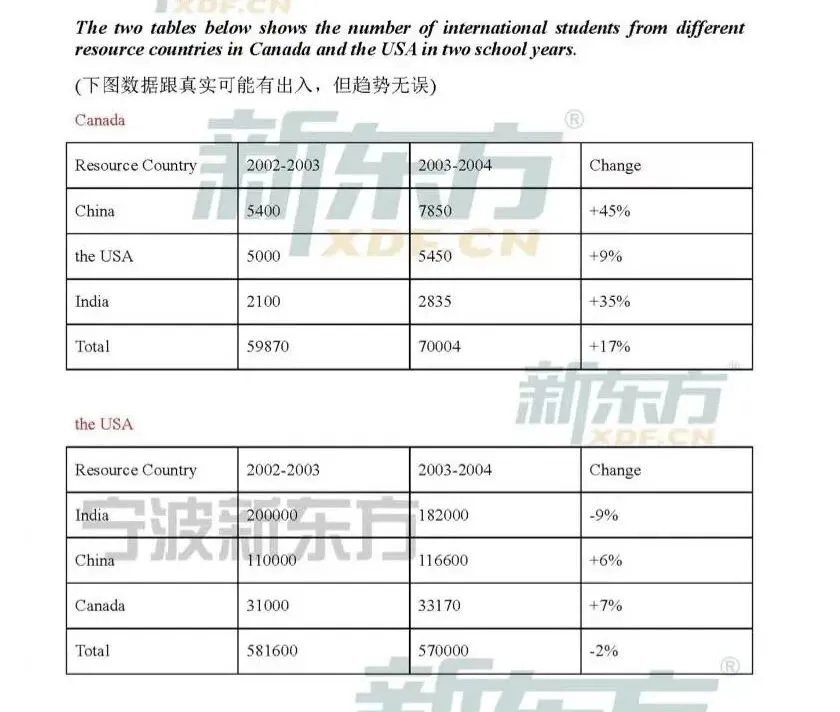
The two tables illustrate the changes in the number of overseas students studying inCanada and the USA over two school years from 2002 to 2004.
两张表格展示了2002年至2004年两年间赴加拿大和美国留学的海外学生人数的变化。
As can be seen from the first table, the total number of international students inCanada increased significantly from 59,870 to 70,004 – a rise of17% over the period.China was the largest source of students to Canadaamong the three countries, withthe sharpest increase of45% from 5,400 to 7,850. India followed witha growth rate of 35%, which was around four times that ofthe United States (9%). However, the number of American students in Canada was still nearly double that of Indian students, with figures of 5,450 and 2,835 respectively in the latter year.
从第一张表格中可见,加拿大国际学生总数从59,870显著增长至70,004,期间增幅达17%。在三个国家中,中国是加拿大最大的留学生来源国,增幅也最大,从5,400人增至7,850人,增长45%。印度紧随其后,增长率为35%,约为美国9%的四倍。然而,在加拿大的美国留学生人数仍是印度学生的近两倍,后一年数据分别为5,450人和2,835人。
According to the second table, there was a slight decrease in the total number of international students inthe United States of2%, with numbers fallingfrom 581,600 to 570,000. AlthoughIndia experienceda sharp decline of 9% from 200,000 to 182,000, it remained the leading source country among the three. China and Canada recorded similar growth rates of6% and 7% respectively, but the number of Chinese students was more than three times that of Canadian students, at 116,600 compared to 33,170 in the second school year.
根据第二张表格,美国国际学生总数略有下降,降幅为2%,人数从581,600减少至570,000。尽管印度学生人数急剧下降9%,从200,000人减至182,000人,但它仍是这三个国家中最大的留学生来源国。中国和加拿大的留学生人数增长率相近,分别为6%和7%,但中国留学生人数是加拿大留学生的三倍多,第二个学年分别为116,600人和33,170人。
To sum up, far more students chose to study in the United States than in Canada, but the overall figure for the US showed a slight downward trend, while Canada experienced a sharp increase.
总之,选择赴美留学的学生远多于赴加留学的学生,但美国的留学生总数呈小幅下降趋势,而加拿大则增长显著。
雅思线上课咨询或需要雅思资料请加微信:sydney20101114