


2026CATTI三级笔译实务真题
英译汉
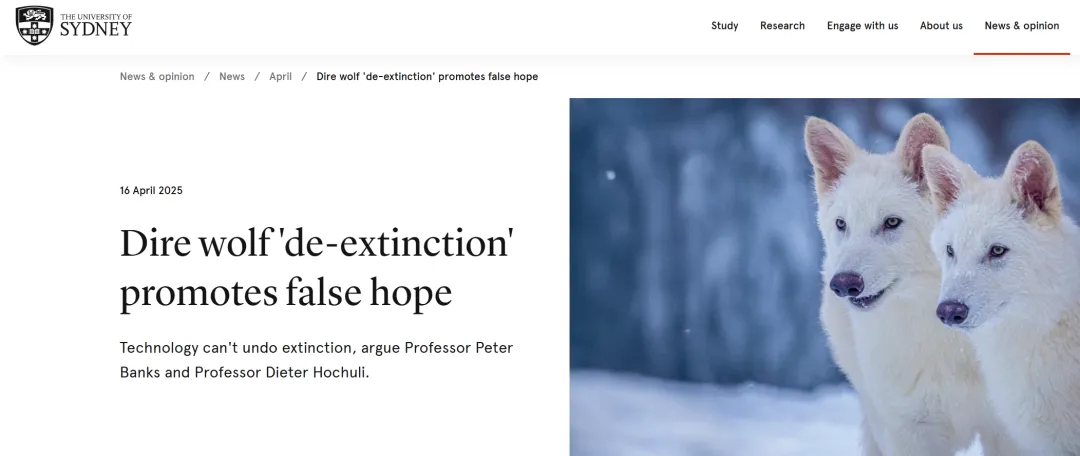
今年的英译汉来源于悉尼大学官网新闻评论专栏,这篇评论是学界针对Colossal Biosciences(巨创生物)“复活恐狼” 商业宣传的批判类时评,因兼具科技、生态、社会政策多重话题,被 CATTI 爱考的风格。原文如下:
Over the past week, the media have been inundated with news of the “de-extinction” of the dire wolf (恐狼) — a species that went extinct about 13,000 years ago. The breakthrough has been achieved by Colossal Biosciences (巨创生物科学公司), a multibillion-dollar United States company that claims their goal is to restore biodiversity through the de-extinction of species. The project is being debated and marketed as a conservation win. But does this technology really have the best interests of conservation in mind? We argue as ecologists that genetic advancements like these, while they are major scientific and technological feats, still risk minimizing the severity of the current extinction crisis. Importantly, they take away focus from proven conservation efforts that are needed to protect the biodiversity that remains.
First, it is important to recognize that the three “dire wolf” pups created are not actually dire wolves. Colossal carried out 20 edits in 14 genes of the grey wolf genome to create their “dire wolves” using a genetic technique called CRISPR-Cas9. The grey wolf’s genome is 2.4 billion base pairs (碱基对) long. Would we consider a chimpanzee, with which we share 98.8% of our genome, to be human after 20 edits? The reality is that there are three slightly modified grey wolves.
This de-extinction project has had millions of dollars poured into it—amounts of money most conservation programs could only dream of. There are proven solutions to help reverse biodiversity loss: habitat protection and restoration, the control of invasive species and the phasing out of fossil fuels. However, those solutions are not slickly marketed as shiny, techno-fix packages like de-extinction. Instead, they are heavily underfunded.
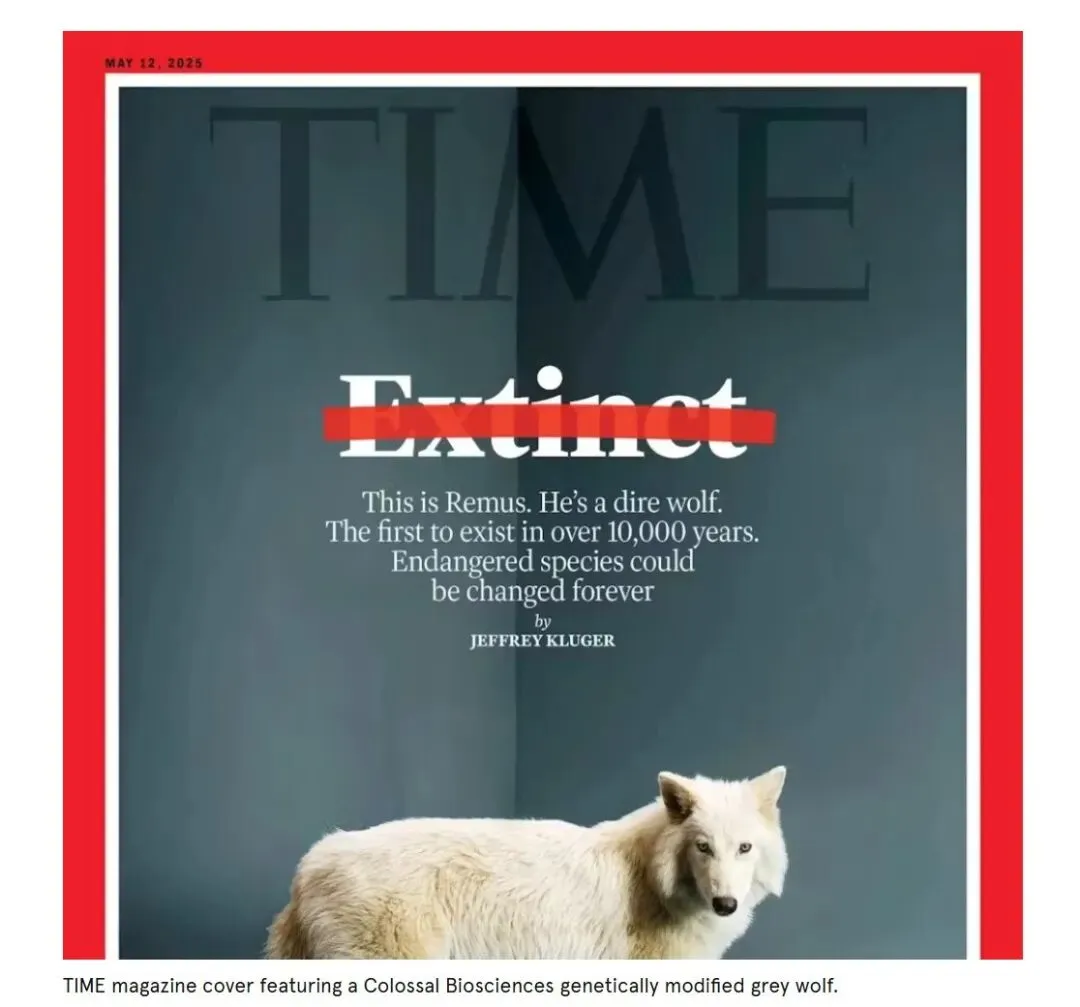
Promoting extinction as reversible risks downplaying its gravity and legacy. Headlines like the one that appeared on the front cover of TIME magazine—with the word “extinct” crossed out—seed a false hope that no matter what environmental damage is done, species loss can be easily undone. The risk is that de-extinction will be used as an ultimate offset for any environment impact. It is what makes fighting biodiversity loss such an urgent concern, so much so that people risk their lives to prevent it, with 150 wildlife rangers dying each year around the world in their fight to protect endangered species. Framing extinction as temporary creates false hope and undermines motivation for real conservation action.
We might already be seeing this happen in response to the “de-extinction” of the dire wolf. Interior Secretary of the US administration, Doug Burgum (道格・伯古姆), praised the new biotechnology advancement and used it as an argument for the removal of the US Endangered Species Act. What good is bringing back species if there are no protective laws to address the drivers of their declines? It is deeply ironic that while millions are being spent recreating a dire wolf proxy, its cousin, the grey wolf, is heavily persecuted globally; other predators are affected, too. In Australia, the dingo, which has been shown to suppress invasive cats and red foxes, helping native biodiversity, is also heavily persecuted.
If we can’t safeguard or protect habitat for apex predators today, in ecosystems that are already under immense pressure, what kind of world would we be bringing extinct species back into? Up to 150 species are considered to go extinct every day. No amount of genetic tech will solve this unless we address the root causes: habitat destruction, over-exploitation and climate change. The de-extinction of the dire wolf may sound like a conservation breakthrough, but it risks distracting us from the protection of our current living species. This approach turns biodiversity conservation into a billionaire's Jurassic Park fantasy instead of addressing the crisis we already know how to fix. (632words)
汉译英
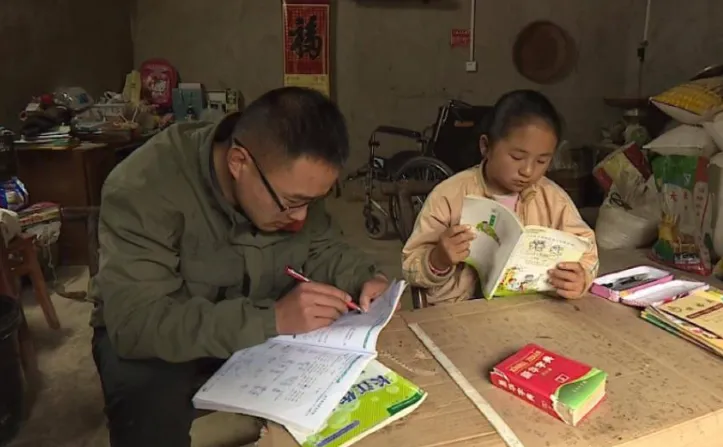
2025年全国高考,被称为“玻璃娃娃”的湖北考生田艳青考出621分的优异成绩。她发自内心地感谢支教教师袁辉,是他点亮了她的生命之光。
2012年9月,袁辉从南京大学历史系毕业,到湖北省姜家湾村支教。当时姜家湾有27个孩子,大多数是留守儿童,很多是单亲家庭。特别是田艳青,患有“成骨不全症(osteogenesis imperfecta)”,常常独自伤心地坐在角落。她渴望上学,但因病而无法到校上课。
看到田艳青的处境,袁辉决定上门为她上课。最初在姜家湾教学点支教时,到田艳青家有3公里山路,后来转至8公里外的白沙坪小学,他仍然坚持去她家上课。六年里,他风雨无阻,不仅分文不取,还用自己微薄的生活补贴,为她买玩具、彩色画笔、课外书。
他发现村里孩子只会方言,无法与外界交流。于是他采用了普通话与方言“双管齐下” 的模式,使孩子们学会了标准的普通话。他教孩子们拼音字母、历史算术和诗词鉴赏,引导孩子们体验自然界的一草一木、风声鸟语,让他们知道,一草一木、鸟语花香都是一种生命,形成对自然、对人生的独特思考。(417字)
如果觉得有用,欢迎点赞收藏在看哦~


