

答案解析
第二部分 阅读
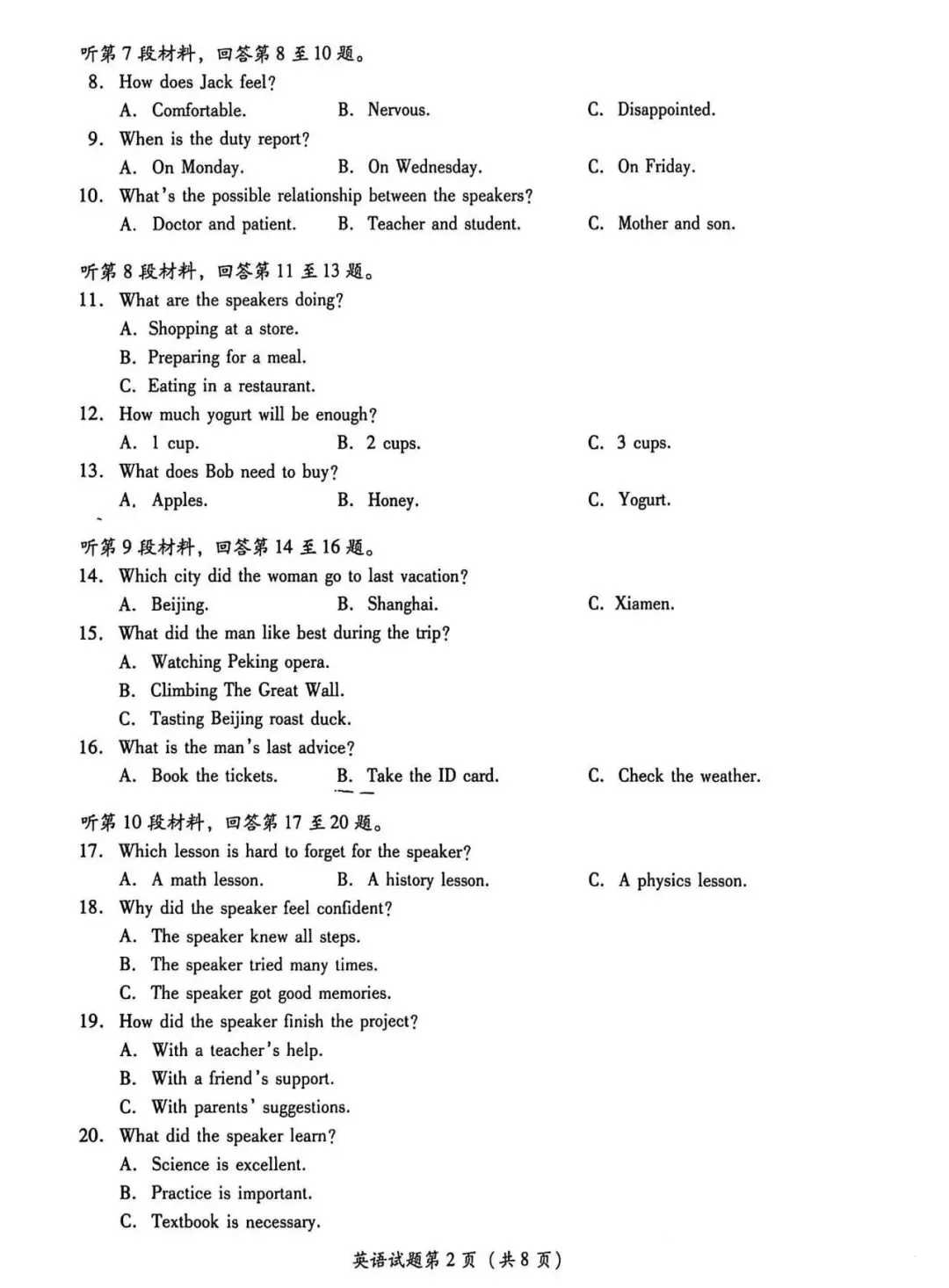
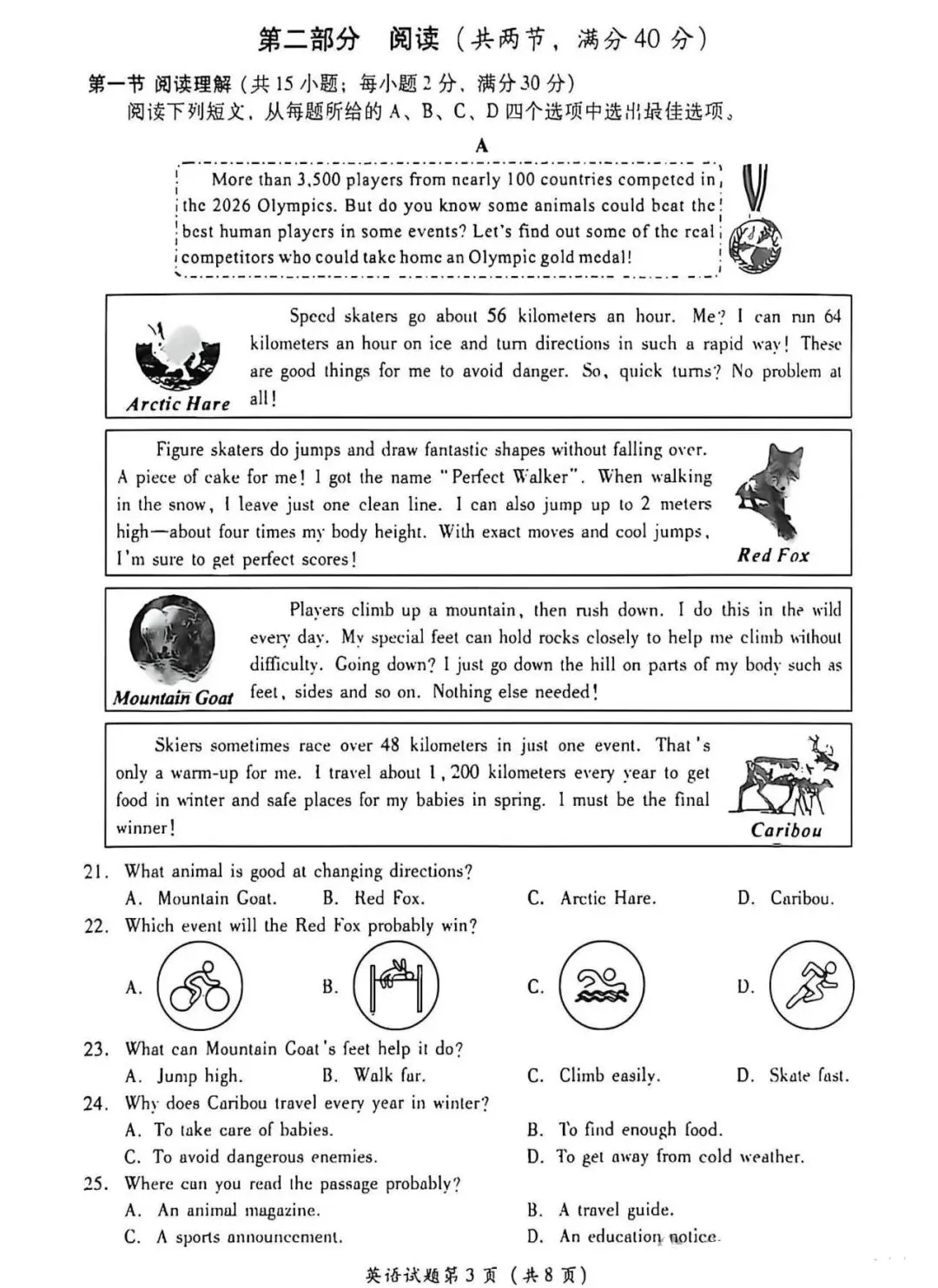
第一节 阅读理解A篇(动物与奥运项目)21.C.Arctic Hare.
解析:根据Arctic Hare部分的描述"I can run 64 kilometers an hour on ice and turn directions in such a rapid way!"以及"So, quick turns? No problem at all!"可知,北极兔擅长快速转向。
22.B. (跳高图标)
解析:Red Fox部分提到"I can also jump up to 2 meters high—about four times my body height. With exact moves and cool jumps, I'm sure to get perfect scores!",说明红狐擅长跳跃,对应跳高项目。
23.C.Climb easily.
解析:Mountain Goat部分明确指出"My special feet can hold rocks closely to help me climb without difficulty.",即山羊的脚能帮助它轻松攀爬。
24.B.To find enough food.
解析:Caribou部分提到"I travel about 1,200 kilometers every year to get food in winter and safe places for my babies in spring.",冬季迁徙是为了获取食物。
25.A.An animal magazine.
解析:本文以生动有趣的口吻介绍动物的特长,并与奥运项目对比,最可能出自动物杂志。
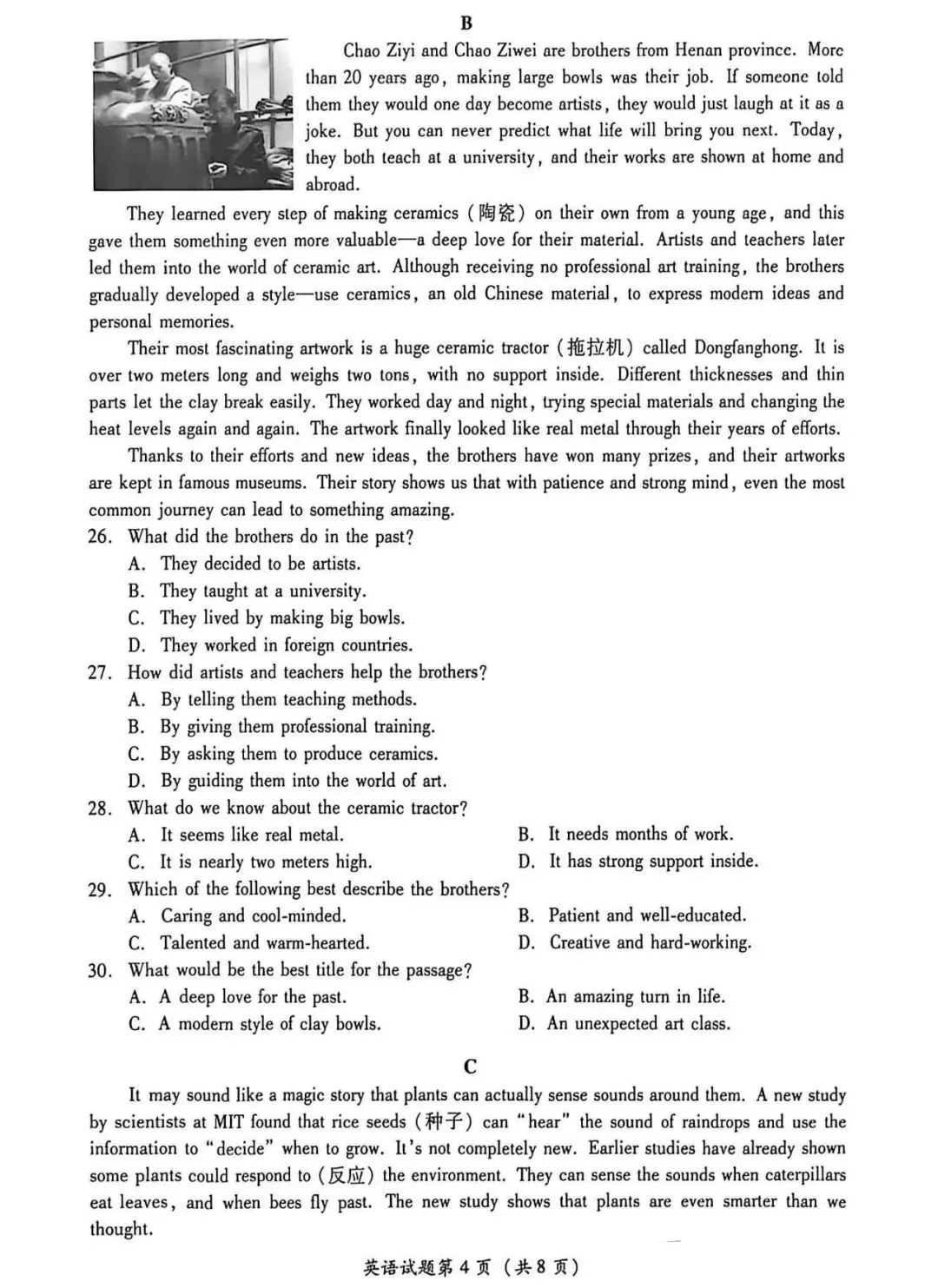
B篇(晁氏兄弟与陶瓷艺术)
26.C.They lived by making big bowls.
解析:第一段第二句"More than 20 years ago, making large bowls was their job."说明他们过去以制作大碗为生。
27.D.By guiding them into the world of art.解析:第二段第三句"Artists and teachers later led them into the world of ceramic art."中的"led...into"与"guiding...into"同义。
28.A.It seems like real metal.
解析:第三段最后一句"The artwork finally looked like real metal through their years of efforts."说明这件陶瓷拖拉机看起来像真金属。
29.D.Creative and hard-working.
解析:文中提到他们"worked day and night"(勤奋),"trying special materials and changing the heat levels again and again"(不断尝试新材料和温度),以及"use ceramics, an old Chinese material, to express modern ideas"(用传统材料表达现代理念),体现了创造性和勤奋。
30.B.An amazing turn in life.
解析:文章讲述兄弟俩从制作大碗的普通工匠,意外成为大学教师和艺术家的故事,体现了人生的惊人转变。第一段"But you can never predict what life will bring you next"也点明了主题。
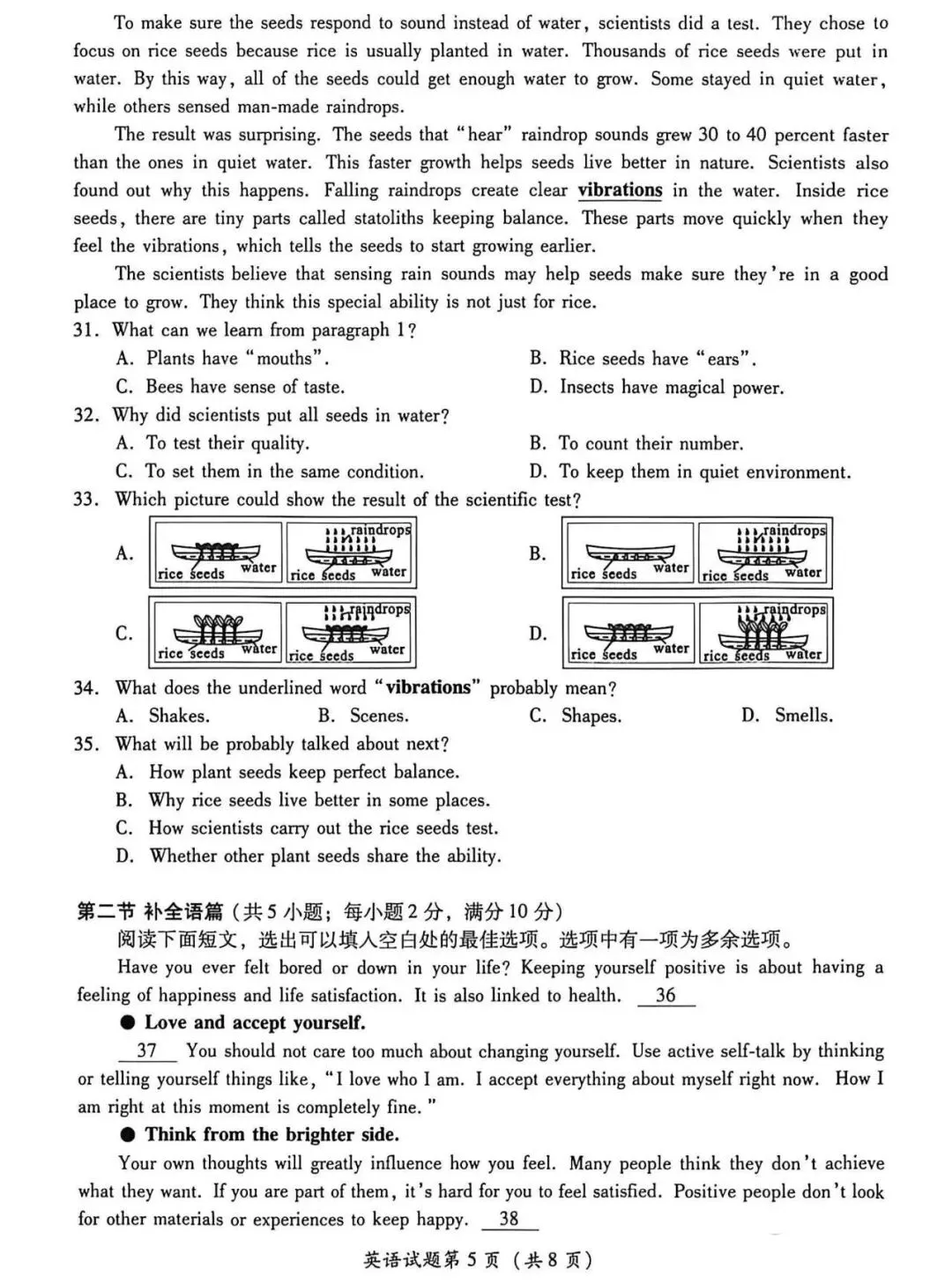
C篇(植物感知声音)
31.B.Rice seeds have "ears".
解析:第一段第二句提到"rice seeds can 'hear' the sound of raindrops",即稻种能"听见"雨滴声,这是比喻说法。
32.C.To set them in the same condition.
解析:第二段提到"To make sure the seeds respond to sound instead of water"以及"all of the seeds could get enough water to grow",说明把所有种子放在水中是为了控制变量,确保它们处于相同的水环境中,从而测试声音的影响。
33.D.(右侧植物更高的图示)
解析:第三段第一句"The seeds that 'hear' raindrop sounds grew 30 to 40 percent faster than the ones in quiet water."说明听到雨滴声的种子长得更快,图示应显示右侧(有雨滴)的植物更高。
34.A.Shakes.
解析:根据上下文,"Falling raindrops create clear vibrations in the water"以及"These parts move quickly when they feel the vibrations",雨滴落下会在水中产生振动,"vibrations"意为"震动",与"shakes"最接近。
35.D.Whether other plant seeds share the ability.
解析:文章最后一句"They think this special ability is not just for rice."暗示科学家认为这种能力不仅限于水稻,下文最可能讨论其他植物种子是否也有这种能力。
第二节 补全语篇
36.F.You can learn to keep yourself positive in many ways.
解析:此句为总起句,承上启下,引出下文介绍的多种保持积极心态的方法。
37.C.Focus on what you are now.
解析:本段主题是"Love and accept yourself",后文提到"You should not care too much about changing yourself"以及接受现在的自己,对应"关注当下的自己"。
38.E.So, pay close attention to good parts of your life.
解析:本段主题是"Think from the brighter side",前文说积极的人不依赖外在物质或经历来保持快乐,因此要注意生活中好的方面。
39.D.Join in relaxing activities in your free time.
解析:本段主题是"Do activities that lift your spirits",后文列举了看电视、画画、听音乐等活动,对应"在空闲时间参加放松活动"。
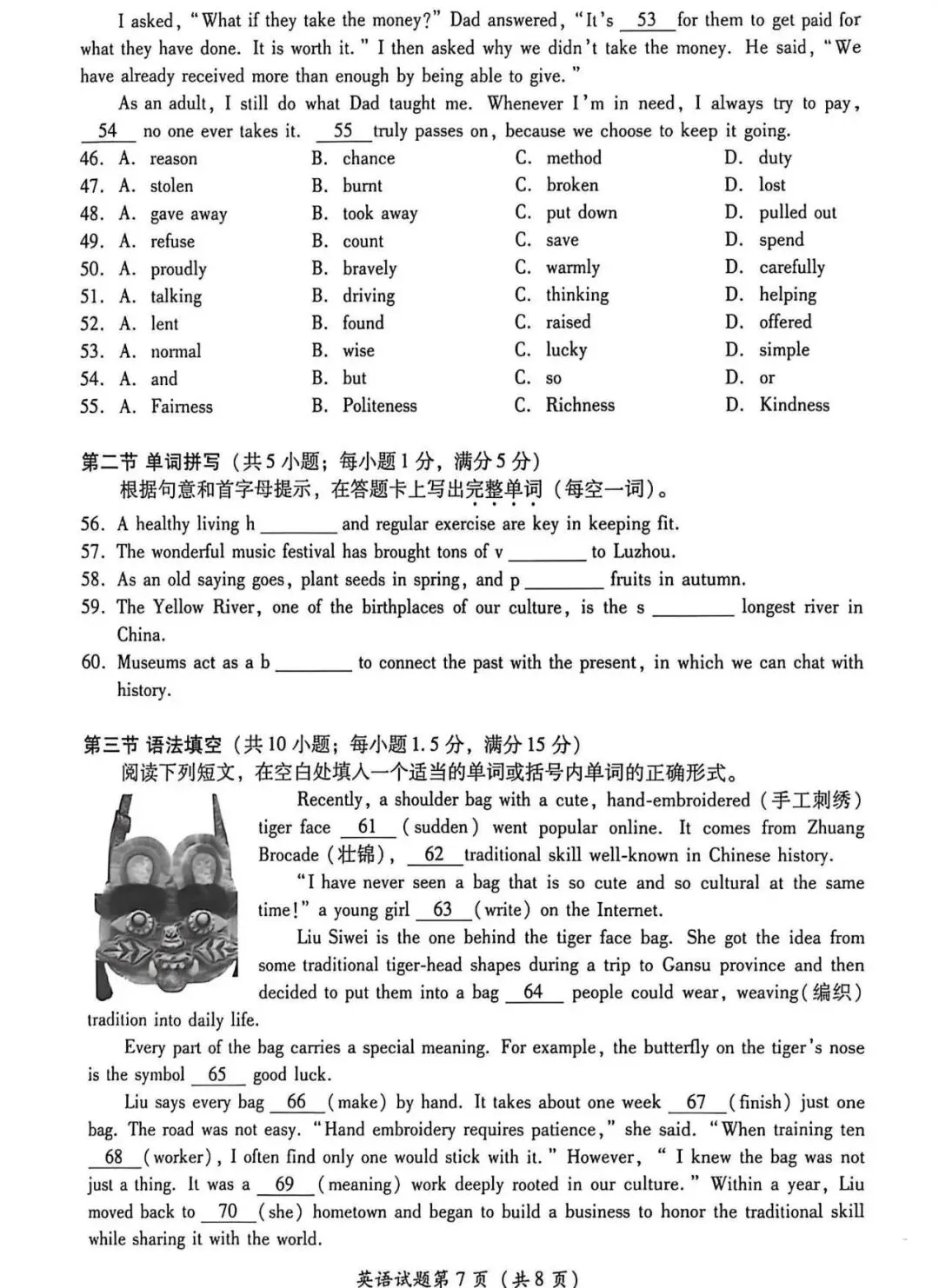
40. A. Be independent.
解析:该段内容为"Do not depend on others to tell you what you want. Hold true to your own beliefs."(不要依赖别人告诉你想要什么,坚持自己的信念),强调的是"独立、不依赖他人"。
第三部分 语言运用第一节
完形填空A篇(树木的馈赠)
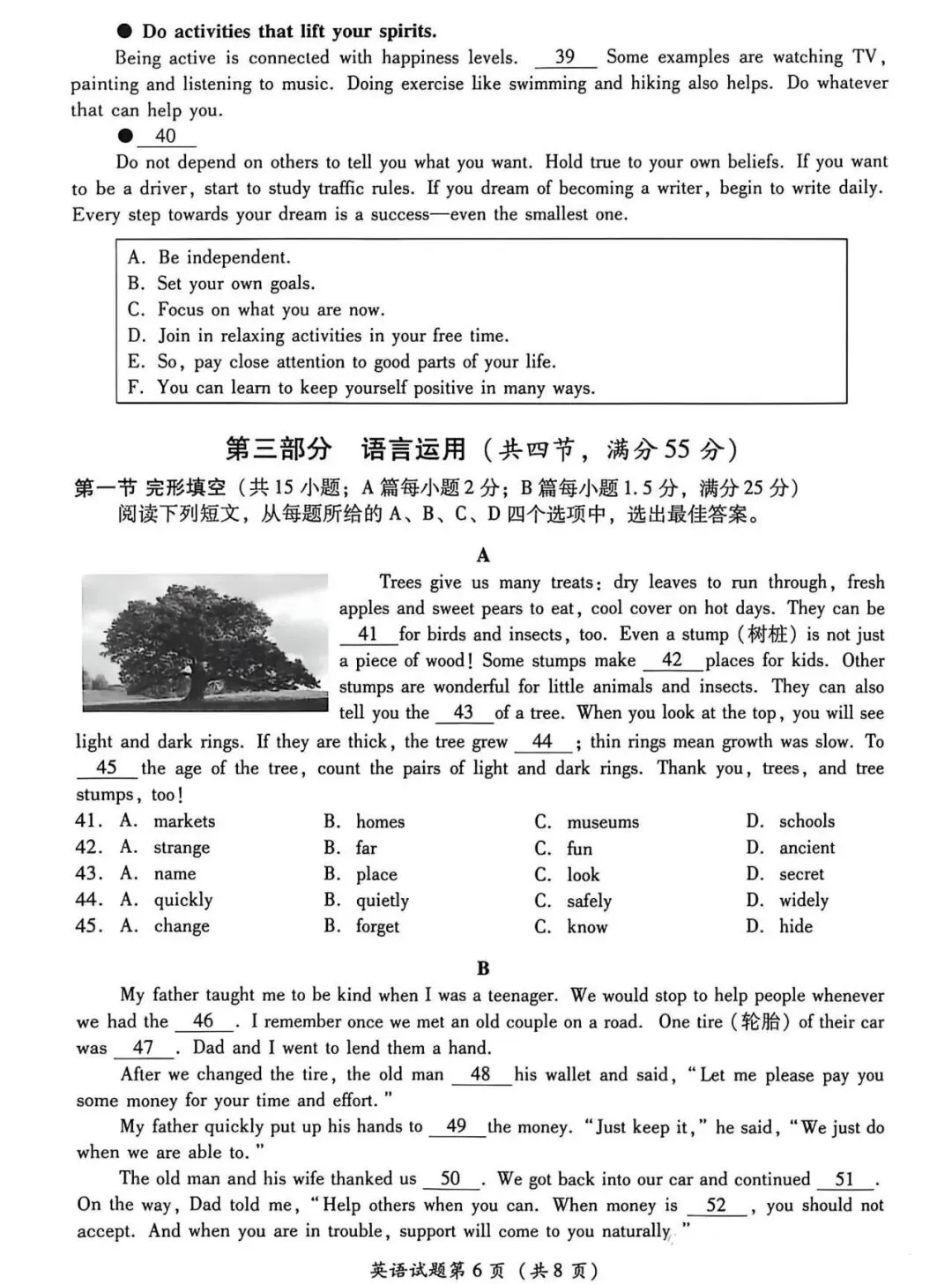
41.B.homes
解析:树木可以成为鸟类和昆虫的"家园",符合语境。
42.C.fun
解析:树桩可以成为孩子们的"有趣"场所,与"wonderful for little animals"对应。
43.D.secret
解析:后文提到通过年轮判断树的年龄,这是树的"秘密"。
44.A.quickly
解析:年轮粗说明树长得"快",与后文"thin rings mean growth was slow"形成对比。
45.C.know
解析:数年轮是为了"知道"树的年龄。
B篇(父亲的教诲)
46.B.chance
解析:"whenever we had the chance"意为"每当我们有机会的时候"。
47.C.broken
解析:后文提到"After we changed the tire"(换轮胎),说明轮胎"坏了"。
48.D.pulled out
解析:老人要付钱,应该是"掏出"钱包,"pull out"符合语境。
49.A.refuse
解析:父亲举手是为了"拒绝"收钱,后文"Just keep it"也印证了这一点。
50.C.warmly
解析:老人和妻子"热情地"感谢我们,符合受到帮助后的反应。
51.B.driving
解析:我们回到车里继续"开车"。
52.D.offered
解析:"When money is offered"意为"当有人给你钱时",与上文老人主动给钱对应。
53.A.normal
解析:父亲说别人为所做的事得到报酬是"正常的"。
54.B.but
解析:前后句为转折关系:"我总是尝试付钱,但没人收"。
55.D.Kindness
解析:全文主题是善良,"Kindness truly passes on"(善良真正传递下去)点明主旨。
第二节 单词拼写
56.habit
解析:"a healthy living habit"健康的生活习惯。
57.visitors
解析:"tons of visitors"大量游客,音乐节带来游客。
58.pick
解析:谚语"春种秋收","pick fruits"摘果实/收获果实。
59.second
解析:黄河是中国"第二"长河。
60.bridge
解析:博物馆作为连接过去与现在的"桥梁"。
第三节 语法填空
61.suddenly
解析:修饰动词"went",用副词形式。
62.a
解析:"a traditional skill"一种传统技艺,泛指。
63.wrote
解析:描述过去发生的动作,用一般过去时。
64.that/which
解析:定语从句,先行词"a bag"指物,关系代词在从句中作宾语。
65.of
解析:"the symbol of good luck"好运的象征。
66.is made
解析:被动语态,"每个包都是手工制作的"。
67.to finish
解析:"It takes + 时间 + to do sth."固定句型。
68.workers
解析:"ten"后接可数名词复数。
69.meaningful
解析:修饰名词"work",用形容词形式。
70.her
解析:修饰名词"hometown",用形容词性物主代词。
第四节 信息摘录
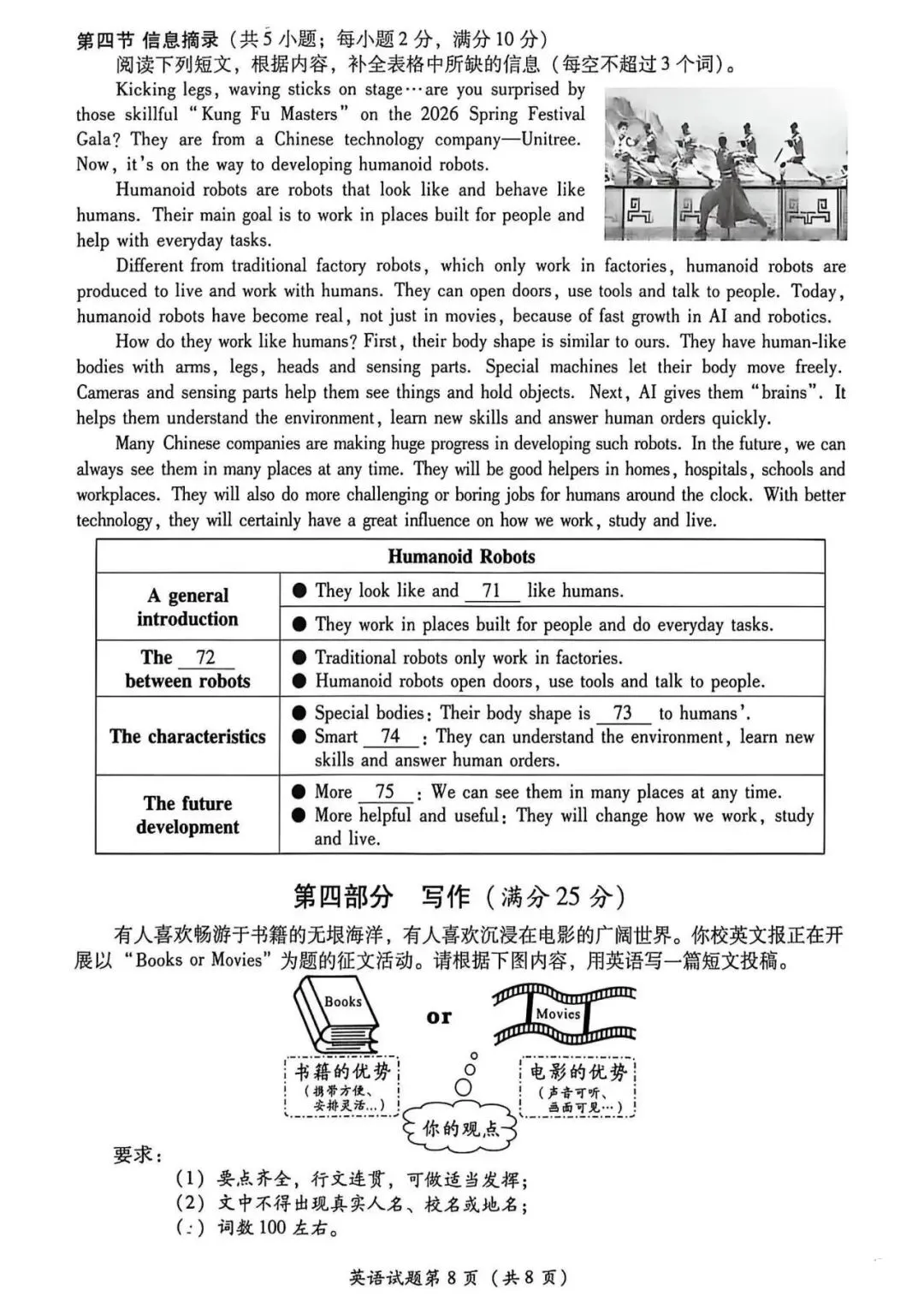
71.behave
解析:第二段第一句"Humanoid robots are robots that look like and behave like humans."
72.differences
解析:该栏对比传统机器人和人形机器人的不同之处。
73.similar
解析:第四段第二句"their body shape is similar to ours."
74.brains
解析:第四段"AI gives them 'brains'."75.common解析:最后一段"we can always see them in many places at any time",说明它们会更"普遍/常见"。
第四部分 写作参考范文:
Books or Movies
Some people prefer books while others like movies better.
Books have many advantages.They are easy to carry, so we can read anywhere.Also, we can arrange our reading time freely.When we read, we can imagine different scenes by ourselves.
However, movies bring us wonderful experiences too.We can listen to sounds and watch vivid pictures at the same time, which makes stories more lively.
In my opinion, both books and movies are great.I love reading books to enjoy imagination, and I also watch movies to relax myself.They enrich our life in different ways.


