PART.01
文本阅读

大意:本文是一篇说明文,介绍了AI在博物馆中的多种应用,同时也提及了其带来的伦理与隐私隐患。
【原文出处】本文选自《硅谷评论》于2024年7月16日发布的名为 How Are Museums Using Artificial Intelligence 的 文 章
https://thesiliconreview.com/2024/07/how-are-museums-using-artificial-intelligence
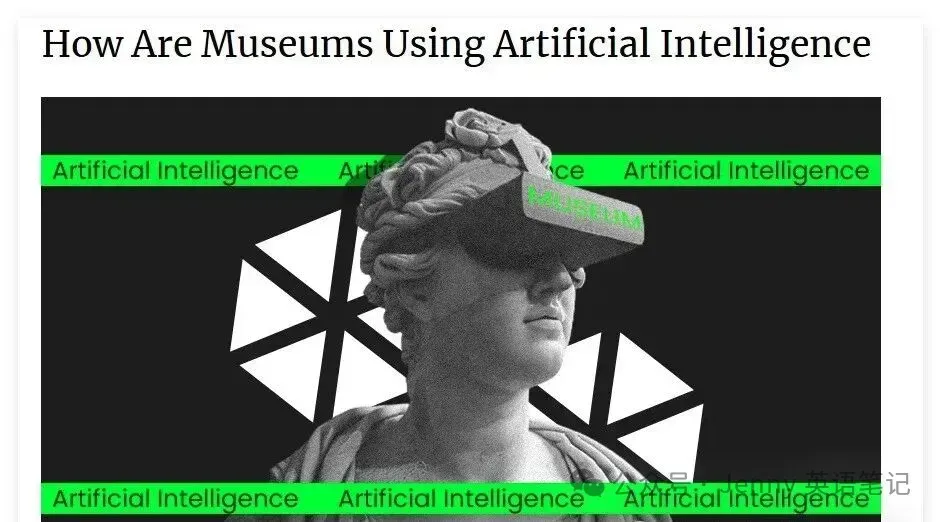
Museums, once quiet places filled with history, are now full of digital excitement. By using machine learning and advanced algorithms(算法), these institutions are creating personalized visitor journeys, protecting delicate collections, and revealing hidden stories. __36__
AI transforms a standard museum trip into a personalized and interactive adventure. Smart recommendation engines analyze data such as exhibit popularity and visitors' past behavior to suggest specific exhibits and events, making each visit unique and surprising. _37___These digital assistants engage visitors in dynamic conversations and offer context-sensitive insights that deepen understanding and satisfy curiosity.
Beyond visitor interaction, AI plays a crucial role in preserving priceless artworks. Since the exhibits in museums sustain natural decay(破损) over time, early detection is vital. AI can help identify the slightest signs of decay, such as cracks or discoloration, which are often invisible to the human eye. _38___Moreover, by predicting future decay patterns, AI helps museums take preventive measures and improve preservation strategies.
AI also significantly enhances the educational value of museums, particularly for children and families. _39___For instance, interactive exhibits powered by AI can adjust their content and difficulty level based on the user's preferences and responses. This adaptability ensures that complex historical concepts become accessible and engaging for young minds.
Looking ahead, the rapid advancement of AI promises both exciting possibilities and ethical(伦理的) challenges. Museums are working together with AI ethicists to develop fair algorithms. _40__Strict policies should be established to protect visitors' information.
PART.02
七选五选项

A. This capability allows for timely restoration.
B. Visitor data collection also raises privacy issues.
C. In short, AI is redefining the museum in all respects.
D. It tailors learning experiences to different age groups and learning styles.
E. Museums are not only places to store artworks, but also spaces for learning.
F. Furthermore, AI-powered virtual guides are replacing traditional tour guides.
G. AI is changing this by using image recognition technology to analyze exhibits.
PART.03
重点单词

1. advanced adj 高级的
2. personalized adj 个性化的
3. delicate adj 精美的; 脆弱的
4. analyze v 分析
5. specific adj 特定的
6. assistant n 助手
7. engage v [熟词生义]吸引
8. dynamic adj 动态的
9. insight n 深入了解
10. deepen v 加深
11. beyond prep 除……之外
12. priceless adj 极珍贵的
13. discoloration n 变色
14. invisible adj 看不见的
15. enhance v 提高
16. power v [名词动化]驱动
17. adjust v 调整
18. adaptability n 适应能力
19. capability n 能力
20. timely adj 及时的
21. restoration n 修复
PART.04
重点短语

PART.05
全文翻译

Museums, once quiet places filled with history, are now full of digital excitement. By using machine learning and advanced algorithms(算法), these institutions are creating personalized visitor journeys, protecting delicate collections, and revealing hidden stories. __36__
博物馆曾经是充满历史的宁静之地,如今却充满了数字化的活力。通过运用机器学习和先进算法,这些机构正在打造个性化的游客体验、保护脆弱的藏品,并揭示隐藏的故事。__36__
AI transforms a standard museum trip into a personalized and interactive adventure. Smart recommendation engines analyze data such as exhibit popularity and visitors' past behavior to suggest specific exhibits and events, making each visit unique and surprising. _37___These digital assistants engage visitors in dynamic conversations and offer context-sensitive insights that deepen understanding and satisfy curiosity.
人工智能将传统的博物馆参观转变为个性化的互动冒险。智能推荐引擎通过分析展览受欢迎程度和游客过往行为等数据,推荐具体的展品和活动,使每次参观都独特而充满惊喜。__37__这些数字助手能与游客进行动态对话,并提供具有情境洞察的见解,从而加深理解、满足好奇心。
Beyond visitor interaction, AI plays a crucial role in preserving priceless artworks. Since the exhibits in museums sustain natural decay(破损) over time, early detection is vital. AI can help identify the slightest signs of decay, such as cracks or discoloration, which are often invisible to the human eye. _38___Moreover, by predicting future decay patterns, AI helps museums take preventive measures and improve preservation strategies.
除了增强游客互动,人工智能在保护珍贵艺术品方面也发挥着关键作用。由于博物馆中的展品会随着时间的推移而自然衰损,早期发现至关重要。人工智能可以帮助识别最细微的衰损迹象,例如裂纹或变色,这些往往是肉眼难以察觉的。__38__此外,通过预测未来的衰损模式,人工智能有助于博物馆采取预防性措施,并改进保护策略。
AI also significantly enhances the educational value of museums, particularly for children and families. _39___For instance, interactive exhibits powered by AI can adjust their content and difficulty level based on the user's preferences and responses. This adaptability ensures that complex historical concepts become accessible and engaging for young minds.
人工智能还显著提升了博物馆的教育价值,特别是对儿童和家庭而言。__39__例如,由人工智能驱动的互动展品可以根据用户的偏好和反馈调整内容和难度。这种适应性确保复杂的历史概念对年轻观众来说既易于理解又充满趣味。
Looking ahead, the rapid advancement of AI promises both exciting possibilities and ethical(伦理的) challenges. Museums are working together with AI ethicists to develop fair algorithms. _40__Strict policies should be established to protect visitors' information.
展望未来,人工智能的快速发展既带来了令人兴奋的可能性,也伴随着伦理挑战。博物馆正与人工智能伦理学家合作,开发公平的算法。__40__应制定严格的政策来保护游客的信息。
PART.06
七选五解析

A. This capability allows for timely restoration.
B. Visitor data collection also raises privacy issues.
C. In short, AI is redefining the museum in all respects.
D. It tailors learning experiences to different age groups and learning styles.
E. Museums are not only places to store artworks, but also spaces for learning.
F. Furthermore, AI-powered virtual guides are replacing traditional tour guides.
G. AI is changing this by using image recognition technology to analyze exhibits.
A. 这种能力使得及时修复成为可能。B. 游客数据的收集也引发了隐私问题。C. 简而言之,人工智能正在从各个方面重新定义博物馆。D. 它根据不同的年龄段和学习风格定制学习体验。E. 博物馆不仅是存放艺术品的地方,也是学习的空间。F. 此外,由人工智能驱动的虚拟导览正在取代传统的导游。G. 人工智能正在通过使用图像识别技术分析展品来改变这一现状。
解析:
36. C 空白处是段落结尾句,上文提到博物馆正通过机器学习和先进算法创造个性化访客路线、保护脆弱藏品、揭示隐藏故事,C项“总之,AI正在各方面重新定义博物馆”对上文三种应用进行总结,In short 收束首段,in all respects 引出下文各段的具体展开,故C项符合语境。
37. F 空白处前提到智能推荐引擎为访客推荐展品和活动,空白处后提到新信息:These digital assistants。由此可知,空白处应指出 These digital assistants 是什么。F项“此外,AI驱动的虚拟导游正在取代传统导游”,Furthermore 承接上文的智能推荐引擎,AI-powered virtual guides与空白处后的These digital assistants形成指代关系,故F项符合语境。
38. A 由空白处后的 Moreover 可知,前后两句应为递进关系,空白处后介绍的是AI能预测未来衰损模式,帮助博物馆采取预防措施,属于艺术品修复领域。由此可知,空白处也应围绕艺术品的保护修复方面展开。A项“这一能力使得及时修复成为可能”中 This capability 指向上文 AI 识别肉眼看不见的衰损迹象的能力,timely restoration与Moreover后预测衰损模式及改进保护策略形成语义递进,故A项符合语境。
39. D 空白处后的 For instance 提示空白处后是针对空白处的具体举例,例子讲的是AI驱动的互动展品能根据用户的偏好和回应调整内容和难度,体现的是针对不同人群提供差异化体验。D项“它根据不同年龄群体和学习风格定制学习体验”正是这一点的概括,且 different age groups and learning styles 对应下文用户的不同偏好和回应,tailors 与空白处前的 personalized 形成语义呼应,故D项符合语境。
40. B 空白处前提到博物馆正与 AI 伦理学家合作开发公平算法,空白处后提到应制定严格政策保护访客信息。B项“访客数据收集也引发隐私问题”中的 also 表明这是除算法公平性之外的又一个伦理问题,privacy issues 与下文 protect visitors' information 形成语义呼应,visitor data collection 补充说明了需要保护的具体对象,故B项符合语境。