

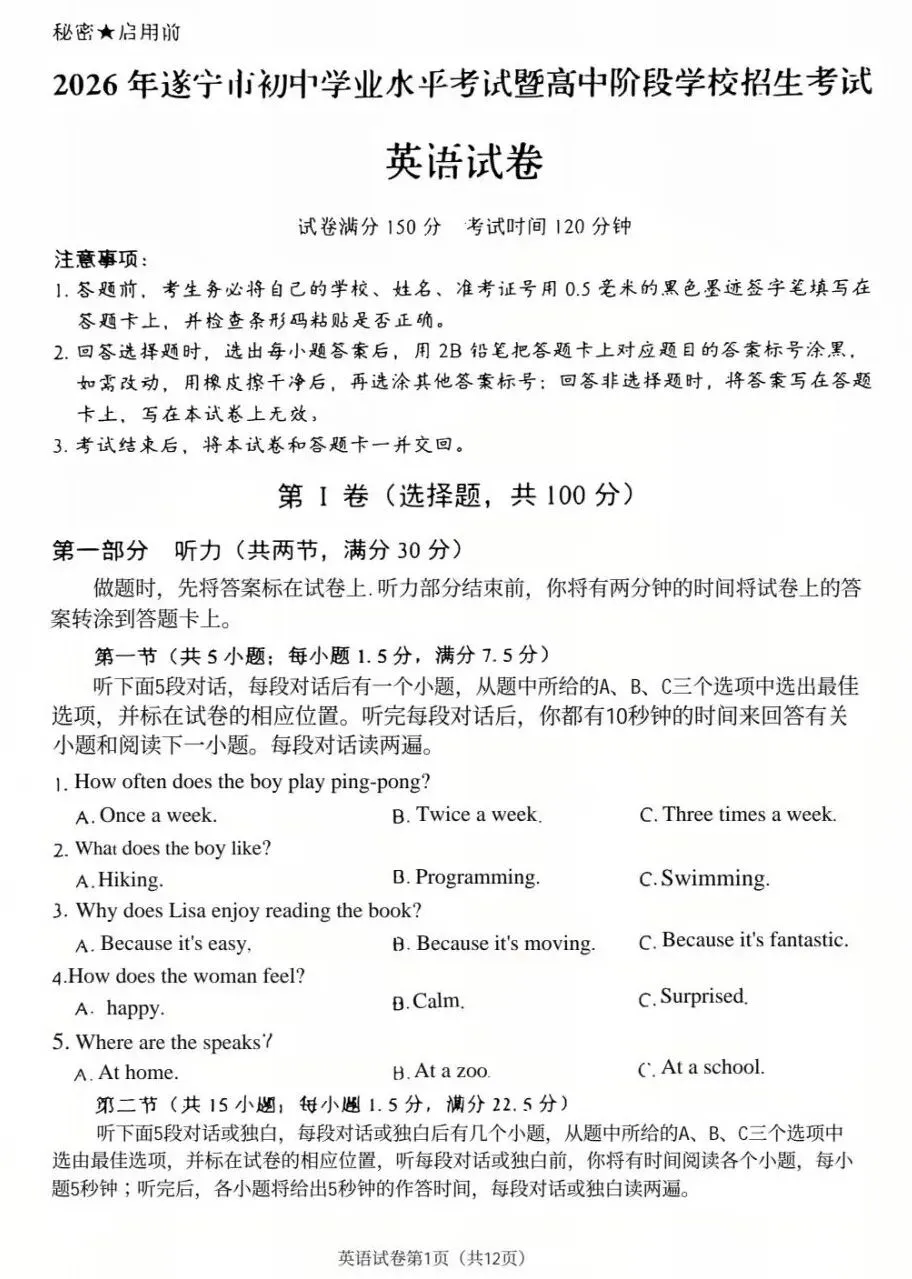
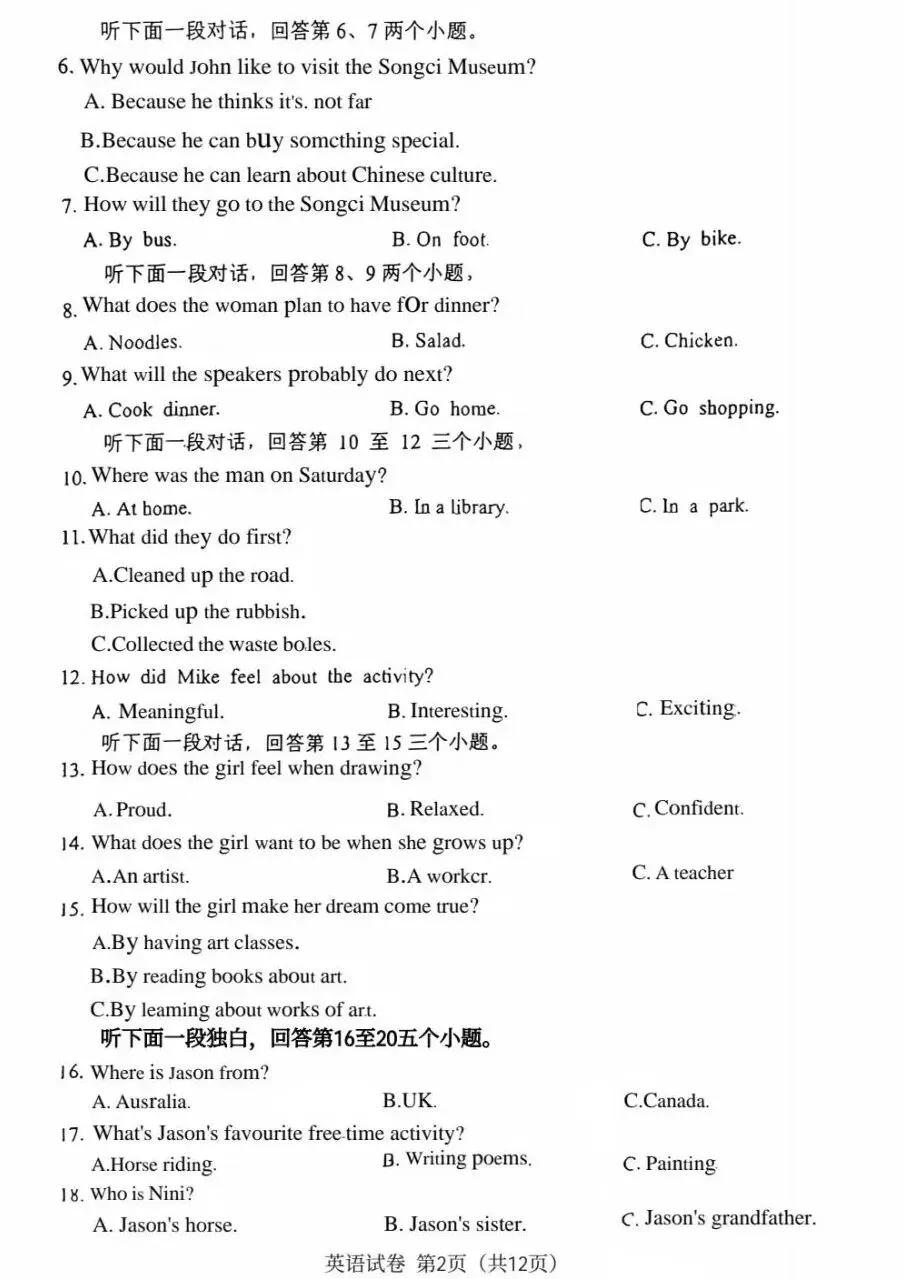
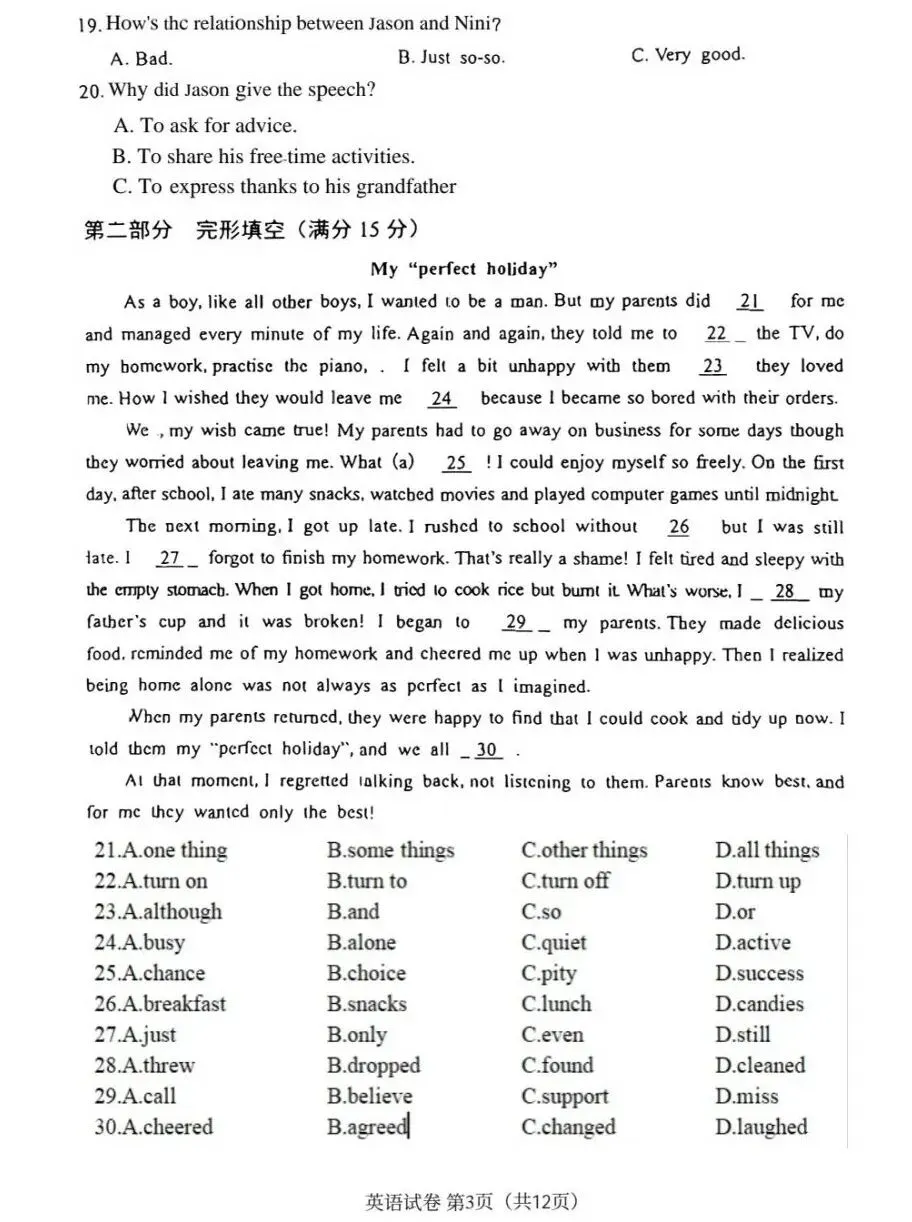
第二部分 完形填空(21-30题)
文章大意:一个男孩渴望独立,父母出差后他享受自由,却因缺乏自律导致各种问题,最终理解父母的爱。
21.D.all things
- 解析:根据后文"managed every minute of my life"(管理我生活的每一分钟),可知父母为他做所有事情,选all things。
22.C.turn off
- 解析:父母让孩子"关掉电视"去做作业、练琴,turn off the TV(关电视)符合语境。
23.A.although
- 解析:"我对他们有点不高兴"与"他们爱我"之间是让步关系,用although(尽管)。
24.B.alone
- 解析:根据后文"being home alone"可知,男孩希望父母让他独自待着,leave me alone(让我一个人待着)。
25.A.chance
- 解析:父母出差,男孩终于获得自由,感叹"多么好的机会啊!",What a chance!
26.A.breakfast
- 解析:前文说"The next morning, I got up late"(第二天早上起晚了),所以是没吃早饭就冲去学校。
27.C.even
- 解析:递进关系,"我迟到了,甚至忘了完成作业",even表示"甚至"。
28.B.dropped
- 解析:杯子碎了,应该是"摔落"了,drop(掉落)符合语境。
29.D.miss
- 解析:经历了一系列糟糕的事情后,男孩开始想念父母的好。
30.D.laughed
- 解析:男孩讲述自己的"完美假期"经历,大家应该是笑了,laughed符合温馨结局。
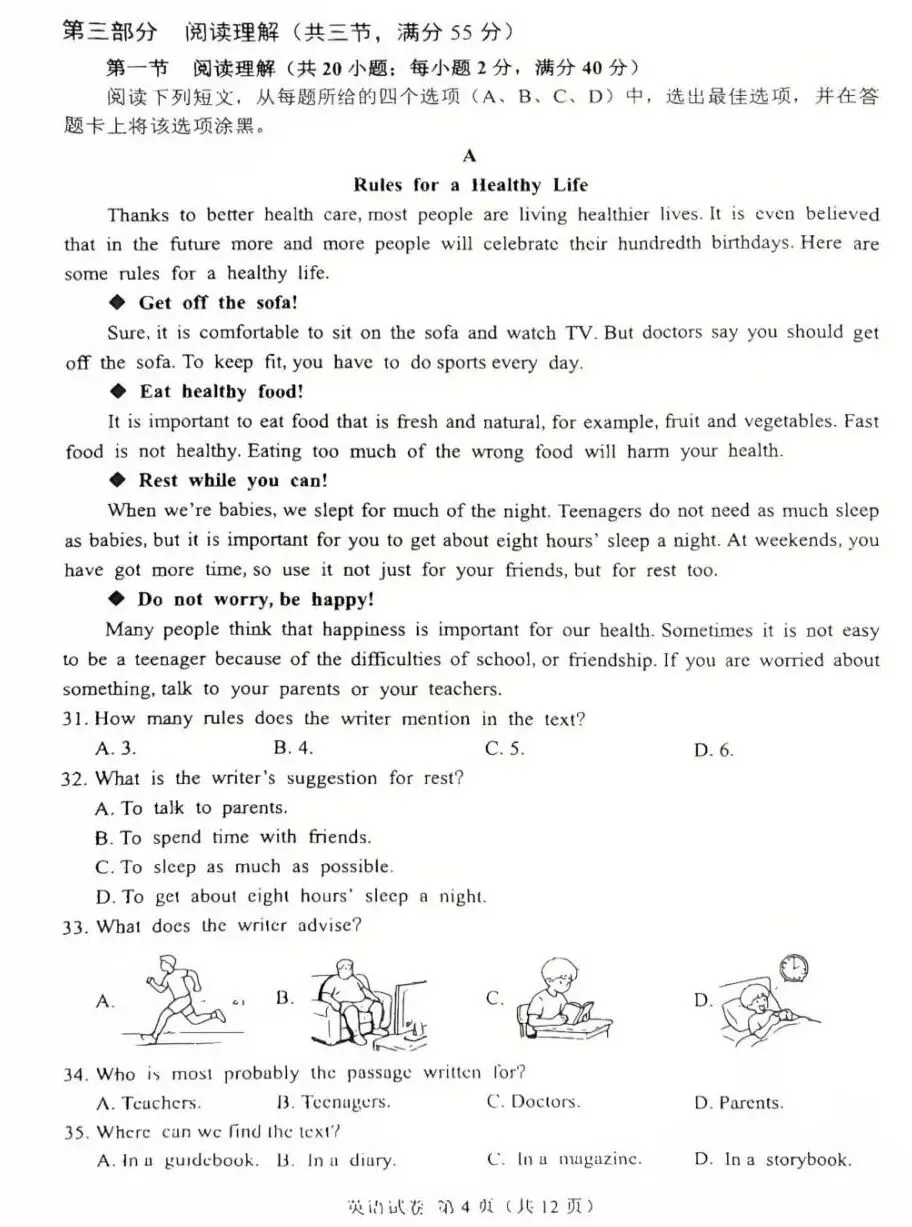
第三部分 阅读理解
A篇:Rules for a Healthy Life(31-35题)
31.B.4
- 解析:文中四个黑色菱形标记:①Get off the sofa! ②Eat healthy food! ③Rest while you can! ④Do not worry, be happy! 共4条规则。
32.D.To get about eight hours' sleep a night.
- 解析:在"Rest while you can!"部分明确提到"it is important for you to get about eight hours' sleep a night"。
33.A(跑步运动的图片)
- 解析:第一条规定"Get off the sofa!"强调要运动,A图是跑步运动,符合建议。B是坐沙发看电视(反对的),C是读书,D是睡觉。
34.B.Teenagers
- 解析:文中提到"Teenagers do not need as much sleep as babies"、"Sometimes it is not easy to be a teenager",明确指向青少年。
35.C.In a magazine
- 解析:健康建议类文章最可能出现在杂志中,不是指南书、日记或故事书。
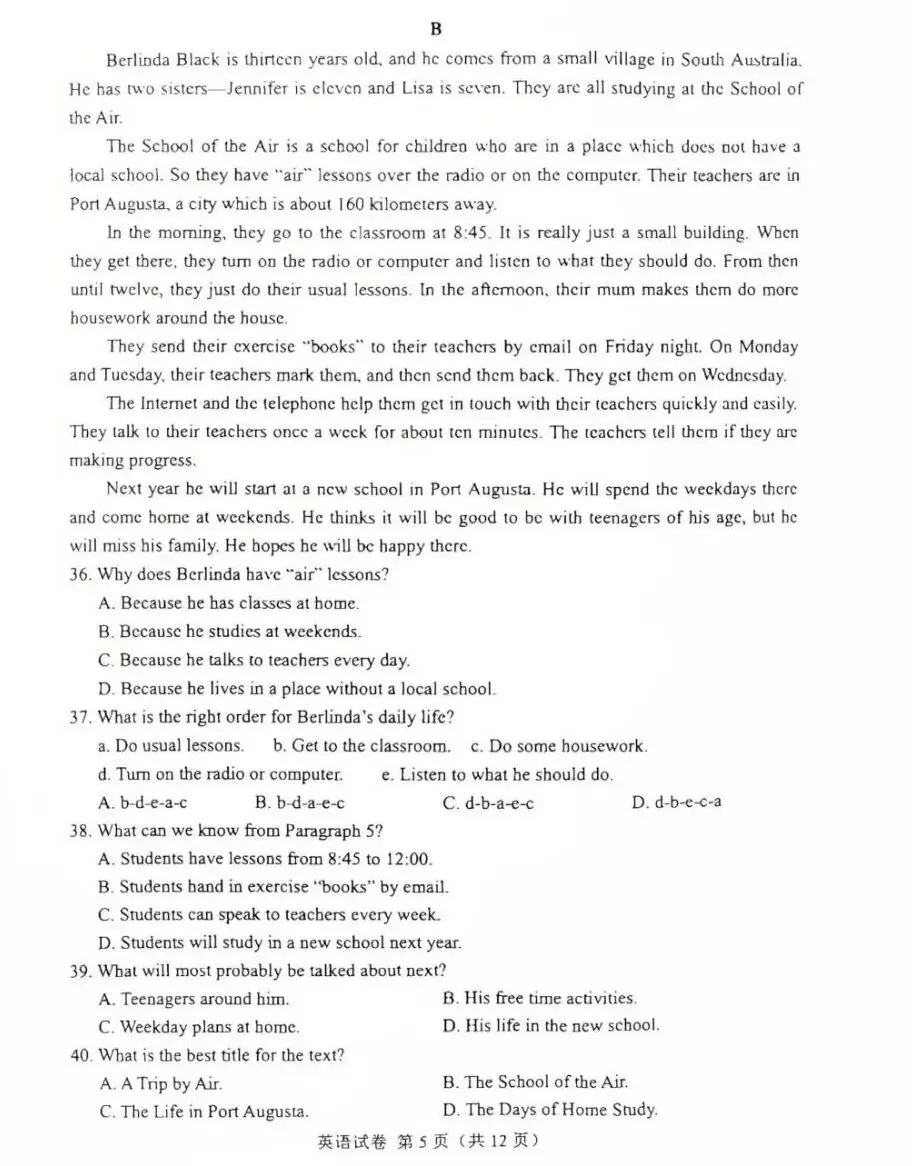
B篇:The School of the Air(36-40题)
36.D.Because he lives in a place without a local school.
- 解析:第二段首句"The School of the Air is a school for children who are in a place which does not have a local school."
37.A.b-d-e-a-c(给力英语公众号提供)
- 解析:第三段顺序:①go to the classroom(b)→ ②turn on the radio or computer(d)→ ③listen to what they should do(e)→ ④do their usual lessons(a)→ ⑤mum makes them do more housework(c)。
38.C.Students can speak to teachers every week.
- 解析:第五段提到"They talk to their teachers once a week for about ten minutes." 注意:第四段是交作业,第五段才是通话。
- 干扰项:A是第三段内容;B是第四段"send...by email"而非"speak";D是第六段"Next year"的内容。
39.D.His life in the new school.
- 解析:最后一段提到"Next year he will start at a new school",接下来最可能讲述他在新学校的生活。
40.B.The School of the Air
- 解析:全文围绕"空中学校"展开,介绍其教学方式、日常生活等,这是最佳标题。
C篇:Fruit Colors(41-45题)
41.D.They studied over 280 different fruit colors.
- 解析:第二段明确说"Chinese scientists studied more than 280 different fruit colors."
42.D.Fruits closer to the equator look darker.
- 解析:第二段末句"The scientists also found that the closer the fruits are to the equator, the darker their colors will be."
- 干扰项:A与原文"instead of just growing in one place"矛盾;B应为red fruits grow in cooler places;C应为blue fruits grow in warmer places。
43.C.Temperatures and animals
- 解析:第二段讲temperature(温度)影响颜色,第三、四段讲animals(动物)影响颜色。
44.A.Get attention of
- 解析:draw animals意为"吸引动物",即水果发展出容易被动物看见的颜色来吸引它们,帮助传播种子。
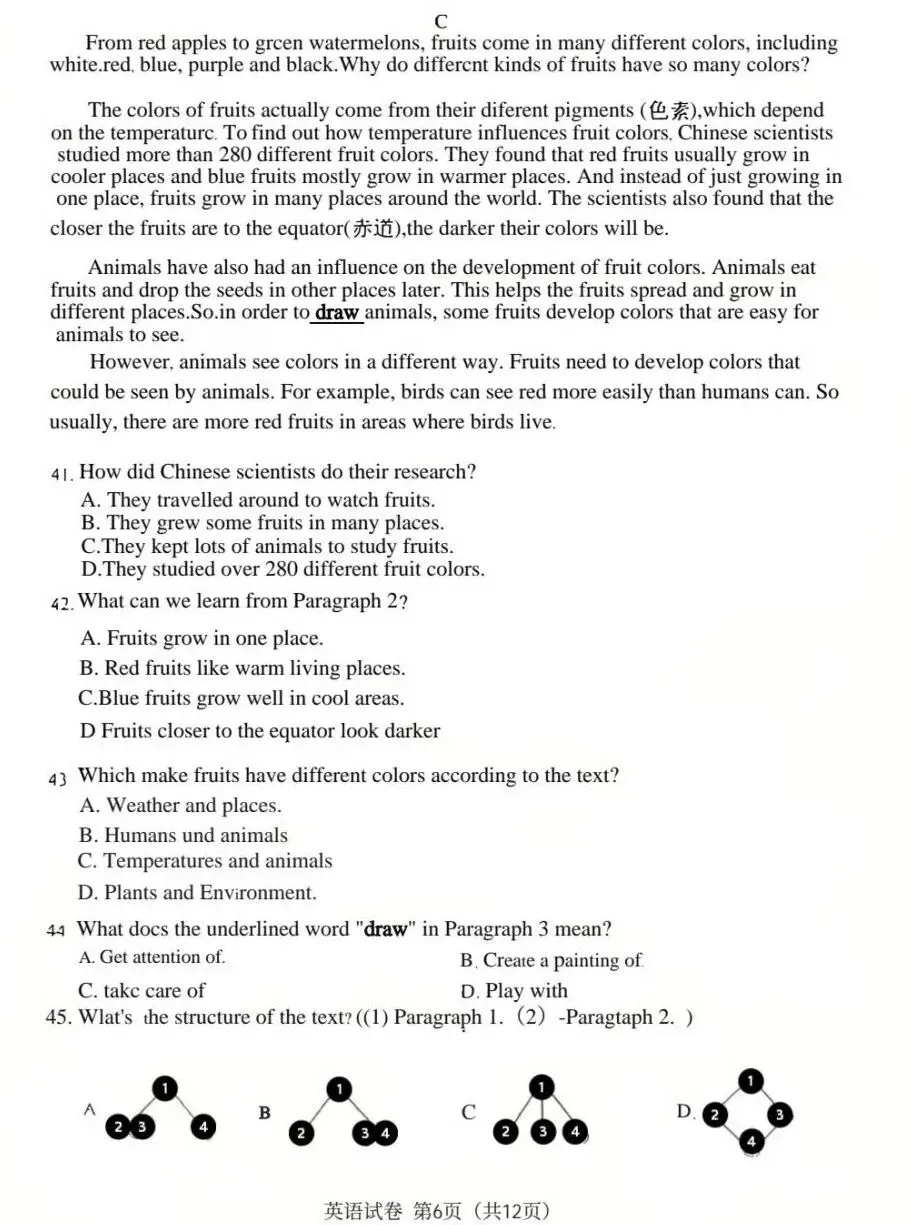
45.C(总-分结构:1总起,2、3、4并列分述)
- 解析:第一段提出问题"Why do different kinds of fruits have so many colors?",第二、三、四段分别从不同角度解释原因,是总-分结构。
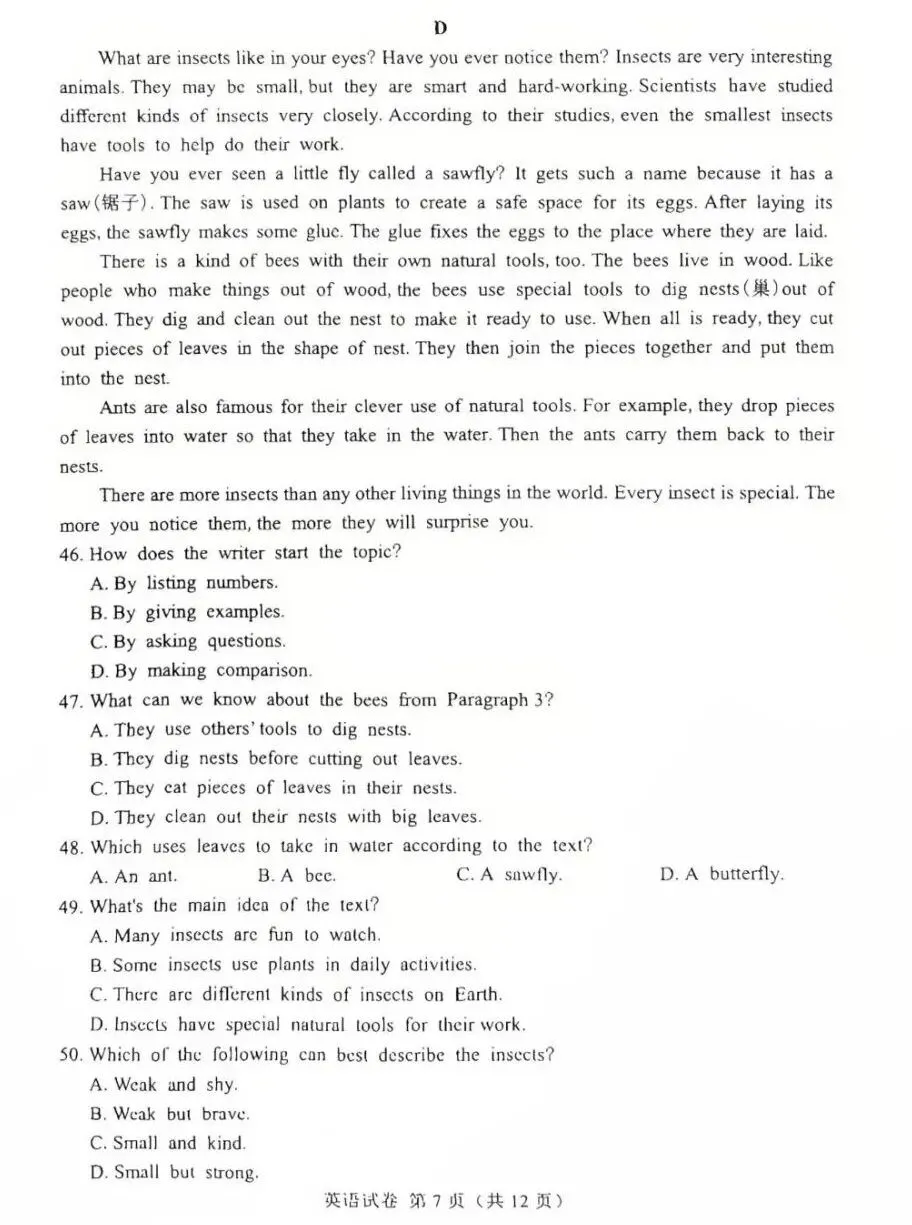
D篇:Insects' Tools(46-50题)
46.C.By asking questions.
- 解析:首句"What are insects like in your eyes? Have you ever notice them?"以问句开头。
47.B.They dig nests before cutting out leaves.
- 解析:第三段顺序:dig nests → clean out → cut out pieces of leaves → join the pieces。所以挖巢在裁剪树叶之前。
48.A.An ant.
- 解析:第四段"Ants...they drop pieces of leaves into water so that they take in the water."
49.D.Insects have special natural tools for their work.
- 解析:首段末句"even the smallest insects have tools to help do their work"是主题句,全文举例说明昆虫使用工具。
50.D.Small but strong.(给力英语公众号提供)
- 解析:首段"They may be small, but they are smart and hard-working"以及全文展示昆虫的能力,small but strong(小而强大)最贴切。
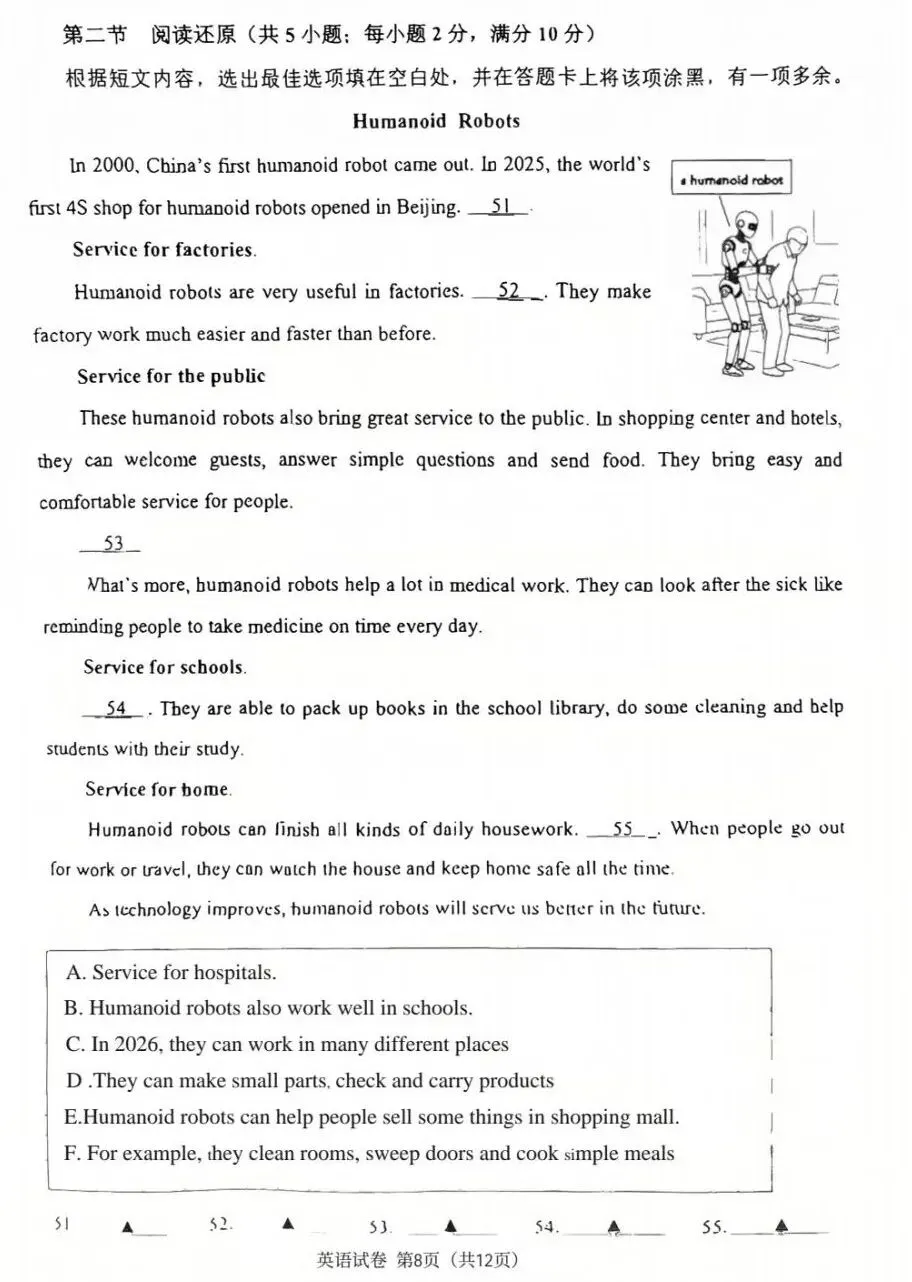
第二节 阅读还原(51-55题)
文章结构:介绍人形机器人在不同领域的应用。
51.C.In 2026, they can work in many different places
- 解析:前文提到2000年和2025年的发展,此处顺承到2026年,且总领下文"在不同地方工作"。
52.D.They can make small parts, check and carry products
- 解析:工厂服务具体做什么?制造零件、检查、搬运产品,符合工厂场景。
53.A.Service for hospitals.
- 解析:下文讲"medical work"、"look after the sick",对应医院服务。
54.B.Humanoid robots also work well in schools.
- 解析:小标题"Service for schools"对应,且also表示递进。
55.F.For example, they clean rooms, sweep doors and cook simple meals
- 解析:家庭服务具体做什么?打扫房间、扫地、做饭,符合家务场景。
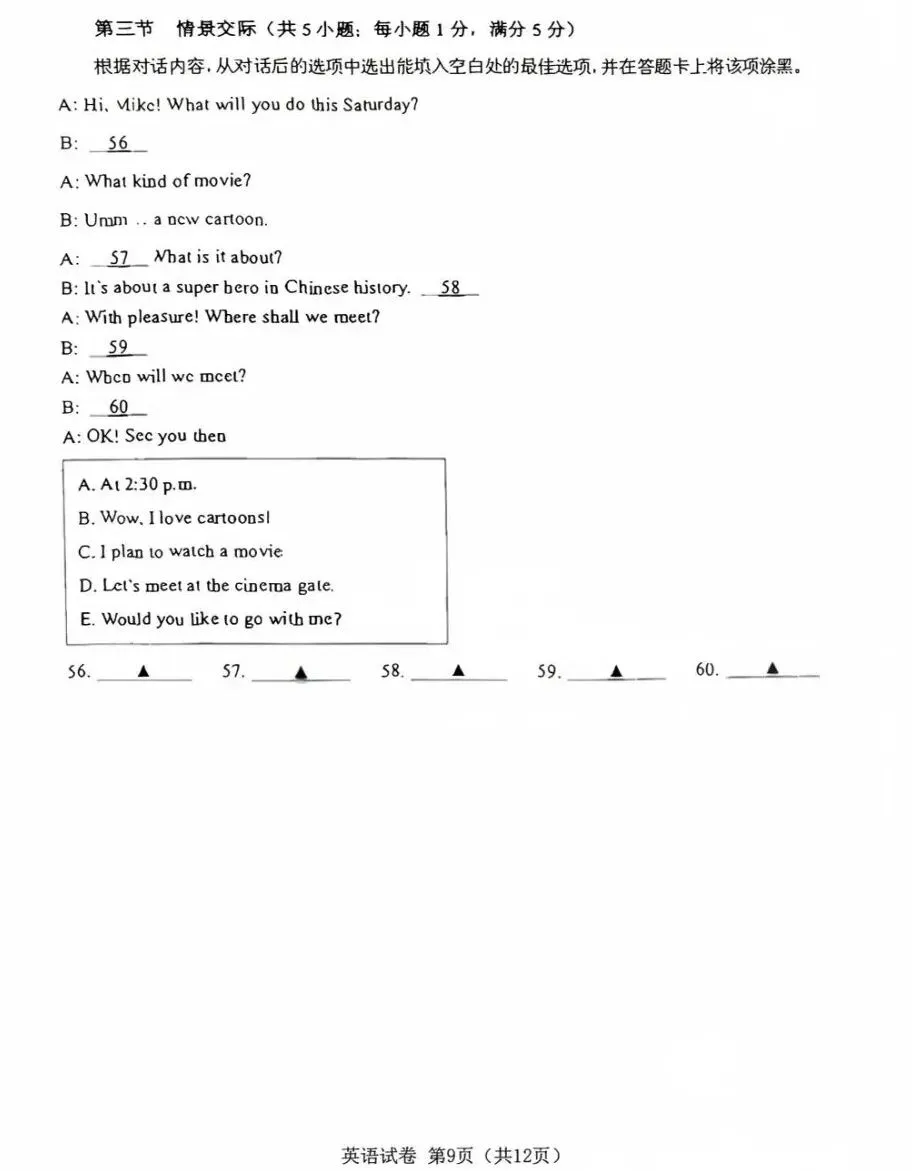
第三节 情景交际(56-60题)
56.C.I plan to watch a movie
- 解析:上文问"What will you do this Saturday?",下文又问"What kind of movie?",所以此处回答要去看电影。
57.B.Wow, I love cartoons!
- 解析:上文说"a new cartoon",此处应表达对卡通片的喜爱,然后接着问"What is it about?"
58.E.Would you like to go with me?
- 解析:下文回答"With pleasure!"(乐意之至),说明此处是邀请。
59.D.Let's meet at the cinema gate.
- 解析:上文问"Where shall we meet?",回答地点。
60.A.At 2:30 p.m.
- 解析:上文问"When will we meet?",回答时间。
第四部分 语言知识运用
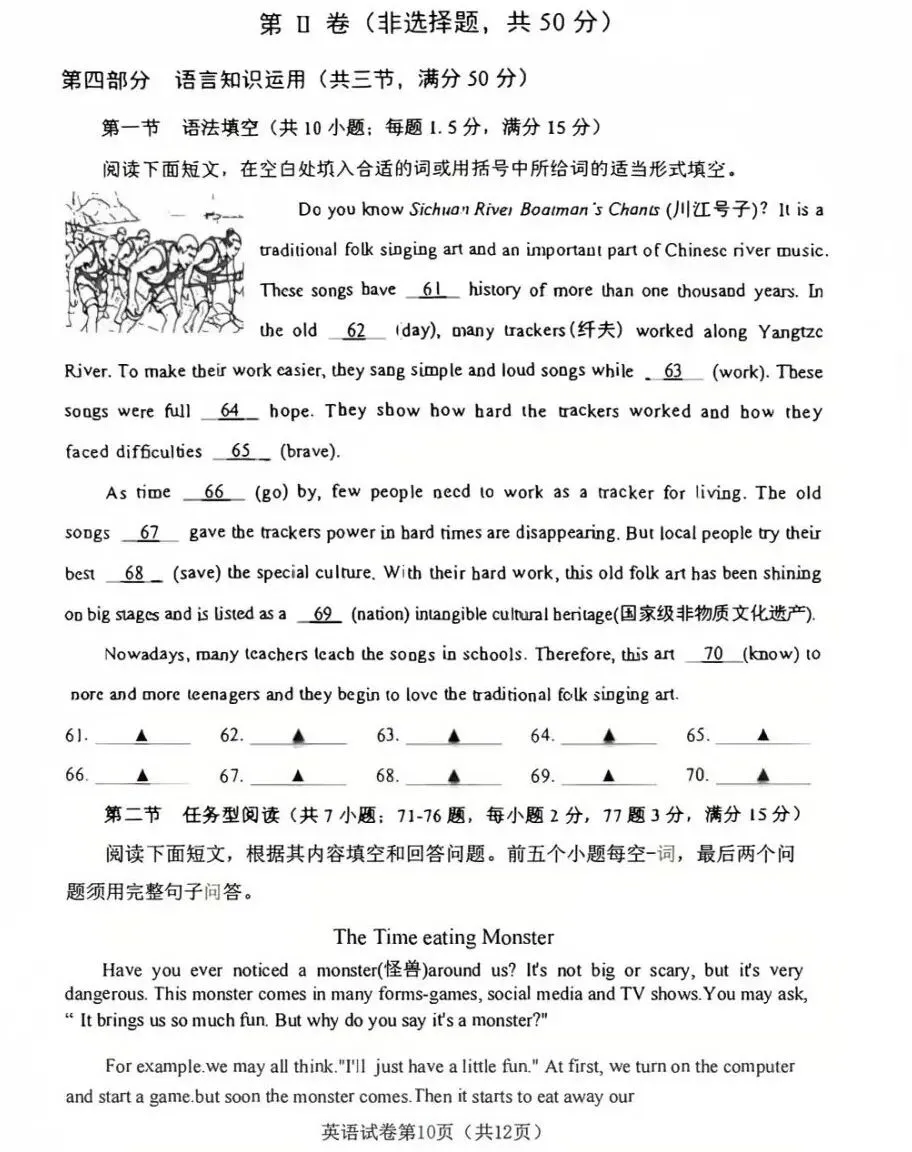
第一节 语法填空(61-70题)
文章主题:川江号子(四川 River Boatman's Chants)
61.a
- 解析:have a history of...有一段……的历史,history以辅音音素开头,用不定冠词a。
62.days
- 解析:in the old days 在过去,固定搭配,day用复数形式。(给力英语公众号提供)
63.working
- 解析:while working 省略结构,完整为while they were working,用现在分词。
64.of
- 解析:be full of 充满……,固定搭配。
65.bravely
- 解析:修饰动词faced,用副词形式bravely(勇敢地)。
66.goes
- 解析:As time goes by 随着时间流逝,固定搭配,一般现在时,time不可数,go用第三人称单数。
67.that/which
- 解析:定语从句,先行词songs指物,从句缺主语,用that或which。
68.to save
- 解析:try one's best to do sth.尽某人最大努力做某事,用不定式。
69.national
- 解析:修饰名词短语intangible cultural heritage,用形容词national(国家的)。
70.is known
- 解析:this art is known to...这种艺术被……所知,被动语态,一般现在时。
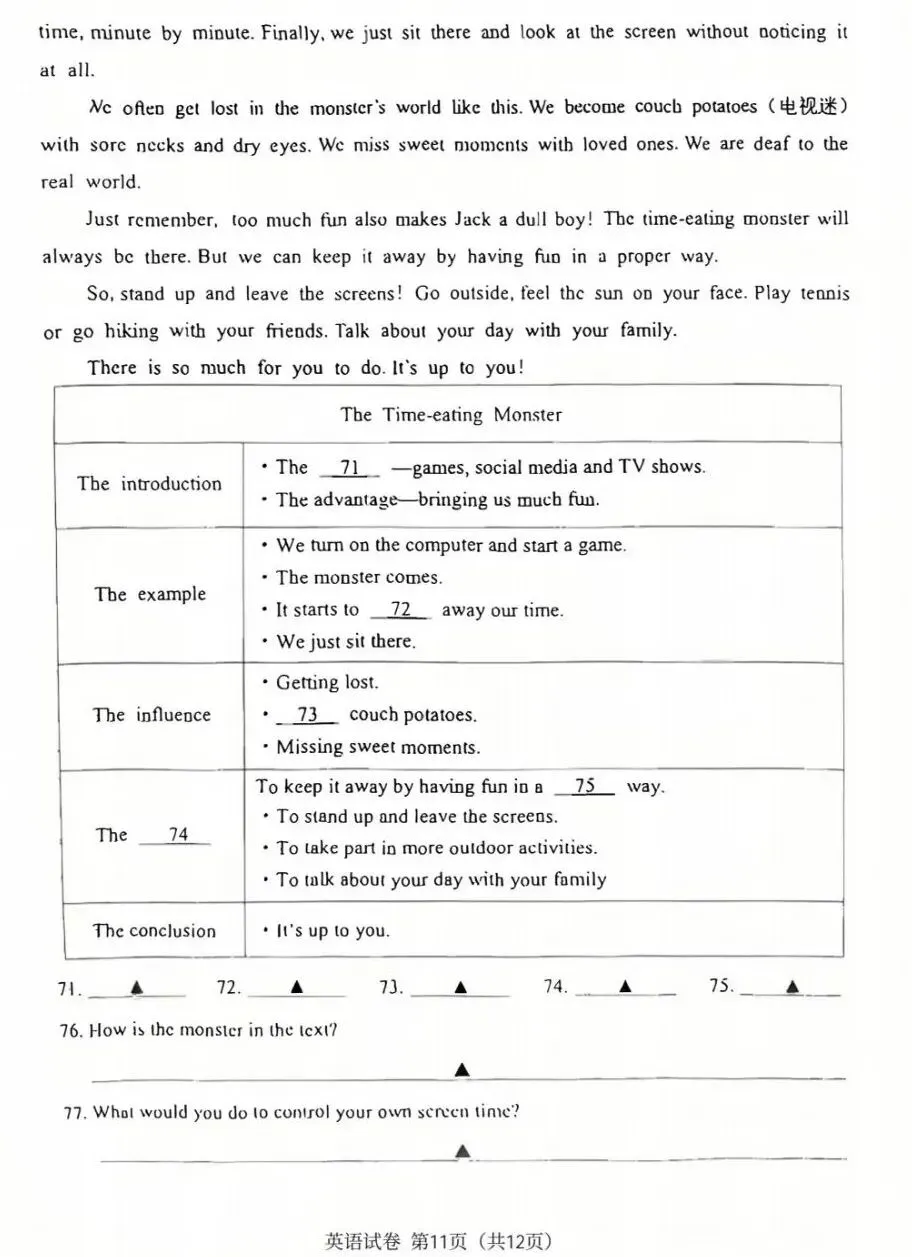
第二节 任务型阅读(71-77题)
文章大意:介绍"时间吞噬怪兽"——以游戏、社交媒体、电视节目等形式出现,看似带来乐趣,实则悄悄消耗我们的时间,让我们沉迷屏幕、远离现实生活。文章最后呼吁我们用正确方式娱乐,远离屏幕。
71.forms
- 解析:第一段明确提到"This monster comes in many forms—games, social media and TV shows." 怪兽以多种形式出现,填forms。
72.eat
- 解析:第二段"Then it starts to eat away our time, minute by minute." 怪兽开始吞噬我们的时间,填eat。
73.Becoming
- 解析:第三段"We become couch potatoes(电视迷)with sore necks and dry eyes." 我们变成电视迷,表格中需要动名词形式与Getting lost、Missing sweet moments并列,填Becoming。
74.advice/suggestions
- 解析:表格右侧列出了三条具体做法:站起来离开屏幕、参加户外活动、和家人聊天。这些都是作者给出的建议,填advice(不可数)或suggestions(可数复数)。
75.proper
- 解析:第四段"But we can keep it away by having fun in a proper way." 用正确/适当的方式娱乐,填proper。
76.It's not big or scary, but it's very dangerous.
- 解析:第一段直接描述"It's not big or scary, but it's very dangerous." 注意用完整句子回答。
77.I would set a time limit for using screens and spend more time on outdoor activities./ I would make a schedule and stick to it.
- 解析:开放性问题,回答需用完整句子,言之有理即可。可以从"设定时间限制"、"制定计划表"、"培养其他爱好"、"多参加户外活动"等角度回答。
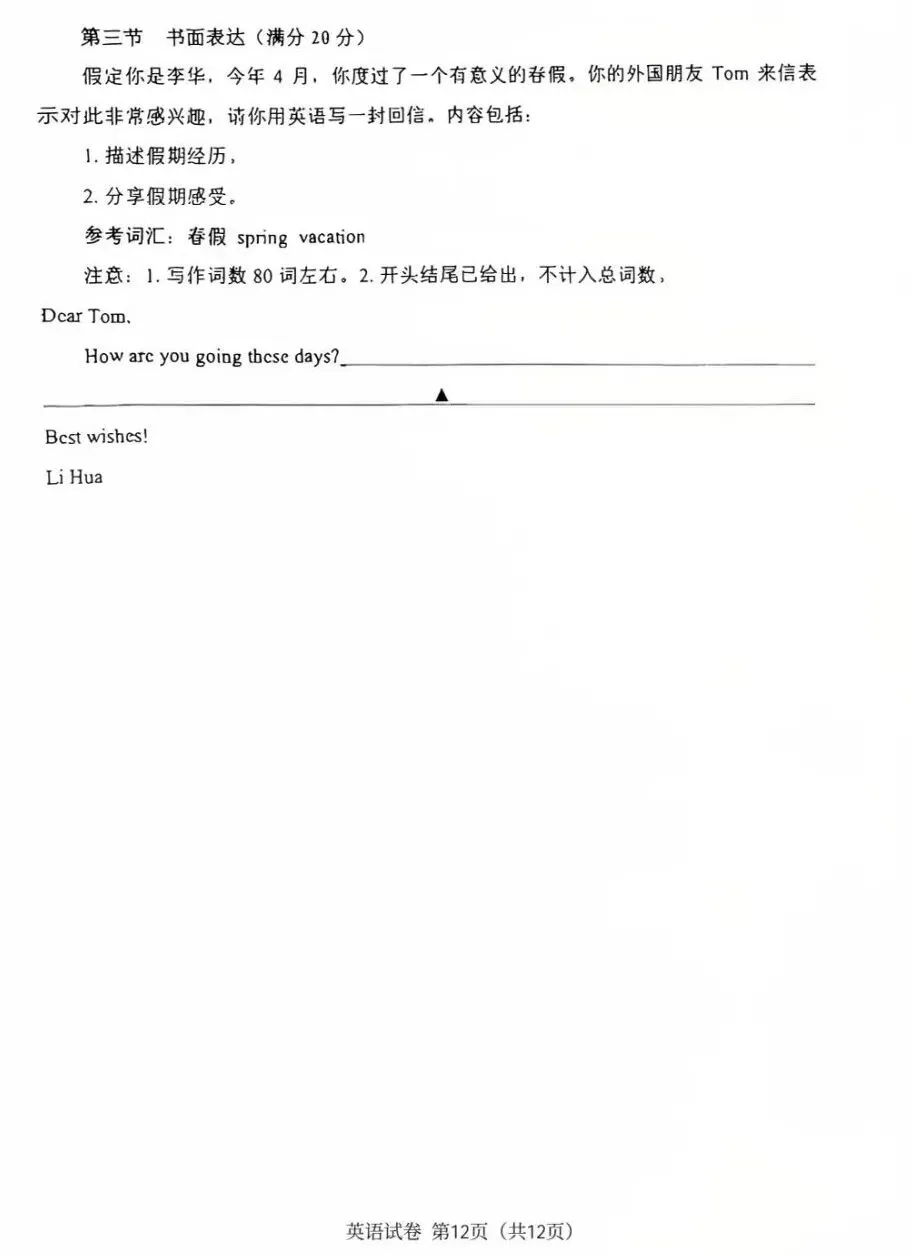
第三节 书面表达(满分20分)
题目要求:以李华身份给外国朋友Tom写回信,介绍今年4月度过的有意义的春假,包括描述假期经历和分享假期感受。80词左右,开头结尾已给出。
写作要点分析:
- 人称:第一人称
- 时态:一般过去时(描述经历)+ 一般现在时(分享感受)
- 内容:必须包含①假期经历(具体做了什么)②假期感受(收获、体会)
- 词数:80词左右(不含开头结尾)
参考范文:
Dear Tom,
How are you going these days? I'm glad to tell you about my meaningful spring vacation in April.I went to the countryside with my family to visit my grandparents.During the stay, I helped them plant vegetables and feed chickens.I also learned to make traditional dumplings from my grandma.Besides, I walked around the village every morning and enjoyed the fresh air and beautiful scenery.
Though I felt a little tired, I was really happy.I not only experienced rural life but also understood how hard farmers work.It was a great chance to get close to nature and spend quality time with family.I hope you can have such an experience too!
Best wishes!
Li Hua
范文解析:
- 经历部分:去乡下看望祖父母、帮忙种菜喂鸡、学包饺子、散步欣赏风景——具体充实,符合"有意义"的主题
- 感受部分:虽累但快乐、体验农村生活、理解农民辛苦、亲近自然、珍惜家庭时光——层次分明
- 语言亮点:not only...but also...结构;get close to nature;spend quality time;meaningful等词汇运用恰当
- 词数控制:正文约85词,符合要求
评分标准参考:
- 内容完整(涵盖经历和感受):8分
- 语言准确(语法、词汇、拼写):6分
- 结构清晰(连贯、过渡自然):4分
- 词数适当、书写规范:2分


