

2026年普通高等学校招生全国统一考试(全国I卷)
第一节(共5小题;每小题1.5分,满分7.5分)
听下面5段录音。每段录音后有一个小题,从题中所给的A、B、C三个选项中选出最佳选项。听完每段录音后,你都有10秒钟的时间来回答有关小题和阅读下一小题。每段录音播放两遍。
1. Who is the man?
A. A business client.
B. A job applicant.
C. A new staff member.
2. Where does the conversation probably take place?
A. In an office.
B. In a restaurant.
C. In a grocery store.
3. What are the speakers talking about?
A. A picture.
B. A fisherman.
C. A country.
4. What does the woman suggest Max do?
A. Go to bed.
B. Drive carefully.
C. Update his blog.
5. Why does Sarah make the phone call?
A. To request sick leave.
B. To make a complaint.
C. To postpone a meeting.
第二节(共15小题;每小题1.5分,满分22.5分)
听下面5段录音。每段录音后有几个小题,从题中所给的A、B、C三个选项中选出最佳选项。听每段录音前,你将有时间阅读各个小题,每小题5秒钟;听完后,每小题将给出5秒钟的作答时间。每段录音播放两遍。
听第6段录音,回答第6、7题。
6. What makes Copenhagen different from London in Lisa’s eyes?
A. A less stressful life.
B. Better city planning.
C. More tourist sites.
7. Why did Lisa originally come to Copenhagen?
A. To look for a permanent job.
B. To do a short-term project.
C. To visit a famous museum.
听第7段录音,回答第8至10题。
8. What is the total budget for the dinner?
A. £200.
B. £300.
C. £600.
9. What occasion is the dinner for?
A. The retirement of an employee.
B. The launch of a new product.
C. The opening of a branch office.
10. What is the woman going to do for Mr. Lee?
A. Take his order.
B. Bring him the bill.
C. Email him a menu.
听第8段录音,回答第11至13题。
11. What does Jenny do?
A. She’s an AI engineer.
B. She’s a pop singer.
C. She’s a radio host.
12. How does the woman feel about what Jenny has done?
A. It might cause legal problems.
B. It would benefit the community.
C. It could be a profitable business.
13. What will the man do next?
A. Play a song.
B. Contact a listener.
C. Recommend a show.
听第9段录音,回答第14至16题。
14. What does Evans say about ancient Babylonia?
A. It is rich in energy resources.
B. It is home to several languages.
C. It is the birthplace of many foods.
15. What did people initially think the ancient texts were about?
A. Cookery.
B. Medicine.
C. Education.
16. What do we know about the French author Jean Bottéro?
A. He proved Mary Hussey right.
B. He taught history at Yale University.
C. He was the first to translate the texts.
听第10段录音,回答第17至20题。
17. What must the students wear when doing the experiment?
A. Loose clothes.
B. Protective glasses.
C. Waterproof caps.
18. What should the students do if they knock over a chemical container?
A. Report to the teacher.
B. Clean up the mess.
C. Check the instructions.
19. Why should the students switch roles?
A. To speed up the experiment.
B. To double-check the final results.
C. To get an equal chance to practice.
20. What should the students do if they finish early?
A. Analyze the data.
B. Clean their workspace.
C. Start a new experiment.
答案:1-5 CBAAC 6-10 ABCAC 11-15BCACB 16-20ABACB
听力文本材料
Text 1
M: Do I need a card to enter the building?
W: Yes. You’ll get your card this afternoon. Now let me show you around and say hello to everyone. And then we’ll talk about your job duties.
Text 2
W: Would you like some more roast beef? It’s the chef’s signature dish.
M: No, thanks. It’s really good. But I can’t manage any more.
Text 3
W: Hey, look at this one in the newspaper: Fishermen Fishing at Lake Victoria in Tanzania.
M: Wow! That’s awesome! I like the unique atmosphere caught by the photographer!
Text 4
W: It’s almost midnight, Max. You’ve got a long drive tomorrow.
M: Okay. Another fifteen minutes from my travel blog. And I’ll be done.
Text 5
W: Hello, Mr. Waterman. This is Sarah Jones. I’m stuck on the highway. There’s a serious accident. I’m afraid I can’t arrive before noon. Could we meet this afternoon?
M: Okay. I’ll see my doctor at one and will be available after two.
Text 6
M: Lisa, you’re English, but you live here. What do you love about Copenhagen?
W: It has everything big cities offer — cafes, theaters, museums — but it is still relaxing and manageable. Unlike London, you don’t feel constant pressure here.
M: Was this lifestyle why you first came?
W: No, I originally came for a three-month project at a law firm. After finishing it, they offered me a permanent job. I took it and stayed.
Text 7
W: Garden Hotel. May I help you?
M: Hello, this is Mike Lee from Gilbert Company. We’d like to book a dinner for next Tuesday.
W: Certainly, Mr. Lee. Could you let me know how many guests you’re expecting and if you have a specific budget in mind?
M: Yes, we’re expecting twenty people. And we’re aiming for thirty pounds per person.
W: Understood. Is this for a special occasion?
M: Yes. It’s to honor a staff member who is retiring next month.
W: That sounds lovely. What time would you like the dinner to start?
M: At six thirty p.m.
W: OK. Would you like a detailed menu with prices?
M: Yes. Could you email it to Mike Lee@Gilbert.com?
W: No problem. I’m on it.
Text 8
W: Dear listeners. The song we’ve just heard was made with an AI version of Jenny’s singing voice.
M: Yeah. Earlier this year, Jenny announced that she’d let anybody make a song using her AI voice as long as they were entitled and shared their profits with her. And in just a few weeks, more than three hundred new songs were created using her AI voice.
W: Incredible! Just imagine: Jenny may have been at home, drinking a glass of wine, while her AI clone voice worked hard to sing her songs. This could be an attractive new business model for a pop star.
M: Indeed. But some of our listeners called to say they want to hear Jenny’s real voice. Now let’s play one of her greatest hits: Show Me Your Love.
Text 9
M: Dr. Evans, you just said that these ancient texts are actually the recipes from ancient Babylonia. Can you tell us more?
W: Ancient Babylonia is home to many of the things that we use in our cooking today. I bet, about fifty percent of the energy you need every day comes from vegetables or animals that originated in this area.
M: Why have these texts taken so long to come to light?
W: These ancient texts have been known since the 1920s, but were thought to be medical texts. In the 1940s, Mary Hussey, an American scholar, suggested that they might be about food. But people didn’t believe her until French author, Jean Bottéro, in the 1980s was asked to write an article about cooking in the past. He had heard about the texts, so he went to Yale University, and found out that they were indeed about food.
Text 10
M: Before we begin today’s experiment, let’s review the lab rules. First, safety glasses must be worn at all times, even if you’re only watching. Second, never mix chemicals unless the instructions tell you to do so. Today we’re using a strong acid, which can cause serious burns if it touches your skin. If any chemical container is knocked over, don’t panic. Tell me immediately and I’ll handle the cleanup. Also, keep your hair tied back and avoid wearing loose clothes. We will work in pairs. One person will handle the tools while the other records the data. Switch roles after every three trials to ensure everyone gets practice. Remember, the goal is accurate data, not speed. If you finish early, do not start a new experiment. Instead, clean your workspace thoroughly.
Any questions? No? All right. Let’s have a safe and productive class.
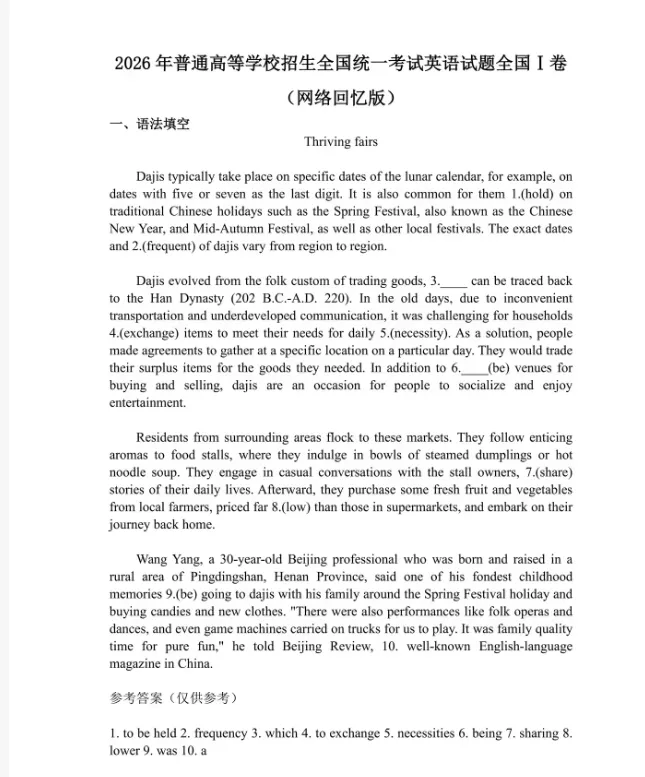
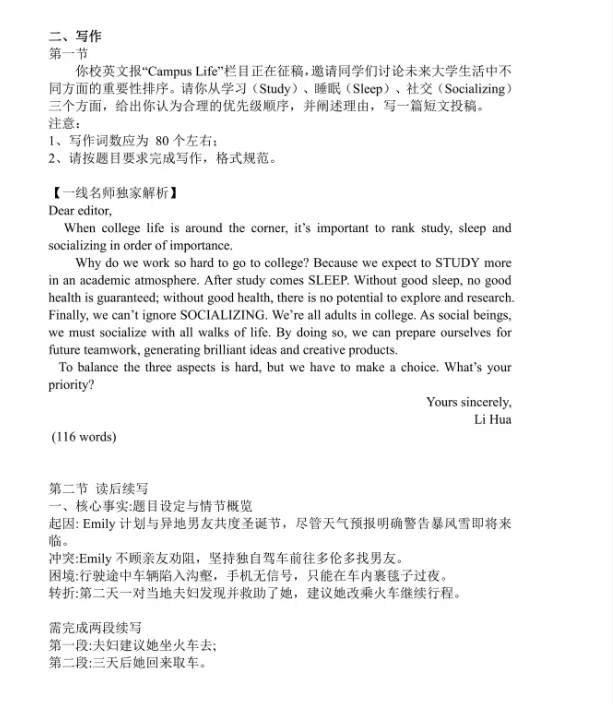
二、写作第一节
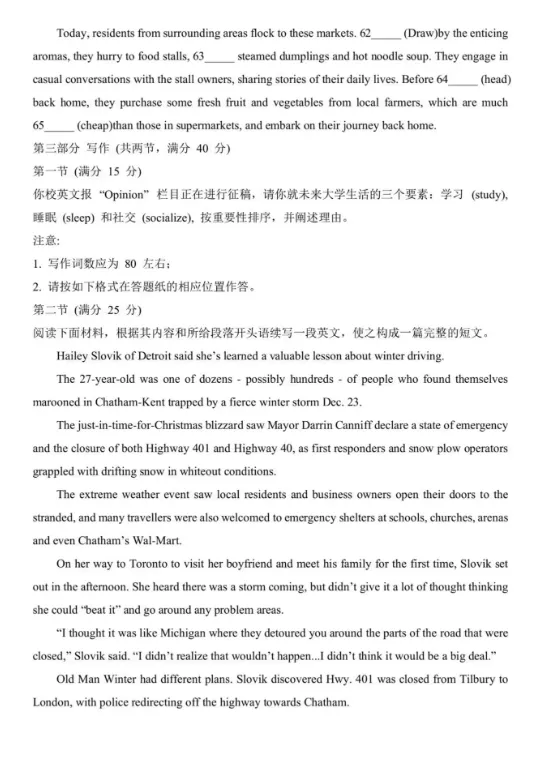
你校英文报“Campus Life”栏目正在征稿,邀请同学们讨论未来大学生活中不同方面的重要性排序。请你从学习(Study)、睡眠(Sleep)、社交(Socializing)三个方面,给出你认为合理的优先级顺序,并阐述理由,写一篇短文投稿。注意:
1、写作词数应为80个左右;
2、请按题目要求完成写作,格式规范。
【名师独家解析参考】
Dear editor,
When college life is around the corner, it's important to rank study, sleep andsocializing in order of importance
Why do we work so hard to go to college? Because we expect to STUDY morein an academic atmosphere. After study comes SLEEP. Without good sleep, no goodhealth is guaranteed; without good health, there is no potential to explore and research.Finally, we can't ignore SOCIALIZING. We're all adults in college. As social beings,we must socialize with all walks of life. By doing so, we can prepare ourselves forfuture teamwork, generating brilliant ideas and creative products.To balance the three aspects is hard, but we have to make a choice. What's yourpriority?
Yours sincerely,
Li Hua
(116 words)
第二节读后续写
一、核心事实:题目设定与情节概览
起因:Emily计划与异地男友共度圣诞节,尽管天气预报明确警告暴风雪即将来临冲突:Emily不顾亲友劝阻,坚持独自驾车前往多伦多找男友。困境:行驶途中车辆陷入沟壑,手机无信号,只能在车内裹毯子过夜。转折:第二天一对当地夫妇发现并救助了她,建议她改乘火车继续行程。
需完成两段续写
第一段:夫妇建议她坐火车去;第二段:三天后她回来取车。
全国一卷来源总结:
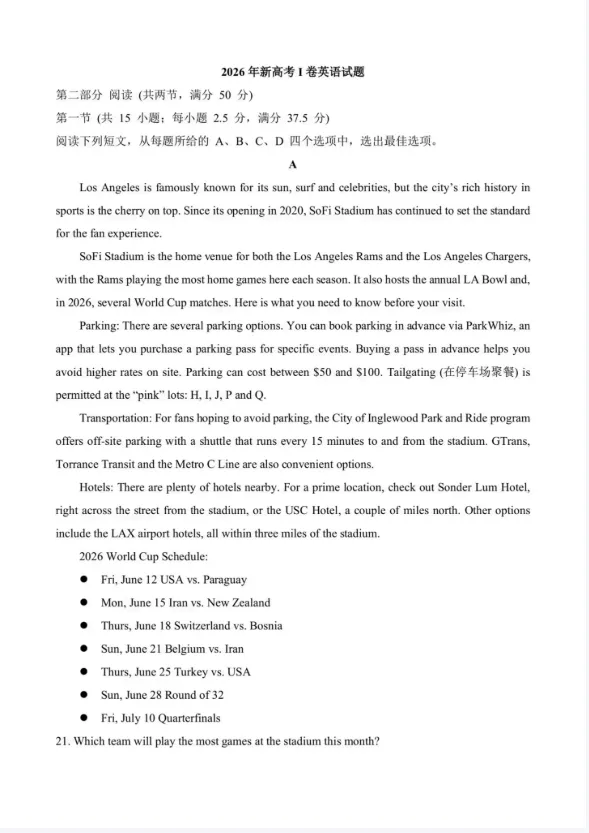
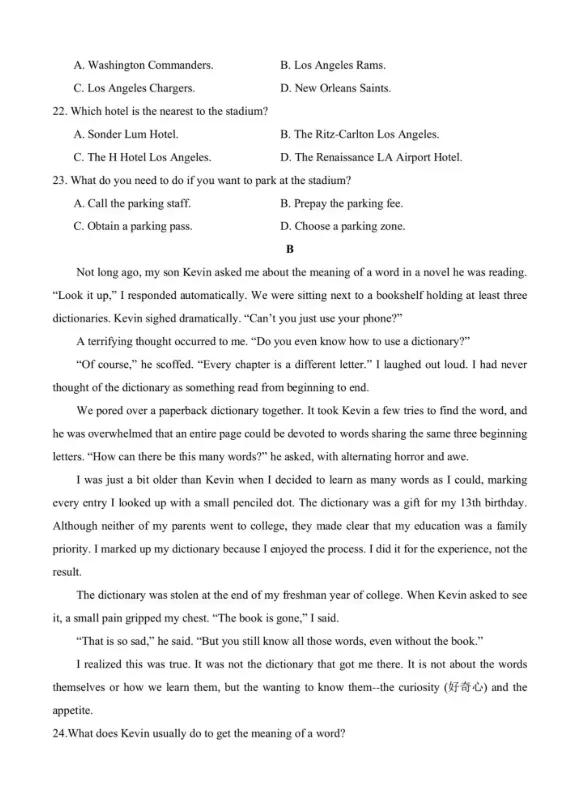
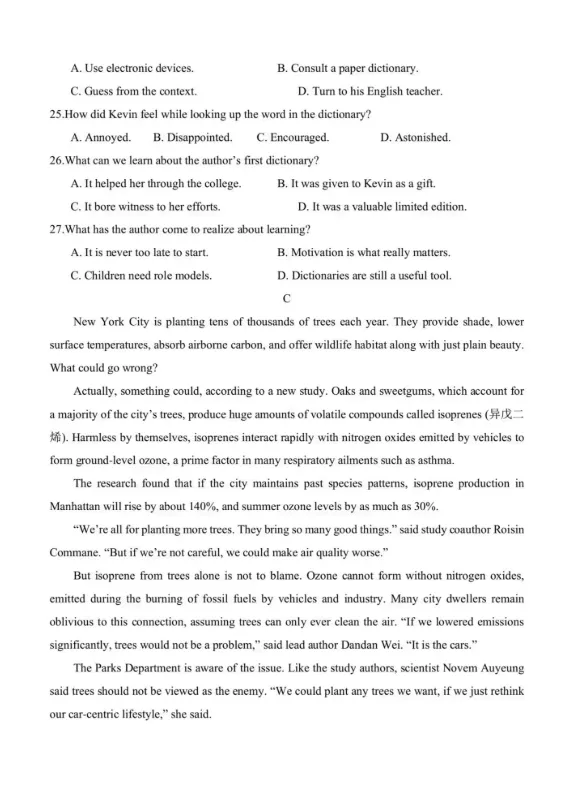
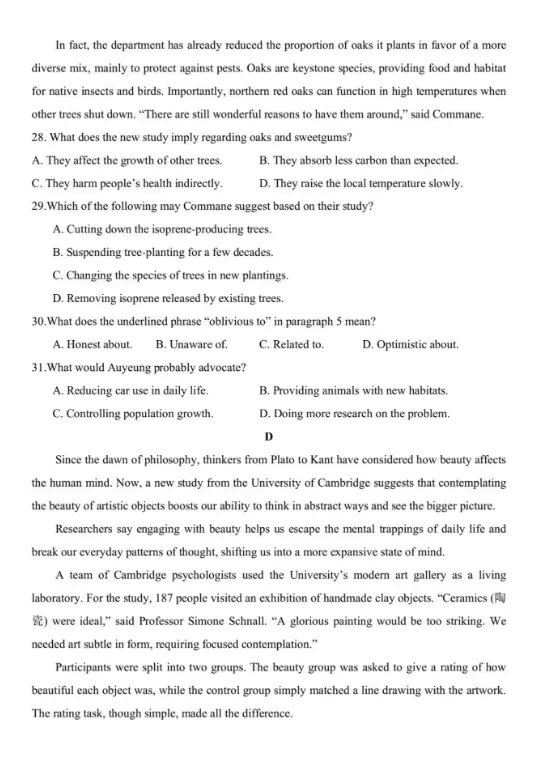
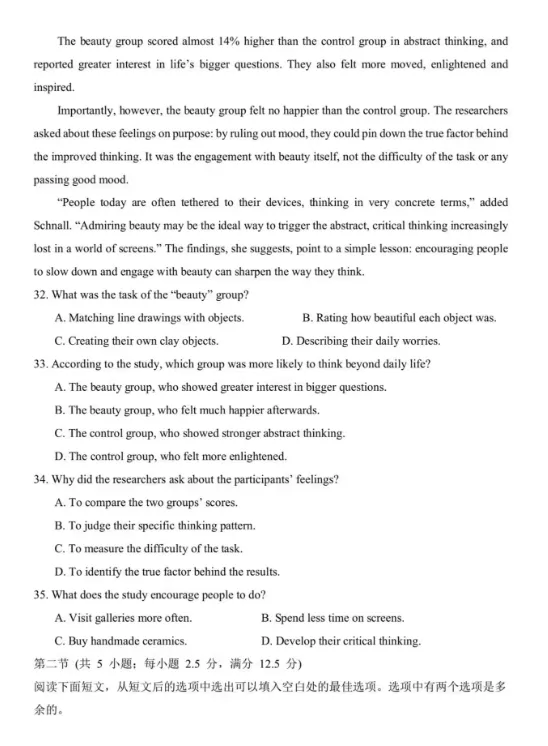
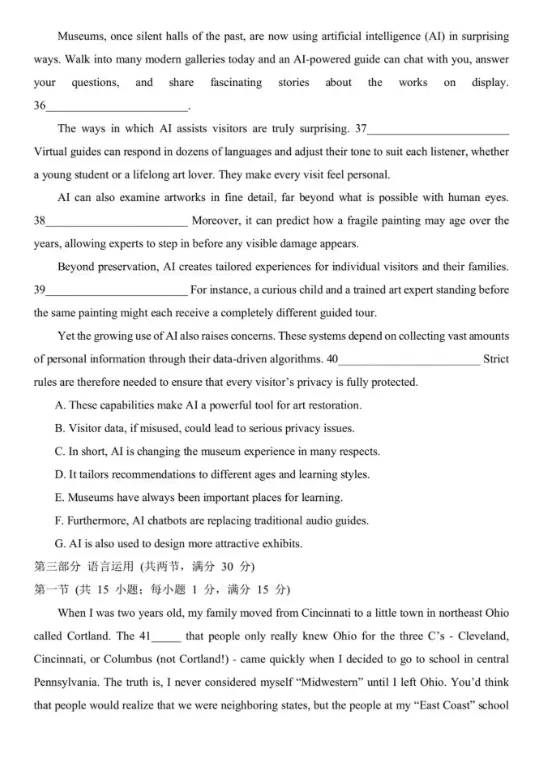
阅读A篇 介绍体育馆近期赛事安排与观赛实用资讯,贴合生活实际,引导学生主动关注体育相关信息,树立积极的运动健康意识。
阅读C篇 聚焦特定树种释放的化学物质与汽车尾气结合后可能影响人体健康及相关讨论,引导学生辩证看待复杂社会环境问题,思考可持续发展解决方案。
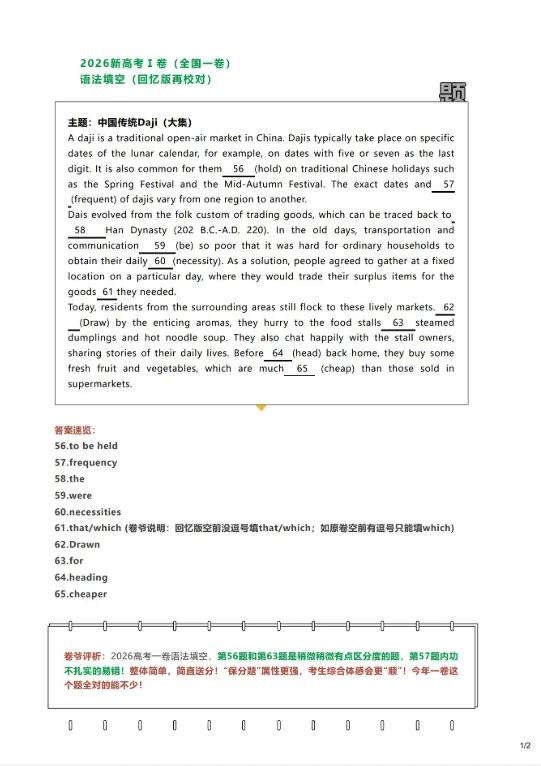
语法填空:传统集市 | 题源:China Daily
完形填空:乡土感恩故事 | 题源:The New York Times
阅读C篇:树种与尾气健康议题 | 题源:National Geographic


网课视频 英语听力 作业题库 课件教案 电子课本 试卷库 语文朗读 拼音学习 奥数课程 数独 作文教程 绘本阅读 国学经典 文学名著 心理健康 书法教程 劳动教育 教研课题 教师职称 优课视频 精品课例 班主任 高考高招 中考中招 获奖通报 比赛通知 资源合集
为防止看不到我们的更新,亲们可以加个星标.方法是点击上方的公众号卡片,再点右上角三个点就能看到“设为星标”特别声明:本公众号教学资源来源于网络,免费分享给大家,仅供学习和教学使用,请勿用于商业用途。本公众号尊重原创,所有资源版权归原作者所有,如有侵权请联系我们删除
2026年普通高等学校招生全国统一考试(全国I卷)
第一节(共5小题;每小题1.5分,满分7.5分)
听下面5段录音。每段录音后有一个小题,从题中所给的A、B、C三个选项中选出最佳选项。听完每段录音后,你都有10秒钟的时间来回答有关小题和阅读下一小题。每段录音播放两遍。
1. Who is the man?
A. A business client.
B. A job applicant.
C. A new staff member.
2. Where does the conversation probably take place?
A. In an office.
B. In a restaurant.
C. In a grocery store.
3. What are the speakers talking about?
A. A picture.
B. A fisherman.
C. A country.
4. What does the woman suggest Max do?
A. Go to bed.
B. Drive carefully.
C. Update his blog.
5. Why does Sarah make the phone call?
A. To request sick leave.
B. To make a complaint.
C. To postpone a meeting.
第二节(共15小题;每小题1.5分,满分22.5分)
听下面5段录音。每段录音后有几个小题,从题中所给的A、B、C三个选项中选出最佳选项。听每段录音前,你将有时间阅读各个小题,每小题5秒钟;听完后,每小题将给出5秒钟的作答时间。每段录音播放两遍。
听第6段录音,回答第6、7题。
6. What makes Copenhagen different from London in Lisa’s eyes?
A. A less stressful life.
B. Better city planning.
C. More tourist sites.
7. Why did Lisa originally come to Copenhagen?
A. To look for a permanent job.
B. To do a short-term project.
C. To visit a famous museum.
听第7段录音,回答第8至10题。
8. What is the total budget for the dinner?
A. £200.
B. £300.
C. £600.
9. What occasion is the dinner for?
A. The retirement of an employee.
B. The launch of a new product.
C. The opening of a branch office.
10. What is the woman going to do for Mr. Lee?
A. Take his order.
B. Bring him the bill.
C. Email him a menu.
听第8段录音,回答第11至13题。
11. What does Jenny do?
A. She’s an AI engineer.
B. She’s a pop singer.
C. She’s a radio host.
12. How does the woman feel about what Jenny has done?
A. It might cause legal problems.
B. It would benefit the community.
C. It could be a profitable business.
13. What will the man do next?
A. Play a song.
B. Contact a listener.
C. Recommend a show.
听第9段录音,回答第14至16题。
14. What does Evans say about ancient Babylonia?
A. It is rich in energy resources.
B. It is home to several languages.
C. It is the birthplace of many foods.
15. What did people initially think the ancient texts were about?
A. Cookery.
B. Medicine.
C. Education.
16. What do we know about the French author Jean Bottéro?
A. He proved Mary Hussey right.
B. He taught history at Yale University.
C. He was the first to translate the texts.
听第10段录音,回答第17至20题。
17. What must the students wear when doing the experiment?
A. Loose clothes.
B. Protective glasses.
C. Waterproof caps.
18. What should the students do if they knock over a chemical container?
A. Report to the teacher.
B. Clean up the mess.
C. Check the instructions.
19. Why should the students switch roles?
A. To speed up the experiment.
B. To double-check the final results.
C. To get an equal chance to practice.
20. What should the students do if they finish early?
A. Analyze the data.
B. Clean their workspace.
C. Start a new experiment.
答案:1-5 CBAAC 6-10 ABCAC 11-15BCACB 16-20ABACB
听力文本材料
Text 1
M: Do I need a card to enter the building?
W: Yes. You’ll get your card this afternoon. Now let me show you around and say hello to everyone. And then we’ll talk about your job duties.
Text 2
W: Would you like some more roast beef? It’s the chef’s signature dish.
M: No, thanks. It’s really good. But I can’t manage any more.
Text 3
W: Hey, look at this one in the newspaper: Fishermen Fishing at Lake Victoria in Tanzania.
M: Wow! That’s awesome! I like the unique atmosphere caught by the photographer!
Text 4
W: It’s almost midnight, Max. You’ve got a long drive tomorrow.
M: Okay. Another fifteen minutes from my travel blog. And I’ll be done.
Text 5
W: Hello, Mr. Waterman. This is Sarah Jones. I’m stuck on the highway. There’s a serious accident. I’m afraid I can’t arrive before noon. Could we meet this afternoon?
M: Okay. I’ll see my doctor at one and will be available after two.
Text 6
M: Lisa, you’re English, but you live here. What do you love about Copenhagen?
W: It has everything big cities offer — cafes, theaters, museums — but it is still relaxing and manageable. Unlike London, you don’t feel constant pressure here.
M: Was this lifestyle why you first came?
W: No, I originally came for a three-month project at a law firm. After finishing it, they offered me a permanent job. I took it and stayed.
Text 7
W: Garden Hotel. May I help you?
M: Hello, this is Mike Lee from Gilbert Company. We’d like to book a dinner for next Tuesday.
W: Certainly, Mr. Lee. Could you let me know how many guests you’re expecting and if you have a specific budget in mind?
M: Yes, we’re expecting twenty people. And we’re aiming for thirty pounds per person.
W: Understood. Is this for a special occasion?
M: Yes. It’s to honor a staff member who is retiring next month.
W: That sounds lovely. What time would you like the dinner to start?
M: At six thirty p.m.
W: OK. Would you like a detailed menu with prices?
M: Yes. Could you email it to Mike Lee@Gilbert.com?
W: No problem. I’m on it.
Text 8
W: Dear listeners. The song we’ve just heard was made with an AI version of Jenny’s singing voice.
M: Yeah. Earlier this year, Jenny announced that she’d let anybody make a song using her AI voice as long as they were entitled and shared their profits with her. And in just a few weeks, more than three hundred new songs were created using her AI voice.
W: Incredible! Just imagine: Jenny may have been at home, drinking a glass of wine, while her AI clone voice worked hard to sing her songs. This could be an attractive new business model for a pop star.
M: Indeed. But some of our listeners called to say they want to hear Jenny’s real voice. Now let’s play one of her greatest hits: Show Me Your Love.
Text 9
M: Dr. Evans, you just said that these ancient texts are actually the recipes from ancient Babylonia. Can you tell us more?
W: Ancient Babylonia is home to many of the things that we use in our cooking today. I bet, about fifty percent of the energy you need every day comes from vegetables or animals that originated in this area.
M: Why have these texts taken so long to come to light?
W: These ancient texts have been known since the 1920s, but were thought to be medical texts. In the 1940s, Mary Hussey, an American scholar, suggested that they might be about food. But people didn’t believe her until French author, Jean Bottéro, in the 1980s was asked to write an article about cooking in the past. He had heard about the texts, so he went to Yale University, and found out that they were indeed about food.
Text 10
M: Before we begin today’s experiment, let’s review the lab rules. First, safety glasses must be worn at all times, even if you’re only watching. Second, never mix chemicals unless the instructions tell you to do so. Today we’re using a strong acid, which can cause serious burns if it touches your skin. If any chemical container is knocked over, don’t panic. Tell me immediately and I’ll handle the cleanup. Also, keep your hair tied back and avoid wearing loose clothes. We will work in pairs. One person will handle the tools while the other records the data. Switch roles after every three trials to ensure everyone gets practice. Remember, the goal is accurate data, not speed. If you finish early, do not start a new experiment. Instead, clean your workspace thoroughly.
Any questions? No? All right. Let’s have a safe and productive class.
二、写作第一节
你校英文报“Campus Life”栏目正在征稿,邀请同学们讨论未来大学生活中不同方面的重要性排序。请你从学习(Study)、睡眠(Sleep)、社交(Socializing)三个方面,给出你认为合理的优先级顺序,并阐述理由,写一篇短文投稿。注意:
1、写作词数应为80个左右;
2、请按题目要求完成写作,格式规范。
【名师独家解析参考】
Dear editor,
When college life is around the corner, it's important to rank study, sleep andsocializing in order of importance
Why do we work so hard to go to college? Because we expect to STUDY morein an academic atmosphere. After study comes SLEEP. Without good sleep, no goodhealth is guaranteed; without good health, there is no potential to explore and research.Finally, we can't ignore SOCIALIZING. We're all adults in college. As social beings,we must socialize with all walks of life. By doing so, we can prepare ourselves forfuture teamwork, generating brilliant ideas and creative products.To balance the three aspects is hard, but we have to make a choice. What's yourpriority?
Yours sincerely,
Li Hua
(116 words)
第二节读后续写
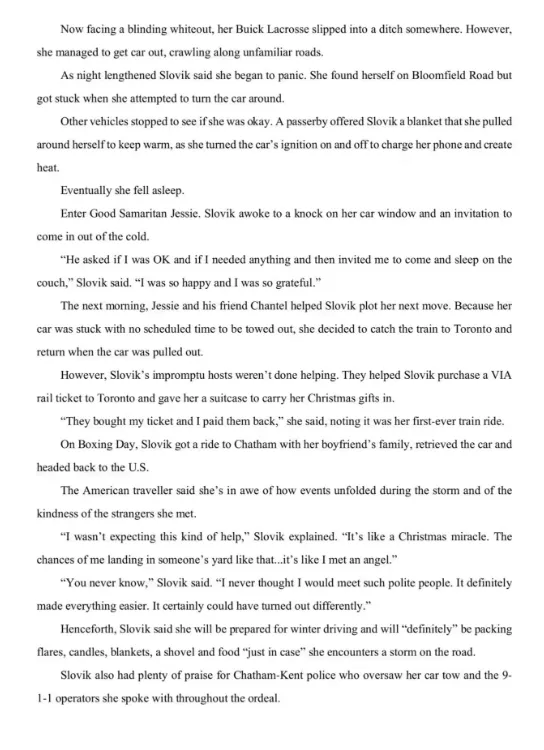
一、核心事实:题目设定与情节概览
起因:Emily计划与异地男友共度圣诞节,尽管天气预报明确警告暴风雪即将来临冲突:Emily不顾亲友劝阻,坚持独自驾车前往多伦多找男友。困境:行驶途中车辆陷入沟壑,手机无信号,只能在车内裹毯子过夜。转折:第二天一对当地夫妇发现并救助了她,建议她改乘火车继续行程。
需完成两段续写
第一段:夫妇建议她坐火车去;第二段:三天后她回来取车。
全国一卷来源总结:
阅读A篇 介绍体育馆近期赛事安排与观赛实用资讯,贴合生活实际,引导学生主动关注体育相关信息,树立积极的运动健康意识。
阅读C篇 聚焦特定树种释放的化学物质与汽车尾气结合后可能影响人体健康及相关讨论,引导学生辩证看待复杂社会环境问题,思考可持续发展解决方案。
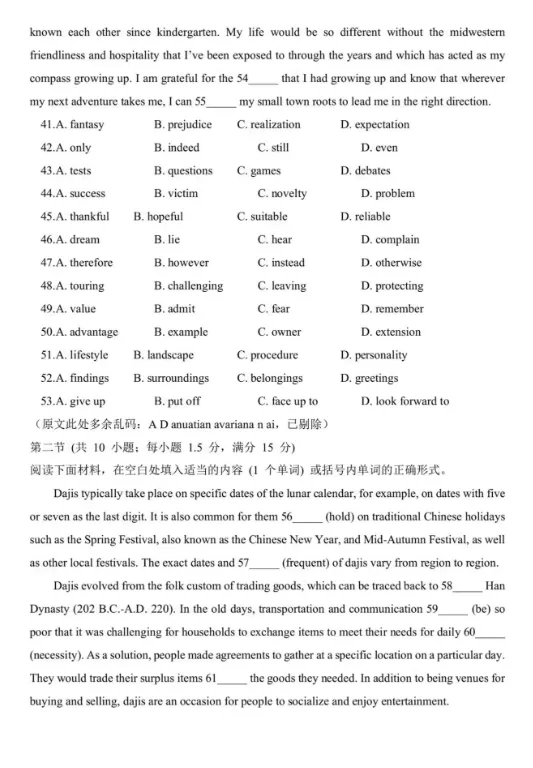
语法填空:传统集市 | 题源:China Daily
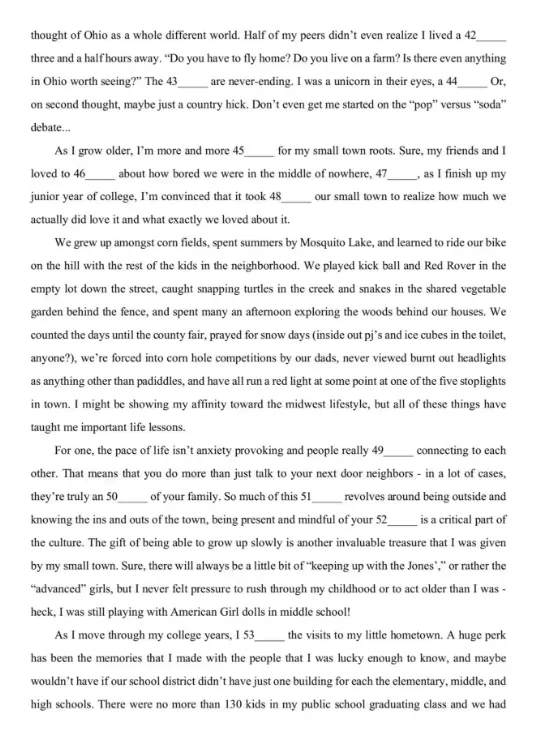
完形填空:乡土感恩故事 | 题源:The New York Times
阅读C篇:树种与尾气健康议题 | 题源:National Geographic
为防止看不到我们的更新,亲们可以加个星标.方法是点击上方的公众号卡片,再点右上角三个点就能看到“设为星标”特别声明:本公众号教学资源来源于网络,免费分享给大家,仅供学习和教学使用,请勿用于商业用途。本公众号尊重原创,所有资源版权归原作者所有,如有侵权请联系我们删除


