题目:
Some people say that what children watch on TV influences their behavior, while others say the amount of time children spend watching TV influences their behavior.
Discuss both views and give your own opinion.
中文:
有人说孩子在电视上看什么会影响他们的行为,而另一些人则说孩子看电视的时间会影响他们。讨论这两种观点并给出自己的意见
题目解读
题目要求我们探讨儿童看电视对行为的影响。
一方观点是,电视内容影响儿童行为,我们可以从电视的负面内容使得儿童模仿导致不良行为讨论,例如暴力;也可以从电视的正面内容培养儿童好的习惯的积极影响进行讨论,例如教育类节目对促进儿童的认知能力、同理心。另一方观点是,看电视的时长影响儿童行为,我们可以从看电视过久对健康的角度和占用其他有益活动的角度进行讨论。
在分析这些方面后,我们需要表明自己的立场,并给出解释
写作框架
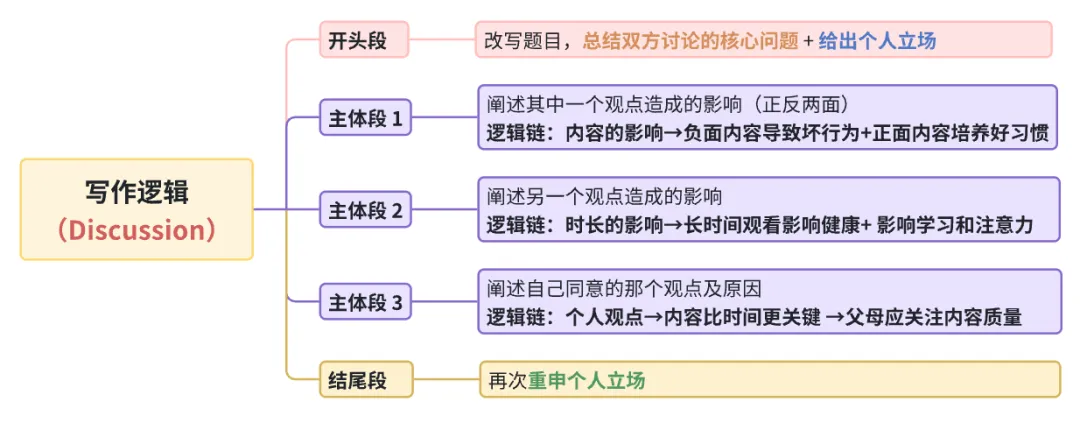
1.开头段(Introduction)
讨论两种观点并给出个人观点:虽然内容和时间都很重要,但我认为内容发挥了更为重要的作用
Some believe that the content children watch shapes their actions, while others argue that the time spent watching TV has a greater impact. In my view, both factors matter, but the content holds slightly more importance in determining behavior.
2.主体段
主体段1:
主题:孩子观看的内容类型对其行为有显著影响
解释:暴力或不当的节目可能会导致模仿行为,尤其是在年轻观众中
举例1:研究表明,暴力卡通节目可能使儿童对同龄人表现出更多的攻击性
举例2:教育性节目能够培养同理心或解决问题的能力,从而促进积极的行为
举例3:《芝麻街》这类节目已被证明能够改善儿童的社交和认知能力,说明了内容对发展的影响
主体段2:
主题:观看电视的时间也很重要
解释1:过度的屏幕时间可能导致久坐的生活方式,增加患肥胖等健康问题的风险
解释2:过多的屏幕时间减少了参与阅读、户外游戏或家庭互动等重要活动的机会
解释3:长时间观看电视的孩子通常注意力不集中,且由于屏幕时间的消极性质,他们的学业表现较差
主体段3:个人观点→虽然内容和时间都很重要,但我认为内容发挥了更为重要的作用
主题:即使是短时间的暴力节目也可能造成伤害,而积极的内容即便观看较长时间,也能给孩子带来好处
解释:家长应关注提供高质量的节目,同时设置合理的屏幕时间限制
结尾段(Conclusion)
总结个人观点:电视观看的内容和时间都会影响儿童的行为。然而,他们所观看的内容对行为的影响比观看时间更深远。精心挑选有益的节目并适度控制屏幕时间对促进儿童积极发展至关重要。
both the content and duration of TV viewing affect children’s behavior. However, the quality of what they watch has a deeper impact than the amount of time spent watching. Curating constructive programs and moderating screen time are essential for fostering positive development.
范文精析版
⭐️ 蓝色部分-生动动作表达:增加写作词汇丰富程
⭐️ 黄色部分-地道名词形容词表达:增加写作词汇丰富程度
⭐️ 橙色部分-必备连接词汇:增加写作连接词的积累
⭐️ 绿色部分-高级语法积累:提高写作时语法多样性和准确性
▼
范文
The influence of television on children’s behavior is a widely debated issue. Some believe that the content children watch shapes their actions, whileothers argue that the time spent watching TV has a greater impact.In my view, both factors matter, butthe content holds slightly more importance in determining behavior.
The type of content children watch significantly impacts their actions. Violent or inappropriate programs can lead to imitative behavior, particularly in young viewers. For example, studies show that children exposed to violent cartoons may exhibit more aggression towards peers.On the other hand, educational programsthat teachempathy or problem-solving can foster positive behavior. For instance, shows likeSesame Street have been shown to improve children’s social and cognitive skills, illustrating the influence of content on development.
However, the amount of time spent watching TV also matters. Excessive screen time can lead to a sedentary lifestyle, increasing the risk of health issues likeobesity. Additionally, too much time in front of screens reduces opportunities for essential activities such as reading, outdoor play, or family interactions. For example, children who spend hours watching TV often have shorter attention spans and perform worse academically due to the passive nature of screen time.
While both content and time are important, I believe content plays a more influential role. Harmful programming can cause damage even with limited exposure, whereaspositive content can benefit children even if viewed for longer periods. Parents should focus on providing high-quality programs while also settingreasonable screen-time limits.
In conclusion, both the content and duration of TV viewing affect children’s behavior. However, the quality of what they watch has a deeper impact than the amount of time spent watching.Curating constructive programs and moderating screen time are essential for fostering positive development.
高分表达
shapes their actions 影响他们的行为
holds slightly more importance 稍微更为重要
exhibit more aggression towards peers 对同龄人表现出更多的攻击性
also matters 也很重要;同样重要
plays a more influential role 发挥更具影响力的作用
Curating constructive programs 策划建设性的节目
moderating screen time 调节屏幕使用时间
a widely debated issue 一个广泛讨论的问题
Violent or inappropriate programs 对同龄人表现出更多的攻击性
imitative behavior 模仿行为
exposed 暴露;接触
violent cartoons 暴力卡通
educational programs 教育节目
empathy 同理心
social and cognitive skills 社交和认知技能
Excessive 过度的;过多的
a sedentary lifestyle 久坐的生活方式
too much time in front of screens 过多时间盯着屏幕
shorter attention spans 较短的注意力持续时间
reasonable screen-time limits 合理的屏幕使用时间限制
①On the other hand, educational programs that teach empathy or problem-solving can foster positive behavior.
另一方面,教育性节目(定语从句)能够培养同理心或解决问题的能力,从而促进积极的行为
②For instance, shows like Sesame Street have been shown to improve children’s social and cognitive skills, illustrating the influence of content on development.
例如,《芝麻街》这类节目已被证明能够改善儿童的社交和认知能力,(分词做状语,表结果/解释)说明了内容对发展的影响
③For example, children who spend hours watching TV often have shorter attention spans and perform worse academically due to the passive nature of screen time.
例如,(定语从句)长时间观看电视的孩子通常注意力不集中,且由于屏幕时间的消极性质,他们的学业表现较差
④Harmful programming can cause damage even with limited exposure, whereas positive content can benefit children even if viewed for longer periods
即使是短时间的暴力节目也可能造成伤害,而积极的内容(条件状语从句)即便观看较长时间,也能给孩子带来好处
⑤Parents should focus on providing high-quality programs while also setting reasonable screen-time limits.
家长应关注提供高质量的节目,(表并列)同时设置合理的屏幕时间限制
⑥However, the quality of what they watch has a deeper impact than the amount of time spent watching.
然而,他们所观看的内容对行为的影响比观看时间(比较结构)更深远
▼