

这篇推文整理了2021–2025年新高考I卷读后续写真题的原文、伏笔、每段可以怎么写,文末还有按场景分的素材库。希望你能用得上。
一、五年真题,先看一眼
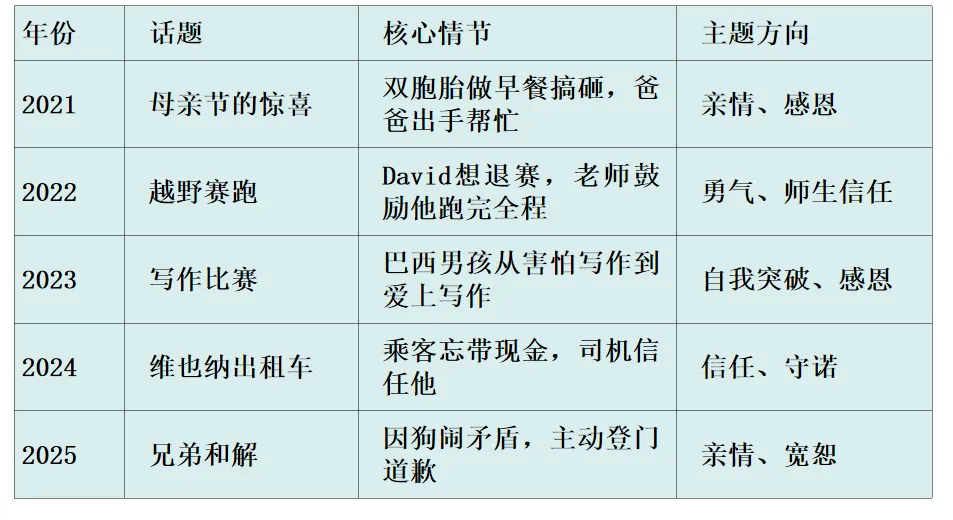
如果你多看几遍,可能会发现它们大多绕着同一个架子转:遇到一个小麻烦→ 想办法解决 → 最后感受到温暖或成长。
二.备考方向:抓住三条核心线
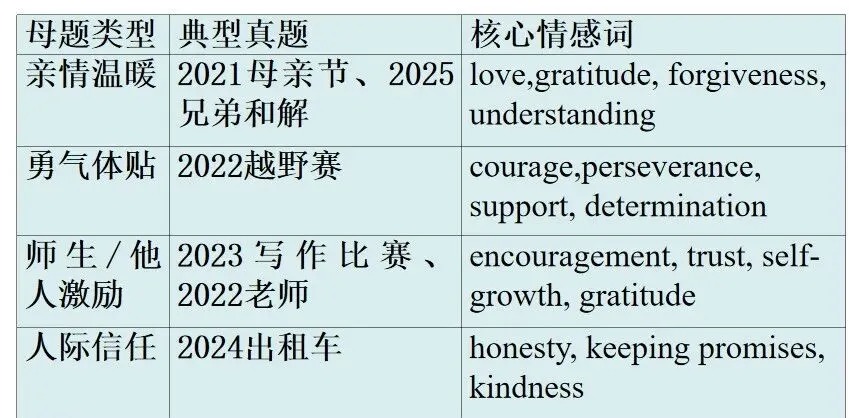
通过五年真题可以看出,读后续写始终围绕“情节推进 + 情感变化 + 主题升华” 三条线展开。备考时不要只背模板,而要学会“用情节带情感,用情感扣主题”。
方向1:主题锁定——四大高频母题
方向2:情节逻辑——必须解决一个“小困难”
每年续写第一段开头都给了一个“困境”:
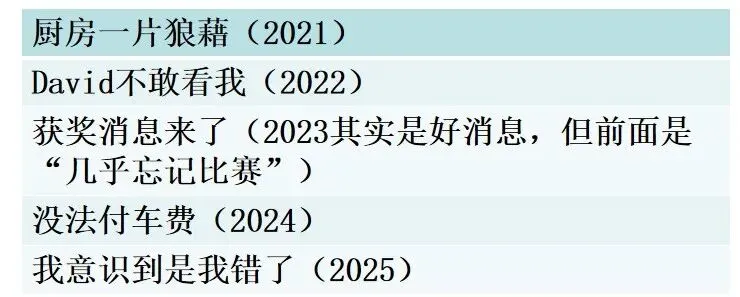
规律:续写第一段要完成“认识问题→ 尝试解决 → 出现转机”; 第二段要完成“行动 → 情感高潮 → 主题升华”。
方向3:语言风格——简单但生动,要有画面感
不需要每个词都很复杂,不过可以试着加一点让人能想象出来的细节。比如不写“I was very moved”,换成:A warm feeling flooded over my heart.
或者Tears welled up in my eyes.再加上一两句直接引语:“I believe in you,” he said softly.
三.考场上的几个小提醒
尽量避免的三件事
·不要突然给人物加“超能力”。原文没有魔法或神奇逆转,续写最好也别出现太离奇的剧情。
尽量不要用“In a word”来结尾。这种更像议论文的收束,读后续写用故事本身来收尾会更自然。
不要全文只有“said”。偶尔换成 whispered, murmured, exclaimed,再搭配一个小动作,会更有画面
试着做的三件事
读原文的时候顺手圈三个东西:主人公的性格、两段段首句、一个可能用上的小物品(2021年的早餐,2025年的饼干)。
写之前花一两分钟简单列个思路:第一段谁帮他/她?说了什么?事情怎么出现转机?第二段后来怎样见面?感情最高点是什么?最后一句话大概落在哪个主题上?
瞄一眼行数:答题卡一般18行,去掉段首两行,每段写8–9行比较稳妥,不用写太满,也不要太少。
写第一段时,记住公式:
回应困境 + 一个小行动 + 一句对话/心理 + 出现转机
例(2024):I ran back to Gunter and told him the bad news. (困境) He looked at me, then smiled. “Don‘t worry. You can pay me when you come back.” (对话+转机)
写第二段时,记住公式:
时间跳跃(必要时)+ 见面/行动 + 情感高潮 + 主题句
例(2025):With the biscuits, I arrived at his door. He opened it, surprise in his eyes. “I’m sorry,” I said. He pulled me into a hug. That day, forgiveness rebuilt our bond.
四、五年真题细致拆解 + 每段写作框架
下面每一年的英文原文可以自己先读一遍,然后看我圈出来的伏笔,以及每段可以分几步写。
2021年 · 母亲节的惊喜
A MOTHER’S DAY SURPRISE
The twins were filled with excitement as they thought of the surprise they were planning for Mother’s Day. How pleased and proud Mother would be when they brought her breakfast in bed. They planned to make French toast and chicken porridge. They had watched their mother in the kitchen.There was nothing to it. Jenna and Jeff knew exactly what to do.
The big day came at last. The alarm rang at 6 a.m. The pair went down the stairs quietly to the kitchen. They decided to boil the porridge first. They put some rice into a pot of water and left it to boil while they made the French toast. Jeff broke two eggs into a plate and added in some milk. Jenna found the bread and put two slices into the egg mixture. Next, Jeff turned on the second stove burner to heat up the frying pan. Everything was going smoothly until Jeff started frying the bread. The pan was too hot and the bread turned black within seconds. Jenna threw the burnt piece into the sink and put in the other slice of bread. This time, she turned down the fire so it cooked nicely.
Then Jeff noticed steam shooting out of the pot and the lid starting to shake. The next minute, the porridge boiled over and put out the fire. Jenna panicked. Thankfully, Jeff stayed calm and turned off the gas quickly. But the stove was a mess now. Jenna told Jeff to clean it up so they could continue to cook the rest of the porridge. But Jeff’s hand touched the hot burner and he gave a cry of pain. Jenna made him put his hand in cold water. Then she caught the smell of burning. Oh dear! The piece of bread in the pan had turned black as well.
注意:
1. 续写词数应为150左右。
2. 请按如下格式在答题卡的相应位置作答。
As the twins looked around them in disappointment, their father appeared.
The twins carried the breakfast upstairs and woke their mother up.
伏笔
·“There was nothing to it” → 孩子们低估了做饭难度,爸爸可以教他们正确方法。
·“Jeff stayed calm” → Jeff比较沉稳,续写里可以延续。
·Jeff被烫伤 → 爸爸要先关心伤口。
·“Oh dear!”语气带点小幽默→ 续写可以保持温暖调子。
写作框架
第一段段首:As the twins looked around them in disappointment, their father appeared.
可以这样安排(4步左右):
1.爸爸出现并观察看到凌乱的厨房、烧焦的面包、Jeff发红的手。没有批评,蹲下来问“怎么了?”
2.孩子说出计划失败Jenna或Jeff解释想给妈妈惊喜但搞砸了。爸爸安慰一句“没关系,我们一起想办法”。
3.爸爸带着重新做示范正确火候,搅拌、摆盘。手伤可以先冲冷水贴创可贴。过程中说一两句鼓励的话。
4.早餐做好,准备上楼吐司金黄,粥冒热气。摆到托盘上,深吸一口气,端着往楼上走。结尾要自然引出第二段段首“端着早餐上楼叫醒妈妈”。
第二段段首:The twins carried the breakfast upstairs and woke their mother up.
可以这样安排(4步左右):
1.叫醒妈妈轻轻推门,拉上窗帘。小声说“Happy Mother’s Day”。
2.妈妈的反应她坐起来,看到早餐,先是惊讶,然后眼睛湿润。可以写她拥抱孩子。
3.对话或互动妈妈尝一口,说“这是我吃过最好的早餐”。孩子坦白说爸爸帮了忙,妈妈笑着摇头“是你们的心意最重要”。
4.结尾点主题比如“That morning, the kitchen was a mess — but their love was not.”
2022年 · David 的越野赛
It was the day of the big cross-country run. Students from seven different primary schools in and around the small town were warming up and walking the route(路线)through thick evergreen forest.
I looked around and finally spotted David, who was standing by himself off to the side by a fence. He was small for ten years old. His usual big toothy smile was absent today. I walked over and asked him why he wasn’t with the other children. He hesitated and then said he had decided not to run.
What was wrong? He had worked so hard for this event!
I quickly searched the crowd for the school’s coach and asked him what had happened. “I was afraid that kids from other schools would laugh at him,” he explained uncomfortably. “I gave him the choice to run or not, and let him decide.”
I bit back my frustration(懊恼). I knew the coach meant well—he thought he was doing the right thing. After making sure that David could run if he wanted, I turned to find him coming towards me, his small body rocking from side to side as he swung his feet forward.
David had a brain disease which prevented him from walking or running like other children, but at school his classmates thought of him as a regular kid. He always participated to the best of his ability in whatever they were doing. That was why none of the children thought it unusual that David had decided to join the cross-country team. It just took him longer—that’s all. David had not missed a single practice, and although he always finished his run long after the other children, he did always finish. As a special education teacher at the school, I was familiar with the challenges David faced and was proud of his strong determination.
注意:
1. 续写词数应为150左右;
2. 请按如下格式在答题卡的相应位置作答.
We sat down next to each other, but David wouldn’t look at me.
I watched as David moved up to the starting line with the other runners.
伏笔
·“His usual big toothy smile was absent today” → 平时笑,今天不笑,情绪反常,续写里笑回来是一个呼应。
·“He always finished” → 必须完赛,不能突然变快。
·教练是好意→ 可以对比老师的做法。
写作框架
第一段段首:We sat down next to each other, but David wouldn‘t look at me.
可以这样安排(4步左右):
1.老师先不说话,陪他坐着不急着问,先让他感觉到旁边有人。可以描写一下周围环境——其他孩子在热身,远处有笑声,衬托 David 的沉默。
2.老师轻声问原因不是质问,而是“Can you tell me what’s going on inside your head?” David可能还是不看老师,但开始小声说出担忧——怕被嘲笑、怕丢脸。
3.老师回应他的担忧可以说“还记得每次训练你都会跑完吗?那比快慢重要得多。” 也可以提一句教练的原话,但温和地说“教练只是担心你,但我相信你自己可以做决定。”
4.David抬起头,决定试一试老师问“Do you want to run?” David 沉默几秒,然后点头。虽然没有笑,但眼神和之前不一样了。结尾可以写“He stood up, still quiet, but walked toward the starting line.”
第二段段首:I watched as David moved up to the starting line with the other runners.
可以这样安排(4步左右):
1.走向起跑线描写他的走路姿态——原文提到的“rocking from side to side”可以在这里呼应。其他选手回头看,但没有人笑。
2.发令枪响,比赛开始所有人都冲出去,David是最后一个。但他在跑,没有停。
3.途中可以加一点旁观者的反应——几个同学喊“Come on, David!”老师站在路边看着他,心里紧张又骄傲。
4.冲线时刻他跑完了,比所有人都慢,但坚持到了最后。老师迎上去,David抬起头——那个大大的笑容回来了。结尾可以落在“He didn‘t win the race, but he won something more important: his own battle.”
2023年 · 写作之路
When I was in middle school, my social studies teacher asked me to enter a writing contest. I said no without thinking. I did not love writing. My family came from Brazil, so English was only my second language. Writing was so difficult and painful for me that my teacher had allowed me to present my paper on the sinking of the Titanic by acting out a play, where I played all the parts. No one laughed harder than he did.
So, why did he suddenly force me to do something at which I was sure to fail? His reply: “Because I love your stories. If you’re willing to apply yourself, I think you have a good shot at this.” Encouraged by his words, I agreed to give it a try.
I chose Paul Revere’s horse as my subject. Paul Revere was a silversmith (银匠) in Boston who rode a horse at night on April 18, 1775 to Lexington to warn people that British soldiers were coming. My story would come straight from the horse’s mouth. Not a brilliant idea, but funny; and unlikely to be anyone else’s choice.
What did the horse think, as he sped through the night? Did he get tired? Have doubts? Did he want to quit? I sympathized immediately. I got tired. I had doubts. I wanted to quit. But, like Revere’s horse, I kept going. I worked hard. I checked my spelling. I asked my older sister to correct my grammar. I checked out a half dozen books on Paul Revere from the library. I even read a few of them.
When I handed in the essay to my teacher, he read it, laughed out loud, and said, “Great. Now, write it again.” I wrote it again, and again and again. When I finally finished it, the thought of winning had given way to the enjoyment of writing. If I didn’t win, I wouldn’t care.
注意:
1. 续写词数应为150个左右;
2. 请按如下格式在答题卡的相应位置作答。
A few weeks later, when I almost forgot the contest, there came the news.
I went to my teacher’s office after the award presentation.
伏笔
·“No one laughed harder than he did” → 老师能理解“我”的幽默感,是鼓励的基础。
·“Because I love your stories” → 老师早就注意到“我”的表达能力。
·“I sympathized immediately” → 把自己和马类比,续写可以延续这种对比。
·“the thought of winning had given way to the enjoyment of writing” → 已经不在乎结果了,所以获奖是意外惊喜。
写作框架
第一段段首:A few weeks later, when I almost forgot the contest, there came the news.
可以这样安排(4步左右):
1.消息传来的方式可以是课间被叫到办公室,或者放学时老师递过来一封信。写一个具体的小场景。
2.得知获奖的第一反应不相信,反复问“真的吗?”可以写“I had to read the letter twice.” 因为已经不在乎输赢,所以惊讶多于狂喜。
3.内心的闪回想到之前写那篇作文时的挣扎——一遍遍修改、查资料、想放弃又坚持。可以和原文里“马”的比喻呼应一下。
4.准备参加颁奖走出办公室时脚步发飘,感觉不真实。告诉自己“无论明天怎样,我已经赚了。”
第二段段首:I went to my teacher‘s office after the award presentation.
可以这样安排(4步左右):
1.敲门进去老师还在批改作业,抬头看到他手里的奖状,笑了。
2.道谢的对话“我”把奖状递过去,说“This belongs to you.” 老师摇头,说“No, you wrote every word. I just opened the door.”
3.回忆第一次鼓励可以提到原文里老师让他演泰坦尼克号的事——“You were the only one who laughed at my play.” 老师又笑了。
4.结尾点成长走出办公室时,心里很踏实。不再是那个一提到写作就想逃跑的人了。
2024年 · 维也纳出租车
I met Gunter on a cold, wet and unforgettable evening in September. I had planned to fly to Vienna and take a bus to Prague for a conference. Due to a big storm, my flight had been delayed by an hour and a half. I touched down in Vienna just 30 minutes before the departure of the last bus to Prague. The moment I got off the plane, I ran like crazy through the airport building and jumped into the first taxi on the rank without a second thought.
That was when I met Gunter. I told him where I was going, but he said he hadn't heard of the bus station. I thought my pronunciation was the problem, so I explained again more slowly, but he still looked confused. When I was about to give up, Gunter fished out his little phone and rang up a friend. After a heated discussion that lasted for what seemed like a century, Gunter put his phone down and started the car.
Finally, with just two minutes to spare we rolled into the bus station. Thankfully, there was a long queue (队列) still waiting to board the bus. Gunter parked the taxi behind the bus, turned around, and looked at me with a big smile on his face. "We made it," he said.
Just then I realised that I had zero cash in my wallet. I flashed him an apologetic smile as I pulled out my Portuguese bankcard. He tried it several times, but the card machine just did not play along. A feeling of helplessness washed over me as I saw the bus queue thinning out.
At this moment, Gunter pointed towards the waiting hall of the bus station. There, at the entrance, was a cash machine. I jumped out of the car, made a mad run for the machine, and popped my card in, only to read the message: "Out of order. Sorry."
注意:
(1)续写词数应为150个左右;
(2)(2)请按如下格式在答题纸的相应位置作答。
I ran back to Gunter and told him the bad news.
Four days later, when I was back in Vienna, I called Gunter as promised.
伏笔
·Gunter打电话问路→ 他愿意花时间帮助陌生人,为后面的信任做铺垫。
·“looked at me with a big smile” → 他先分享“赶上了”的喜悦,而不是催钱。
·ATM坏了 → 困境推到极致,后面的善意会更打动人。
写作框架
第一段段首:I ran back to Gunter and told him the bad news.
可以这样安排(4步左右):
1.冲回去说坏消息气喘吁吁地说“The ATM is broken. I have no cash.” 心里已经准备好被骂或被迫下车。
2.Gunter的反应他愣了一下,看了看“我”焦急的脸,又看了看快要开走的大巴。沉默两秒。
3.他提出信任他说“How about you pay me next time you’re in Vienna? I trust you.” 然后快速写了电话号码递过来。
4.道谢、赶车、留一个约定“我”接过纸条,使劲握手道谢,冲上大巴。车门关上的瞬间,窗外的Gunter还在挥手。这一段要明确出现“约定”(promise),因为第二段段首说“as promised”。
第二段段首:Four days later, when I was back in Vienna, I called Gunter as promised.
可以这样安排(4步左右):
1.打电话约见面拨通电话,那边Gunter接了。“I told you I‘d come back,” 我笑着说。约在车站门口见。
2.见面还钱Gunter还是那辆出租车,还是那个笑容。我把钱递过去,他数都没数就塞进口袋。
3.一点额外的感谢可以加一个小细节:请他喝杯咖啡,或者递一包从布拉格带回来的巧克力。Gunter笑着说“You didn’t have to.”
4.结尾点信任挥手告别时,心里很暖。可以写“A promise kept is a small thing, but it can mean the world to someone.”
2025年 · 兄弟和解
My wife and I wanted to share our new home with family and friends by hosting a small gathering in the early summer. She had prepared lots of snacks, while my job was to have the backyard in order.
There was plenty of space for the kids to run and play. There was just one thing I hadn’t counted on: My brother chose to bring his dog Toby, a 50-pound ball of fire. Though friendly, he could easily knock over my niece’s small boys and my six-month-old granddaughter. So, when my brother showed up, I asked him to watch Toby and keep him outside.
My plan was working out just fine. Toby was using up his energy by running back and forth in the backyard and giving the kids plenty of room. Unexpectedly, after supper, the weather changed. It started to rain and everyone went indoors. It was an awkward moment. I didn’t want Toby to be running around in the house, and my brother wasn’t happy with driving home with a wet dog. Eventually, my brother decided to leave rather than force the issue.
A few days passed, and I hadn’t heard anything from my brother. I texted him and expressed wishes for him to come out again. His reply came as a surprise — a shock, actually: “Not a chance.” Clearly, he was unhappy over the way we had parted. After all, I had left him little choice. Well, he’ll get over it, I reasoned.
Two months passed. My wife suggested I get in touch with my brother, but I resisted, thinking he should call first. However, my conscience (良心) kept bothering me. I tried to put myself in my brother’s shoes. He was facing health issues and his wife of thirty-five years had passed away a few months earlier. Toby was his constant companion, the one who kept him going.
注意:
(1)续写词数应为150个左右;
(2)请按如下格式在答题卡的相应位置作答。
I realized it was me who was at fault.
With the biscuits my wife had made, I arrived at my brother’s door.
伏笔
·“a 50-pound ball of fire” → 形容Toby精力旺盛,为矛盾埋伏笔。
·下雨是转折点,不是任何人故意→ 醒悟时可以提到。
·“Not a chance” → 弟弟的回复很重。
·妻子去世、健康问题→ 理解弟弟的关键。
写作框架
第一段段首:I realized it was me who was at fault.
可以这样安排(4-5步):
1.醒悟的瞬间可以写一个具体场景——晚上翻来覆去睡不着,或者看到妻子带饼干时心里被戳了一下。不是突然就想通,而是慢慢意识到自己错了。
2.换位思考回想弟弟失去妻子后的日子,Toby可能是他唯一每天会说话的活物。而自己那天因为下雨把他赶走了。可以用“What if I were him?”来写内心活动。
3.内心的犹豫想道歉,但又怕弟弟不理自己。拿起手机又放下。妻子在旁边轻声说“He’s your brother. He‘s waiting, not ignoring you.”
4.决定行动深吸一口气,说“You’re right. I‘ll go.” 带上妻子准备的饼干(第二段段首提到的物品),走出门。
5.去弟弟家的路上可以写一小段路上的心情——脚步很快但又有点慌。最后一句可以是“I knocked on his door before I lost my courage.”
第二段段首:With the biscuits my wife had made, I arrived at my brother’s door.
可以这样安排(4步左右):
1.敲门,弟弟开门门开了,弟弟站在门口,表情有点意外,但没说话。Toby在旁边摇尾巴。
2.递出饼干,开口道歉把饼干递过去,说“I brought these. And... I‘m sorry. That day, I was wrong.”可以提到下雨不是他的错、自己当时没体谅他。
3.弟弟的反应沉默了几秒,然后拉开门让他进屋。说“Come in. Toby missed you.” 或者直接拥抱。
4.和解与结尾坐下来聊了一会,Toby趴在他们脚边。离开时弟弟说了句“Thanks for coming.” 结尾可以落在“Sometimes the hardest person to apologize to is the one who never asked for it. But he was the one who needed it most.”
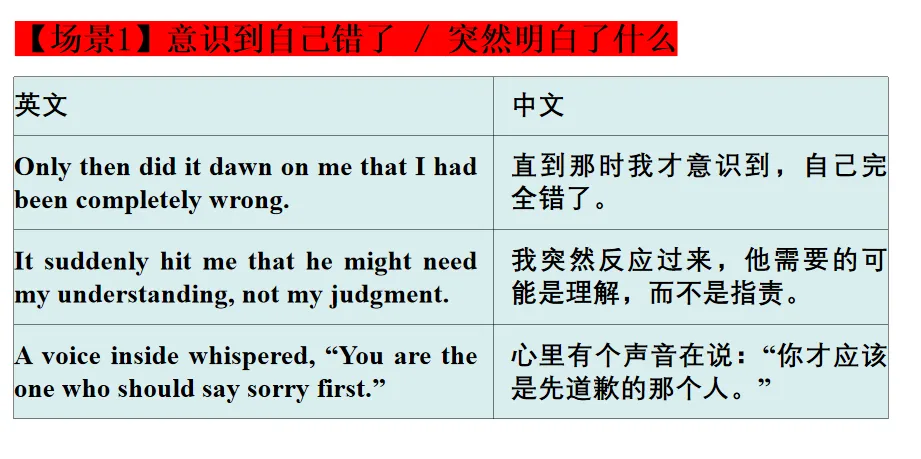
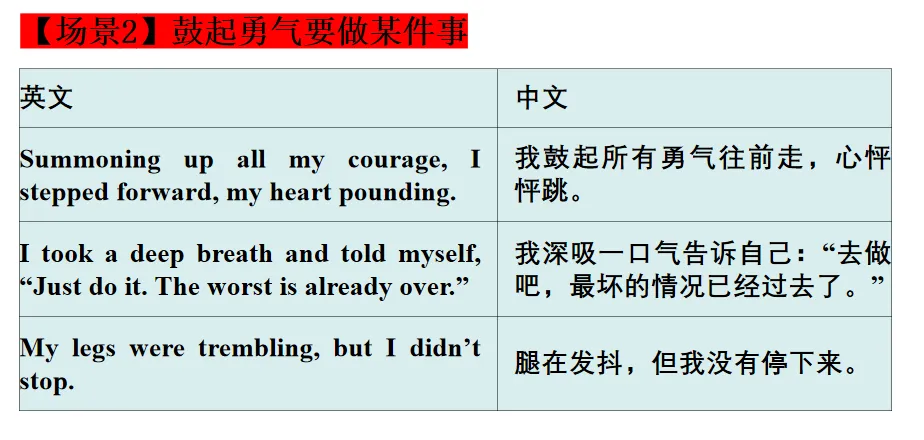
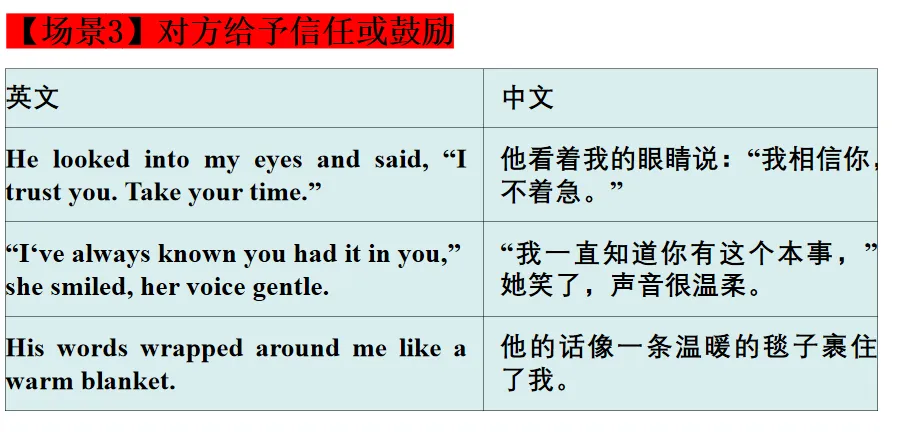
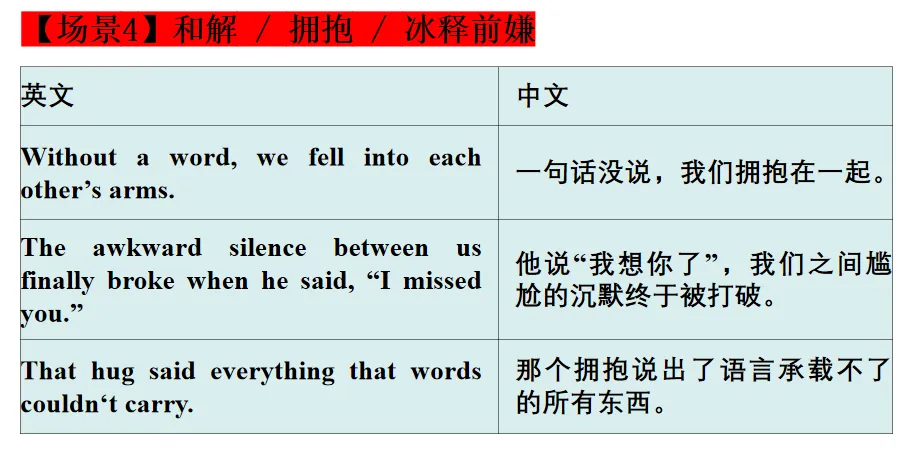
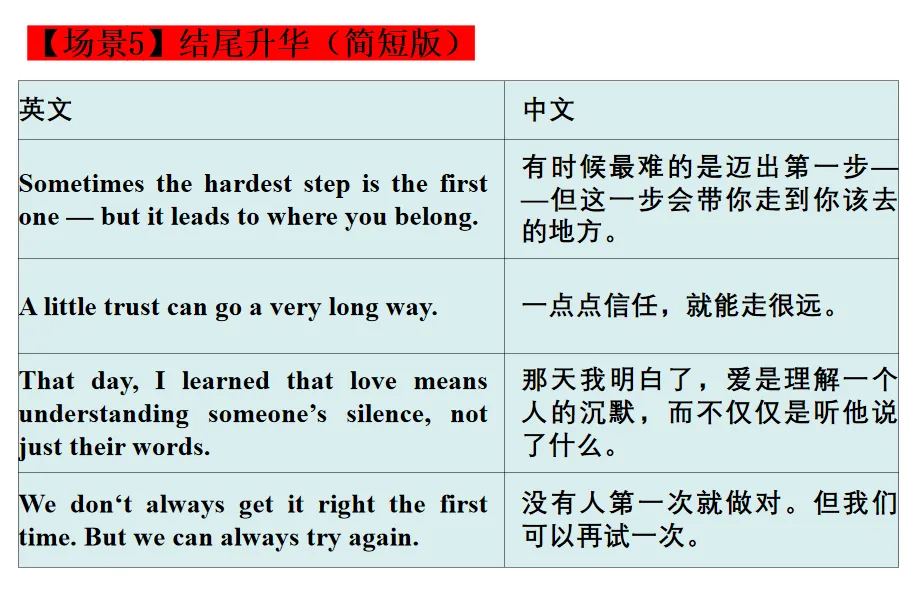
五、直接能用的素材库(按场景分)
最后:读后续写其实没有想象中那么难。它更多是看你能不能把一个温暖的小故事讲清楚、讲顺、让人觉得有一点触动。


