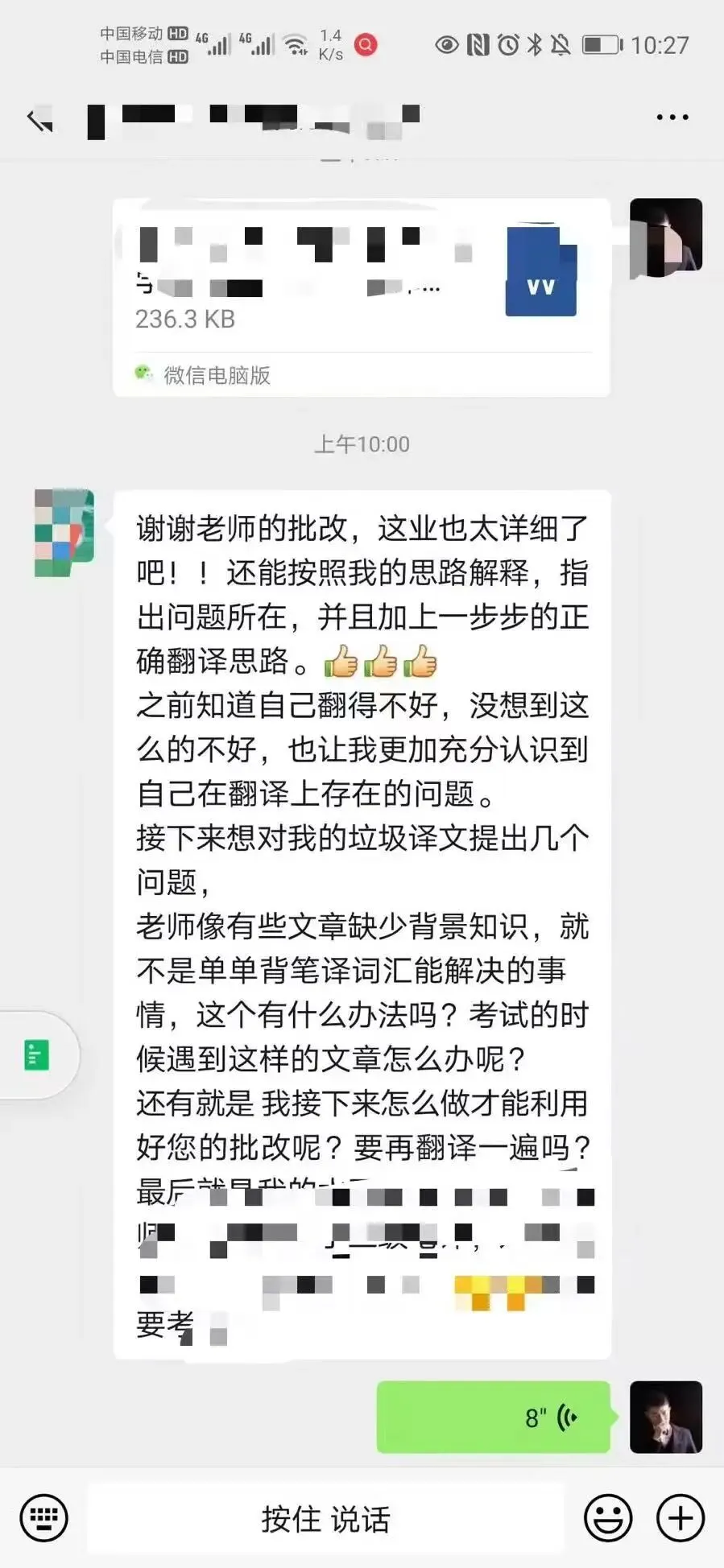
Mulan was a child of Peking. She had grown up there and had drunk in all the richness of life of the city which enveloped its inhabitants like a great mother soft toward all her children’s requests, fulfilling all their whims and desires, or like a huge thousand-year-old tree in which the insects making their home in one branch did not know what the insects in the other branch were doing. She had learned from Peking its tolerance, geniality, and urbanity, as we all in our formative years catch something of the city and country we live in.木兰是个地道的北京孩子,她在北京长大,沉浸在/陶醉于北京城丰富多彩的生活里。对当地居民而言,北京城像是一位慈母,对儿女的请求,总是温柔回应;对儿女的愿望,无不有求必应。北京城又像一棵千年古树,居民们像虫子一样在各枝丫上安家,对于其它各枝丫上居民的生活状况一无所知。从北京身上,木兰学到了宽容友善,学到了温文尔雅,就像我们童年时不知不觉间从故乡学到的东西一样。重要翻译要点提示:1 She had grown up there and had drunk in all the richness of life of the city.首先,“had drunk in” 为过去完成时,动词短语 drink in在文学语境中并非实指“饮用”,而是比喻性地表示“全身心吸收、沉浸、内化”某种精神或文化滋养。其次理解richness这个词,在这句话中,"richness"为抽象名词,指"丰富性"或"深厚底蕴",指城市生活所蕴含的多元文化、历史积淀等或指城市所承载的文化多样性、生活细节、人文气息与精神氛围等,这一点从后面关于北京市井人文以及景观介绍中可以看出。而后面"of life"则限定了"richness"的范畴;"of the city"又进一步明确可空间属性,表明"北京城市生活的丰富性"。译为:她在北京长大,沉浸于/陶醉于北京城丰富多彩的生活里。2 She had learned from Peking its tolerance, geniality, and urbanity这句话通过三个名词进一步交代北京城的内在精神特质,比如:tolerance 侧重 宽容 包容,实际反映了北京作为千年古都兼收并蓄的文化特质;geniality 侧重 温和,和蔼,友善等方面;而 urbanity 这个词由urban 都市这个词衍生而来, 它原本指城市生活方式的文雅文明礼貌等,后面这个词直接引申为品质类词汇,表示人文雅,有礼貌,雅致等含义,这里可译为:温文尔雅// 文雅译为:从北京身上,木兰学到了宽容友善,学到了温文尔雅。3 as we all in our formative years catch something of the city and country we live in.formative 英文含义是 having an important and lasting influence on the development of sth or of sb's character (对某事物或性格的发展)有持续重大影响的。而对于一个人而言,童年正是性格形成的关键时期,并对之后的人生有着重大影响,所以英文中常用formative years 表示一个人的童年时期/小时候。而这里catch something,相当于learn something 即学到xxx,这里强调环境影响的非刻意性,即潜移默化,所以我这里合理增译“不知不觉间”。The city and the country we lived in结合这里的formative years(童年时期),我们童年时期生活的城市或国家(The city and the country we lived in),我们可称之为故乡。译为:就像我们童年时不知不觉间从故乡学到的东西一样(2)She had grown up with the yellow-roofed palaces and the purple and green roofed temples, the broad boulevards and the long, crooked alleys, the busy thoroughfares and the quiet districts that were almost rural in their effect; the common man’s homes with their inevitable pomegranate trees and jars of goldfish, no less than the rich man’s mansions and gardens; the open-air tea houses where men loll on rattan armchairs under cypress tress, spending twenty cents for a whole afternoon in summer; the enclosed teashops where in winter men eat steaming-hot mutton fried with onion and drink pehkan and where the great rub shoulders with the humble;
She had grown up with the yellow-roofed palaces and the purple and green roofed temples, the broad boulevards and the long, crooked alleys, the busy thoroughfares and the quiet districts that were almost rural in their effect; 翻译这句话的关键是厘清结构,正确理解这里多个名词短语,按照汉语习惯和思维,合理安排信息。紧缩主干:主语 "She" + 谓语 "had grown up with" + 并列宾语(由 "and" 连接的多组名词短语)核心动作:"had grown up with",交代成长环境特点;宾语部分通过 "and" 连接多个并列的名词短语 结构,描述北京城多样的城市风貌;且注意观察,后面四个并列的宾语部分(名词短语),实则存在对比逻辑:1 色彩对比yellow-roofed palaces and the purple and green roofed temples,
黄瓦宫殿与紫绿相间的寺庙
2 空间对比 the broad boulevards and the long, crooked alleys
宽阔的林荫大道与曲折幽深的小巷
3 氛围对比the busy thoroughfares and the quiet districts that were almost rural in their effect;繁华的通衢与安静得近乎乡野的街巷译为:她自幼便成长于北京城中,见惯了黄瓦宫殿与紫绿相间的寺庙,宽阔的林荫大道与曲折幽深的小巷,繁华的通衢与安静得近乎乡野的街巷。2 the common man’s homes with their inevitable pomegranate trees and jars of goldfish, no less than the rich man’s mansions and gardens;紧缩主干: the common man’s homes is no less than the rich man’s mansions and gardens实际上这句可以看作一个省略系动词(is)的句子,be no less than 连接两组对比的宾语:the common man’s homes 平民宅院 the rich man’s mansions and gardens 达官显贵的府邸庭院 而"with their inevitable...",属于介词短语结构,修饰“平民之家”,强调石榴树和金鱼缸的普遍性,inevitable 暗含“不可或缺”之意。no less than,属于比较级否定形式,通过这一结构将平民与富人的居所置于同等地位,即平民的宅院并不比富人的府邸庭院要差。也可进一步提升思路,处理为:其与富人宅邸花园相比,同样值得称道译为:平民宅院里,株株石榴树和缸缸金鱼从未缺席,其与富人宅邸花园相比,同样值得称道。3 the enclosed teashops where in winter men eat steaming-hot mutton fried with onion and drink pehkan and where the great rub shoulders with the humble; 先看句子结构:本句主语为 the enclosed teashops(即室内茶馆),后接两个定语从句交代其功能:1"where in winter men eat... mutton fried with onion"2"where the great rub shoulders with the humble"另外理解几个表达:1 mutton fried with onion 传统北京名菜,葱爆羊肉。2 pehkan 是中文“白干儿”的音译,指一种传统中国白酒,通常由高粱酿造,酒精度较高,口感辛辣。在原文语境中,它出现在冬季室内茶楼的饮食场景中,与“葱爆羊肉”搭配,体现北方冬季常见的饮酒取暖习俗。3 the great rub shoulders with the humble这里属于the+adj 表示一类人的用法,比如the great 指大人物,权贵等,而the humble 指平民或百姓,rub shoulder with 摩肩接踵 与……接触 一般表示 拥挤的地方,各类人互相插肩而过,这里形容茶馆内人很多,非常拥挤。译为:而到寒冬时节,人们又挤进暖洋洋的室内茶馆,就着葱爆羊肉大快朵颐,饮着白干酒取暖,茶馆内,各类人物摩肩接踵/比肩而坐,既有寻常百姓,又有达官贵人注:《京华烟云》是一本英文小说,林语堂于1938年至1939年旅居巴黎期间用英文创作,原名为《Moment in Peking》,并于1939年底在美国首次出版,这篇英译汉真题,原文就是节选自英文原著。the end