题目:
Buildings and monuments that have historical importance in cities and countryside should always be preserved.
To what extent do you agree or disagree with this opinion?
中文:
在城市和农村具有历史意义的建筑和纪念碑应该始终得到保护。你在多大程度上同意或不同意这一观点?
题目解读
题目要求我们探讨在城市和农村具有历史意义的建筑和纪念碑是否应该始终得到保护。在论证过程中,我们可以从文化和经济这两个方向展开
然后,为了更好地展现出逻辑思维的严谨性和全面性,建议加入一个主体段做出一定程度上的让步,即承认保护历史建筑可能对会造成较高维护成本,然后对该负面影响做出批驳,从而得到更加科学的论证
写作框架
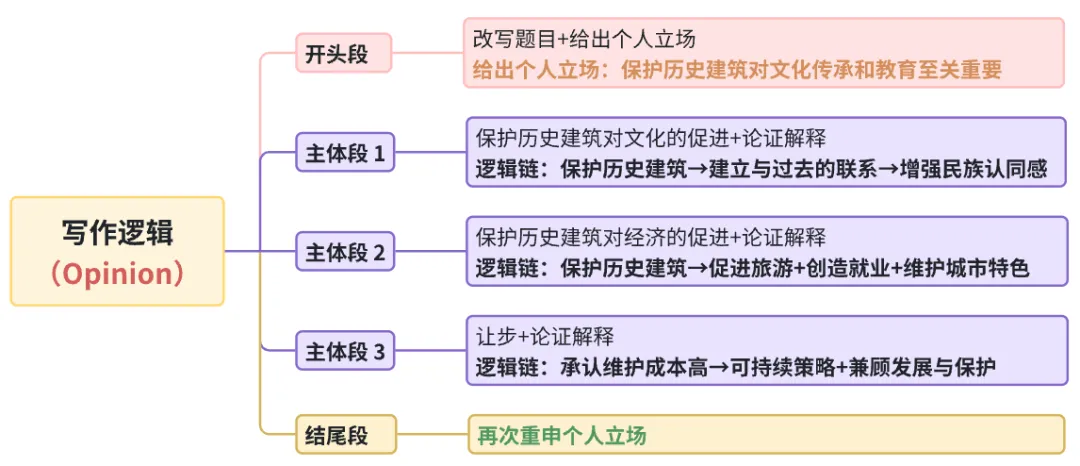
1.开头段(Introduction)
历史建筑和纪念碑是文化地标,见证了一个国家的过去。虽然有人认为现代发展应优先于保护,但我坚信,保护这些建筑对于维护文化认同和教育后代至关重要
Historical buildings and monuments serve as cultural landmarks and bear witness to a nation’s past. While some argue that modern development should take priority over preservation, I firmly believe that protecting these structures is essential for maintaining cultural identity and educating future generations.
2.主体段
主体段1:
主题:保护历史建筑的一个重要原因是其文化和历史意义
解释1:这些遗址是过去的实物见证,使人们能够与自身的文化和传统产生联系
例子1:例如,罗马的斗兽场或中国的长城提供了有关建造它们的文明的宝贵见解。如果这些遗址被拆除,无法替代的知识和文化认同将会丧失
解释2:此外,历史建筑还能增强民族自豪感和凝聚力,让人们铭记共同的历史
主体段2:
主题:历史建筑还能通过旅游业和城市复兴为经济做出贡献
解释1:巴黎和京都等保存完好的城市每年吸引数百万游客,带来可观的收入并创造就业机会。
解释2:除了旅游业,维护这些建筑还能促进当地商业,如酒店、餐馆和纪念品商店
解释3:相比之下,用现代建筑取代历史遗址往往会导致城市特色的丧失,并削弱其独特吸引力
主体段3:
主题:一些人认为保护旧建筑成本高昂,并限制城市发展
解释1:尽管维护费用较高,但其长期收益远远超过成本。政府和私人投资者可以实施可持续的保护策略,例如“适应性再利用”,即在不破坏建筑完整性的前提下,使历史建筑发挥新功能
解释2:此外,将现代基础设施与历史遗址相结合,可以在发展与保护之间找到平衡
结尾段(Conclusion)
因为历史建筑和纪念碑承载着文化、经济和教育价值,应当被永久保护。通过在保护的同时促进可持续发展,社会可以确保子孙后代既能继承丰富的历史,又能享受繁荣的城市环境
Historic buildings and monuments should always be preserved as they carry cultural, economic, and educational value. By protecting them while embracing sustainable development, societies can ensure that future generations inherit both a rich history and a thriving urban landscape.
范文精析版
⭐️ 蓝色部分-生动动作表达:增加写作词汇丰富程
⭐️ 黄色部分-地道名词形容词表达:增加写作词汇丰富程度
⭐️ 橙色部分-必备连接词汇:增加写作连接词的积累
⭐️ 绿色部分-高级语法积累:提高写作时语法多样性和准确性
▼
范文
Historical buildings and monuments serve as cultural landmarks and bear witness to a nation’s past. While some argue that modern development should take priority over preservation, I firmly believe that protecting these structures is essential for maintaining cultural identity and educating future generations.
One compelling reason for preserving historic structures is their cultural and historical significance. These sites provide tangible links to the past, allowing people to connect with their heritage and traditions. For instance, landmarks like the Colosseum in Rome or the Great Wall of China offer invaluable insights into the civilizations that built them. If such sites were to be demolished, irreplaceable knowledge and cultural identity would be lost. Furthermore, historic architecture fosters national pride and unity by reminding people of their shared history.
Additionally, historic buildings contribute to the economy through tourism and urban revitalization. Cities with well-preserved monuments, such as Paris and Kyoto, attract millions of tourists each year, generating substantial revenue and creating employment opportunities. Beyond tourism, maintaining these structures can stimulate local businesses,such as hotels, restaurants, and souvenir shops. In contrast, replacing them with modern buildings often leads to a loss of character and a decline in the city’s unique appeal.
However, some argue that preserving old buildings is costly and restricts urban development. While maintenance expenses can be high, the long-term benefits outweigh the costs. Governments and private investors can implement sustainable preservation strategies, such asadaptive reuse, which allows historic buildings to serve new functions without compromising their architectural integrity. Additionally, integrating modern infrastructure with historical sites can create a balance between progress and preservation.
In conclusion, historic buildings and monuments should always be preserved as they carry cultural, economic, and educational value. By protecting them while embracing sustainable development, societies can ensure that future generations inherit both a rich history and a thriving urban landscape.
高分表达
serve as cultural landmarks 作为文化地标
bear witness 见证历史
take priority over preservation 优先于保护
provide tangible links 提供切实的联系
offer invaluable insights 提供宝贵的见解
fosters national pride and unity 促进民族自豪感与凝聚力
reminding people of 唤起人们对…… 的记忆
generating substantial revenue 创造可观收入
stimulate local businesses 促进当地商业
leads to a loss 导致特色缺失
benefits outweigh the costs 利大于弊
implement sustainable preservation strategies 实施可持续保护策略
embracing sustainable development, societies 致力于可持续发展
serve as cultural landmarks 作为文化地标
bear witness 见证历史
take priority over preservation 优先于保护
provide tangible links 提供切实的联系
offer invaluable insights 提供宝贵的见解
fosters national pride and unity 促进民族自豪感与凝聚力
reminding people of 唤起人们对…… 的记忆
generating substantial revenue 创造可观收入
stimulate local businesses 促进当地商业
leads to a loss 导致特色缺失
benefits outweigh the costs 利大于弊
implement sustainable preservation strategies 实施可持续保护策略
embracing sustainable development, societies 致力于可持续发展
①These sites provide tangible links to the past, allowing people to connect with their heritage and traditions.
这些遗址是过去的实物见证,(comma-ing表伴随)使人们能够与自身的文化和传统产生联系
②If such sites were to be demolished, irreplaceable knowledge and cultural identity would be lost.
(if…were to…引导虚拟语气)如果这些遗址被拆除,无法替代的知识和文化认同将会丧失
③Governments and private investors can implement sustainable preservation strategies, such as adaptive reuse, which allows historic buildings to serve new functions without compromising their architectural integrity.
政府和私人投资者可以实施可持续的保护策略,例如“适应性再利用”,即(without+动名词表示“在不…的前提下”)在不破坏建筑完整性的前提下,使历史建筑发挥新功能
④In conclusion, historic buildings and monuments should always be preserved as they carry cultural, economic, and educational value.
总之,(as状语从句表原因)因为历史建筑和纪念碑承载着文化、经济和教育价值,应当被永久保护
▼