题目:
In more and more countries, people choose to give money on special occasions rather than giving gifts chosen personally. Why might this be the case?
Is it a positive or a negative development?
中文:
在越来越多的国家,人们在特殊场合选择赠送钱款,而不是亲自挑选礼物。这种现象的原因是什么?它是积极的发展还是消极的发展?
题目解读
该题目要求我们不仅要分析送钱这个现象的原因,还要评估这种现象的正反两方面影响。
对于前者,我们可以从实用性、文化、全球化这三个角度阐述原因;对于后者,我们可以从送钱的自由度、减少浪费、帮助财务这几个积极方面阐述积极影响,然后从送钱的缺乏感情价值的消极方面阐述消极影响,注意尽量避免绝对性的结论,指出这种现象有其积极的一面,但也也有消极的一面,这样可以更好地展现出思维的严谨性
写作框架
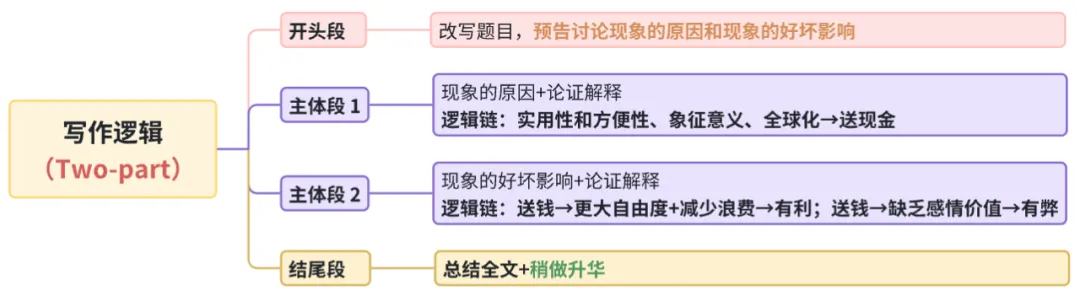
1.开头段(Introduction)
近年来,在许多国家,人们在特殊场合赠送金钱而非亲自挑选的礼物变得越来越普遍。这一变化引发了关于其原因以及它是积极还是消极趋势的讨论
In recent years, giving money instead of personally selected gifts on special occasions has become more common in many countries. This shift raises questions about its causes and whether it is a positive or negative trend.
2.主体段
主体段 1:
主题:这种变化的一个主要原因是人们更倾向于实用性和便利性
解释 1:随着现代生活节奏加快,许多人没有时间挑选个性化的礼物,因此现金成为更高效的选择
解释 2:金钱礼物还能避免赠送不合适或不被需要的物品,使收礼者能够根据自己的喜好和需求自由支配
解释 3:在某些文化中,赠送钱财具有象征意义,代表着繁荣、好运或祝福
举例 1:在许多亚洲传统中,婚礼或春节期间赠送红包象征着祝福、成功和未来的财务安全
解释 4:全球化的发展也可能促使这一趋势的流行,因为人们对来自不同地区的文化习俗变得更加开放,而其中一些文化更倾向于赠送钱财
主体段 2:
主题:这一趋势既有好处也有弊端
解释 1:从积极的角度来看,金钱给予收礼者更大的自由度,使他们能够购买真正需要的物品、投资于有意义的体验,或者用于未来支出
解释 2:它还能防止资源浪费,因为不需要的礼物往往被搁置或丢弃,而金钱则是一种更可持续和高效的选择
举例 1:在婚礼或毕业等场合,金钱礼物能帮助新人或毕业生支付大笔开销,比如开启新生活、继续深造,甚至偿还债务
解释 3:这一变化也可能削弱礼物的情感价值。传统上,选择礼物需要花费心思、努力,并且要深入了解收礼者的喜好,这有助于增进人际关系
解释 4:如果赠送钱财成为常态,礼物交换可能更像是金钱交易,而非充满情感的表达,从而可能削弱赠送者和接收者之间的情感联系
结尾段(Conclusion)
虽然赠送钱财更加实用,但它可能会削弱送礼的情感意义。在便利性和用心挑选之间找到平衡,才是保持赠礼深层意义的关键
While giving money is practical, it may weaken the emotional aspect of gift-giving。 Striking a balance between convenience and thoughtfulness is essential to maintaining the deeper significance of exchanging gifts.
范文精析版
⭐️ 蓝色部分-生动动作表达:增加写作词汇丰富程
⭐️ 黄色部分-地道名词形容词表达:增加写作词汇丰富程度
⭐️ 橙色部分-必备连接词汇:增加写作连接词的积累
⭐️ 绿色部分-高级语法积累:提高写作时语法多样性和准确性
▼
范文
In recent years, giving money instead of personally selected gifts on special occasions has become more common in many countries. This shift raises questions about its causes and whether it is a positive or negative trend.
One key reason for this change is the preference for practicality and convenience. With modern lifestyles becoming busier, many people lack the time to choose personalized gifts, making cash a more efficient option. Monetary gifts also eliminate the risk of giving something unwanted, allowing recipients to spend as they wish based on their personal preferences and needs. Additionally, in some cultures, giving money holds symbolic significance, representing prosperity, good fortune, or blessings. For example, in many Asian traditions, red envelope gifts during weddings or Lunar New Year symbolize well-wishes, success, and financial security for the future. The increasing globalization of cultural practices may also contribute to this trend, as people become more open to customs from different regions that emphasize monetary gifting.
This trend has both benefits and drawbacks. On the positive side, money provides recipients with greater freedom, allowing them to buy what they truly need, invest in meaningful experiences, or save for future expenses. It also prevents waste, as unwanted gifts often go unused or discarded, making monetary gifts a more sustainable and efficient choice. In occasions like weddings or graduations, monetary gifts help with major expenses such as starting a new life, furthering education, or even paying off debts. However, this shift can feel impersonal, reducing the emotional value of gift-giving. Traditionally, choosing a gift required thought, effort, and a deep understanding of the recipient’s tastes, strengthening personal relationships. If money becomes the norm, gift exchanges may feel more like financial transactions than heartfelt gestures, potentially weakening the sentimental connection between givers and receivers.
Overall, while giving money is practical, it may weaken the emotional aspect of gift-giving. Striking a balance between convenience and thoughtfulness is essential to maintaining the deeper significance of exchanging gifts.
高分表达
raises questions 引发问题
eliminate the risk 消除风险
spend as they wish 随心所欲地消费
holds symbolic significance 具有象征意义
symbolize well-wishes, success, and financial security for the future 象征着美好的祝愿、成功以及未来的经济保障
may also contribute to this trend 可能也促成了这一趋势
save for future expenses 为未来的开支存钱
furthering education 深造;进一步接受教育
paying off debts 偿还债务
strengthening personal relationships 加强人际关系
weakening the sentimental connection 削弱情感联系
personally selected gifts 亲自挑选的礼物
preference for practicality and convenience 对实用性和便利性的偏好
personal preferences and needs 个人偏好和需求
red envelope gifts 红包礼金
monetary gifting 送金钱作为礼物
a more sustainable and efficient choice 一个更可持续、更高效的选择
impersonal 缺乏人情味的;冷淡的
emotional value of gift-giving 送礼的情感价值
heartfelt gestures 真诚的举动
emotional aspect of gift-giving 送礼的情感层面
the deeper significance of exchanging gifts 交换礼物的更深层意义
①This shift raises questions about its causes and whether it is a positive or negative trend.
这一变化引发了关于其原因以及(whether引导名词性从句)它是积极还是消极趋势的讨论
②With modern lifestyles becoming busier, many people lack the time to choose personalized gifts, making cash a more efficient option.
(with引导独立主格)随着现代生活节奏加快,许多人没有时间挑选个性化的礼物,因此现金成为更高效的选择
③Additionally, in some cultures, giving money holds symbolic significance, representing prosperity, good fortune, or blessings.
此外,在某些文化中,赠送钱财具有象征意义,(句尾comma-ing表伴随)代表着繁荣、好运或祝福
④It also prevents waste,as unwanted gifts often go unused or discarded, making monetary gifts a more sustainable and efficient choice.
此外,它还能防止资源浪费,(as做连词表示原因)因为不需要的礼物往往被搁置或丢弃,而金钱则是一种更可持续和高效的选择
▼