题目:
Some people say the fashion industry is bad for the environment, as it encourages the consumers to buy new clothes all the time.
Do you agree or disagree?
中文:
有人说时尚产业对环境有害,因为它鼓励消费者不断购买新衣服。
你是否同意这一观点?
题目解读
题目要求我们探讨时尚产业是否对环境有害,特别是因为它鼓励消费者不断购买新衣服
注意,我们不能脱离环境讨论时尚产业,也不能脱离时尚产业来讨论环境,我们需要在文章中讨论时尚产业如何对环境产生负面影响,同时评估这个观点的合理性。在论证过程中,我们可以从生产和资源消耗两个角度展开,然后针对反对意见做出让步,从而展现出我们逻辑思维的严谨性和全面性
写作框架
1.开头段(Introduction)
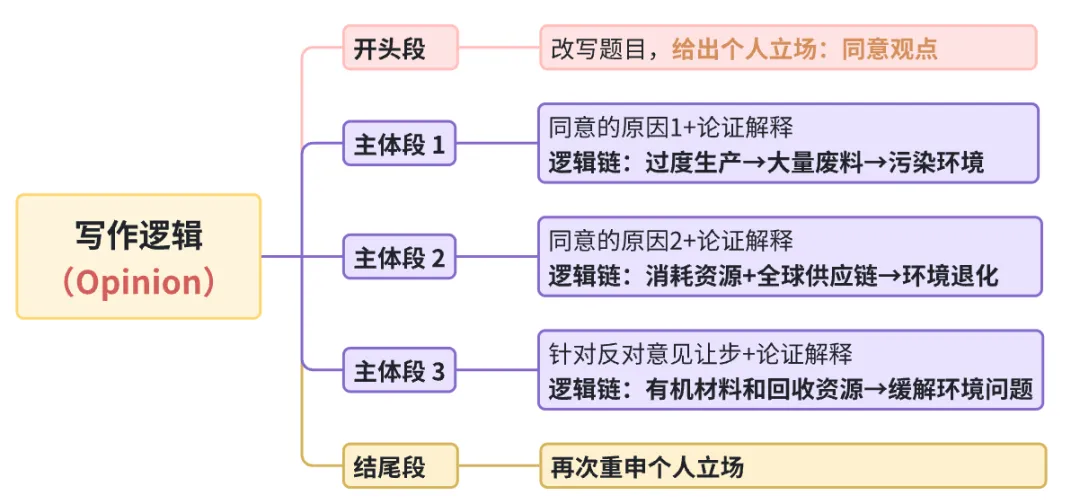
时尚产业对环境的负面影响,主要通过鼓励消费者不断购买新衣服。个人立场:同意时尚产业对环境有害
The fashion industry is often criticized for its negative impact on the environment, particularly due to its encouragement of constant consumption. I agree with this viewpoint, as the industry's fast fashion model leads to excessive waste and unsustainable production practices.
2.主体段
主体段1:
主题:时尚产业的一个主要问题是通过过度生产造成的环境退化
解释1:快时尚品牌生产大量廉价服装,这些衣服设计为穿几次就丢弃
解释2:这导致了大量的纺织废料,许多衣物最终被送往垃圾填埋场
解释3:这些衣物使用的材料,如聚酯纤维和尼龙,都是不可降解的,进一步加剧了污染和环境破坏
主体段2:
主题:另一个环境问题是生产服装所需的巨大资源
解释1:从棉花种植中的水资源使用到染色和整理面料的高能耗,时尚产业消耗了大量的自然资源
举例1:例如,生产一件棉质T恤需要约2,700升水,相当于一个人三年的饮用水需求
解释2:这些做法的环境影响因行业全球供应链的存在而加剧,造成了可观的碳足迹
主体段3:
主题:有人可能认为时尚产业也在推动可持续发展方面取得了一些进展
解释1:一些品牌开始生产环保服装,使用有机材料或回收旧面料以减少浪费。尽管这些举措仍然有限,但它们表明该行业正在开始回应环境问题
解释2:尽管时尚产业确实对环境造成了危害,但也有一些努力在缓解这些影响
结尾段(Conclusion)
尽管时尚产业内有一些积极变化,我认为其过度生产和不可持续的做法带来的环境危害,仍然大于这些努力。消费者和公司必须做出更加负责任的选择,以减少时尚产业对环境的足迹
In conclusion, although there are positive changes happening within the fashion industry, I believe that the environmental harm caused by its overproduction and unsustainable practices outweighs these efforts. It is essential for both consumers and companies to make more responsible choices in order to reduce the fashion industry’s environmental footprint.
范文精析版
⭐️ 蓝色部分-生动动作表达:增加写作词汇丰富程
⭐️ 黄色部分-地道名词形容词表达:增加写作词汇丰富程度
⭐️ 橙色部分-必备连接词汇:增加写作连接词的积累
⭐️ 绿色部分-高级语法积累:提高写作时语法多样性和准确性
▼
范文
The fashion industry is often criticized for its negative impact on the environment, particularly due to its encouragement of constant consumption. I agree with this viewpoint, as the industry's fast fashion model leads to excessive waste and unsustainable production practices.
One major issue with the fashion industry is its contribution to environmental degradation through overproduction. Fast fashion brands produce a large volume of cheap clothing that is designed to be worn only a few times before being discarded. Thisresults in enormous amounts of textile waste, which often end up in landfills. Additionally, the materials used in these clothes, such as polyester and nylon, are not biodegradable, further contributing to pollution and environmental damage.
Another environmental concern is the vast amount of resources required for the production of clothing. From water usage in cotton farming to the energy-intensive processes involved in dyeing and finishing fabrics, the fashion industry consumes significant amounts of natural resources. For instance, it takes about 2,700 liters of water to make a single cotton t-shirt, an amount that could meet the drinking water needs of one person for nearly three years. The environmental impact of these practices is compounded bythe industry’s global supply chain, which results in a substantial carbon footprint.
However, it could be argued that the fashion industry has also made strides in promoting sustainability. Some brands have started producing eco-friendly clothing, using organic materials or recycling old fabrics to minimize waste. While these initiatives are still limited, they show that the industry is beginning to respond to environmental concerns. Therefore, while the fashion industry does have a harmful environmental impact, there are emerging efforts to mitigate these effects.
In conclusion, although there are positive changes happening within the fashion industry, I believe that the environmental harm caused by its overproduction and unsustainable practices outweighs these efforts. It is essential for bothconsumers and companies to make more responsible choicesin order to reduce the fashion industry’s environmental footprint.
高分表达
end up in landfills 最终进入垃圾填埋场
meet the drinking water needs of one person 满足一个人的饮用水需求
is compounded by 因……而加剧
has also made strides 取得了进展
respond to environmental concerns 回应环境问题
have a harmful environmental impact 对环境造成有害影响
mitigate these effects 减轻这些影响
make more responsible choices 做出更负责任的选择
encouragement of constant consumption 鼓励持续消费
excessive waste 过度浪费
unsustainable production practices 不可持续的生产实践
environmental degradation 环境退化
overproduction 过度生产
Fast fashion brands 快时尚品牌
a large volume of 大量的
enormous amounts of textile waste 大量的纺织品废弃物
biodegradable 可生物降解的
environmental concern 环境问题
cotton farming 棉花种植
the energy-intensive processes 高能耗的工艺
dyeing and finishing fabrics 染色和整理织物
the industry’s global supply chain 该行业的全球供应链
a substantial carbon footprint 显著的碳足迹
promoting sustainability 促进可持续性
eco-friendly 环保的
① I agree with this viewpoint, asthe industry's fast fashion model leads to excessive waste and unsustainable production practices.
我同意这一观点,(as状语从句表原因)因为该行业的快时尚模式导致了过度浪费和不可持续的生产方式
②Fast fashion brands produce a large volume of cheap clothing thatis designed to be worn only a few times before being discarded.
快时尚品牌生产大量廉价服装,(定语从句)这些衣服设计为穿几次就丢弃
③This results in enormous amounts of textile waste,which often end up in landfills.
这导致了大量的纺织废料,(定语从句)许多衣物最终被送往垃圾填埋场
④ For instance, it takes about 2,700 liters of water to make a single cotton t-shirt, an amount that could meet the drinking water needs of one person for nearly three years.
例如,生产一件棉质T恤需要约2,700升水,(名词同位语)相当于一个人三年的饮用水需求
▼