【2026.3.28 真题题目】
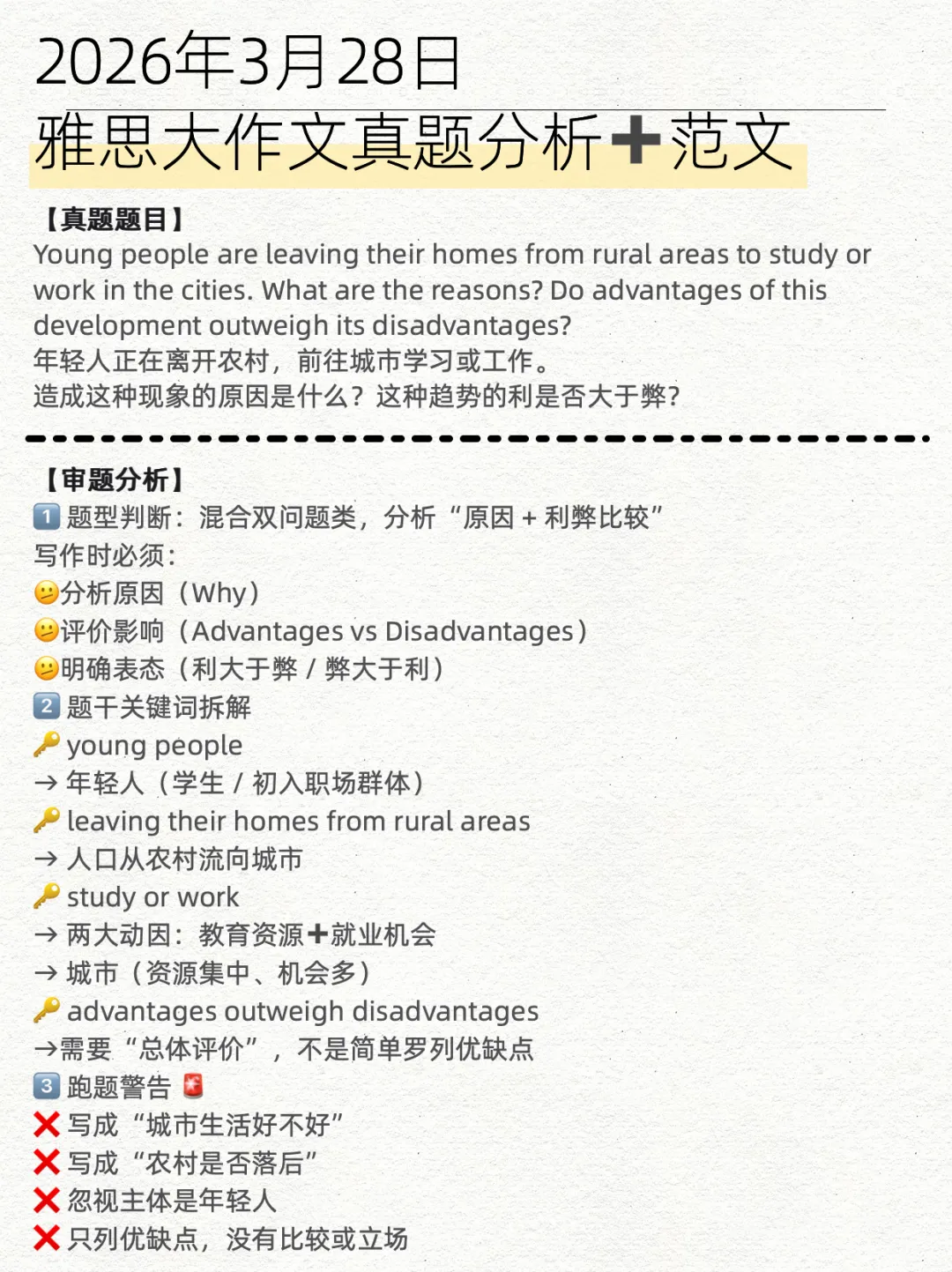
Young people are leaving their homes from rural areas to study or work in the cities. What are the reasons? Do advantages of this development outweigh its disadvantages?
年轻人正在离开农村,前往城市学习或工作。
造成这种现象的原因是什么?这种趋势的利是否大于弊?
【审题分析】
1️⃣题型判断:混合双问题类,分析“原因 + 利弊比较”
写作时必须:
🫤分析原因(Why)
🫤评价影响(Advantages vs Disadvantages)
🫤明确表态(利大于弊 / 弊大于利)
2️⃣题干关键词拆解
🔑 young people
→ 年轻人(学生 / 初入职场群体)
🔑 leaving their homes from rural areas
→ 人口从农村流向城市
🔑 study or work
→ 两大动因:教育资源➕就业机会
→ 城市(资源集中、机会多)
🔑 advantages outweigh disadvantages
→需要“总体评价”,不是简单罗列优缺点
3️⃣跑题警告🚨
❌写成“城市生活好不好”
❌写成“农村是否落后”
❌忽视主体是年轻人
❌只列优缺点,没有比较或立场
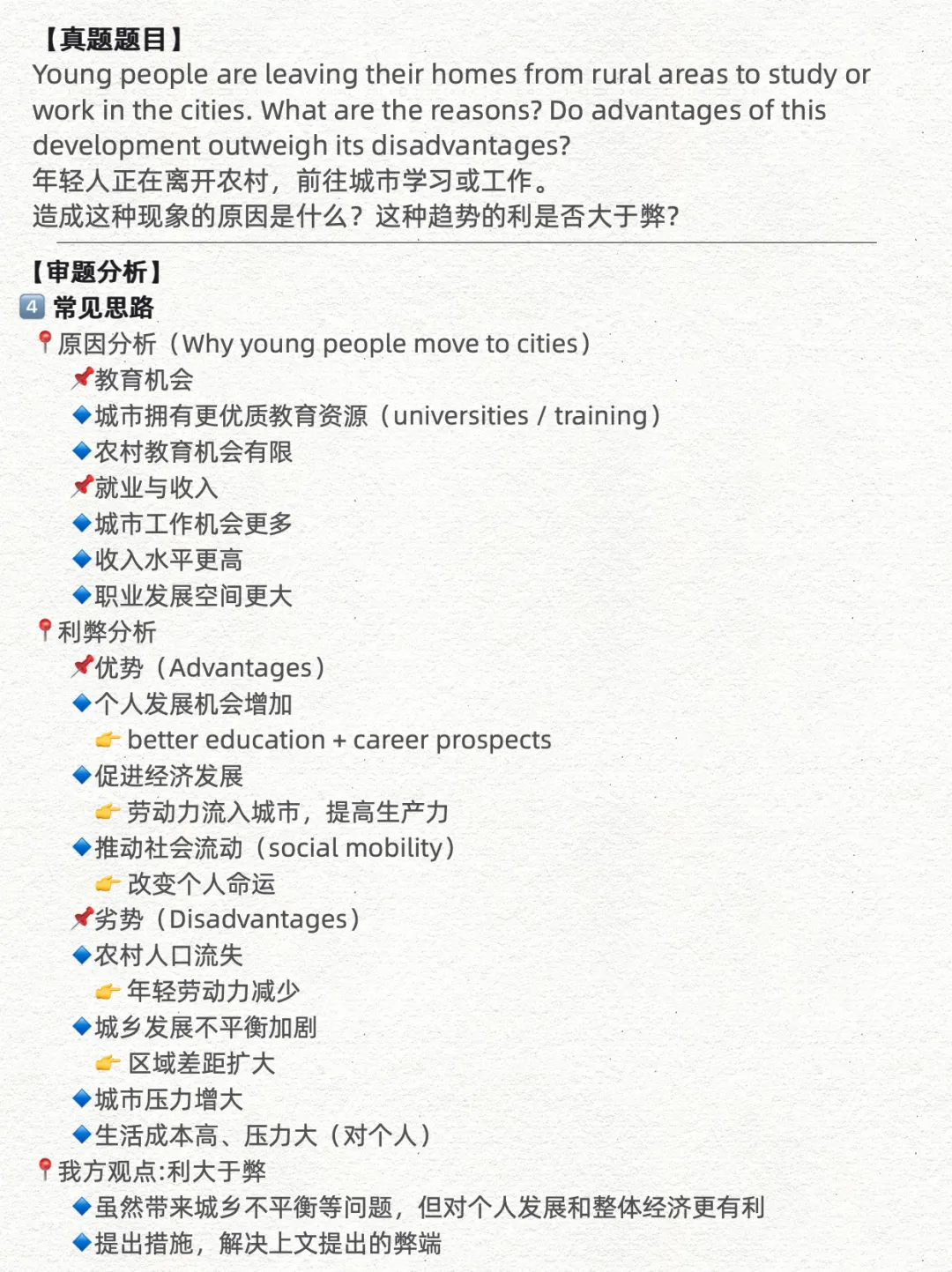
4️⃣常见思路
📍原因分析(Why young people move to cities)
📌教育机会
🔹城市拥有更优质教育资源(universities / training)
🔹农村教育机会有限
📌就业与收入
🔹城市工作机会更多
🔹收入水平更高
🔹职业发展空间更大
📍利弊分析
📌优势(Advantages)
🔹个人发展机会增加
👉 better education + career prospects
🔹促进经济发展
👉劳动力流入城市,提高生产力
🔹推动社会流动(social mobility)
👉改变个人命运
📌劣势(Disadvantages)
🔹农村人口流失
👉年轻劳动力减少
🔹城乡发展不平衡加剧
👉区域差距扩大
🔹城市压力增大
🔹生活成本高、压力大(对个人)
📍我方观点:利大于弊
🔹虽然带来城乡不平衡等问题,但对个人发展和整体经济更有利
🔹提出措施,解决上文提出的弊端
【参考范文】
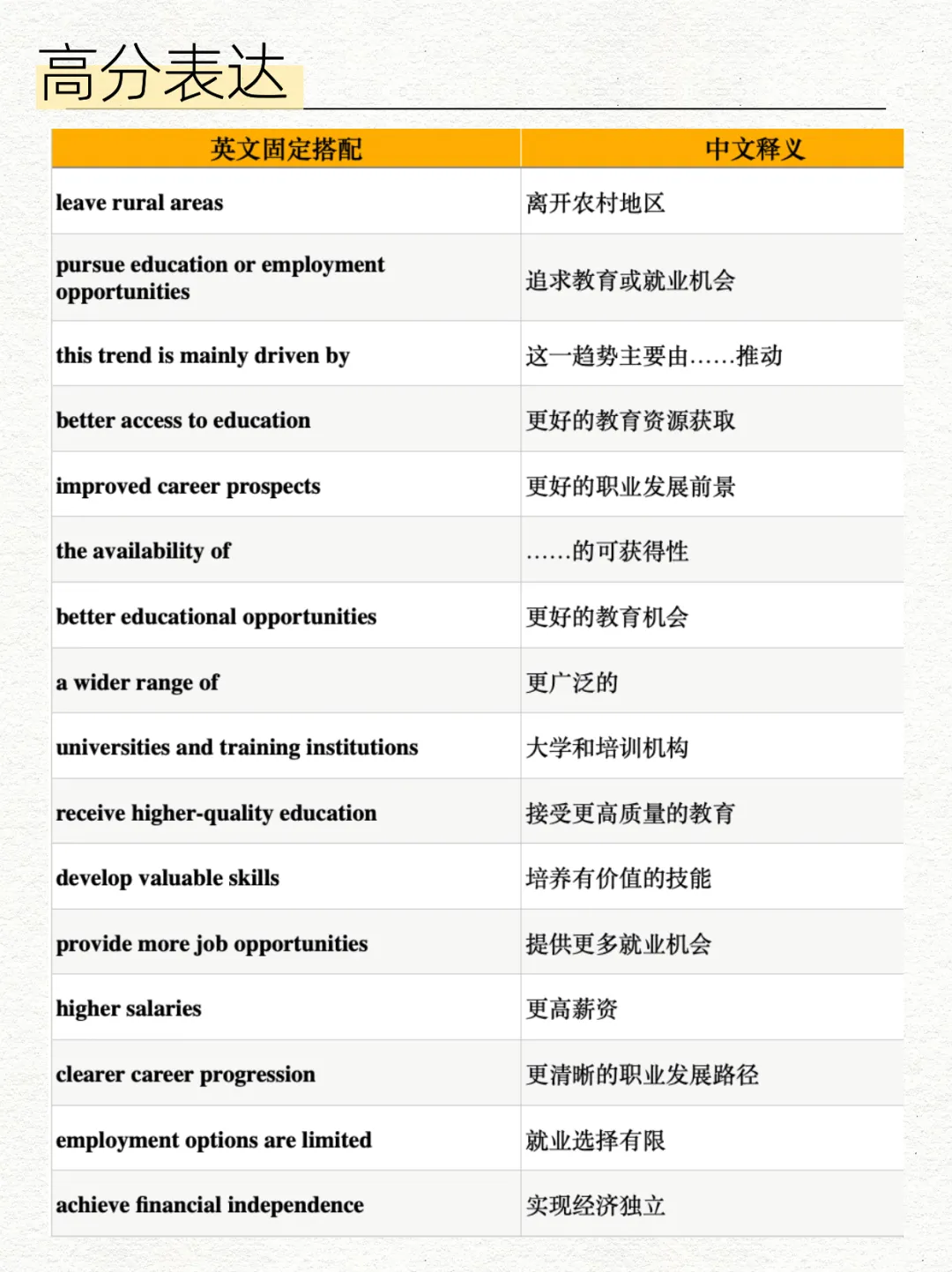
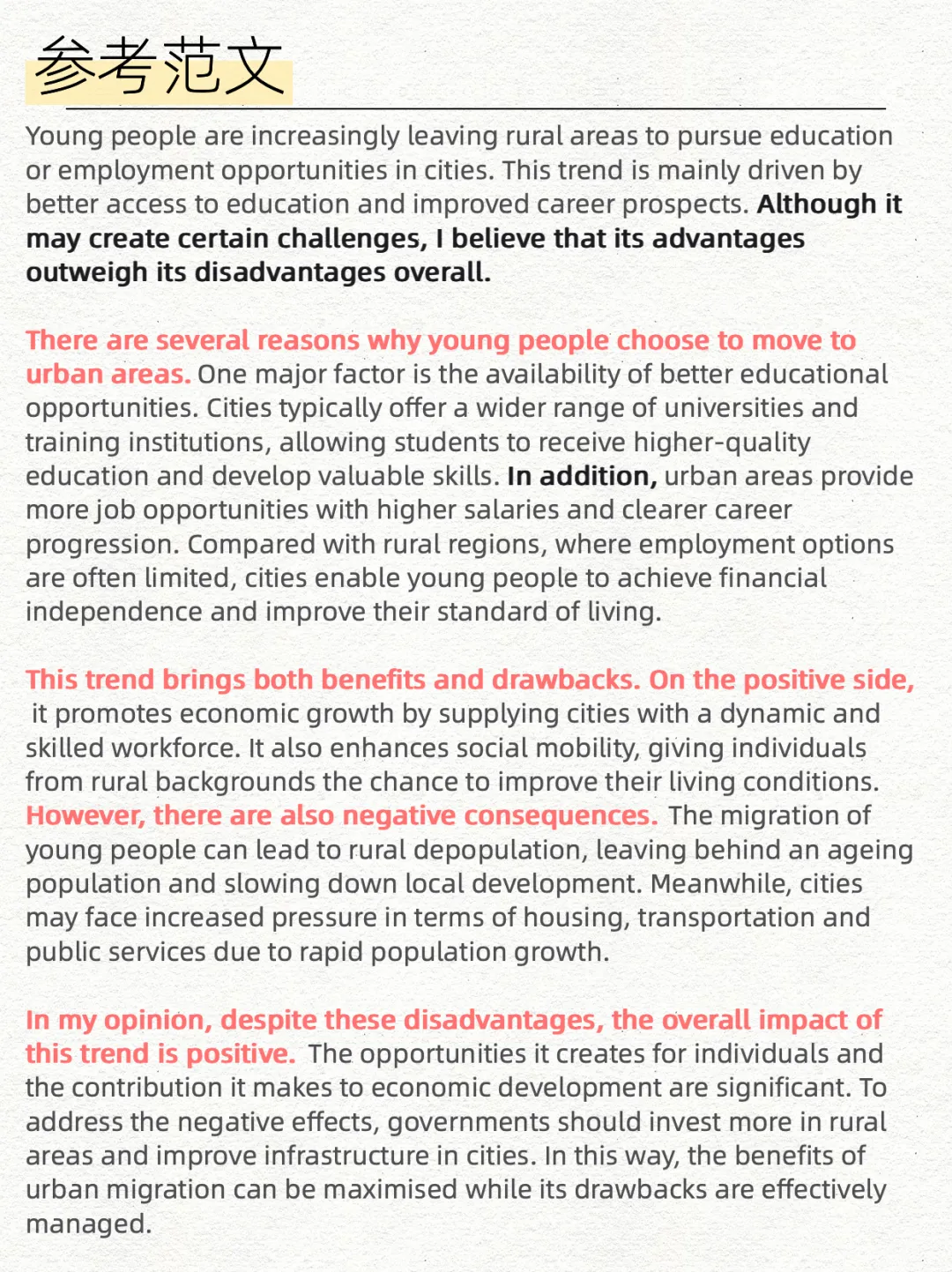
Young people are increasingly leaving rural areas to pursue education or employment opportunities in cities. This trend is mainly driven by better access to education and improved career prospects. Although it may create certain challenges, I believe that its advantages outweigh its disadvantages overall.
There are several reasons why young people choose to move to urban areas. One major factor is the availability of better educational opportunities. Cities typically offer a wider range of universities and training institutions, allowing students to receive higher-quality education and develop valuable skills. In addition, urban areas provide more job opportunities with higher salaries and clearer career progression. Compared with rural regions, where employment options are often limited, cities enable young people to achieve financial independence and improve their standard of living.
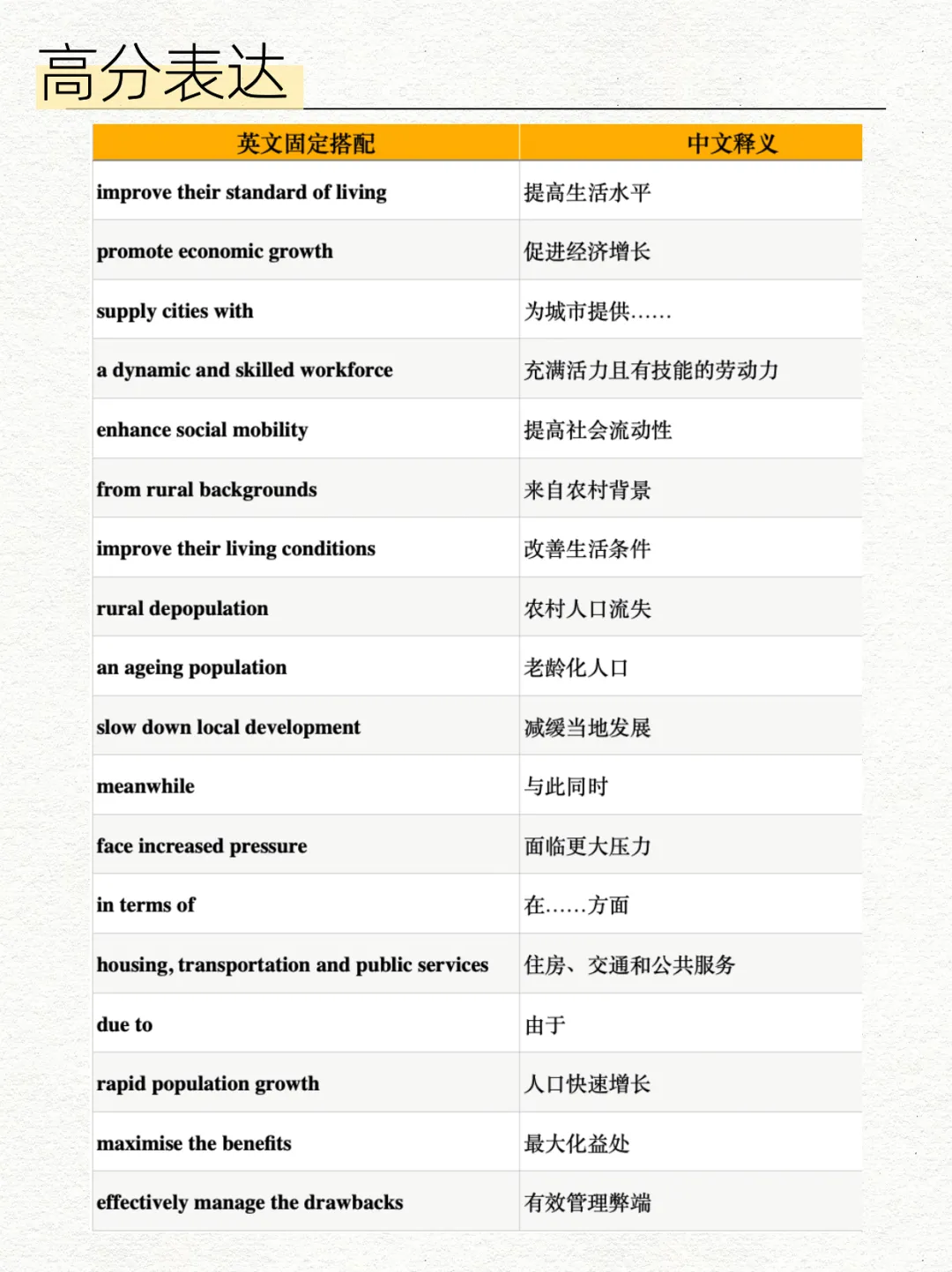
This trend brings both benefits and drawbacks. On the positive side, it promotes economic growth by supplying cities with a dynamic and skilled workforce. It also enhances social mobility, giving individuals from rural backgrounds the chance to improve their living conditions. However, there are also negative consequences. The migration of young people can lead to rural depopulation, leaving behind an ageing population and slowing down local development. Meanwhile, cities may face increased pressure in terms of housing, transportation and public services due to rapid population growth.
In my opinion, despite these disadvantages, the overall impact of this trend is positive. The opportunities it creates for individuals and the contribution it makes to economic development are significant. To address the negative effects, governments should invest more in rural areas and improve infrastructure in cities. In this way, the benefits of urban migration can be maximised while its drawbacks are effectively managed.
【参考译文】
越来越多的年轻人离开农村,前往城市追求教育或就业机会。这一趋势主要是由更好的教育资源获取以及更广阔的职业发展前景所推动的。尽管这一现象可能带来一些挑战,但我认为,从整体来看,其优势大于劣势。
年轻人选择迁往城市有多方面原因。其中一个主要因素是更优质的教育机会。城市通常拥有更多样化的大学和培训机构,使学生能够接受更高质量的教育并培养有价值的技能。此外,城市还提供更多就业机会,这些工作往往薪资更高、职业发展路径更加清晰。相比之下,农村地区的就业选择往往较为有限,而城市则能够帮助年轻人实现经济独立并提升生活水平。
这一趋势既带来好处,也存在弊端。从积极方面来看,它通过为城市提供充满活力且具备技能的劳动力,从而促进经济增长。同时,它也增强了社会流动性,使来自农村背景的人有机会改善生活条件。然而,这一现象也带来了一些负面影响。年轻人的外流可能导致农村人口减少,留下老龄化人口,并减缓当地的发展。与此同时,由于人口快速增长,城市在住房、交通和公共服务方面也可能面临更大的压力。
在我看来,尽管存在这些不利因素,这一趋势的整体影响仍然是积极的。它为个人创造的机会以及对经济发展的贡献都是显著的。为了应对其负面影响,政府应加大对农村地区的投资,并改善城市基础设施。通过这种方式,可以在最大化城市化带来益处的同时,有效地控制其不利影响。