
先感受一下这3题的难度,看看会不会做?还是一头雾水,两眼一抹黑?
每次学生在 SAT 阅读里看到这些词,都会先慌一下:
gene、allele、variant、mutation、IGF1、canid、insulin-like growth factor 1
很多人第一反应是:
“完了,这是不是在考生物?”

其实不是。
今天我们就用三道你很容易被术语吓住、但本质上高度同类的题,讲透这一类科研题到底该怎么做。
先把 4 个高频词彻底讲明白
1
gene就是基因。
可以把它先理解成一个“大类”。
比如题里反复出现的 IGF1,这是一个 gene。
2
allele / variant / version
这三个词,在 SAT 科研题里,学生可以先抓成同一个核心意思:
同一个 gene 的不同版本。
严格的生物学定义当然更细,但在考试里,先抓这个层级就够用了。
所以:
IGF1 是 gene
C allele 是 IGF1 的某个版本
其他 version / variant 也是这个 gene 的其他版本
这一步分不清,后面几乎必错!
3
mutation
就是突变。
意思是:发生了某种改变,而这个改变可能会导致新的 version / variant 出现。
所以常见逻辑链是:
gene → mutation → new variant/new version/ allele
4
trait
就是最终表现出来的性状 / 特征。
比如:
· body size
· coat color
· disease resistance
也就是最后“看得见”的东西。
把术语全部拿掉,你会发现这类题的骨架几乎都是:
某个 gene 的某个 version与某个 trait 有关
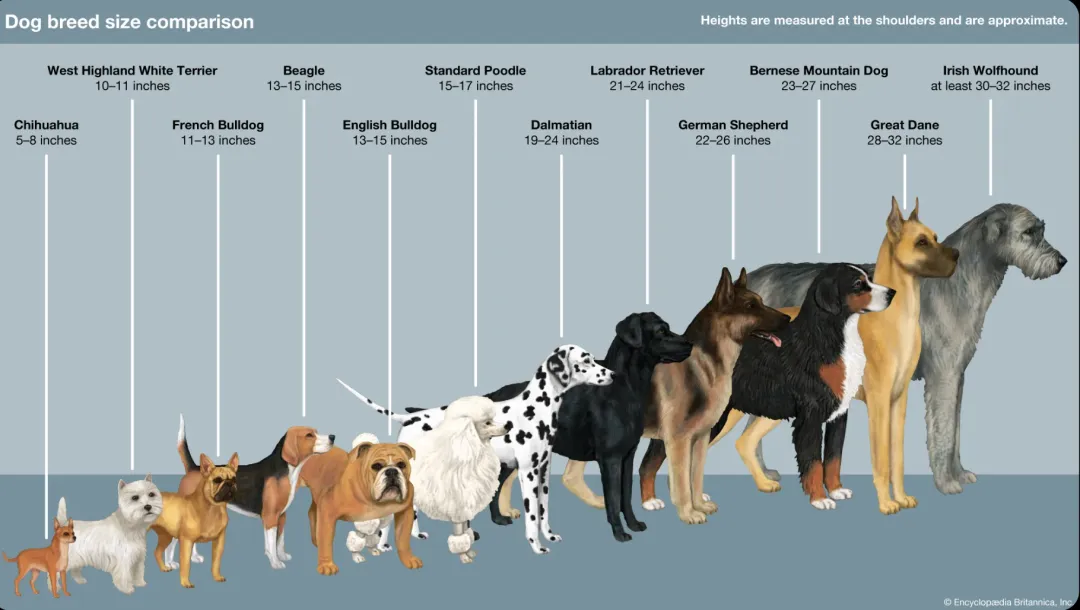
研究者讨论:
这个 version 是不是更早出现?是不是更广泛存在?是不是能支持某种解释?是不是能削弱某种绝对化结论?
所以做题时,
先分基因,再看版本,再找特征,最后盯结论里的绝对词。
有了以上的必备的知识框架以后,再来看这几个题,就没那么“晕”了。
“
题 1:2024 年 5 月北美 B 卷
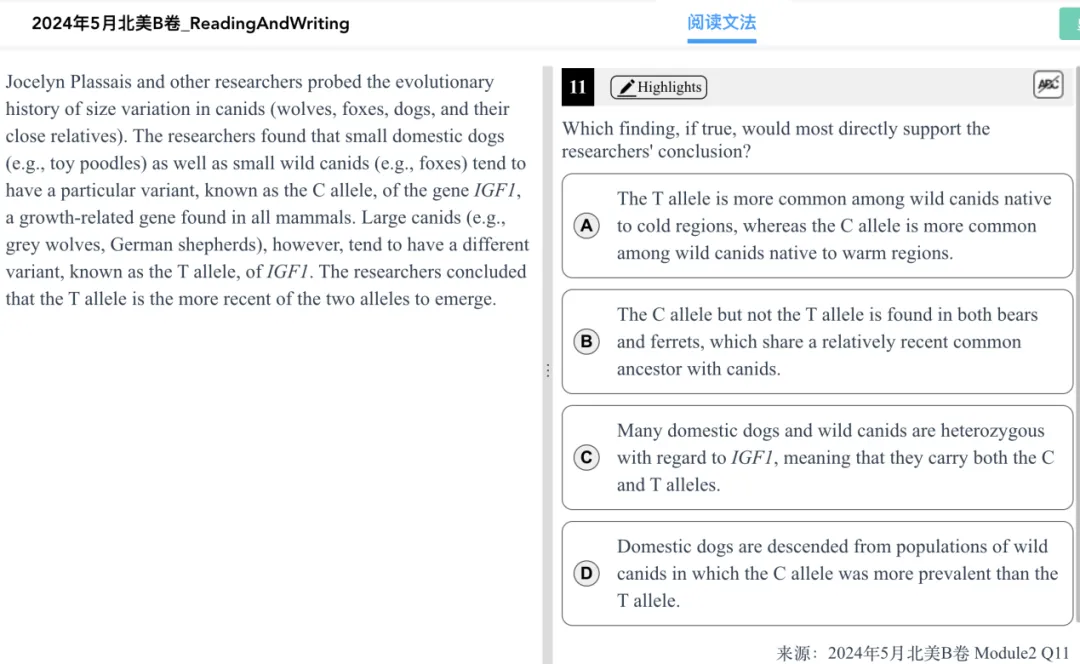
The researchers found that small domestic dogs (e.g., toy poodles) as well as small wild canids (e.g., foxes) tend to have a particular variant, known as the C allele, of the gene IGF1, a growth-related gene found in all mammals.
“IGF1 的某个版本——C allele——和小体型有关。”
Large canids (e.g., grey wolves, German shepherds), however, tend to have a different variant, known as the T allele, of IGF1.
“IGF1 的另1个版本——T allele——和大体型有关。”
The researchers concluded that the T allele is the more recent of the two alleles to emerge.
结论是:“研究人员的结论,T这个版本更近代”
题目:Which finding, if true, would most directly support the researchers' conclusion? 要求 支持 结论
结论说 more recent
那我们就去找哪个基因的版本更像祖先型、哪个基因的版本分布更广,
更像祖先说明基因更老;同样的,基因分布广,说明存在时间更久,基因更老。
通过反证版本C古老,支持版本T更近代。
答案:
TheC allele but not the T allele is found in both bears and ferrets, which share a relatively recent common ancestor with canids.
解析:
C版本 存在于熊和貂里,而T不存在;
跟狗有相同祖先的熊和貂存在于什么时候呢?很古老。
因为后来这几个动物就分道扬镳了,狗是狗,熊是熊,貂是貂了。
可以证明C版本更古老。
“
题 2:2024 年 6 月 B 卷
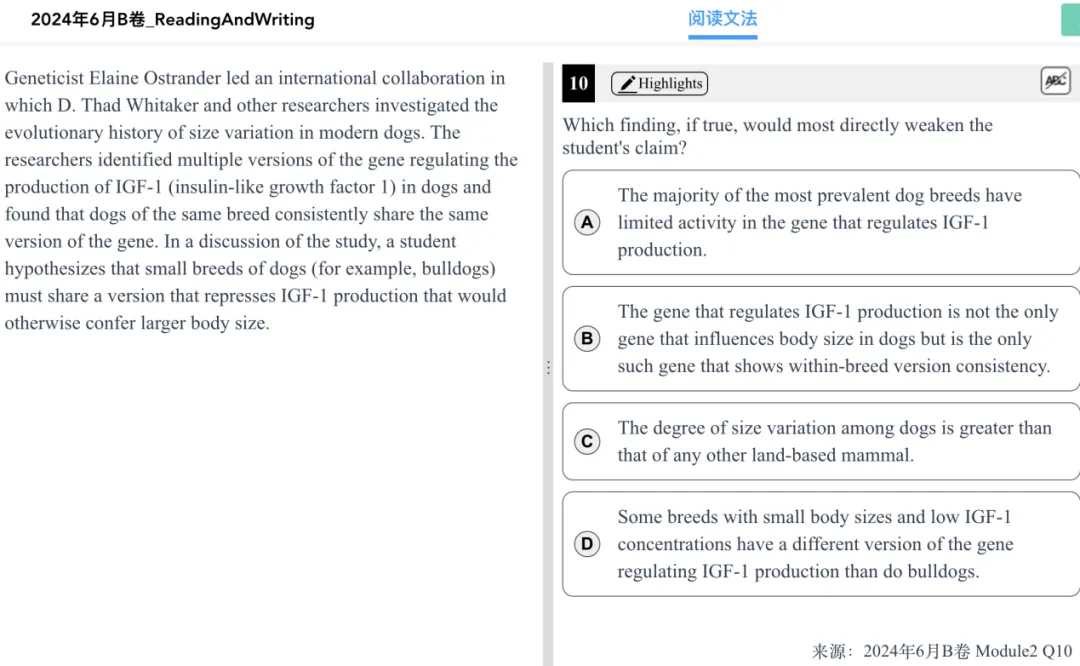
In a discussion of the study, a student hypothesizes that small breeds of dogs (for example, bulldogs) must share a version that represses IGF-1
production that would otherwise confer larger body size.
假设是:“体型小的同一品种内部,基因版本一定一致。”
题目:Which finding, if true, would most directly weaken the student's claim?
要求 削弱 结论
结论说 must share
削弱这种绝对词,只要找到一个不 share的反例,就够了。
答案:
Some breeds with small body sizes and low IGF-1 concentrations have a different version of the gene regulating IGF-1 production than do bulldogs.
解析:有些品种,题型很小,有不同版本的基因。完美的反例。
“
题 3:2025 年 5 月国际 A 卷
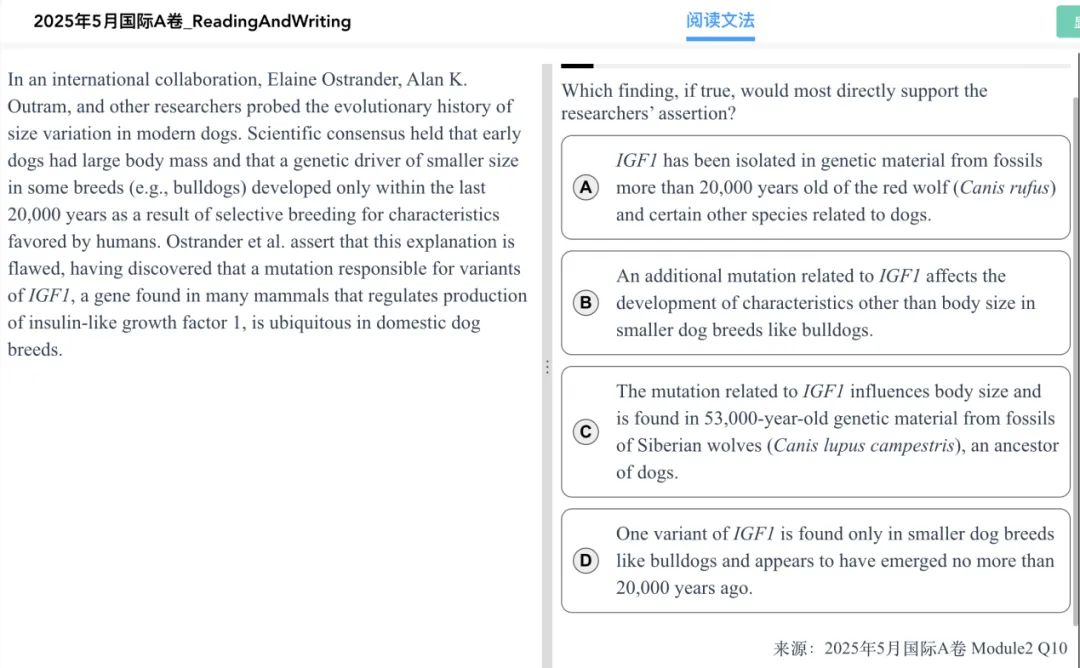
Scientific consensus held that early dogs had large body mass and that a genetic driver of smaller size in some breeds (e.g., bulldogs) developed only within the last 20,000 years as a result of selective breeding for characteristics favored by humans.
旧观点:体型小的基因是2万年前,因人类选择性培育而发展出来的。
Ostrander et al. assert that this explanation is flawed, having discovered that a mutation responsible for variants of IGF1, a gene found in many mammals that regulates production of insulin-like growth factor 1, is ubiquitous in domestic dog breeds.
新假说是:该基因普遍存在,并非上文说的2万年前才有,更久之前就有。
题目:Which finding, if true, would most directly support the researchers’ assertion? 要求支持新假说,也就是反对旧观点
答案:
The mutation related to IGF1 influences body size and is found in 53,000-year-old genetic material from fossils of Siberian wolves (Canis lupus campestris), an ancestor of dogs.
解析:
旧观点说这个 driver 是 only within the last 20,000 years 才出现的。
53,000 年明显比 20,000 年更早。
结论:SAT的很多不同次的考试里,充满了大量这种“换汤不换药”的题,不把背后的原理搞清楚,碰到一样的题还是会错,因为题会微微的变化;而一旦搞清楚了,它们就变成“送分童子”了。
这也是W的价值所在,拆“考”专家,让同学们轻松拿下这些“纸老虎”。