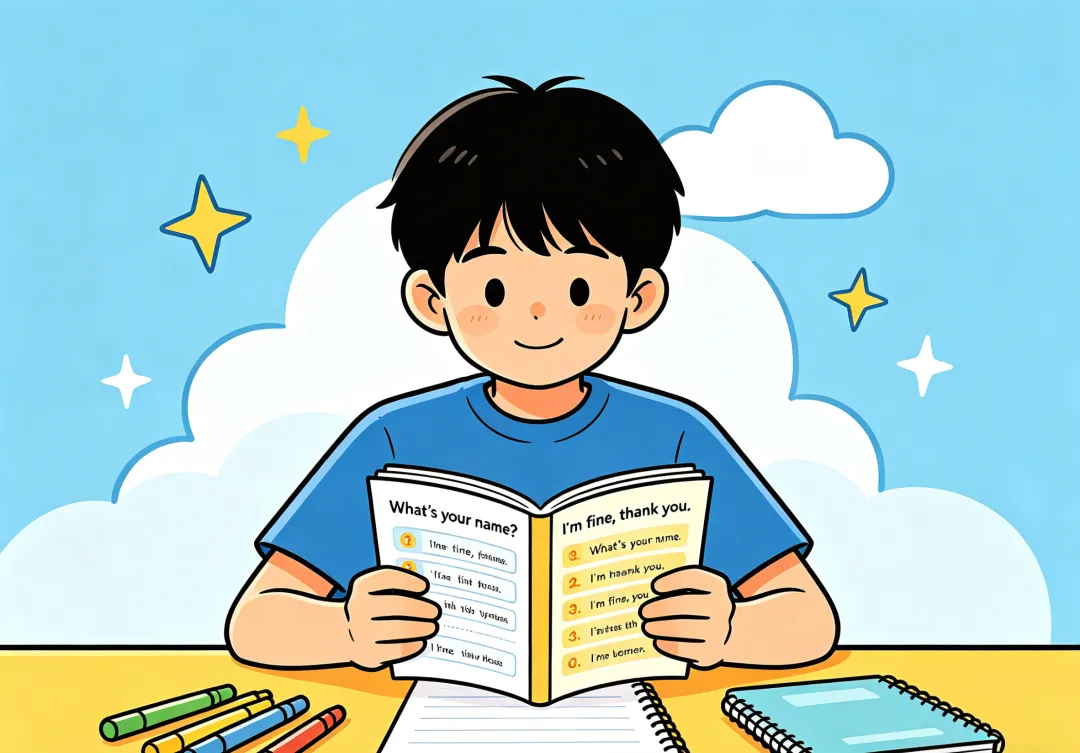
中考英语想快速提分,死背单词不如吃透核心句型!单选、完形、语法填空90%的考点都围绕固定句型展开,作文用对还能直接加分。整理了350个中考最高频核心句型,按考点分类拆解,每天背一组,轻松吃透考点,英语稳步提分!

第一类:be动词&主谓宾基础核心句型

1. I am + 名词/形容词
我是……/我处于……状态
例句:I am a middle school student.
我是一名中学生。
2. You/We/They are + 名词/形容词
你/我们/他们是……/你们/我们/他们处于……状态
例句:They are good friends.
他们是好朋友。
3. He/She/It is + 名词/形容词
他/她/它是……/他/她/它处于……状态
例句:She is very outgoing.
她性格很外向。
4. I am not + 名词/形容词
我不是……/我不处于……状态
例句:I am not late for school.
我上学没有迟到。
5. Are you + 名词/形容词?
你是……吗?/你处于……状态吗?
例句:Are you interested in English?
你对英语感兴趣吗?
6. Is he/she/it + 名词/形容词?
他/她/它是……吗?/他/她/它处于……状态吗?
例句:Is he from Beijing?
他来自北京吗?
7. There is + 单数可数名词/不可数名词 + 地点状语
某地有……(单数/不可数)
例句:There is a book on the desk.
桌子上有一本书。
8. There are + 可数名词复数 + 地点状语
某地有……(复数)
例句:There are many trees in the park.
公园里有很多树。
9. There is something wrong with + 名词
……出了问题/有故障
例句:There is something wrong with my bike.
我的自行车出故障了。
10. There is nothing wrong with + 名词
……没有问题
例句:There is nothing wrong with your eyes.
你的眼睛没有问题。
11. 主语 + 实义动词原形 + 其他(一般现在时,非三单)
某人/某物做某事
例句:I get up at 7 o'clock every morning.
我每天早上7点起床。
12. 主语(三单)+ 实义动词三单形式 + 其他(一般现在时,三单)
某人/某物做某事
例句:My mother cooks dinner every day.
我妈妈每天做晚饭。
13. 主语 + don't + 实义动词原形 + 其他
某人/某物不做某事(非三单)
例句:They don't like playing football.
他们不喜欢踢足球。
14. 主语(三单)+ doesn't + 实义动词原形 + 其他
某人/某物不做某事(三单)
例句:He doesn't watch TV on school nights.
他上学日的晚上不看电视。
15. Do + 主语 + 实义动词原形 + 其他?
某人做某事吗?(非三单)
例句:Do you go to school by bike?
你骑自行车上学吗?
16. Does + 主语(三单)+ 实义动词原形 + 其他?
某人做某事吗?(三单)
例句:Does she study hard at school?
她在学校努力学习吗?
17. 主语 + 实义动词过去式 + 其他(一般过去时)
某人过去做了某事
例句:We visited the Great Wall last year.
我们去年参观了长城。
18. 主语 + didn't + 实义动词原形 + 其他
某人过去没有做某事
例句:He didn't finish his homework yesterday.
他昨天没有完成作业。
19. Did + 主语 + 实义动词原形 + 其他?
某人过去做了某事吗?
例句:Did you go to the park last weekend?
你上周末去公园了吗?
20. What + be动词 + 主语?
某人是做什么工作的?
例句:What is your father?
你爸爸是做什么的?
21. What + do/does + 主语 + do?
某人是做什么工作的?
例句:What does your mother do?
你妈妈是做什么的?
22. What + be动词 + 主语 + like?
某人性格/外貌是什么样的?
例句:What is your English teacher like?
你的英语老师是什么样的人?
23. What do/does + 主语 + look like?
某人长什么样子?
例句:What does your best friend look like?
你最好的朋友长什么样子?
24. How + be动词 + 主语?
某人过得怎么样?
例句:How are your parents?
你的父母身体好吗?
25. How old + be动词 + 主语?
某人多大年纪了?
例句:How old is your little brother?
你的弟弟几岁了?
26. What color + be动词 + 主语?
某物是什么颜色的?
例句:What color is your new schoolbag?
你的新书包是什么颜色的?
27. What time + do/does + 主语 + 实义动词原形 + 其他?
某人几点做某事?
例句:What time do you go to bed every night?
你每天晚上几点睡觉?
28. When + do/does + 主语 + 实义动词原形 + 其他?
某人什么时候做某事?
例句:When does your winter holiday start?
你的寒假什么时候开始?
29. Where + do/does + 主语 + 实义动词原形 + 其他?
某人在哪里做某事?
例句:Where do you have lunch on school days?
你上学日在哪里吃午饭?
30. Why + do/does + 主语 + 实义动词原形 + 其他?
某人为什么做某事?
例句:Why do you like English best?
你为什么最喜欢英语?
31. Which + 名词 + do/does + 主语 + 实义动词原形 + 其他?
某人喜欢哪一个……?
例句:Which subject do you like best?
你最喜欢哪一个科目?
32. Whose + 名词 + be动词 + 主语?
某物是谁的?
例句:Whose pen is this?
这是谁的钢笔?
33. How many + 可数名词复数 + are there + 地点状语?
某地有多少……?
例句:How many students are there in your class?
你们班里有多少个学生?
34. How much + 不可数名词 + is there + 地点状语?
某地有多少……?
例句:How much water is there in the bottle?
瓶子里有多少水?
35. How much + be动词 + 主语?
某物多少钱?
例句:How much is this new dress?
这条新裙子多少钱?

第二类:中考高频时态核心句型

1. 主语 + am/is/are + 现在分词 + 其他(现在进行时)
某人/某物正在做某事
例句:I am reading an English book now.
我现在正在读一本英语书。
2. 主语 + am/is/are + not + 现在分词 + 其他
某人/某物没有在做某事
例句:He is not playing computer games now.
他现在没有在玩电脑游戏。
3. Am/Is/Are + 主语 + 现在分词 + 其他?
某人/某物正在做某事吗?
例句:Are they having a class now?
他们现在正在上课吗?
4. 主语 + was/were + 现在分词 + 其他(过去进行时)
某人/某物过去某个时间正在做某事
例句:She was watching TV at 8 o'clock last night.
昨晚8点她正在看电视。
5. Was/Were + 主语 + 现在分词 + 其他?
某人/某物过去某个时间正在做某事吗?
例句:Were you doing your homework at that time?
那个时候你正在写作业吗?
6. 主语 + will + 实义动词原形 + 其他(一般将来时)
某人/某物将要做某事
例句:I will visit my grandparents this weekend.
这周末我将要去看望我的爷爷奶奶。
7. 主语 + be going to + 实义动词原形 + 其他(一般将来时,计划/打算)
某人/某物打算/将要做某事
例句:We are going to have a party tomorrow.
我们明天打算举办一场派对。
8. 主语 + will not (won't) + 实义动词原形 + 其他
某人/某物将不会做某事
例句:He won't come to the party tomorrow.
他明天不会来参加派对。
9. Will + 主语 + 实义动词原形 + 其他?
某人/某物将要做某事吗?
例句:Will you go to the cinema with me tonight?
你今晚要和我一起去看电影吗?
10. 主语 + am/is/are + going to + 实义动词原形 + 其他?
某人/某物打算做某事吗?
例句:Is she going to learn to swim this summer?
她今年夏天打算学游泳吗?
11. 主语 + have/has + 动词过去分词 + 其他(现在完成时)
某人/某物已经做了某事
例句:I have finished my homework already.
我已经完成我的作业了。
12. 主语 + have/has + not + 动词过去分词 + 其他
某人/某物还没有做某事
例句:He hasn't come back home yet.
他还没有回到家。
13. Have/Has + 主语 + 动词过去分词 + 其他?
某人/某物已经做了某事吗?
例句:Have you ever been to Beijing?
你曾经去过北京吗?
14. 主语 + have/has + 动词过去分词 + for + 时间段
某人做某事已经持续了多久
例句:We have lived in this city for 10 years.
我们已经在这座城市住了10年了。
15. 主语 + have/has + 动词过去分词 + since + 时间点/一般过去时句子
自从……以来,某人一直做某事
例句:She has learned English since she was 5 years old.
她从5岁起就开始学英语了。
16. It is + 时间段 + since + 一般过去时句子
自从……以来已经有多久了
例句:It is 3 years since we met last time.
自从我们上次见面已经有3年了。
17. 主语 + had + 动词过去分词 + 其他(过去完成时)
在过去某个动作之前,某人已经做了某事
例句:The train had left when I got to the station.
当我到达车站的时候,火车已经开走了。
18. 主语 + would + 实义动词原形 + 其他(过去将来时)
在过去看来,某人将要做某事
例句:He said he would come to see me the next day.
他说他第二天会来看我。
19. 主语 + am/is/are + about to + 实义动词原形 + 其他
某人/某物即将做某事
例句:The movie is about to start.
电影即将开始。
20. 主语 + am/is/are + to + 实义动词原形 + 其他
某人/某物按计划/约定要做某事
例句:We are to meet at the school gate at 8 o'clock.
我们约定8点在校门口见面。
21. 一般现在时(主句)+ when + 一般现在时(从句)
当……的时候,会发生……(真理/习惯)
例句:When the sun goes down, it gets dark.
太阳落山的时候,天就黑了。
22. 一般将来时(主句)+ when + 一般现在时(从句)
当……的时候,某人将会做某事(主将从现)
例句:I will call you when I get to Beijing.
我到北京的时候会给你打电话。
23. 主语 + used to + 实义动词原形 + 其他
某人过去常常做某事(现在不做了)
例句:He used to play basketball after school.
他过去常常放学后打篮球。
24. 主语 + be used to + 动名词 + 其他
某人习惯于做某事
例句:I am used to getting up early in the morning.
我习惯了早上早起。
25. 主语 + be used to + 实义动词原形 + 其他
某物被用来做某事
例句:Knives are used to cut things.
刀是用来切东西的。
26. 主语 + keep/keeps + 动词现在分词 + 其他
某人一直/持续做某事
例句:She keeps practicing the piano every day.
她每天坚持练习钢琴。
27. 主语 + keep/keeps + 宾语 + 形容词
某人使某物保持某种状态
例句:We should keep our classroom clean.
我们应该保持教室干净。
28. 主语 + spend/spent + 时间/金钱 + on sth.
某人在某物上花费时间/金钱
例句:I spent 100 yuan on this new book.
我在这本新书上花了100元。
29. 主语 + spend/spent + 时间/金钱 + (in) doing sth.
某人花费时间/金钱做某事
例句:He spends two hours doing his homework every day.
他每天花两个小时写作业。
30. It takes/took + sb. + 时间 + to do sth.
做某事花费了某人多少时间
例句:It took me three hours to finish the work.
完成这项工作花了我三个小时。
31. 主语 + pay/paid + 金钱 + for sth.
某人为某物支付了多少钱
例句:I paid 300 yuan for this new bike.
我为这辆新自行车付了300元。
32. 某物 + cost/cost + sb. + 金钱
某物花费了某人多少钱
例句:This new computer cost me 5000 yuan.
这台新电脑花了我5000元。
33. While + 过去进行时(从句), 一般过去时(主句)
当某个动作正在发生的时候,另一个动作发生了
例句:While I was reading, the telephone rang.
当我正在看书的时候,电话响了。
34. While + 过去进行时(从句), 过去进行时(主句)
当一个动作正在发生的时候,另一个动作也正在发生
例句:While my mother was cooking, my father was watching TV.
当我妈妈在做饭的时候,我爸爸在看电视。
35. 主语 + have/has been to + 地点
某人曾经去过某地(已经回来)
例句:I have been to Shanghai twice.
我曾经去过上海两次。

第三类:形容词&副词比较级最高级必考句型

1. A + be动词 + 形容词比较级 + than + B
A比B更……
例句:Tom is taller than his brother.
汤姆比他的弟弟更高。
2. A + 实义动词 + 副词比较级 + than + B
A做某事比B更……
例句:She runs faster than me.
她跑得比我快。
3. 主语 + be动词 + 形容词比较级 + and + 形容词比较级
某人/某物越来越……
例句:The weather is getting warmer and warmer.
天气变得越来越暖和了。
4. 主语 + 实义动词 + 副词比较级 + and + 副词比较级
某人做某事越来越……
例句:He runs faster and faster.
他跑得越来越快了。
5. The + 形容词/副词比较级 + 主语 + 谓语, the + 形容词/副词比较级 + 主语 + 谓语
越……,就越……
例句:The harder you study, the better grades you will get.
你学习越努力,取得的成绩就越好。
6. 主语 + be动词 + the + 形容词比较级 + of the two
某人/某物是两者中更……的那个
例句:He is the taller of the two boys.
他是两个男孩中更高的那个。
7. 主语 + be动词 + 形容词比较级 + than any other + 可数名词单数
某人/某物比同一范围内其他任何一个都更……
例句:Shanghai is bigger than any other city in China.
上海比中国其他任何一个城市都大。
8. 主语 + be动词 + 形容词比较级 + than the other + 可数名词复数
某人/某物比同一范围内其他的都更……
例句:He is taller than the other boys in his class.
他比班里其他的男孩都高。
9. 主语 + be动词 + less + 多音节形容词原级 + than + B
A不如B……
例句:This movie is less interesting than that one.
这部电影不如那部有趣。
10. 主语 + 实义动词 + less + 多音节副词原级 + than + B
A做某事不如B……
例句:He studies less hard than his deskmate.
他学习不如他的同桌努力。
11. A + be动词 + as + 形容词原级 + as + B
A和B一样……
例句:She is as tall as her mother.
她和她的妈妈一样高。
12. A + 实义动词 + as + 副词原级 + as + B
A做某事和B一样……
例句:He can speak English as well as his teacher.
他英语说得和他的老师一样好。
13. A + be动词 + not as/so + 形容词原级 + as + B
A不如B……
例句:This book is not as interesting as that one.
这本书不如那本书有趣。
14. A + 实义动词 + not as/so + 副词原级 + as + B
A做某事不如B……
例句:He doesn't run as fast as his brother.
他跑得不如他的弟弟快。
15. 主语 + be动词 + as + 形容词原级 + a/an + 可数名词单数 + as + B
A和B是一样……的……
例句:She is as good a student as her brother.
她和她哥哥一样是个好学生。
16. 主语 + as + many + 可数名词复数 + as + 其他
某人有和……一样多的……
例句:I have as many books as you.
我的书和你的一样多。
17. 主语 + as + much + 不可数名词 + as + 其他
某人有和……一样多的……
例句:She drinks as much milk as I do.
她喝的牛奶和我一样多。
18. 主语 + be动词 + the + 形容词最高级 + 可数名词单数 + 范围(in/of)
某人/某物是某范围内最……的
例句:She is the most beautiful girl in our class.
她是我们班最漂亮的女孩。
19. 主语 + 实义动词 + (the) + 副词最高级 + 范围(in/of)
某人在某范围内做某事最……
例句:He jumps (the) highest of all the students.
他在所有学生里跳得最高。
20. 主语 + be动词 + one of the + 形容词最高级 + 可数名词复数 + 范围
某人/某物是某范围内最……的……之一
例句:Beijing is one of the biggest cities in China.
北京是中国最大的城市之一。
21. 主语 + be动词 + the + 序数词 + 形容词最高级 + 可数名词单数 + 范围
某人/某物是某范围内第几……的
例句:The Yellow River is the second longest river in China.
黄河是中国第二长的河流。
22. Which/Who + be动词 + 形容词比较级, A or B?
A和B,哪一个/谁更……?
例句:Which is bigger, the sun or the moon?
太阳和月亮,哪一个更大?
23. Which/Who + be动词 + 形容词最高级, A, B or C?
A、B、C中,哪一个/谁最……?
例句:Who is the tallest, Tom, Jack or Mike?
汤姆、杰克和迈克,谁最高?
24. 主语 + be动词 + 比较级 + than + 从句
比……更……
例句:He is taller than I thought.
他比我想象的更高。
25. 主语 + be动词 + no + 形容词比较级 + than + B
两者都不……,和……一样不……
例句:This book is no more interesting than that one.
这本书和那本书一样都没意思。
26. 主语 + be动词 + not + 形容词比较级 + than + B
前者不如后者……,前者不比后者更……
例句:He is not taller than his brother.
他不比他的弟弟高。
27. 主语 + be动词 + superior to + B
优于/比B更好(无than)
例句:This computer is superior to that one.
这台电脑比那台好。
28. 主语 + be动词 + inferior to + B
劣于/比B差(无than)
例句:This product is inferior to that one in quality.
这个产品的质量比那个差。
29. 主语 + be动词 + senior to + B
比B年长/资历深(无than)
例句:He is senior to me in the company.
他在公司里资历比我深。
30. 主语 + be动词 + junior to + B
比B年幼/资历浅(无than)
例句:She is junior to me by two years.
她比我小两岁。
31. 主语 + prefer + 名词A + to + 名词B
比起B,更喜欢A
例句:I prefer tea to coffee.
比起咖啡,我更喜欢茶。
32. 主语 + prefer + doing A + to + doing B
比起做B,更喜欢做A
例句:She prefers reading to watching TV.
比起看电视,她更喜欢读书。
33. 主语 + would rather + do A + than + do B
宁愿做A也不愿做B
例句:I would rather walk than take a bus.
我宁愿走路也不愿坐公交车。
34. 主语 + would + do A + rather than + do B
宁愿做A也不愿做B
例句:He would stay at home rather than go out in the rain.
他宁愿待在家里也不愿冒雨出去。
35. A is to B what C is to D
A对于B来说,就像C对于D一样
例句:Water is to fish what air is to humans.
水对于鱼来说,就像空气对于人类一样。

第四类:中考状语从句高频核心句型

1. When + 一般现在时从句, 一般将来时主句
当……的时候,某人将会做某事(主将从现)
例句:When I grow up, I will be a doctor.
当我长大的时候,我要成为一名医生。
2. As soon as + 一般现在时从句, 一般将来时主句
一……就……(主将从现)
例句:I will call you as soon as I get to the airport.
我一到机场就给你打电话。
3. Not...until + 时间状语/从句
直到……才……
例句:I didn't go to bed until I finished my homework.
我直到写完作业才上床睡觉。
4. While + 延续性动作从句, 主句
当……的时候(动作持续)
例句:While I was reading, my sister was listening to music.
当我在看书的时候,我妹妹在听音乐。
5. Since + 一般过去时从句, 现在完成时主句
自从……以来,某人一直做某事
例句:Since I was a child, I have lived in this city.
我从小就住在这座城市里。
6. By the time + 一般过去时从句, 过去完成时主句
到……的时候,某人已经做了某事
例句:By the time I got to the cinema, the movie had already started.
当我到达电影院的时候,电影已经开始了。
7. Whenever + 从句, 主句
无论何时……,都……
例句:Whenever you need help, you can call me.
无论何时你需要帮助,都可以给我打电话。
8. Every time/Each time + 从句, 主句
每次……的时候,都……
例句:Every time I see this photo, I think of my childhood.
每次我看到这张照片,都会想起我的童年。
9. The first time + 从句, 主句
第一次……的时候,就……
例句:The first time I met her, I liked her very much.
我第一次见到她的时候,就非常喜欢她。
10. If + 一般现在时从句, 一般将来时主句
如果……,就会……(主将从现)
例句:If it doesn't rain tomorrow, we will go for a picnic.
如果明天不下雨,我们就去野餐。
11. Unless + 一般现在时从句, 一般将来时主句
除非……,否则就……(=if not)
例句:Unless you study hard, you won't pass the exam.
除非你努力学习,否则你不会通过考试。
12. As long as/So long as + 从句, 主句
只要……,就……
例句:As long as you keep trying, you will succeed.
只要你坚持尝试,你就会成功。
13. On condition that + 从句, 主句
条件是……,就……
例句:You can go out to play on condition that you finish your homework first.
你可以出去玩,条件是你先写完作业。
14. Provided that/Providing that + 从句, 主句
假如……,就……
例句:We will have a trip provided that the weather is fine.
假如天气好,我们就去旅行。
15. In case + 从句, 主句
以防……,万一……
例句:Take an umbrella with you in case it rains.
带把伞在身上,以防下雨。
16. Because + 原因状语从句, 主句
因为……,所以……(不与so连用)
例句:He didn't come to school because he was ill.
他没来上学,因为他生病了。
17. Since + 原因状语从句, 主句
既然……,就……(已知原因)
例句:Since you are tired, you should have a rest.
既然你累了,就应该休息一下。
18. As + 原因状语从句, 主句
由于……,所以……(显而易见的原因)
例句:As it is raining, we have to stay at home.
由于下雨了,我们不得不待在家里。
19. Now that + 原因状语从句, 主句
既然……,就……
例句:Now that you have grown up, you should learn to be independent.
既然你已经长大了,就应该学会独立。
20. Because of + 名词/短语, 主句
因为……,所以……
例句:We didn't go for a picnic because of the bad weather.
因为糟糕的天气,我们没有去野餐。
21. So that + 目的状语从句
以便于……,为了……
例句:I get up early every day so that I can catch the early bus.
我每天早起,以便于能赶上早班车。
22. In order that + 目的状语从句
为了……(正式)
例句:She studies hard in order that she can go to a good college.
她努力学习,为了能考上一所好大学。
23. In order to + 动词原形, 主句
为了……
例句:In order to pass the exam, he studied very hard.
为了通过考试,他学习非常努力。
24. So as to + 动词原形, 主句
为了……(不用于句首)
例句:She works hard so as to pass the exam.
她努力学习是为了通过考试。
25. So + 形容词/副词 + that + 结果状语从句
如此……以至于……
例句:He ran so fast that no one could catch up with him.
他跑得太快了,没人能追上他。
26. Such + a/an + 形容词 + 可数名词单数 + that + 结果状语从句
如此……的一个……以至于……
例句:It is such a good movie that I want to watch it again.
这是一部如此好看的电影,以至于我想再看一遍。
27. Such + 形容词 + 可数名词复数/不可数名词 + that + 结果状语从句
如此……的……以至于……
例句:It is such fine weather that we want to go out for a walk.
天气如此好,以至于我们想出去散步。
28. Too + 形容词/副词 + to do sth.
太……而不能做某事
例句:He is too young to go to school.
他太小了,还不能上学。
29. 形容词/副词 + enough + to do sth.
足够……去做某事
例句:She is old enough to go to school.
她到了上学的年纪了。
30. Though/Although + 让步状语从句, 主句
虽然……,但是……(不与but连用)
例句:Although he is very tired, he still keeps working.
尽管他很累,他还是继续工作。
31. Even though/Even if + 让步状语从句, 主句
即使……,也……
例句:Even if it rains tomorrow, we will still have the sports meeting.
即使明天下雨,我们还是会开运动会。
32. While + 让步状语从句, 主句
虽然……,但是……(句首)
例句:While I like the color of the dress, I don't like its style.
虽然我喜欢这条裙子的颜色,我不喜欢它的款式。
33. No matter what/Whatever + 从句, 主句
无论什么……,都……
例句:No matter what happens, I will be with you.
无论发生什么,我都会和你在一起。
34. No matter how/However + 形容词/副词 + 从句, 主句
无论多么……,都……
例句:No matter how hard it is, I will never give up.
无论有多难,我都绝不会放弃。
35. Where + 地点状语从句, 主句
在……的地方,……
例句:Where there is a will, there is a way.
有志者,事竟成。

第五类:宾语从句核心必考句型

1. 主语 + think/say/believe/know + that + 陈述句语序的宾语从句
某人认为/说/相信/知道……
例句:I think that English is very interesting.
我认为英语非常有趣。
2. 主语 + don't think/believe + that + 陈述句语序的宾语从句
某人认为/相信……不……(否定前移)
例句:I don't think he will come to the party.
我认为他不会来参加派对。
3. 主语 + be sure + that + 陈述句语序的宾语从句
某人确信……
例句:I am sure that he will pass the exam.
我确信他会通过考试。
4. 主语 + be afraid + that + 陈述句语序的宾语从句
某人恐怕……
例句:I am afraid that I can't go with you.
我恐怕不能和你一起去了。
5. 主语 + be sorry + that + 陈述句语序的宾语从句
某人很抱歉……
例句:I am sorry that I broke your cup.
我很抱歉打碎了你的杯子。
6. 主语 + be glad/happy + that + 陈述句语序的宾语从句
某人很高兴……
例句:I am glad that you passed the exam.
我很高兴你通过了考试。
7. 主语 + tell/ask sb. + that + 陈述句语序的宾语从句
某人告诉/问某人……
例句:He told me that he would come back soon.
他告诉我他很快就会回来。
8. 主语 + wonder/want to know + if/whether + 陈述句语序的宾语从句
某人想知道是否……
例句:I wonder if he will come to the meeting.
我想知道他是否会来参加会议。
9. 主语 + ask sb. + if/whether + 陈述句语序的宾语从句
某人问某人是否……
例句:She asked me if I liked English.
她问我是否喜欢英语。
10. 主语 + don't know + if/whether + 陈述句语序的宾语从句
某人不知道是否……
例句:I don't know whether he will agree with us.
我不知道他是否会同意我们的观点。
11. 宾语从句(whether)+ or not
是否……
例句:I don't know whether he will come or not.
我不知道他是否会来。
12. 主语 + ask/wonder + 特殊疑问词 + 陈述句语序的宾语从句
某人问/想知道……(特殊疑问词引导)
例句:I want to know where he lives.
我想知道他住在哪里。
13. 主语 + tell sb. + 特殊疑问词 + 陈述句语序的宾语从句
某人告诉某人……(特殊疑问词引导)
例句:Can you tell me how I can get to the library?
你能告诉我怎么去图书馆吗?
14. 主语 + don't know + 特殊疑问词 + 陈述句语序的宾语从句
某人不知道……(特殊疑问词引导)
例句:I don't know when he will come back.
我不知道他什么时候会回来。
15. Could you please tell me + 特殊疑问词 + 陈述句语序的宾语从句?
你能告诉我……吗?(礼貌请求)
例句:Could you please tell me how old you are?
你能告诉我你几岁了吗?
16. 主句(一般现在时)+ 宾语从句(任意时态)
主句为现在时,从句根据实际情况用任意时态
例句:He says that he will go to Beijing tomorrow.
他说他明天要去北京。
17. 主句(一般过去时)+ 宾语从句(过去的某种时态)
主句为过去时,从句用过去的某种时态
例句:He said that he had finished his homework.
他说他已经完成了作业。
18. 主句(一般过去时)+ 宾语从句(一般现在时)
从句为客观真理/自然现象时,永远用一般现在时
例句:The teacher told us that the earth goes around the sun.
老师告诉我们地球绕着太阳转。
19. 主语 + find/feel/think + it + 形容词 + to do sth.
某人发现/觉得/认为做某事是……的(it作形式宾语)
例句:I find it easy to learn English well.
我发现学好英语很容易。
20. 主语 + make it + 形容词 + to do sth.
某人使做某事成为……
例句:We make it a rule to get up early every day.
我们把每天早起定为规矩。
21. 主语 + see/hear/watch/feel + that + 宾语从句
某人看到/听到/看到/感觉到……
例句:I heard that you won the first prize in the competition.
我听说你在比赛中获得了一等奖。
22. 主语 + suggest/advise + that + 宾语从句((should) + 动词原形)
某人建议……
例句:The doctor suggested that he (should) give up smoking.
医生建议他戒烟。
23. 主语 + insist + that + 宾语从句((should) + 动词原形)
某人坚持要求……
例句:He insisted that we (should) stay for dinner.
他坚持要求我们留下来吃晚饭。
24. 主语 + order + that + 宾语从句((should) + 动词原形)
某人命令……
例句:The officer ordered that the soldiers (should) start at once.
军官命令士兵们立刻出发。
25. 主语 + promise + that + 宾语从句
某人承诺……
例句:He promised that he would never be late again.
他承诺再也不会迟到了。
26. 主语 + explain + that + 宾语从句
某人解释……
例句:He explained that he was late because of the traffic jam.
他解释说他迟到是因为堵车。
27. 主语 + complain + that + 宾语从句
某人抱怨……
例句:She complained that the food was too bad.
她抱怨食物太难吃了。
28. 主语 + agree + that + 宾语从句
某人同意……
例句:We all agree that this is a good plan.
我们都同意这是一个好计划。
29. 主语 + decide + that + 宾语从句
某人决定……
例句:He decided that he would study harder from then on.
他决定从那时起更加努力学习。
30. 主语 + hope + that + 宾语从句
某人希望……
例句:I hope that you will have a good time.
我希望你玩得开心。
31. 主语 + wish + that + 宾语从句(过去时/过去完成时)
某人希望……(虚拟语气)
例句:I wish I could fly like a bird.
我希望我能像鸟一样飞。
32. 主语 + expect + that + 宾语从句
某人期待……
例句:My parents expect that I can go to a good college.
我的父母期待我能考上一所好大学。
33. 主语 + realize + that + 宾语从句
某人意识到……
例句:He realized that he was wrong.
他意识到自己错了。
34. 主语 + forget/remember + that + 宾语从句
某人忘记/记得……
例句:I forgot that I had locked the door.
我忘记我已经锁过门了。
35. It + be动词 + 形容词 + that + 宾语从句
……是……的(it作形式主语)
例句:It is important that we should learn English well.
我们学好英语是很重要的。

第六类:定语从句高频基础句型

1. 先行词(人)+ who + 定语从句
……的人(who在从句中作主语)
例句:The girl who is standing there is my best friend.
站在那里的那个女孩是我最好的朋友。
2. 先行词(人)+ whom + 定语从句
……的人(whom在从句中作宾语,可省略)
例句:The man whom you met yesterday is my father.
你昨天见到的那个男人是我的爸爸。
3. 先行词(人/物)+ that + 定语从句
……的人/物(that在从句中作主语/宾语,作宾语可省略)
例句:The boy that won the first prize is my brother.
获得一等奖的那个男孩是我的弟弟。
4. 先行词(物)+ which + 定语从句
……的物(which在从句中作主语/宾语,作宾语可省略)
例句:This is the book which I bought yesterday.
这就是我昨天买的那本书。
5. 先行词(人/物)+ whose + 名词 + 定语从句
……的(whose在从句中作定语,表所属)
例句:This is the girl whose mother is our English teacher.
这就是那个妈妈是我们英语老师的女孩。
6. 先行词(时间)+ when + 定语从句
……的时间(when在从句中作时间状语)
例句:I still remember the day when we first met.
我仍然记得我们第一次见面的那一天。
7. 先行词(地点)+ where + 定语从句
……的地方(where在从句中作地点状语)
例句:This is the school where I studied 10 years ago.
这就是我10年前就读的学校。
8. 先行词(原因)+ why + 定语从句
……的原因(why在从句中作原因状语)
例句:This is the reason why he was late for school.
这就是他上学迟到的原因。
9. 先行词(物)+ 介词 + which + 定语从句
……的物(正式用法,相当于where/when)
例句:This is the room in which we lived last year.
这就是我们去年住过的房间。
10. 先行词(人)+ 介词 + whom + 定语从句
……的人(正式用法)
例句:The man with whom you talked just now is our manager.
你刚才和他说话的那个男人是我们的经理。
11. 先行词(物,被最高级修饰)+ that + 定语从句
……的物(先行词被最高级修饰,只能用that)
例句:This is the most interesting book that I have ever read.
这是我读过的最有趣的一本书。
12. 先行词(人/物,被序数词修饰)+ that + 定语从句
……的人/物(先行词被序数词修饰,只能用that)
例句:This is the first gift that I received on my birthday.
这是我生日收到的第一份礼物。
13. 先行词(人/物,被the only/the very/the same修饰)+ that + 定语从句
……的人/物(先行词被the only等修饰,只能用that)
例句:This is the only book that I need.
这就是我唯一需要的那本书。
14. 先行词(物,被all/every/no/some/any/little/much修饰)+ that + 定语从句
……的物(先行词被不定代词修饰,只能用that)
例句:There is nothing that I can do for you.
我没有什么能为你做的了。
15. 先行词既有人又有物 + that + 定语从句
……的人和物(先行词既有人又有物,只能用that)
例句:They talked about the people and the things that they remembered in the school.
他们谈论了他们记得的学校里的人和事。
16. 主句, which + 非限制性定语从句
……,这一点……(which指代整个主句,非限制性定语从句)
例句:He failed the exam again, which made his parents very angry.
他考试又不及格了,这让他的父母非常生气。
17. 先行词(人,one of + 复数名词)+ who + 定语从句(复数谓语)
……中的一个人,他/她……
例句:He is one of the students who have passed the exam.
他是通过考试的学生之一。
18. 先行词(人,the only one of + 复数名词)+ who + 定语从句(单数谓语)
唯一一个……的人
例句:He is the only one of the students who has passed the exam.
他是学生中唯一一个通过考试的人。
19. 先行词(物,不定代词something/anything/nothing/everything)+ that + 定语从句
……的某物(先行词为不定代词,只能用that)
例句:Is there anything that I can do for you?
有什么我能为你做的吗?
20. 先行词(人,who/which引导的特殊疑问句)+ that + 定语从句
……的人(特殊疑问句中避免重复,用that)
例句:Who is the girl that is standing under the tree?
站在树下的那个女孩是谁?
21. 主语 + be动词 + 名词 + that/which + 定语从句
这是……的某物
例句:This is the bike that my father bought for me.
这就是我爸爸给我买的那辆自行车。
22. 主语 + 实义动词 + 名词 + that/which + 定语从句
某人做了……的某事
例句:I like the songs that are sung by Jay Chou.
我喜欢周杰伦唱的歌。
23. 先行词(人)+ who + 定语从句 + 主句谓语
……的人做了某事
例句:Anyone who breaks the rules will be punished.
任何违反规则的人都会受到惩罚。
24. Those + who + 定语从句 + 主句谓语
那些……的人会……
例句:Those who work hard will succeed sooner or later.
那些努力工作的人迟早会成功。
25. 先行词(时间)+ which + 定语从句(介词+which=when)
……的时间
例句:I still remember the day on which we first met.
我仍然记得我们第一次见面的那一天。
26. 先行词(地点)+ which + 定语从句(介词+which=where)
……的地方
例句:This is the factory in which my father works.
这就是我爸爸工作的工厂。
27. 先行词(原因)+ which + 定语从句(介词+which=why)
……的原因
例句:This is the reason for which he was late.
这就是他迟到的原因。
28. 先行词(物)+ as + 定语从句(先行词被such/the same修饰)
像……一样的物
例句:This is the same book as I lost yesterday.
这本书和我昨天丢的那本一样。
29. As + 定语从句, 主句
正如……,……
例句:As we all know, the earth goes around the sun.
众所周知,地球绕着太阳转。
30. As is known to all, 主句
众所周知,……
例句:As is known to all, China is a great country.
众所周知,中国是一个伟大的国家。
31. 先行词(物)+ that + 定语从句(that在从句中作主语,不可省略)
……的物
例句:The train that has just left is for Shanghai.
刚开走的那列火车是去上海的。
32. 先行词(人)+ that + 定语从句(that在从句中作宾语,可省略)
……的人
例句:The man (that) you saw just now is our teacher.
你刚才看到的那个男人是我们的老师。
33. 主句, whose + 名词 + 非限制性定语从句
……,他/她/它的……
例句:I have a good friend, whose father is a doctor.
我有一个好朋友,他的爸爸是一名医生。
34. 先行词(物,数词/不定代词+of+which)+ 非限制性定语从句
……的,其中……
例句:There are many books in the library, most of which are about English.
图书馆里有很多书,其中大部分是关于英语的。
35. 先行词(人,数词/不定代词+of+whom)+ 非限制性定语从句
……的人,其中……
例句:There are 50 students in our class, most of whom are girls.
我们班有50个学生,其中大部分是女生。

第七类:情态动词&被动语态核心句型

1. 主语 + can + 动词原形 + 其他
某人能/会做某事
例句:She can speak three languages.
她会说三种语言。
2. 主语 + can't + 动词原形 + 其他
某人不能/不会做某事
例句:I can't swim.
我不会游泳。
3. Can + 主语 + 动词原形 + 其他?
某人能做某事吗?
例句:Can you help me with my English?
你能帮我学英语吗?
4. 主语 + could + 动词原形 + 其他
某人过去能/会做某事;某人可以做某事(委婉)
例句:I could ride a bike when I was 5 years old.
我5岁的时候就会骑自行车了。
5. Could + 主语 + 动词原形 + 其他?
某人可以做某事吗?(委婉请求)
例句:Could you please pass me the salt?
你能把盐递给我吗?
6. 主语 + may + 动词原形 + 其他
某人可以/可能做某事
例句:You may go home now.
你现在可以回家了。
7. May + 主语 + 动词原形 + 其他?
某人可以做某事吗?(请求许可)
例句:May I use your dictionary?
我可以用一下你的字典吗?
8. 主语 + might + 动词原形 + 其他
某人可能做某事(可能性更低)
例句:He might come to the party tonight.
他今晚可能会来参加派对。
9. 主语 + must + 动词原形 + 其他
某人必须做某事
例句:You must finish your homework today.
你必须今天完成你的作业。
10. 主语 + mustn't + 动词原形 + 其他
某人禁止/绝不可以做某事
例句:You mustn't play football in the street.
你绝不可以在街上踢足球。
11. Must + 主语 + 动词原形 + 其他?
某人必须做某事吗?
例句:Must I finish the work today?
我必须今天完成这项工作吗?
12. 主语 + have to + 动词原形 + 其他
某人不得不做某事(客观需要)
例句:I have to get up early to catch the early bus.
我不得不早起赶早班车。
13. 主语 + don't/doesn't have to + 动词原形 + 其他
某人不必做某事
例句:You don't have to come here tomorrow.
你明天不必来这里了。
14. 主语 + should + 动词原形 + 其他
某人应该做某事
例句:You should listen to the teacher carefully in class.
你上课应该认真听老师讲课。
15. 主语 + shouldn't + 动词原形 + 其他
某人不应该做某事
例句:You shouldn't stay up late.
你不应该熬夜。
16. Should + 主语 + 动词原形 + 其他?
某人应该做某事吗?
例句:Should I tell him the truth?
我应该告诉他真相吗?
17. 主语 + had better + 动词原形 + 其他
某人最好做某事
例句:You had better go to see a doctor.
你最好去看医生。
18. 主语 + had better not + 动词原形 + 其他
某人最好不要做某事
例句:You had better not go out alone at night.
你最好不要晚上独自出门。
19. 主语 + need + 动词原形 + 其他(情态动词,多用于否定/疑问句)
某人需要做某事
例句:You needn't worry about me.
你不必担心我。
20. Need + 主语 + 动词原形 + 其他?
某人需要做某事吗?
例句:Need I come here tomorrow?
我明天需要来这里吗?
21. 主语 + dare + 动词原形 + 其他(情态动词,多用于否定/疑问句)
某人敢做某事
例句:She dare not go out alone at night.
她不敢晚上独自出门。
22. 主语 + must be + 表语
某人/某物一定是……(肯定推测)
例句:The light is on, so he must be at home.
灯亮着,所以他一定在家。
23. 主语 + can't be + 表语
某人/某物不可能是……(否定推测)
例句:He can't be in the classroom, I saw him go out just now.
他不可能在教室里,我刚才看到他出去了。
24. 主语 + may/might be + 表语
某人/某物可能是……(不确定推测)
例句:He may be in the library.
他可能在图书馆里。
25. 主语 + must have + 动词过去分词 + 其他
某人过去一定做了某事(对过去的肯定推测)
例句:He must have finished his homework already.
他一定已经完成作业了。
26. 主语 + can't have + 动词过去分词 + 其他
某人过去不可能做了某事(对过去的否定推测)
例句:He can't have gone to Beijing, I saw him this morning.
他不可能去北京了,我今天早上还见到他了。
27. 主语 + should have + 动词过去分词 + 其他
某人过去本应该做某事(却没做)
例句:You should have studied harder for the exam.
你本应该为了考试更努力学习的。
28. 主语 + shouldn't have + 动词过去分词 + 其他
某人过去本不应该做某事(却做了)
例句:You shouldn't have told lies to your parents.
你本不应该对父母撒谎的。
29. 主语 + needn't have + 动词过去分词 + 其他
某人过去本不必做某事(却做了)
例句:You needn't have bought so much food.
你本不必买这么多食物的。
30. 主语 + am/is/are + 动词过去分词 + 其他(一般现在时被动语态)
某人/某物被……
例句:English is spoken all over the world.
全世界都说英语。
31. 主语 + am/is/are + not + 动词过去分词 + 其他
某人/某物不被……
例句:This kind of bike is not made in this factory.
这种自行车不是这家工厂生产的。
32. Am/Is/Are + 主语 + 动词过去分词 + 其他?
某人/某物被……吗?
例句:Is this letter written in English?
这封信是用英语写的吗?
33. 主语 + was/were + 动词过去分词 + 其他(一般过去时被动语态)
某人/某物过去被……
例句:The bridge was built 10 years ago.
这座桥是10年前建造的。
34. 主语 + will be + 动词过去分词 + 其他(一般将来时被动语态)
某人/某物将会被……
例句:A new hospital will be built in our city next year.
明年我们城市将会建一座新医院。
35. 主语 + am/is/are + being + 动词过去分词 + 其他(现在进行时被动语态)
某人/某物正在被……
例句:The classroom is being cleaned now.
教室现在正在被打扫。

第八类:倒装&强调句高频句型

1. Only + 状语 + 助动词/情态动词/be动词 + 主语 + 谓语 + 其他
只有……,才……(only置于句首的部分倒装)
例句:Only in this way can you solve the problem.
只有用这种方法你才能解决这个问题。
2. Only + 时间状语从句 + 助动词/情态动词/be动词 + 主语 + 谓语 + 其他
只有当……的时候,才……
例句:Only when you study hard can you pass the exam.
只有当你努力学习的时候,你才能通过考试。
3. Never + 助动词/情态动词/be动词 + 主语 + 谓语 + 其他
从来没有……(否定词置于句首的部分倒装)
例句:Never have I seen such a beautiful place.
我从来没有见过这么美的地方。
4. Hardly + 助动词 + 主语 + 动词过去分词 + when + 一般过去时句子
一……就……
例句:Hardly had I got home when it began to rain.
我一到家,天就开始下雨了。
5. No sooner + 助动词 + 主语 + 动词过去分词 + than + 一般过去时句子
一……就……
例句:No sooner had he entered the room than the phone rang.
他一进房间,电话就响了。
6. Little + 助动词/情态动词/be动词 + 主语 + 谓语 + 其他
某人完全不……
例句:Little did I know about this thing.
我对这件事完全不了解。
7. Seldom + 助动词/情态动词/be动词 + 主语 + 谓语 + 其他
某人很少……
例句:Seldom does he go to the cinema.
他很少去看电影。
8. Rarely + 助动词/情态动词/be动词 + 主语 + 谓语 + 其他
某人罕有……
例句:Rarely does she eat junk food.
她很少吃垃圾食品。
9. By no means + 助动词/情态动词/be动词 + 主语 + 谓语 + 其他
某人绝不……
例句:By no means should you give up your dream.
你绝不应该放弃你的梦想。
10. In no way + 助动词/情态动词/be动词 + 主语 + 谓语 + 其他
某人绝不……
例句:In no way can you cheat in the exam.
你绝不能在考试中作弊。
11. On no account + 助动词/情态动词/be动词 + 主语 + 谓语 + 其他
某人绝对不……
例句:On no account should you open the door to strangers.
你绝对不能给陌生人开门。
12. Under no circumstances + 助动词/情态动词/be动词 + 主语 + 谓语 + 其他
在任何情况下某人都不……
例句:Under no circumstances should you tell lies.
在任何情况下你都不应该撒谎。
13. Not only + 助动词/情态动词/be动词 + 主语 + 谓语 + but also + 句子
不仅……,而且……
例句:Not only does he study hard, but also he is very kind.
他不仅学习努力,而且人很善良。
14. Not until + 时间状语/从句 + 助动词/情态动词/be动词 + 主语 + 谓语 + 其他
直到……才……
例句:Not until I finished my homework did I go to bed.
直到我写完作业才上床睡觉。
15. So + 形容词/副词 + 助动词/情态动词/be动词 + 主语 + that + 结果状语从句
如此……以至于……
例句:So fast did he run that no one could catch up with him.
他跑得太快了,没人能追上他。
16. Such + 名词 + 助动词/情态动词/be动词 + 主语 + that + 结果状语从句
如此……以至于……
例句:Such a good student is he that all the teachers like him.
他是一个如此好的学生,以至于所有老师都喜欢他。
17. 肯定句, so + 助动词/情态动词/be动词 + 主语
……也一样
例句:He likes English, so do I.
他喜欢英语,我也喜欢。
18. 否定句, neither/nor + 助动词/情态动词/be动词 + 主语
……也不
例句:He doesn't like math, neither do I.
他不喜欢数学,我也不喜欢。
19. Here + 谓语动词 + 名词主语
……在这里/来了(完全倒装)
例句:Here comes the bus.
公交车来了。
20. There + 谓语动词 + 名词主语
……在那里(完全倒装)
例句:There goes the bell.
铃响了。
21. Up/Down/In/Out/Away + 谓语动词 + 名词主语
……上去/下来/进来/出去/走开了(完全倒装)
例句:Away flew the bird.
鸟儿飞走了。
22. 表示地点的介词短语 + 谓语动词 + 名词主语
……在某地(完全倒装)
例句:In front of our house stands a big tree.
我们的房子前面立着一棵大树。
23. It is/was + 被强调部分(人/物/时间/地点)+ that + 句子剩余部分
就是……(强调句,除了谓语都可以强调)
例句:It was yesterday that I met him in the street.
就是昨天我在街上遇到了他。
24. It is/was + 被强调部分(人)+ who + 句子剩余部分
就是某人……(强调人,可用who)
例句:It was my English teacher who helped me a lot.
就是我的英语老师帮了我很多。
25. It is/was not until + 时间状语/从句 + that + 句子剩余部分
就是直到……才……(强调not until)
例句:It was not until I finished my homework that I went to bed.
就是直到我写完作业,我才上床睡觉。
26. What + 主语 + 谓语 + is/was + that从句/名词短语
某人做的某事是……(主语从句强调)
例句:What he said is that we should study hard.
他说的是我们应该努力学习。
27. It is/was + 形容词/名词 + that + 完整句子
……的是……(it作形式主语的强调)
例句:It is important that we should learn English well.
重要的是我们应该学好英语。
28. It is/was + 介词短语 + that + 完整句子
就是在……(强调地点/时间状语)
例句:It was in the park that I met her for the first time.
就是在公园里我第一次见到了她。
29. It is/was + 数词 + 时间名词 + before + 句子
过了多久才……
例句:It was 3 years before he came back.
过了3年他才回来。
30. It is/has been + 时间段 + since + 一般过去时句子
自从……以来已经有多久了
例句:It has been 10 years since we met last time.
自从我们上次见面已经有10年了。
31. It takes/took + sb. + 时间段 + to do sth.
做某事花费了某人多少时间(it作形式主语)
例句:It took me 2 hours to finish the work.
完成这项工作花了我2个小时。
32. It is no use/good + doing sth.
做某事是没用的/没好处的
例句:It is no use crying over spilt milk.
覆水难收。
33. It is a waste of time/money + doing sth.
做某事是浪费时间/金钱的
例句:It is a waste of time playing computer games all day.
整天玩电脑游戏是浪费时间。
34. It is kind/nice/foolish/clever of sb. + to do sth.
某人做某事是善良的/友好的/愚蠢的/聪明的
例句:It is very kind of you to help me.
你能帮我真是太好了。
35. It is important/necessary/easy/difficult for sb. + to do sth.
对某人来说做某事是重要的/必要的/容易的/困难的
例句:It is necessary for us to learn English well.
对我们来说学好英语是必要的。

第九类:非谓语动词必考句型

1. 主语 + want/would like + to do sth.
某人想要做某事
例句:I want to buy a new book.
我想要买一本新书。
2. 主语 + want/would like + sb. + to do sth.
某人想要某人做某事
例句:My parents want me to study hard.
我的父母想要我努力学习。
3. 主语 + hope + to do sth.
某人希望做某事
例句:I hope to visit Beijing this summer.
我希望今年夏天去北京旅游。
4. 主语 + wish + to do sth.
某人希望做某事
例句:She wishes to travel around the world.
她希望环游世界。
5. 主语 + wish + sb. + to do sth.
某人希望某人做某事
例句:I wish you to be happy forever.
我希望你永远开心。
6. 主语 + plan + to do sth.
某人计划做某事
例句:We plan to have a party this weekend.
我们计划这周末举办一场派对。
7. 主语 + decide + to do sth.
某人决定做某事
例句:He decided to learn to swim this summer.
他决定今年夏天学游泳。
8. 主语 + agree + to do sth.
某人同意做某事
例句:She agreed to help me with my English.
她同意帮我学英语。
9. 主语 + refuse + to do sth.
某人拒绝做某事
例句:He refused to tell lies to his parents.
他拒绝对父母撒谎。
10. 主语 + promise + to do sth.
某人承诺做某事
例句:He promised to come back soon.
他承诺很快就回来。
11. 主语 + offer + to do sth.
某人主动提出做某事
例句:She offered to help me with my homework.
她主动提出帮我辅导作业。
12. 主语 + learn + to do sth.
某人学习做某事
例句:She learned to play the piano at the age of 5.
她5岁的时候学习弹钢琴。
13. 主语 + afford + to do sth.
某人负担得起做某事
例句:I can't afford to buy this expensive car.
我买不起这辆昂贵的车。
14. 主语 + try + to do sth.
某人努力做某事
例句:He tried to finish the work on time.
他努力按时完成工作。
15. 主语 + manage + to do sth.
某人设法做成了某事
例句:He managed to pass the exam at last.
他最终设法通过了考试。
16. 主语 + remember + to do sth.
某人记得要去做某事(还没做)
例句:Remember to turn off the light when you leave.
你离开的时候记得关灯。
17. 主语 + remember + doing sth.
某人记得做过某事(已经做了)
例句:I remember meeting him somewhere before.
我记得以前在某个地方见过他。
18. 主语 + forget + to do sth.
某人忘记要去做某事(还没做)
例句:I forgot to lock the door when I left.
我离开的时候忘记锁门了。
19. 主语 + forget + doing sth.
某人忘记做过某事(已经做了)
例句:I forgot telling him the news.
我忘记已经告诉他这个消息了。
20. 主语 + regret + to do sth.
某人很遗憾要做某事(还没做)
例句:I regret to tell you that you didn't pass the exam.
我很遗憾地告诉你,你没有通过考试。
21. 主语 + regret + doing sth.
某人后悔做了某事(已经做了)
例句:He regrets not studying hard when he was young.
他后悔年轻的时候没有努力学习。
22. 主语 + stop + to do sth.
某人停下来去做另一件事
例句:He stopped to have a rest.
他停下来休息了一下。
23. 主语 + stop + doing sth.
某人停止做某事
例句:He stopped watching TV and began to do his homework.
他停止看电视,开始写作业。
24. 主语 + go on + to do sth.
某人继续做另一件事
例句:He finished his homework and went on to read a book.
他写完作业,接着去看书了。
25. 主语 + go on + doing sth.
某人继续做同一件事
例句:He went on working for 3 hours.
他连续工作了3个小时。
26. 主语 + mean + to do sth.
某人打算做某事
例句:I mean to go to Beijing tomorrow.
我打算明天去北京。
27. 主语 + mean + doing sth.
某事意味着做某事
例句:Missing the bus means waiting for another hour.
错过这班公交车意味着要再等一个小时。
28. 主语 + like/love + to do sth.
某人喜欢做某事(具体某次)
例句:I like to swim this afternoon.
我今天下午想去游泳。
29. 主语 + like/love + doing sth.
某人喜欢做某事(习惯性爱好)
例句:I like swimming in summer.
我夏天喜欢游泳。
30. 主语 + hate + to do sth.
某人讨厌做某事(具体某次)
例句:I hate to trouble you.
我不想麻烦你。
31. 主语 + hate + doing sth.
某人讨厌做某事(习惯性)
例句:I hate getting up early in the morning.
我讨厌早上早起。
32. 主语 + begin/start + to do sth./doing sth.
某人开始做某事
例句:She began to learn English when she was 3 years old.
她3岁的时候就开始学英语了。
33. 主语 + keep (on) + doing sth.
某人一直/持续做某事
例句:He keeps practicing the piano every day.
他每天坚持练习钢琴。
34. 主语 + enjoy + doing sth.
某人喜欢做某事
例句:I enjoy reading books in my free time.
我空闲时间喜欢看书。
35. 主语 + finish + doing sth.
某人完成做某事
例句:I finished writing the letter just now.
我刚刚写完了这封信。

第十类:中考作文万能加分句型

一、开头万能句型
1. As far as I am concerned, ...
就我而言,……
例句:As far as I am concerned, reading is very important for us.
就我而言,阅读对我们来说非常重要。
2. It is well-known that...
众所周知,……
例句:It is well-known that the earth goes around the sun.
众所周知,地球绕着太阳转。
3. With the development of..., more and more people...
随着……的发展,越来越多的人……
例句:With the development of the Internet, more and more people shop online.
随着互联网的发展,越来越多的人在网上购物。
4. Nowadays, ...has become a hot topic among people.
如今,……已经成为人们热议的话题。
例句:Nowadays, environmental protection has become a hot topic among people.
如今,环境保护已经成为人们热议的话题。
5. There is a widespread concern over the problem that...
人们普遍担忧……的问题。
例句:There is a widespread concern over the problem that more and more students are getting nearsighted.
人们普遍担忧越来越多的学生近视的问题。
6. Recently, the problem of...has aroused people's attention.
最近,……的问题已经引起了人们的关注。
例句:Recently, the problem of food safety has aroused people's attention.
最近,食品安全问题已经引起了人们的关注。
7. Different people have different opinions about...
不同的人对……有不同的看法。
例句:Different people have different opinions about online learning.
不同的人对线上学习有不同的看法。
8. Some people think that..., while others believe that...
一些人认为……,而另一些人认为……
例句:Some people think that students should do housework, while others believe that students should focus on their study.
一些人认为学生应该做家务,而另一些人认为学生应该专注于学习。
9. As an old saying goes, ...
正如一句老话所说,……
例句:As an old saying goes, practice makes perfect.
正如一句老话所说,熟能生巧。
10. It goes without saying that...
不言而喻,……
例句:It goes without saying that health is more important than wealth.
不言而喻,健康比财富更重要。
二、观点表达万能句型
11. From my point of view, ...
在我看来,……
例句:From my point of view, we should protect the environment.
在我看来,我们应该保护环境。
12. In my opinion, ...
在我看来,……
例句:In my opinion, students should read more books.
在我看来,学生应该多读书。
13. As for me, I am in favor of the former/latter opinion.
至于我,我支持前一种/后一种观点。
例句:As for me, I am in favor of the former opinion.
至于我,我支持前一种观点。
14. Personally, I think that...
就我个人而言,我认为……
例句:Personally, I think that traveling is a good way to relax.
就我个人而言,我认为旅行是放松的好方法。
15. I firmly believe that...
我坚信……
例句:I firmly believe that we will succeed in the end.
我坚信我们最终会成功。
16. There is no doubt that...
毫无疑问,……
例句:There is no doubt that hard work leads to success.
毫无疑问,努力造就成功。
17. It is obvious that...
很明显,……
例句:It is obvious that he is telling lies.
很明显,他在撒谎。
18. It is generally believed that...
人们普遍认为……
例句:It is generally believed that exercise is good for health.
人们普遍认为锻炼对健康有益。
19. From what has been discussed above, we may draw the conclusion that...
通过以上讨论,我们可以得出结论……
例句:From what has been discussed above, we may draw the conclusion that we should protect wild animals.
通过以上讨论,我们可以得出结论:我们应该保护野生动物。
20. The reason why...is that...
……的原因是……
例句:The reason why I like English is that it is very interesting.
我喜欢英语的原因是它非常有趣。
三、建议措施万能句型
21. We should take effective measures to...
我们应该采取有效措施去……
例句:We should take effective measures to protect the environment.
我们应该采取有效措施去保护环境。
22. It is high time that we did...
是我们该做……的时候了。
例句:It is high time that we took action to protect the earth.
是我们该采取行动保护地球的时候了。
23. Only in this way can we...
只有用这种方法我们才能……
例句:Only in this way can we learn English well.
只有用这种方法我们才能学好英语。
24. We should spare no effort to...
我们应该不遗余力地去……
例句:We should spare no effort to help the poor children.
我们应该不遗余力地去帮助贫困儿童。
25. We should make every effort to...
我们应该尽一切努力去……
例句:We should make every effort to achieve our dreams.
我们应该尽一切努力去实现我们的梦想。
26. It is necessary for us to...
对我们来说做……是必要的。
例句:It is necessary for us to learn English well.
对我们来说学好英语是必要的。
27. We had better (not)...
我们最好(不要)……
例句:We had better not stay up late.
我们最好不要熬夜。
28. What we should do is to...
我们应该做的是……
例句:What we should do is to help each other.
我们应该做的是互相帮助。
29. In order to..., we should...
为了……,我们应该……
例句:In order to pass the exam, we should study hard.
为了通过考试,我们应该努力学习。
30. It is important for everyone to...
对每个人来说做……是很重要的。
例句:It is important for everyone to keep healthy.
对每个人来说保持健康是很重要的。
四、结尾万能句型
31. In a word, ...
总之,……
例句:In a word, we should study hard and make progress every day.
总之,我们应该好好学习,天天向上。
32. In conclusion, ...
总而言之,……
例句:In conclusion, health is the most important thing in our life.
总而言之,健康是我们生命中最重要的东西。
33. To sum up, ...
总而言之,……
例句:To sum up, reading can enrich our knowledge and broaden our horizons.
总而言之,阅读能丰富我们的知识,开阔我们的眼界。
34. All in all, ...
总的来说,……
例句:All in all, this is a very meaningful activity.
总的来说,这是一次非常有意义的活动。
35. I hope that...
我希望……
例句:I hope that everyone can have a bright future.
我希望每个人都能有一个光明的未来。
以上350个句型,全部来自近10年中考真题和新课标要求,覆盖单选、完形、语法填空、作文90%的核心考点。不用死记硬背,结合例句理解用法,每天花10分钟背一组,10天就能全部掌握,单选完形秒选答案,作文轻松写出高分句子,中考英语稳步提分!
—END—
欢迎点赞+关注,更多干货资源后期持续分享!
图源网络,侵删