

一、审题拆解与解题思路
1. 任务确认
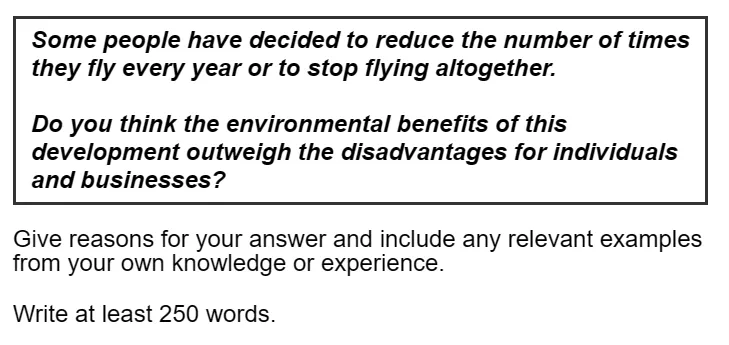
背景句:Some people have decided to reduce the number of times they fly every year or to stop flying altogether.(仅为现象铺垫,无需展开观点)
核心问题(必须完整回应):
Do you think the environmental benefits of this development outweigh the disadvantages for individuals and businesses?
→ 需同时覆盖:环境好处(environmental benefits)、对个人的弊端(individuals)、对企业的弊端(businesses),最终明确表态「利大于弊 / 弊大于利」
2. 结构(四段式)
二、注意事项
任务完整性:必须同时回应「环境收益」「个人弊端」「企业弊端」三个维度,不可遗漏任何一方
立场清晰:结尾必须明确表态 outweigh 的方向,避免模棱两可
例子具体:用「疫情期间航空业裁员」「远程办公替代商务飞行」等具象案例
逻辑衔接:使用 Firstly/However/In conclusion 等连接词,段落间过渡自然
词汇多样性:避免重复 fly,可替换为 air travel/aviation/flying trips 等
三、范文
In recent years, an increasing number of people have chosen to cut back on their annual flights or stop flying entirely, driven by growing environmental awareness. This essay will argue that the environmental benefits of this trend far outweigh the drawbacks it brings to individuals and businesses, while acknowledging the need for practical solutions to mitigate the negative impacts.
近年来,出于环保意识的不断增强,越来越多的人选择减少每年的飞行次数,甚至完全停止乘飞机出行。本文将论述这一趋势所带来的环境效益远远超过其给个人和企业带来的弊端,同时承认需要切实可行的解决方案来减轻其负面影响。
The primary environmental advantage of reducing air travel is a significant reduction in carbon emissions(碳排放). Aviation accounts for approximately 2.5% of global greenhouse gas emissions, and long-haul flights in particular generate enormous amounts of CO₂ that contribute directly to climate change. For example, a single return flight from London to New York emits more carbon than the average person in many developing countries produces in an entire year. By cutting back on flights, individuals can drastically lower their carbon footprint, helping to slow global warming, reduce air pollution around airports, and protect fragile ecosystems from the noise and disruption caused by air traffic.
减少航空旅行的主要环境优势在于能大幅降低碳排放。航空业约占全球温室气体排放量的 2.5%,长途航班尤其会产生大量二氧化碳,直接导致气候变化。例如,从伦敦到纽约的一个往返航班所排放的碳,比许多发展中国家的普通人一年的排放量还要多。通过减少飞行次数,个人可以大幅降低自己的碳足迹,有助于减缓全球变暖,减少机场周边的空气污染,并保护易受航空交通噪音和干扰影响的脆弱生态系统。
Nevertheless, this trend does impose tangible disadvantages on both individuals and businesses. For individuals, reducing or eliminating flights restricts their mobility: it becomes harder to visit family living abroad, explore new cultures through international travel, or access remote regions for work or leisure. For businesses, especially those reliant on global connectivity, the impact is even more severe. Airlines face declining revenues and may be forced to cut jobs, while tourism industries in popular destinations suffer from fewer international visitors. Additionally, businesses that rely on air freight for global supply chains may face higher costs and longer delivery times, reducing their competitiveness.
然而,这种趋势确实给个人和企业带来了明显的劣势。对于个人而言,减少或取消航班限制了他们的流动性:探望国外的家人、通过国际旅行探索新文化或前往偏远地区工作或休闲变得更加困难。对于企业,特别是那些依赖全球连接的企业来说,影响更为严重。航空公司面临收入下降,可能被迫裁员,而热门目的地的旅游业则因国际游客减少而受到影响。此外,依赖空运来维持全球供应链的企业可能面临更高的成本和更长的交货时间,从而降低其竞争力。
In my view, the environmental benefits clearly outweigh these drawbacks. While the short-term inconveniences for individuals and businesses are real, the long-term survival of the planet is a far more pressing(迫切的) priority. Moreover, many of the disadvantages can be mitigated: businesses can adopt remote work to reduce business travel, and governments can invest in high-speed rail as a sustainable alternative to short-haul flights.
在我看来,环境方面的益处显然超过了这些弊端。虽然对个人和企业而言,短期内的不便确实存在,但地球的长期生存才是更为紧迫的要务。而且,许多不利因素是可以缓解的:企业可以采用远程办公来减少商务出行,政府可以投资建设高速铁路,作为短途飞行的可持续替代方案。
In conclusion, although reducing air travel creates challenges for individuals and businesses, its environmental benefits in combating climate change are irreplaceable. With thoughtful policy and innovation, we can minimise the downsides while prioritising the health of our planet.
总之,尽管减少航空旅行会给个人和企业带来一些挑战,但其在应对气候变化方面所具有的环境优势是无可替代的。通过明智的政策制定和创新举措,我们能够将负面影响降至最低,同时优先保护我们地球的健康。


