

山东省统考 中考英语 新题型(三)阅读还原 高分技巧
冠县清泉中学 张凤娇
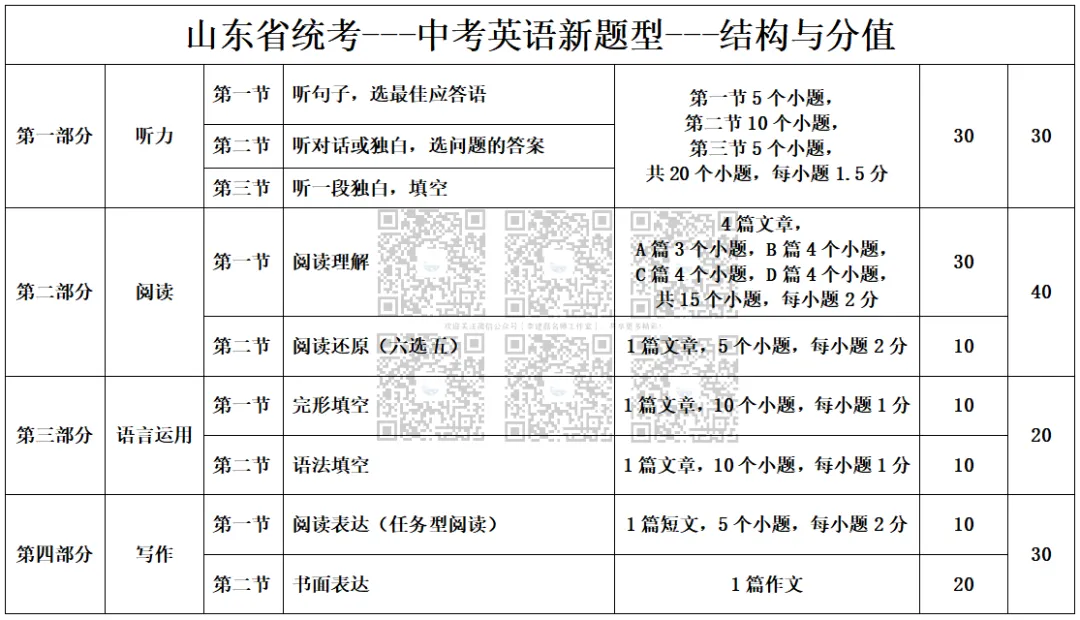
阅读还原,即阅读六选五,是新题型第二部分-阅读-的第二节。
技能一 寻找特点法(6招)
该方法根据设空位置的不同特点解题,不同位置的设空有不同的解题核心思路,需结合设空处的篇章作用筛选选项。
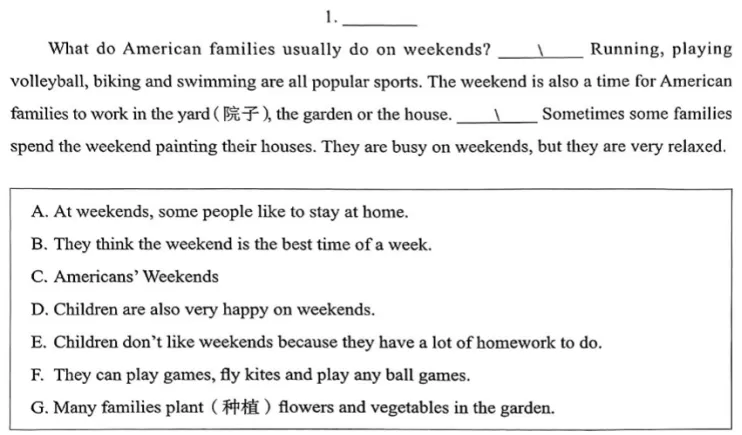
第1招:文章标题设空
解题要点:标题需包含全文关键词、可引领全文,部分标题要求大写;在选项中寻找含核心关键词且能概括全文的选项。
真题例证:
技巧应用解析:
答案:C。当题设在文章的标题处时,文章的标题有时需要大写且包含整篇文章的关键词,同时能够引领全文。同学们只需要在选项中寻找这些线索,就可以轻松解出。
第2招:段落标题设空
解题要点:观察上下文段落标题的结构,选择结构相似、能引领本段内容的选项。
真题例证:
High school is a big step in any student’s life. High school may be challenging, but if you make the most of these three years, you can make great progress. 1
Obey your school rules!
If you don’t want to get in trouble in your first year, don’t break school rules. Make sure you learn your school’s dress rules as well as the other rules. Follow those rules.
Study as much as you can.
2 Then you will need to be hard-working. Read all the required books and spend a lot of time on study. High school is an important time to develop good school habits, so getting used to studying now will really help you better.
3
If you want to do it well in class, the best attitude to take is to pay attention! Follow your teacher’s instructions. It’s amazing how much your grades will go up if you just pay attention and try to get as much information from the lesson as possible.
Don’t procrastinate (拖延).
Many students develop the very bad habit of procrastinating. 4 This is bad, because when you put off what should be done now, the result will be bad. It will make you really stressed.
Explore (探索) yourself.
5 You should take electives (选修科目) that you think you might like, learn to do things that you’ve always wanted to learn how to do, and read about things you’d like to do in the future.
A.Pay attention in class.
B.Here are some tips for you to follow.
C.This means that they don’t do things until the last minute!
D.High school is a great time to explore the things you enjoy.
E.Of course, you hope for good results at the end of the term.
F.It sounds reasonable to think twice.
技巧应用解析:答案为A。本题第3空为段落标题设空,核心应用“段落标题设空技巧”。第一步:观察上下文段落标题结构——前文标题“Obey your school rules!”“Study as much as you can.”“Don’t procrastinate.”“Explore yourself.”均为“祈使句/简短陈述句”结构,且均为“建议类”标题,引领本段具体内容;第二步:匹配选项结构与主旨——本段内容围绕“课堂上集中注意力”展开,选项中只有A选项“Pay attention in class.”为祈使句结构,与上下文标题结构完全一致,且能精准引领本段“课堂专注、听老师指令”的内容,因此第3空正确答案为A,完美契合“段落标题设空”技巧。
第3招:首段首句设空
解题要点:首段首句具有总领全文的作用,通常含贯穿全文的关键词,正确选项需与下文内容高度相关,下文为该句的详细阐述。
真题例证:
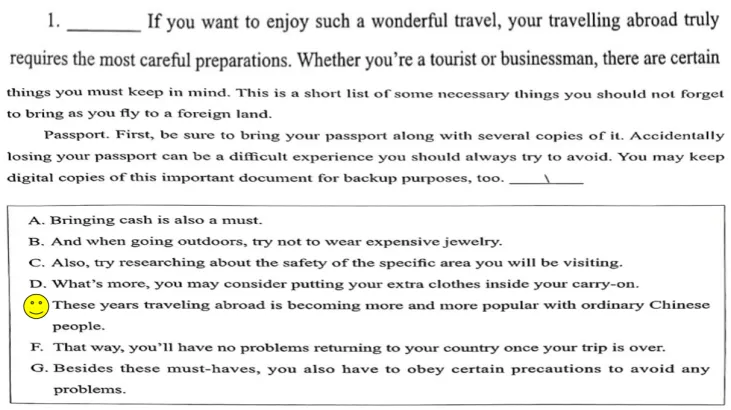
技巧应用解析:答案:E。当题设在首段的首句时,此时的题是整篇文章的“大哥”,具有总领全文的作用,通常含有贯穿全文的关键词。下文是对此题的详细阐述,因此正确选项通常与下文具有一定的相关性。
第4招:中段首句设空
解题要点:中段首句是整段的核心,下文为该句的展开说明,正确选项通常含本段的关键词。
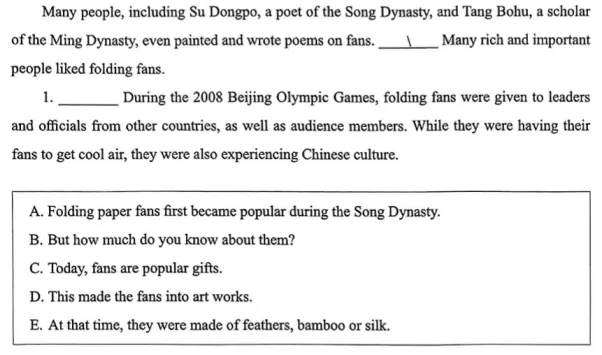
技巧应用解析:答案:C。当题设在段中的首句时,此时的题是整段的“老大”。因此下文通常是此题的展开说明,正确选项通常也含有该段的关键词。
第5招:尾段首句设空
解题要点:正确选项需对全文主题进行升华或总结,贴合文章整体主旨。
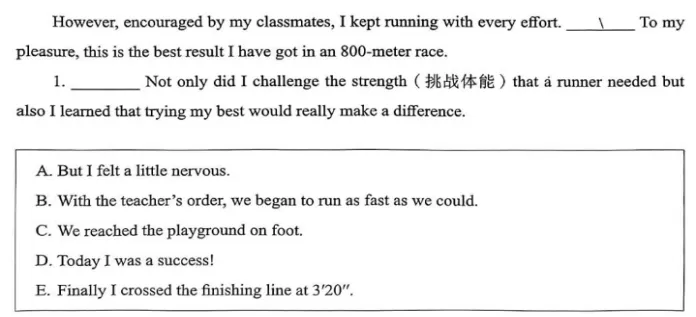
技巧应用解析:答案:D。当题设在最后一段的首句时,正确选项通常能够将主题升华或者总结。
第6招:承上启下设空
解题要点:设空多在段落结尾或中间,优先选择能连接上下文、兼具承上和启下作用的选项。
真题例证:
Self-improvement is a lifelong journey that everyone should start. It helps us become better and reach our goals. However, many ninth-grade students often feel stressed by study pressure and leave out this important part of personal growth. 1 Here are some good ways to balance self-improvement with schoolwork.
First, set clear goals. 2 For example, you might want to get better at managing time, so you can finish homework faster and have more time for self-development. Or you could decide to read one helpful book each month to get new ideas. Setting clear goals gives you a clear direction and spirit.
Second, set up a plan. Creating a well-organized plan is very important. Set certain time for studying, doing homework, and self-improvement. 3 For example, you can spend 30 minutes every day exercising. It keeps you healthy and helps reduce stress. You can also use weekends to learn a new skill, like drawing.
Third, learn from failures. Self-improvement isn’t always easy. You’ll meet problems and make mistakes. 4 Instead, find out what went wrong, learn from them, and use them to grow. If you fail a test, don’t lose heart. Just find out which parts you didn’t understand and plan to review them.
Finally, stay active. A positive attitude is the key to successful self-improvement. Believe you can change and grow. 5 When you face difficulties, tell yourself every challenge is a chance to get stronger. Celebrate your small achievements, as they are steps on your self-improvement journey.
A.Don’t be too hard on yourself when things go wrong.
B.Remember, self-improvement doesn’t need to take much time.
C.But in fact, self-improvement can help you do better at school.
D.Goals give you a sense of purpose and help you focus your efforts.
E.Self-improvement includes physical, mental, and social parts.
F.Don’t compare yourself with others, as everyone’s journey is different.
技巧应用解析:本题第1空为承上启下设空(第一段结尾),核心应用“承上启下”技巧。第一步:分析“承上”内容——前文提到“九年级学生因学业压力,忽略自我提升”,强调学生对自我提升的误解(认为自我提升会占用学习时间);第二步:分析“启下”内容——下文引出“平衡自我提升与学业的方法”,核心是“自我提升与学业不冲突”;第三步:匹配选项——选项C“But in fact, self-improvement can help you do better at school.”中,“But”转折前文误解(承上),“self-improvement can help you do better at school”说明自我提升与学业的关系,引出下文“平衡两者的方法”(启下),兼具承上启下作用,因此第1空正确答案为C,是本技巧的典型应用。
技能二 锁定信号法(4招)
核心利用代词指代的语法特征解题,通过代词的单复数属性,匹配文中或选项中的名词单复数,快速缩小选项范围。
第7招:在文中的复数指代
解题要点:若设空后出现They、Them等复数代词,在选项中寻找含复数名词的选项即可快速锁定答案。
真题例证:
Whether you’re going hiking or camping in your favorite place, it’s important to leave it just as you found it! 1 They can help you enjoy nature while being kind to the environment.
● 2
Always put it in bins. If there are no bins, you should carry your rubbish with you until you find a proper place to throw it. This includes food waste, empty bottles and other things like plastic (塑料) bags.
●Try not to damage (损坏) plants and trees.
Plants and trees are gifts of nature. They play an important role and always offer a lot. 3 They are an important part of nature and provide food. Some insects and small animals live on them.
●Keep quiet near rivers and lakes.
The peace is important for animals that live there. 4 They might have to leave their homes or have difficulty finding food.
● 5
Use a camp stove (炉子) instead of making a fire directly on the ground. A camp stove can control the fire better and prevent accidental fires. Making a fire on the ground can damage the soil and the plants growing on it.
By following these simple steps, you can help protect our beautiful planet while having fun in the great outdoors!
A.Don’t pick flowers.
B.Be careful with campfires.
C.Here are some tips for you.
D.Loud noises can scare them.
E.Don’t throw rubbish everywhere.
F.You can’t catch the animals there
技巧应用解析:本题第4空应用“文中复数指代”技巧。设空后出现复数代词“They”,指代前文“animals that live there(生活在那里的动物)”(复数概念);选项D“Loud noises can scare them.”中,“them”为复数代词,恰好指代“animals”,且内容贴合“保持安静、不惊吓动物”的语境,快速锁定第4空正确答案为D,进一步印证技巧的实用性。
第8招:在文中的单数指代
解题要点:若设空后出现it、he、this等单数代词,在选项中寻找含单数名词或表示整体概念的句子。
第9招:在选项中的复数指代
解题要点:若选项中出现They、Them等复数代词,利用代词指代功能,确定设空处上下句一定有复数名词/代词。
第10招:在选项中的单数指代
解题要点:若选项中出现it、this、he等单数代词,确定设空处上下句一定有单数名词或表示整体概念的句子。
技能三 瞻前顾后法(4招)
结合词汇复现和上下文逻辑解题,通过选项与文中的词汇关联,搭配篇章结构、语境暗示筛选正确答案,核心是“前后对照找关联”。
第11招:纯复现型答案
解题要点:若选项含上下文中的原词、同语境词或同义词(多为名词),该选项大概率为正确答案。
真题例证:
About 80% of people do not get enough vitamin (维生素) D every day. 1
Vitamin D is really important for our bones (骨骼). When we are young, vitamin D builds up our bones and makes them strong. When we are older, we still need vitamin D to keep our bones strong. 2 Then we lose vitamin D as we work and exercise during the day. But our bodies can’t make vitamin D.3
Where can a person get this very important vitamin? 4 Sometimes, vitamin D is added to bread, milk, and orange juice. Food is not the only way our bodies can get vitamin D.
5 If we want to be healthy, we should spend some time in the sun each day. Too much sun is not good for you, but about 15 minutes a day is usually enough. And we should be sure to eat foods that are rich in vitamin D, too.
A.The sun also gives us vitamin D.
B.Vitamin D is in foods like fish and eggs.
C.When we are old, we have no vitamin D.
D.So we have to get it from outside of our bodies.
E.But this vitamin is very important for your health.
F.Our bodies keep the vitamin D in our bones and teeth.
技巧应用解析:本题第2空为“纯复现型”设空,核心应用第11招技巧。第一步:定位上下文关键词——设空处前文关键词为“vitamin D(维生素D)”“bones(骨骼)”,下文关键词为“vitamin D”;第二步:匹配选项中的词汇复现——选项F“Our bodies keep the vitamin D in our bones and teeth.”中,含原文原词“vitamin D”“bones”,与上下文词汇高度关联,无额外复杂逻辑,仅通过“词汇纯复现”即可初步锁定该选项;第三步:验证逻辑——选项内容贴合“维生素D在体内的储存”,与前文“维生素D对骨骼重要”、下文“白天会流失维生素D”逻辑连贯,因此第2空正确答案为F,完美体现“纯复现型答案”的解题思路。补充印证:第4空选项B“Vitamin D is in foods like fish and eggs.”,含原词“vitamin D”,且与下文“vitamin D is added to bread, milk, and orange juice”(食物中含维生素D)词汇复现、语境一致,因此第4空正确答案为B,进一步印证技巧的实用性。
第12招:代词+复现型答案
解题要点:结合词汇复现和代词指代两大技巧,同时满足词汇关联和代词指代逻辑的选项为正确答案。
第13招:结构+复现型答案
解题要点:结合词汇复现和文章结构技巧,匹配文章句式/段落结构,且含词汇复现的选项为正确答案。
第14招:上下文暗示型答案
解题要点:上下文中会给出设空处的线索,正确选项不仅含原文原词/语境词,且与上下文逻辑一致。
真题例证:
Napping (小睡) can be really helpful if done correctly. 1
If you can’t get enough sleep at night because of busy work, taking a nap can help. However, if you aren’t napping properly, you might experience nighttime sleep problems or feel terrible after waking up from a nap. Here are some suggestions on how to take a perfect nap.
First, decide the length of your nap. To make sure you don’t feel uncomfortable after a nap, stick to either a short 20-minute nap or a longer nap of at least 1 hour and 30 minutes. 2 If you wake up in the middle of the rule during the deep sleep, you may feel worse than before the nap.
Second, take naps in the early afternoon. Napping late in the afternoon can influence your nighttime sleep. 3 If your normal bedtime is around 11:00 pm, then you shouldn’t be napping any later than 2:00 pm.
Third, avoid unintentional (无意识的) naps. 4Besides, the blue light from smartphones, televisions and computers can reduce melatonin (褪黑素) that helps you sleep.
Last, give yourself time after a nap.5 Give yourself some time to fully wake up before starting activities, especially those that require a quick action, such as driving.
A.This can make it harder to fall asleep at night.
B.After napping, you might still feel a little sleepy.
C.The body has a sleep rule of one and a half hours.
D.It can help improve your memory and reduce tiredness.
E.Students might be better studying hard before bedtime, or taking a nap after a period of afternoon study.
F.Napping in front of screens may reduce your need for sleep later.
技巧应用解析:本题第4空为“上下文暗示型”设空,核心应用第14招技巧。第一步:寻找上下文线索——设空处前文线索为“avoid unintentional naps(避免无意识小睡)”,下文线索为“blue light from smartphones, televisions and computers(手机、电视、电脑的蓝光)”,语境词为“screens(屏幕)”“sleep(睡眠)”;第二步:匹配选项中的原词/语境词——选项F“Napping in front of screens may reduce your need for sleep later.”中,含语境词“screens”“sleep”,与上下文线索高度关联;第三步:验证逻辑——选项内容贴合“避免无意识小睡”的建议(屏幕前小睡属于无意识小睡,会减少后续睡眠需求),与下文“蓝光影响睡眠”逻辑一致,上下文线索均暗示“屏幕前小睡不利于睡眠”,因此第4空正确答案为F,完美契合本技巧。
技能四 柯南推理法(5招)
核心分析上下文的逻辑关系,通过识别句间的并列、转折、因果等关系,匹配符合逻辑的选项,是六选五解题的核心方法之一。
第15招:并列关系
解题要点:若选项与上下文结构相似、内容方向一致,大概率为并列关系选项,可优先选择。
第16招:转折关系
解题要点:文中或选项出现but等转折信号词时,前后内容需有明显差异,据此筛选选项。
第17招:因果关系
解题要点:识别so、because等因果信号词,理清“原因→结果”或“结果→原因”的逻辑,so既可表结果,也可表总结。
第18招:解释关系
解题要点:是六选五高频考查的逻辑关系,设空处内容是对前一句/上文的详细阐述、解释说明,需选择贴合前文且能展开说明的选项。
真题例证:
Different countries have different manners about social situations. In Mexico people shake hands when they meet for the first time. In Brazil, people sometimes kiss. In Korea, people usually bow. Do you know Chinese fist and palm salute (拱手礼)? It is one of classic greeting manners in China. 1
The occasions of making fist and palm salute
For centuries, China has been known as a “Liyi Zhibang”. Nowadays, Chinese usually shake hands when meeting others, but sometimes they also make fist and palm salute.
2 People make fist and palm salute when they visit someone during the Spring Festival or attend someone’s wedding ceremony, birthday party and so on.
The history of fist and palm salute
3 It started in West Zhou Dynasty. If people met strangers, they would prepare for a fight if necessary, and hands were always ready for holding weapons (武器). Holding hands together pointed to themselves was a meaning of expressing kindness. Later it became one of traditional Chinese manners when meeting each other.
4
How do you make fist and palm salute properly? First, stand at attention. Then if you are a man, right-hand half-fist, and then left-hand hold the right-hand in front of your chest. For a woman, left-hand half-fist, then right-hand put the left-hand on the top. Next, watch each other, raise both hands to brow (额头) and bend down. 5 Also, you could say some lucky greeting words to each other for three times.
A.Now let’s learn more about it.
B.When and where do people use it?
C.The way to make fist and palm salute
D.It is often widely used among western countries.
E.Finally, shake hands towards each other for three times.
F.Fist and palm salute has a history of more than 3000 years.
技巧应用解析:本题第2空为“解释关系”设空,核心应用第18招技巧。第一步:分析前文核心——设空处前一句提到“nowadays, Chinese usually shake hands... but sometimes they also make fist and palm salute.(现在中国人通常握手,但有时也行拱手礼)”,核心是“拱手礼的使用场景”;第二步:判断设空作用——设空句需引出下文对“拱手礼使用场景”的详细解释;第三步:匹配选项——选项B“When and where do people use it?”为问句,下文“春节拜访、婚礼、生日派对等场景行拱手礼”,是对该问句的详细解释说明,贴合“解释关系”(设空处为问题,下文为解释性回答);第四步:验证逻辑——选项内容贴合“拱手礼的使用场合”这一主题,下文所有内容均为设空句的展开说明,因此第2空正确答案为B,充分体现本技巧。
第19招:问答关系
解题要点:是最简单的逻辑关系,设空处为问题或答案,需选择与上下文形成“提问→回答”或“回答→提问”对应关系的选项。
Everyone has secrets. Sometimes a friend tells you something private and asks you not to tell anyone else. Keeping a secret can be hard, but it is important for trust. (1) ______ Here are some tips to help you.
First, think before you speak. If someone asks you about the secret, you might feel pressured to answer. (2) ______ For example, you can say, "I promised not to talk about it," or "It's not my story to tell." These answers show that you respect your friend's privacy.
Second, change the topic. If you are worried that you might accidentally say something, try to move the conversation in a different direction. (3) ______ You could ask, "Did you see the new movie last weekend?" or "What are your plans for the summer holiday?"
Third, stay away from gossip. Sometimes, groups of friends start talking about others behind their backs. (4) ______ If you hear people guessing about a secret, it is best to leave the room or tell them, "Let's talk about something else."
Finally, remember why you are keeping the secret. (5) ______ When you remember how good it feels to be trusted, it becomes easier to keep your mouth shut. Being a good secret-keeper makes you a better friend.
A. What should you do if you really want to tell someone?
B. But what if you don't know how to keep it?
C. So, what is the best way to stop the conversation?
D. In this situation, what should you do?
E. Why is it so important to keep a promise?
F. Who told you the secret in the first place?
技巧应用解析:
本阅读文章答案为BACDE。此类题可注意:
识别信号词:
提问信号: 看到选项以 What, How, Why, Who, When 开头,且以问号结尾,大概率是设空处需要填入的问题。
回答信号: 看到下文出现 Here are..., For example..., You could..., The answer is..., Because... 等引导解释、建议或原因的词句。
解题步骤:
步骤一: 读空前一句,看是否描述了一个困境、现象或观点(这通常是问题的背景)。
步骤二: 读空后一句,看是否在提供建议、解释原因、列举例子或直接回答问题。
步骤三: 在选项中寻找能与后文形成“一问一答”逻辑的疑问句。
如果后文是建议 (Tips/Ways),找 How/What to do 类的问题。
如果后文是原因 (Because/Reasons),找 Why 类的问题。
如果后文是具体例子 (For example),找询问具体方法的问题。
避坑指南:
不要只看单词匹配,要看逻辑功能。有时候问题不会直接重复前文的词,而是用 "In this situation" (在这种情况下) 或 "What then" (那该怎么办) 来指代。
确保“问”和“答”在内容上是紧密相关的(如:问“怎么转移话题”,答“问电影怎么样”)。
总结:在这篇例题中,所有五个空(1, 2, 3, 4, 5) 都使用了“问答关系”这一技巧。这篇文章的结构设计非常典型,专门为了训练学生识别 “前文/后文设问 ↔↔ 选项作答” 或 “前文情境 ↔↔ 选项设问 ↔↔ 后文作答” 的逻辑链条。这就是第19招的核心用法。
技能五 褒贬态度一致法(1招)
通过分析文中的感情色彩解题,利用上下文的正向/负向态度倾向,排除态度不符的选项,筛选与上下文感情色彩一致的答案。
第20招:感情色彩分析
解题要点:若设空处上下句带有明显的感情倾向(积极、消极、悲伤、喜悦等),在选项中选择感情色彩(正负向)与上下文一致的选项。
真题例证
It was Monday morning, and I woke up feeling terrible. My alarm clock didn't go off, so I was thirty minutes late for school. (1) ______ When I finally rushed into the classroom, my teacher, Mr. Brown, was already writing on the blackboard. He looked at me with a serious face and shook his head.
During the first lesson, things got even worse. I realized I had left my math homework on my desk at home. (2) ______ I tried to explain, but Mr. Brown just sighed and told me to stand in the corner. I felt my face turn red with shame.
At lunchtime, I sat alone in the cafeteria. I wanted to talk to my best friend, Jerry, but he was laughing loudly with another group of students. (3) ______ It seemed like the whole world was against me. I looked down at my tray; even the apple looked brown and unappetizing.
However, the afternoon brought a surprise. In art class, we were asked to draw something that made us happy. I closed my eyes and thought about my little dog, Buster. (4) ______ As I drew, I started to smile. My art teacher, Ms. Green, walked by and stopped. She looked at my picture and her eyes lit up. "This is wonderful!" she said cheerfully. (5) ______ Suddenly, the heavy feeling in my chest disappeared. Maybe Monday wasn't so bad after all.
A. I felt so lonely and ignored that I wanted to cry.
B. Her praise made me feel proud and warm inside.
C. I ran as fast as I could, but I still missed the school bus.
D. Everyone in the class started clapping for my great idea.
E. My heart sank because I knew he would be very angry.
F. Immediately, a warm and happy picture formed in my mind.
技巧应用解析:本题答案为CEAFB。在做本阅读题时,可遵循以下步骤:1、标记情感词:圈出上下文中表示情绪的形容词或动词(如:terrible, angry, sigh, lonely, happy, wonderful, smile)。2、判断方向: 确定空缺处前后的情感流向是“由坏更坏”、“由坏转好”还是“持续向好”。3、匹配选项: 排除那些情感色彩(正/负)与上下文冲突的选项。例如本题中,前半部分全是坏事,如果选项里突然出现一个开心的句子(如B或D),直接排除,除非看到了 "However" 这样的转折词。


