题目:
Some people think that only the best students should be rewarded. Others, however, think that it is more important to reward students who show improvements.
Discuss both these views and give your own opinion.
中文:
有些人认为,只有最优秀的学生才应该获得奖励。然而,另一些人则认为,奖励那些取得进步的学生更为重要。讨论这两种观点,并给出你自己的看法
题目解读
本题要求我们探讨应该奖励哪种学生,并要求我们就两种观点进行讨论:一方认为应该奖励最优秀的学生;另一方则认为应该奖励取得进步的学生。我们不能只讨论一方观点,必须比较全面地分析二者,然后在开头和结尾明确给出自己的立场。在结构上,采用五段式论证更为清晰合理。
第一段点明背景和个人观点;第二段讨论为什么有人认为应该奖励最优秀的学生;第三段讨论为什么有人认为应该奖励取得进步的学生;第四段则展开论述为个人观点,认为应该奖励取得进步的学生;最后一段总结立场
写作框架
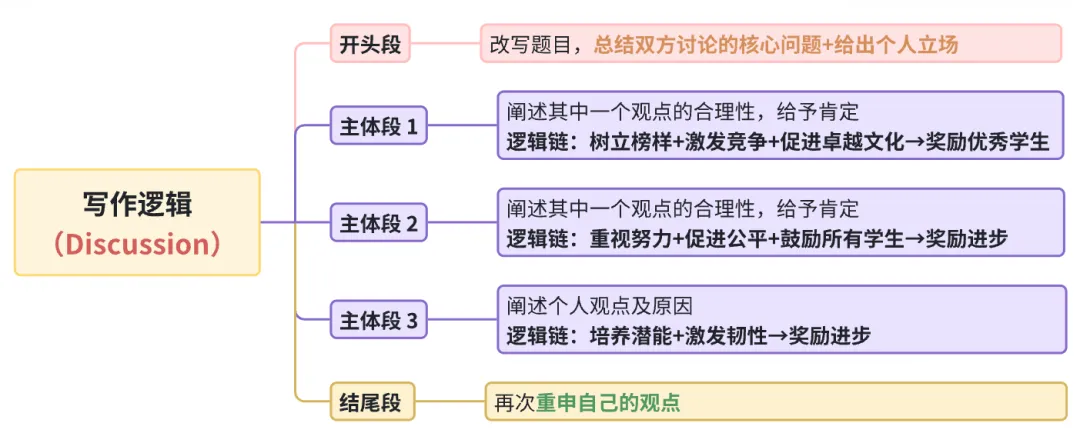
1.开头段(Introduction)
关于学业奖励应当颁发给成绩最优秀的学生,还是应当奖励那些取得最大进步的学生,这一问题长期存在争议。虽然两种方式各有价值,但我认为奖励进步更有助于学生的长期动力与教育公平
The question of whether academic rewards should go to the best-performing students or to those who show the most improvement remains highly debated. While I believe both approaches have value, rewarding improvement is ultimately more beneficial for students’ long-term motivation and educational equity.
2.主体段
主体段1:
主题:支持奖励优等生的人认为,卓越应当得到认可,因为它能为他人树立榜样
解释1:当高成就学生获奖时,这强化了努力、纪律和智力的价值
举例1:例如,基于成绩或竞赛成绩颁发的奖学金常常激励学生追求卓越
解释2:表彰杰出表现有助于识别未来的领导者、科学家或创新者,他们能对社会作出重大贡献。因此,奖励优异成绩能促进精英精神并培育成就文化
主体段2:
主题:另一些人认为奖励进步更有意义,因为它重视努力而非天赋
解释1:并非所有学生起点相同,因此进步体现出毅力与真正的学习
举例1:例如,一个将数学成绩从不及格提升到中等的学生,比一直名列前茅的学生展现了更多的成长与决心。奖励这类努力能激励成绩较差的学生不断提升,而不是轻易放弃
解释2:此外,这种包容性的方式能鼓励所有学生积极参与,而不仅是最有天赋的那部分人
主体段3:
主题:在我看来,尽管卓越不应被忽视,但奖励进步更符合教育的真正目标——挖掘每个学习者的潜能
解释1:通过表彰成长,学校能培养学生的成长型思维,使他们相信成功源自努力而非天赋
解释2:这种理念培养了韧性与终身好奇心,帮助学生在课堂之外也能不断适应与成功
结尾段(Conclusion)
尽管奖励优等生能强化精英意识,但认可进步能激励更广泛的学生群体。因此,我认为学业奖励应主要关注进步,同时兼顾卓越表现
In conclusion, although rewarding top students reinforces merit and excellence, recognizing improvement motivates a broader range of learners. Therefore, I believe that academic awards should focus primarily on progress while still acknowledging outstanding achievement.
范文精析版
⭐️ 蓝色部分-生动动作表达:增加写作词汇丰富程
⭐️ 黄色部分-地道名词形容词表达:增加写作词汇丰富程度
⭐️ 橙色部分-必备连接词汇:增加写作连接词的积累
⭐️ 绿色部分-高级语法积累:提高写作时语法多样性和准确性
▼
范文
The question of whether academic rewards should go to the best-performing students or to those who show the most improvement remains highly debated. While I believe both approaches have value, rewarding improvement is ultimately more beneficial for students’ long-term motivation and educational equity.
Supporters of rewarding top achievers argue that excellence deserves recognition because it sets a standard for others to follow. When high-performing students receive awards, it reinforces the value of hard work, discipline, and intellectual talent. For example, scholarships based on top grades or competition results often encourage academic ambition and drive students to strive for perfection. In addition, honouring outstanding performance helps identify future leaders, scientists, or innovators who can contribute significantly to society. Thus, rewarding excellence promotes meritocracy and fosters a culture of achievement.
However, others believe that recognizing improvement is more meaningful because it values effort over natural ability. Not all students start from the same level of skill, opportunity, or background; therefore, progress reflects perseverance and genuine learning. For instance, a student who raises their math grade from a failing score to an average level has demonstrated greater growth and determination than one who consistently earns top marks. Rewarding such effort can inspire struggling learners to keep improving rather than give up. Moreover, this inclusive approach encourages all students to participate actively, not just the most gifted.
From my perspective, while excellence should not be ignored, rewarding improvement better serves the purpose of education—to cultivate potential in every learner. By celebrating progress, schools promote a growth mindset, where success is seen as the result of effort rather than fixed talent. This philosophy nurtures resilience and lifelong curiosity, preparing students to adapt and succeed beyond the classroom.
In conclusion, although rewarding top students reinforces merit and excellence, recognizing improvement motivates a broader range of learners. Therefore, I believe that academic awards should focus primarily on progress while still acknowledging outstanding achievement.
高分表达
remains highly debated 备受争论
deserves recognition 值得被认可
reinforces the value 强化/巩固……的价值
drive students to strive 驱动/激励学生去奋斗/努力
promotes meritocracy 促进任人唯贤
earns top marks 获得优异成绩
promote a growth mindset 培养成长型思维
nurtures resilience and lifelong curiosity 培养韧性和终身的好奇心
long-term motivation 长期动机
educational equity 教育公平
intellectual talent 才智
perseverance and genuine learning 坚持不懈与扎实学习
merit and excellence 贤能与卓越
outstanding achievement 杰出的成就
①While I believe both approaches have value, rewarding improvement is ultimately more beneficial for students’ long-term motivation and educational equity
虽然两种方式各有价值,但我认为(动名词作主语)奖励进步更有助于学生的长期动力与教育公平
②In addition, honouring outstanding performance helps identify future leaders, scientists, or innovatorswho can contribute significantly to society.
此外,表彰杰出表现有助于识别未来的领导者、科学家或创新者,(定语从句)他们能对社会作出重大贡献
③For instance, a student who raises their math grade from a failing score to an average level has demonstrated greater growth and determination than one who consistently earns top marks.
例如,一个将数学成绩从不及格提升到中等的学生,(比较结构)比一直名列前茅的学生展现了更多的成长与决心
④By celebrating progress, schools promote a growth mindset, where success is seen as the result of effort rather than fixed talent.
(介词+doing表方式)通过表彰成长,学校能培养学生的成长型思维,使他们相信成功源自努力而非天赋
▼