题目:
Some people think that public art should be funded by governments, while others believe that it should be funded by other sources.
Discuss both these views and give your own opinion.
中文:
有些人认为公共艺术应该由政府资助,而另一些人则认为应该由其他来源资助。讨论这两种观点,并给出你自己的看法
题目解读
本题要求我们探讨公共艺术应该由谁资助,并要求我们就两种观点进行讨论:一方认为应该由政府资助;另一方则认为应该由其他来源资助。我们不能只讨论一方观点,必须比较全面地分析二者,然后在结尾明确给出自己的立场。在结构上,采用五段式论证更为清晰合理
第一段点明背景和个人观点;第二段讨论为什么有人认为公共艺术应该由政府资助;第三段讨论为什么有人认为应该由其他来源资助;第四段则展开论述为个人观点,认为公私合作最理想;最后一段总结立场
写作框架
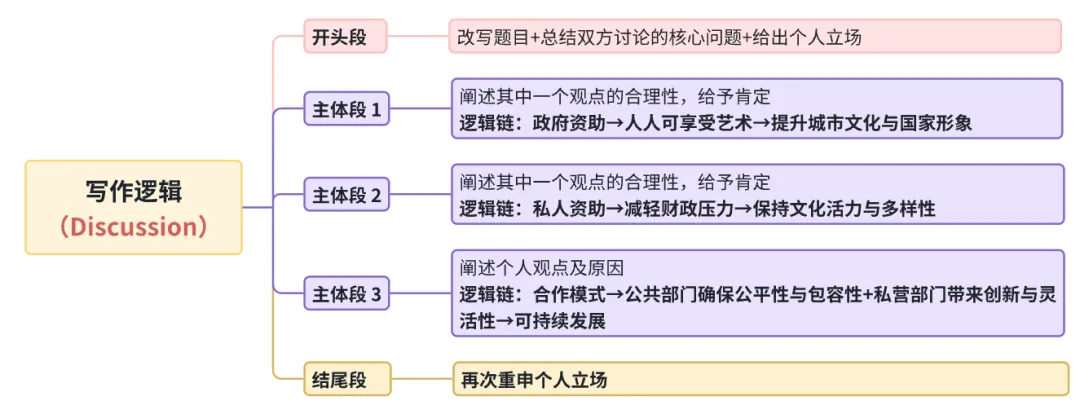
1.开头段(Introduction)
公共艺术——从雕塑和壁画到文化装置——在塑造城市的身份与美感方面发挥着关键作用。虽然有人认为这类艺术应由政府资助,但我认为公共与私人资金结合的方式最能兼顾创意与可持续性
Public art, from statues and murals to cultural installations, plays a crucial role in shaping the identity and beauty of cities. While some believe the government should finance such art, I argue that a combination of public and private funding ensures both creativity and sustainability.
2.主体段
主体段1:
主题:支持政府资助的人认为,艺术是一种惠及全体社会的公共产品
解释1:政府投资能确保所有人——而非只有富人——都能在公共空间中欣赏并参与文化表达
例子1:例如,伦敦“第四基座”项目由政府资助,成功将多样而富有争议性的艺术作品带入城市中心,激发了市民与游客的广泛讨论
解释2:此外,当政府支持艺术时,也传递出文化与创造力是国家身份重要组成部分的信号,而非少数人享有的奢侈品
主体段2:
主题:反对者认为,公共资金应优先用于医疗、教育和基础设施等基本服务
解释1:经济紧张时期,将纳税人的钱用于艺术创作可能被视为浪费或精英化
解释2:相反,私人企业和慈善家往往拥有资助公共艺术的经济实力与积极动机
例子1:例如,世界各地许多由企业赞助的壁画和雕塑公园,不仅美化了社区,也反映了地方历史与价值观
解释3:因此,依靠其他资金来源能减轻政府财政负担,同时保持文化活力
主体段3:
主题:最佳的做法是公共与私营部门合作。政府的参与能确保艺术的包容性与公平性,防止艺术完全商业化
解释1:而私人赞助则能带来创新、灵活性和额外资源。通过建立合作模式——由政府提供监管与初始资金
解释2:企业与社区提供经济支持——可以比单一资助模式更有效地维持艺术多样性与市民自豪感
结尾段(Conclusion)
尽管关于公共艺术资助方的观点不一,但我认为由政府与私人共同承担资助责任,是最平衡且持久的解决方案
While opinions differ on who should fund public art, I believe that shared responsibility between governments and private sponsors offers the most balanced and enduring solution.
范文精析版
⭐️ 蓝色部分-生动动作表达:增加写作词汇丰富程
⭐️ 黄色部分-地道名词形容词表达:增加写作词汇丰富程度
⭐️ 橙色部分-必备连接词汇:增加写作连接词的积累
⭐️ 绿色部分-高级语法积累:提高写作时语法多样性和准确性
▼
范文
Public art, from statues and murals to cultural installations, plays a crucial role in shaping the identity and beauty of cities. While some believe the government should finance such art, I argue that a combination of public and private funding ensures bothcreativity and sustainability.
Those who support government funding emphasize that art is a public good that enriches society as a whole. Government investment guarantees that everyone—not just the wealthy—can access and enjoy cultural expression in public spaces. For example, government-funded projectslike London’s “Fourth Plinth” program have brought provocative and diverse art to the heart of the city, sparking dialogue among citizens and tourists alike. Moreover, when the state supports art, it sends a message that culture and creativity are integral to national identity, not luxuries for the privileged few.
However, opponents argue that public money should prioritize essential servicessuch as healthcare, education, and infrastructure. In times of economic pressure, allocating tax revenue to art may be seen as wasteful or elitist. Private enterprises and philanthropists, on the other hand, often have the financial means and motivation to support public art. For instance, many corporate-sponsored murals and sculpture parks around the world not only beautify communities but also reflect local history and values. Thus, relying on alternative sources of funding can reduce the financial burden on governments while maintaining cultural vitality.
In my view, the best approach lies in collaboration between public and private sectors. Government involvement ensures inclusivity and fairness, preventing art from becoming purely commercial or profit-driven. Meanwhile, private sponsorship brings innovation, flexibility, and additional resources. A partnership model—where governments provide regulatory support and initial fundingwhile businesses and communities contribute financially—can sustain artistic diversity and civic pridemore effectively than either side alone.
In conclusion, while opinions differ on who should fund public art, I believe that shared responsibility between governments and private sponsors offers the most balanced and enduring solution.
高分表达
plays a crucial role 起着至关重要的作用
shaping the identity 塑造身份认同
finance such art 资助/赞助这种艺术
enriches society 促进社会繁荣
prioritize essential services 优先保障基本服务
reduce the financial burden 减轻财务负担
ensures inclusivity and fairness 确保包容性和公平性
sustain artistic diversity and civic pride 保持艺术多样性和市民自豪感
cultural installations 文化设施
creativity and sustainability 创造力与可持续性
a public good 公共物品
cultural expression 文化表达
provocative and diverse art 富有挑战性和多样性的艺术
the heart of the city 市中心
integral to national identity 对民族认同至关重要的
luxuries for the privileged few 特权阶层的专属享受
times of economic pressure 经济压力时期
alternative sources of funding 替代资金来源
purely commercial 完全商业化的
profit-driven 以盈利为目的
regulatory support 监管支持
initial funding 初始资金
shared responsibility 共同责任
①For example, government-funded projects like London’s “Fourth Plinth” program have brought provocative and diverse art to the heart of the city, sparking dialogue among citizens and tourists alike.
例如,伦敦“第四基座”项目由政府资助,成功将多样而富有争议性的艺术作品带入城市中心,(句尾comma-ing表结果)激发了市民与游客的广泛讨论
②For instance, many corporate-sponsored murals and sculpture parks around the world not only beautify communities but also reflect local history and values.
例如,世界各地许多由企业赞助的壁画和雕塑公园,(not only…but also…平行结构)不仅美化了社区,也反映了地方历史与价值观
③Thus, relying on alternative sources of funding can reduce the financial burden on governments while maintaining cultural vitality.
因此,依靠其他资金来源能减轻政府财政负担,(while状语从句省略主语)同时保持文化活动
④A partnership model—where governments provide regulatory support and initial funding while businesses and communities contribute financially—can sustain artistic diversity and civic pride more effectively than either side alone.
通过建立合作模式——由政府提供监管与初始资金,企业与社区提供经济支持——可以(比较结构)比单一资助模式更有效地维持艺术多样性与市民自豪感
▼