

题目:
In the past, everyone wore clothes according to their culture, but now people wear similar clothes all around the world. Is this a positive or a negative development?
中文:
过去,每个人都根据自己的文化穿衣服,但现在世界各地的人都穿类似的衣服。这是积极的还是消极的发展?
题目解读
题目要求我们探讨世界各地的人都穿类似的衣服的利弊,我们需要对利和弊两方都进行讨论,并且给出自己的立场。
一方面,我们可以从平等和归属感等角度阐述利;另一方面,我们可以从价格和实用角度继续阐述利;然后我们可以给出让步,使得逻辑分析更加全面。最后,我们重申个人立场
写作框架
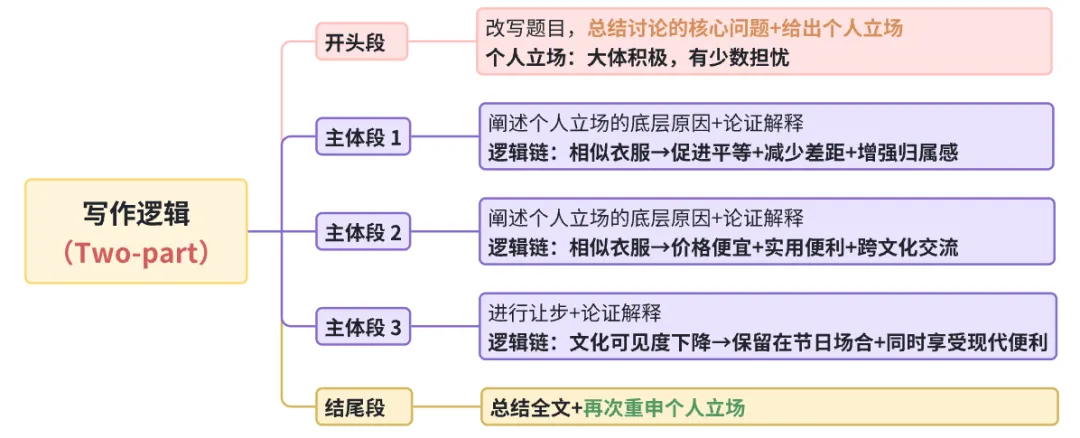
1.开头段(Introduction)
过去,人们的衣着往往体现其文化背景,而如今相似的时尚趋势已经在全球范围内盛行。我认为这一现象大体上是积极的,因为它促进了平等与便利,尽管不可避免地引发了对文化认同的担忧
In the past, clothing reflected people’s cultural background, whereas nowadays similar fashion trends dominate across the globe. I believe this development is mostly positive because it promotes equality and convenience, though it inevitably raises concerns about cultural identity.
2.主体段
主体段1:
主题:人们穿着相似服装的一个重要好处是,它带来了联系感和平等感
解释1:在历史上,衣服常常代表着阶层和地位,而如今,休闲且实惠的风格让来自不同背景的人能够以相似的方式展示自己
解释2:这减少了可见的社会差距,并促进了归属感,尤其是在重视包容性的年轻一代中
举例1:例如,牛仔裤和T恤如今既可以由专业人士穿着,也可以由学生穿着,这表明现代时尚能够消除隔阂
主体段2:
主题:另一个明显的优势是全球时尚产业所带来的可及性和实用性
解释1:通过大规模生产和国际品牌,人们可以以相对低廉的价格购买到功能性与时尚感兼具的服装
解释2:这在快节奏的社会中尤为重要,因为舒适和效率往往比传统更受重视
解释3:此外,全球化的时尚使旅行者在国外更容易适应,因为服装几乎已经成为一种通用语言
解释4:通过这种方式,现代时尚不仅节省时间和金钱,还促进了跨文化交流
文段3:
主题:诚然,传统服饰的减少确实降低了文化的可见度
解释1:衣着曾经象征着传承、工艺和集体自豪感,而像和服或纱丽这样的独特服饰如今多仅限于特殊场合。但这并不意味着文化一定会消失
解释2:相反,人们在日常生活中使用现代服装,同时在节日或仪式上保留传统服饰,可以在享受全球化便利的同时传承文化
解释3:这种平衡让社会既能保持与传统的联系,又不会失去现代化带来的好处。
结尾段(Conclusion)
尽管全球化服装的普及存在一些不足,但其在平等性、实用性和全球联系方面的优势更为显著。总体而言,我认为这是一个积极的发展Although the spread of similar clothing has some drawbacks, the advantages of equality, practicality, and global connection outweigh them. Overall, I view this trend as a positive development.
范文精析版
⭐️ 蓝色部分-生动动作表达:增加写作词汇丰富程
⭐️ 黄色部分-地道名词形容词表达:增加写作词汇丰富程度
⭐️ 橙色部分-必备连接词汇:增加写作连接词的积累
⭐️ 绿色部分-高级语法积累:提高写作时语法多样性和准确性
▼
范文
In the past, clothing reflected people’s cultural background, whereas nowadays similar fashion trends dominate across the globe. I believe this development is mostly positive because itpromotes equality and convenience, though it inevitably raises concerns about cultural identity.
One significant benefit of people wearing similar clothes is the sense of connection and equalityit creates. Historically, clothing often represented class and hierarchy, but today casual and affordable styles allow individuals from different backgrounds to present themselves in similar ways. This reduces visible social gaps and fosters a sense of belonging, particularly among younger generations who value inclusiveness. For example, jeans and T-shirts are worn by both professionals and students alike, showing how modern fashion can bridge divides.
Another clear advantage is the accessibility and practicality brought by the global fashion industry. With mass production and international brands, people can purchase functional and stylish clothing at relatively low prices. This is particularly useful in fast-paced societieswhere comfort and efficiency often outweigh tradition. Moreover,globalized fashion makes it easier for travelers to adapt abroad, as clothing has become almost a universal language. In this way, modern fashion not only saves time and money but also supports cross-cultural communication.
Admittedly, the decline of traditional dress does reduce cultural visibility. Clothing once symbolized heritage, craftsmanship, and community pride, but unique garments such as the kimono or sari are now mostly reserved for special occasions. Yet this does not necessarily mean culture is lost. On the contrary, by keeping traditional attire for festivals or ceremonies while using modern fashion daily, people can both preserve heritage and enjoy the benefits of global styles. This balance allows societies to stay connected to tradition without sacrificing convenience.
In conclusion, although the spread of similar clothing has some drawbacks, the advantages of equality, practicality, and global connection outweigh them. Overall, I view this trend as a positive development.
高分表达
promotes equality and convenience 促进平等与便利
raises concerns 引发担忧
fosters a sense of belonging 培养归属感
supports cross-cultural communication 支持跨文化交流
reduce cultural visibility 降低文化可见性
preserve heritage 保护文化遗产
to stay connected 保持联结
cultural identity 文化归属感与独特性
sense of connection and equality 联结感与平等感
visible social gaps 显性社会差距
accessibility and practicality 可及性与实用性
fast-paced societies 快节奏社会
globalized fashion 全球化时尚
a universal language 通用语言
heritage, craftsmanship, and community pride 文化遗产、工艺(技艺)与社区自豪感
equality, practicality, and global connection 平等、实用性与全球联结
①One significant benefit of people wearing similar clothes is the sense of connection and equality it creates.
人们穿着相似服装的一个重要好处是,(定语从句省略that)它带来了联系感和平等感
②For example, jeans and T-shirts are worn by both professionals and students alike, showing how modern fashion can bridge divides.
例如,牛仔裤和T恤如今既可以由专业人士穿着,也可以由学生穿着,(句尾comma-ing表伴随)这表明现代时尚能够消除隔阂
③This is particularly useful in fast-paced societies where comfort and efficiency often outweigh tradition.
这在快节奏的社会中尤为重要,因为(where定语从句)舒适和效率往往比传统更受重视
④On the contrary, by keeping traditional attire for festivals or ceremonies while using modern fashion daily, people can both preserve heritage and enjoy the benefits of global styles.
相反,人们在(while状语从句省略主语)日常生活中使用现代服装,同时在节日或仪式上保留传统服饰,可以在享受全球化便利的同时传承文化
▼


![初二学生目标冲刺老九所[烟花]超前规划班[烟花]](https://sjds.net/zb_users/theme/suiranx_air/image/random_img/9.jpg "初二学生目标冲刺老九所[烟花]超前规划班[烟花]")

