资讯 / 正文
2026浙江高考英语|阅读理解B篇完整精讲
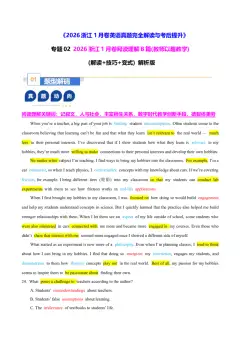
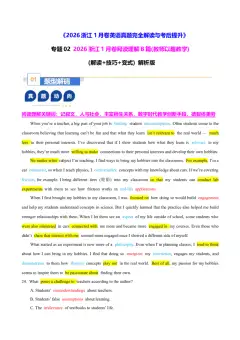
2026浙江高考英语|阅读理解B篇完整精讲一、原题原文 + 题目 When you’re a teacher, a big part of your job is battling student misconceptions. Often students come to the classroom believing that learning can’t be fun and that what they learn isn’t relevant to the real world—much less to their personal interests. I’ve discovered that if I show students how what they learn is relevant to my hobbies, they’re much more willing to make connections to their personal interests and develop their own hobbies. No matter what subject I’m teaching, I find ways to bring my hobbies into the classroom. For example, I’m a car enthusiast, so when I teach physics, I contextualize concepts with my knowledge about cars. If we’re covering friction, for example, I bring different tires(轮胎)into my classroom so that my students can conduct lab experiments with them to see how friction works in real-life applications. When I first brought my hobbies to my classroom, I was focused on how doing so would build engagement and help my students understand concepts in science. But I quickly learned that the practice also helped me build stronger relationships with them. When I let them see an aspect of my life outside of school, some students who were also interested in cars connected with me more and became more engaged in my courses. Even those who didn’t share that interest with me seemed more engaged once I showed a different side of myself. What started as an experiment is now more of a philosophy. Even when I’m planning classes, I tend to think about how I can bring in my hobbies. I find that doing so energizes my instruction, engages my students, and demonstrates to them how abstract concepts play out in the real world. Best of all, my passion for my hobbies seems to inspire them to be passionate about finding their own. 24. What poses a challenge to teachers according to the author? A. Students’ misunderstandings about teachers. B. Students’ false assumptions about learning. C. The irrelevance of textbooks to students’ life. D. The gap between teachers’ and students’ hobbies. 25. Why does the author bring tires into the classroom? A. To teach an engineering skill. B. To explain the structure of a car. C. To share a real-life experience. D. To illustrate a scientific concept. 26. What was the unexpected outcome of the author’s teaching method? A. A higher class attendance rate. B. Better examination results. C. A closer teacher-student bond. D. More spare time for students. 27. Which of the following best describes the author as a teacher? A. Innovative. B. Humorous. C. Decisive. D. Sympathetic. 二、逐句中文翻译 When you’re a teacher, a big part of your job is battling student misconceptions. 当你是一名教师时,工作中很大一部分就是纠正学生的错误认知。 Often students come to the classroom believing that learning can’t be fun and that what they learn isn’t relevant to the real world—much less to their personal interests. 学生走进课堂时,常常抱有这样的想法:学习没有乐趣,学到的知识和现实世界无关,更谈不上贴合他们个人的兴趣爱好。 I’ve discovered that if I show students how what they learn is relevant to my hobbies, they’re much more willing to make connections to their personal interests and develop their own hobbies. 我发现,如果我向学生展示所学知识和我的爱好之间的关联,学生会更主动地把知识和自身兴趣联系起来,慢慢培养属于他们自己的爱好。 No matter what subject I’m teaching, I find ways to bring my hobbies into the classroom. 无论我讲授哪一门科目,我都会想方设法把自己的爱好带进课堂。 For example, I’m a car enthusiast, so when I teach physics, I contextualize concepts with my knowledge about cars. 举个例子,我是一名汽车爱好者,所以上物理课的时候,我会借助汽车相关知识,把概念放到具体情境中讲解。 If we’re covering friction, for example, I bring different tires(轮胎)into my classroom so that my students can conduct lab experiments with them to see how friction works in real-life applications. 比如讲到摩擦力,我会把不同轮胎带到教室,让学生利用轮胎做实验,直观观察摩擦力在现实场景里是如何发挥作用的。 When I first brought my hobbies to my classroom, I was focused on how doing so would build engagement and help my students understand concepts in science. 最开始把爱好带进课堂的时候,我只想着借此提升课堂参与度,帮助学生理解理科知识点。 But I quickly learned that the practice also helped me build stronger relationships with them. 但我很快发现,这种做法还有另外的收获:它帮助我和学生建立更紧密的关系。 When I let them see an aspect of my life outside of school, some students who were also interested in cars connected with me more and became more engaged in my courses. 当学生看到我讲台之外生活中的一面,一些同样喜欢汽车的学生,和我有了更多共鸣,在课堂上投入度更高。 Even those who didn’t share that interest with me seemed more engaged once I showed a different side of myself. 就算和我爱好不一样的学生,在看见我不一样的一面之后,上课也更加积极投入。 What started as an experiment is now more of a philosophy. 这件事一开始只是一次教学尝试,如今已经成为我的教学理念。 Even when I’m planning classes, I tend to think about how I can bring in my hobbies. 哪怕在备课时,我也会思考,要如何融入自己的爱好。 I find that doing so energizes my instruction, engages my students, and demonstrates to them how abstract concepts play out in the real world. 我发现,这样的方式让课堂更有活力,吸引学生投入,同时向他们展示抽象理论在现实世界里是如何体现的。 Best of all, my passion for my hobbies seems to inspire them to be passionate about finding their own. 最可贵的是,我对爱好的这份热忱,也激励着他们,主动去发掘、热爱属于自己的爱好。 三、题目解析 24. 答案:B 解析:文章开篇点明老师要对抗学生的 misconceptions(错误认知),具体就是学生对学习的固有错误看法:学习无趣、知识脱离现实,对应“学生对于学习的错误预设”。A 错,不是学生误解老师;C 错,原文没有说课本本身和生活无关;D 错,没有提到师生爱好差距是难题。 25. 答案:D 解析:作者拿出轮胎,是在讲解 friction 摩擦力,用来阐释科学概念。illustrate a scientific concept:解释、阐明一个科学概念。A 工程技能、B 汽车结构、C 分享经历,都不是目的。 26. 答案:C 解析:原文:一开始目标是提升参与、理解知识点,但很快发现,这个做法还帮自己和学生建立更稳固的关系。这是意料之外的收获:更亲近的师生关系。其余选项原文没有提及。 27. 答案:A 解析:这位老师跳出传统授课方式,巧用个人爱好、实物实验设计课堂,教学方式富有创新。innovative:富有创新精神的。humorous 幽默的;decisive 果断的;sympathetic 富有同情心的,都不符合文本人物特点。 四、重点词汇整理 1. misconception /ˌmɪskənˈsepʃn/ n. 误解,错误想法 2. be relevant to 与……有关 3. enthusiast /ɪnˈθjuːziæst/ n. 爱好者 4. contextualize /kənˈtekstʃuəlaɪz/ v. 置于情境中理解 5. friction /ˈfrɪkʃn/ n. 摩擦力 6. conduct experiments 做实验 7. engagement /ɪnˈɡeɪdʒmənt/ n. 投入,参与度 8. philosophy /fəˈlɒsəfi/ n. 理念;哲学 9. energize /ˈenədʒaɪz/ v. 使充满活力 10. abstract /ˈæbstrækt/ adj. 抽象的 五、语篇感悟 这是高考很典型的教育感悟类记叙文。很多学生潜意识里认定学习枯燥、脱离生活,而文中老师找到了很好的切入点:带着自己的热爱上课,打通书本知识和现实生活的壁垒。 教学的意义不止传递知识点。当老师愿意展示真实鲜活的自我,课堂就不再单向灌输。一次小小的课堂尝试,既能帮学生看懂抽象原理,又能拉近师生距离,更能唤醒孩子寻找热爱的内心。这类文章也是高考阅读高频选材,做题时重点把握作者态度、写作目的、细节定位三类考点。
相关文档
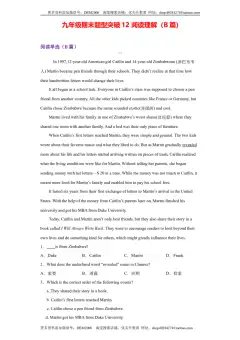
- 英语专题12阅读理解(B篇)(学生版)
- 2026年浙江高考英语完全解读与考后提升 专题02 1月卷阅读理解B篇 学生版(解读+技巧+变式)
- 2026年浙江高考英语完全解读与考后提升 专题02 1月卷阅读理解B篇 教师版(解读+技巧+变式)
- 2026版高考物理解题技巧:力学、电磁学篇精讲讲义(189页完整版)
- 2026年高考英语一轮复习考点精讲精练(新高考通用)考点3阅读理解 普通说明文阅读C篇 学生版
- 2026版高考英语一轮复习考点精讲精练 考点3阅读理解普通说明文阅读C篇 全国通用 教师版
- 2026年高考英语一轮复习考点精讲精练(新高考通用):考点4 阅读理解——研究报告类说明文(阅读D篇)核心考点精讲精练(全国通用)(学生版)
- 2026年高考英语一轮复习考点4阅读理解研究报告类说明文阅读D篇核心考点精讲精练全国通用教师版
- 2026年高考英语阅读理解突破策略及押题 高考阅读理解高频词汇记忆手册 完整版权威版
- 专题08阅读理解精练精析20篇
- 2026年高考物理解题技巧精讲讲义:力学与电磁学篇(189页完整版)
- 英语阅读理解150篇(中国烟草)
- 2025年高考英语一轮复习阅读理解与完形填空精讲精练阅读理解之细节理解题
- 2025年高考英语一轮复习阅读理解与完形填空精讲精练阅读理解之细节理解题
- 人教版九年级全册英语专题12阅读理解B篇教师版专项练习
- 人教版九年级全册英语专题12阅读理解B篇学生版专项练习
- 2024年高考英语三轮冲刺阅读理解B篇记叙文15篇(2)精选各地市模拟好题
- 2024高考英语一轮复习阅读理解细节理解题精讲原卷版
- 初三英语全册专题12阅读理解B篇教师版(人教新目标)
- 2027届高考英语三轮复习全国卷真题考前分类集训 阅读理解B篇练习
- 2026年浙江高考英语完全解读与考后提升:专题01 浙江1月卷阅读理解A篇(艺术作品征集)解读+技巧+变式(学生版)
- 2025年高考英语题型专练 阅读理解B篇记叙文15篇(1)(精选2024年各地市模拟好题)
- 2025年高考英语一轮复习阅读理解与完形填空精讲精练阅读理解之词句猜测题
- 2025年高考英语一轮复习阅读理解与完形填空精讲精练阅读理解之词句猜测题
- 2025年高考英语一轮复习阅读理解与完形填空精讲精练阅读理解之主旨大意题
- 2025年高考英语一轮复习阅读理解与完形填空精讲精练阅读理解之主旨大意题
- 英语专题11阅读理解(A篇)(学生版)
- 四级英语阅读理解20篇
- 2026年浙江高考英语完全解读与考后提升:专题01 浙江1月卷阅读理解A篇(艺术作品征集)解读+技巧+变式(教师版)
- 2026年浙江高考英语完全解读与考后提升:专题01 浙江1月卷阅读理解A篇(艺术作品征集)解读+技巧+变式(教师版)
- 专题08阅读理解精讲精练30篇(名校真题)-八年级英语下(人教版)(教师版)
- 2026年浙江高考英语完全解读与考后提升专题04浙江1月卷阅读理解D篇(AI辅助植物碳封存)解读+技巧+变式(学生版)
- 2024高考英语一轮复习语篇理解·阅读理解词句猜测题
- 2025年高考英语一轮复习阅读理解与完形填空精讲精练阅读理解之推理判断题
- 2025年高考英语一轮复习阅读理解与完形填空精讲精练阅读理解之推理判断题
- 2026版新高考通用高考英语一轮复习考点精讲精练:2025年1月浙江卷阅读理解ABCD(真题精做+考点探究+以读促写,教师版)
- 2025年1月浙江卷高考英语阅读理解ABCD真题精做考点探究以读促写(学生版)
- 押北京卷第21-27题阅读理解(A,B篇)(解析版)
- 2026高考英语阅读理解A篇预测新增考点猜押热点专题02解析版
- 2026年浙江高考英语完全解读与考后提升:专题03浙江1月卷阅读理解C篇(识别消费者评论真伪)解读+技巧+变式 教师版
- 初中英语专题08阅读理解精讲精练30篇(名校真题)-八年级英语下(人教版)学生版
- 一本英语阅读理解150篇中考
- 英语专题14阅读理解(D篇)(学生版)
- 英语专题13阅读理解(C篇)(学生版)
- 2026年浙江高考英语完全解读与考后提升:专题04浙江1月卷阅读理解D篇(AI辅助植物碳封存)解读+技巧+变式教师版
- 2026年浙江高考英语完全解读与考后提升:专题04浙江1月卷阅读理解D篇(AI辅助植物碳封存)解读+技巧+变式教师版
- 2026年浙江高考英语完全解读与考后提升:专题03浙江1月卷阅读理解C篇(识别消费者评论真伪)解读+技巧+变式学生版
- 2025年高考英语题型专练(精选2024年各地市模拟好题)专项复习阅读理解B篇记叙文15篇(2)
- 2025年高考英语题型专练(精选2024年各地市模拟好题)专项复习阅读理解B篇应用文15篇(2)
- 2024年新课标I卷高考英语真题深度解析与考后提升 专题03阅读理解B篇 原卷版