资讯 / 正文

中考英语阅读理解·第1期:A Shy Boy Who Found His Voice

中考英语阅读理解·第1期:A Shy Boy Who Found His Voice

河南中考英语阅读理解 · 第1期

A Shy Boy Who Found His Voice

主题语境:人与自我·成长与励志体裁:记叙文词数:294建议用时:12分钟

一、阅读短文

Li Hua is a 15-year-old student in a middle school in Henan. He is a hard-working boy, but he is very quiet in class. When the English teacher asks him to read a sentence, his face turns red and he speaks so softly that no one can hear him. He is afraid of making mistakes in front of others.

One Monday morning, the teacher told the class that there would be an English speech contest in two weeks. "If you are brave enough, you can sign up for it," she said. Li Hua wanted to take part in it, but he was afraid. He thought that he could never speak well in front of so many people.

Li Hua's best friend, Wang Ming, noticed his worry. "Don't be afraid," Wang Ming said. "I can practice with you every day after school." From then on, the two boys met in the school garden every afternoon. Li Hua practiced speaking aloud in front of a tree, treating the tree as his audience. At first his voice shook, but day by day he became more confident. By the end of the week, he could speak clearly and loudly without any fear.

On the day of the contest, Li Hua stood on the stage. For a moment, his heart beat fast and his legs felt weak. Then he remembered the days in the garden and took a deep breath. He began to speak, and his words came out clearly and naturally. When he finished, the whole room broke into applause. He won the second prize.

Looking back, Li Hua has learned an important lesson: fear can be a wall, but practice and friendship can break it. "I found my voice because I tried," he said with a smile.

二、中考仿真练

1Why did Li Hua feel afraid in English class?

AHe was a new student in the school.

BHe was afraid of making mistakes in front of others.

CHe did not like his English teacher.

DHe could not read English at all.

2What did the teacher tell the class on Monday morning?

AThere would be a math test on Friday.

BWang Ming would give a speech to the class.

CThere would be an English speech contest in two weeks.

DThe contest would be held in the school garden.

3What can we infer about Li Hua from Paragraph 3?

AHe gave up the contest at first.

BHe practiced English by himself at home.

CHe won the first prize in the contest.

DHe became more and more confident with practice.

4What is the best title for the passage?

AHow to Win an English Contest

BA Shy Boy Who Found His Voice

CA Helpful English Teacher

DThe School Garden

三、生词与短语

词条
音标
词性
释义
文中语境
nervous
/ˈnɜːvəs/
adj.
紧张的
...I always feel nervous when people look at me...
confident
/ˈkɒnfɪdənt/
adj.
自信的
...he became more and more confident...
contest
/ˈkɒntest/
n.
竞赛;比赛
...an English speech contest in two weeks...
sign up
—
短语
报名;登记
...you can sign up for it...
applause
/əˈplɔːz/
n.
掌声
...the whole room broke into applause...

四、语法聚焦

现在完成时:have/has + 过去分词

·文中句:Looking back, Li Hua has learned an important lesson: fear can be a wall, but practice and friendship can break it.

·用法:表示过去发生的动作对现在产生的影响或结果。句中 has learned 强调「他过去开始练习并一直坚持,现在有了重要收获」这一结果,所以用现在完成时。

·例句:I have finished my homework, so I can play basketball now. (我已经写完作业,所以现在可以打篮球了。)

宾语从句(that 引导)

·文中句:He thought that he could never speak well in front of so many people.

·用法:that 引导的宾语从句作 thought 的宾语,表示「他认为……」。口语中 that 常省略;从句必须用陈述句语序(主语 + 谓语),不能用疑问句语序。

·例句:The teacher said that we would have a class meeting on Friday. (老师说我们周五要开班会。)

五、答案与详解

1B

细节理解题。定位第 1 段「He is afraid of making mistakes in front of others」,与选项 B 为同义转述。A 项「新学生」原文未提,属无中生有;C 项「不喜欢英语老师」无中生有;D 项「完全不会读英语」过度推理,原文只说他说得小声,并非不会读。

2C

细节理解题。定位第 2 段「the teacher told the class that there would be an English speech contest in two weeks」,与选项 C 为同义转述。A 项「周五数学测试」无中生有;B 项偷换主语,要参赛的是李华而非王明发言;D 项偷换地点,原文未说比赛在学校花园举行。

3D

推理判断题。定位第 3 段「day by day he became more confident」「he could speak clearly and loudly without any fear」,可一步推出「李华在练习中越来越自信」。A 项正反颠倒,李华没有放弃而是坚持练习;B 项无中生有,练习是在学校花园与王明一起,并非独自在家;C 项偷换信息,李华得的是二等奖不是一等奖。

4B

主旨大意题。全文讲述害羞男孩李华通过练习和朋友帮助,最终在英语演讲比赛中勇敢开口并获奖,选项 B「一个找到自己声音的害羞男孩」覆盖全文、简洁有吸引力。A 项以偏概全,只涉及「如何获胜」一个细节;C 项以偏概全,老师只在开头出现;D 项离题,花园只是练习地点。

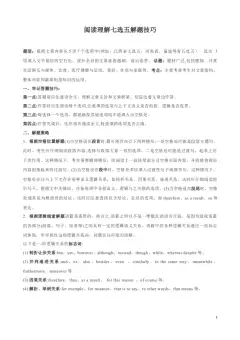
六、答题技巧

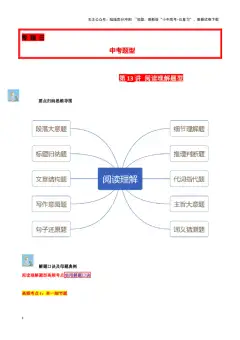
细节理解题(对应第 1、2 题)

•- 步骤 1:圈出题干关键词(人名、数字、时间、专有名词)

•- 步骤 2:回原文定位关键词所在句,答案一般是该句的同义转述

•- 步骤 3:把四个选项与原句逐一比对,警惕偷换主语、时间、地点、程度

•- 提醒:第 1 题中「新学生」「不喜欢老师」都是原文没提的,直接排除

推理判断题(对应第 3 题)

•- 步骤 1:找到依据句(第 3 段练习后的变化)

•- 步骤 2:只推一步,凡是原文没提的、要推两步以上的选项一律排除

•- 提醒:C 项「一等奖」原文没给这个奖次,B 项「独自在家练习」原文也没说,都属于无中生有

主旨大意题(对应第 4 题)

•- 步骤 1:串读首段 + 各段首句,圈出全文复现的实词(Li Hua, speak, practice, contest)

•- 步骤 2:对照选项——覆盖全文的选,只讲一段的排(以偏概全)

•- 提醒:A 项只讲「如何获胜」,C 项只讲老师,都是局部细节拼凑,不是全文主旨

互动时间

你在英语学习中遇到过「不敢开口」这样的困难吗?你是如何克服的?

欢迎在文末留言区分享你的故事和好方法,也别忘了点「赞」和「在看」,支持我们每周更新。

分享给同学

如果这份「每周一练」对你有帮助,欢迎转发给同学和家长,一起坚持阅读训练、共同进步。

河南中考英语阅读理解 · 第1期|词数 294

← 返回资讯列表