资讯 / 正文
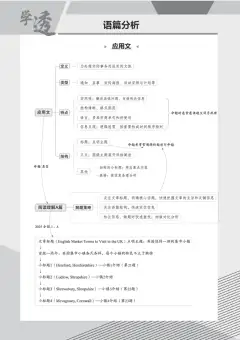
高考英语文化传承与交流语篇分析
文化传承与交流类主题的核心是“认知文化价值—坚守文化根脉—促进跨文化互鉴—推动文化活化”,通过语篇理解、语言运用和创意表达,考查对“文化内涵、传承路径、交流智慧”的理解与语言转化能力。
(一)核心考查维度
Ø主题内核:聚焦“传统文化保护(非遗、习俗、语言)、文化创新发展、跨文化沟通、文明互鉴、文化自信构建”五大方向,语料选择和题目设计均紧扣“价值—传承—交流—发展”的核心导向,传递“尊重传统、开放包容”的价值理念。
Ø逻辑链条:隐含“文化价值呈现(历史、精神、时代价值)—传承现状(坚守与挑战)—交流实践(跨文化互动/传播)—发展成效(文化活化/互鉴共赢)”的闭环逻辑。
Ø语言重点:高频出现“heritage、inherit、preserve、promote、exchange、culture、civilization、traditional、innovate、mutual understanding”等核心词汇。
(二)题型融合解读
Ø语篇理解类(阅读、七选五、完形):语篇多以文化传承记叙文(如非遗传承故事)、跨文化交流议论文、传统文化科普说明文为载体,题目设计围绕“文化的核心价值、传承的具体实践、交流的细节过程、创新的路径方法”展开。解题时,需通过情感词汇捕捉文化认同,通过逻辑词锁定段落衔接逻辑,通过细节描写把握核心事件。
Ø语言运用类(短文填空、书面表达):短文填空侧重考查文化类固定搭配和语法结构;书面表达常见“文化介绍类(向外国友人介绍中国传统节日、非遗技艺)、建议倡议类(为传统文化传承或跨文化交流提建议、发起践行号召)、经历感悟类(分享跨文化交流经历或传承传统文化的实践与感悟)、观点论述类(阐述文化自信、文明互鉴的重要性)”中。
Ø创造性表达类(读后续写):承接前文的“文化传承/交流伏笔”,续写情节需符合“正视挑战—主动行动—突破阻碍—文化焕新/互鉴成功”的逻辑,通过场景、动作、对话描写凸显实践过程,结尾呼应“文化传承与交流的时代价值”。
(三)核心应对原则
Ø抓准“价值—传承—交流”核心链:理解语篇时,快速定位“文化的核心价值”“传承的关键路径”“交流的有效方法”;组织表达时,以“价值”铺垫认知,以“传承”筑牢根基,以“交流”拓展边界。
Ø强化“主题语料”与“逻辑衔接”双储备:积累文化相关的词汇、句型和典型案例(如剪纸、京剧等非遗项目,中外文化交流活动,文化创新案例);善用逻辑词,让语篇衔接更顺畅、内容更有条理。
Ø贴合“文化自信与包容”的价值导向:需传递“坚守文化根脉、尊重多元文明、主动双向交流”的理念。
一、阅读理解
A
On the surface, Vienna Cammarota is a simple grandmother in her Italian hometown, but initial impressions can be misleading. The mother of three in her 70s is a well-known hiker, who fearlessly explores what the world has to offer.
Beginning in Venice on April 26, 2022, Cammarota arrived in China last month, the last stop of her journey to the East, hiking more than 20,000 kilometers. The moment she set foot in China on August 29, she was warmly greeted by people who presented her with a wreath, symbolizing friendship and blessings, and put on traditional dance and singing performances for her arrival via Irkeshtam, the country’s farthest-west land port in the Xinjiang Uygur autonomous region.
Starting from Kashgar, Cammarota will embark on a 15-month cultural journey across China and explore over 30 cities in 17 provinces and autonomous regions, including Gansu, Shaanxi, Fujian and Guangdong Provinces, and Beijing. Her journey will end in Beijing to mark the 750th anniversary of Marco Polo’s arrival in China.
She began studying The Travels of Marco Polo in 2000 and planned to retrace Marco Polo’s route along the Silk Road. Her goal is to experience the profound cultural heritage of Chinese civilization, witness the development and achievements of modern China, and call for global harmony and inclusiveness by bringing into modern view the Silk Road history and spirit to boost dialogue and understanding between the East and the West.
Li Jinsheng, chairman of China Arts and Entertainment Group, expressed his gratitude to Cammarota for her admiration and goodwill toward Marco Polo, the Silk Road and China, as well as her strength to overcome numerous challenges to retrace the Silk Road.
Li hopes that through her experiences, the historical charm of the Silk Road and the openness and inclusiveness of China can be displayed, showcasing the beautiful vision of common development among Belt and Road countries.
1.What does Cammarota’s reception in China suggest about local attitudes towards cultural exchange?
A.They are indifferent to foreign visitors.
B.They prefer to keep their culture isolated.
C.They are primarily focused on tourism income.
D.They value friendship and cultural connections.
2.What is the main purpose of Vienna Cammarota’s journey across China?
A.To experience Chinese cultural heritage and promote East-West dialogue.
B.To celebrate Marco Polo’s 750th anniversary.
C.To visit as many cities in China as possible.
D.To complete a 20,000-kilometer hike for personal achievement.
3.How might Cammarota’s journey impact her understanding of the Silk Road?
A.She will likely find it less significant than she expected.
B.She might realize that the Silk Road is no longer relevant today.
C.She will only focus on modern cities, ignoring historical sites.
D.She may discover new connections between cultures along the route.
4.What can be inferred about Li Jinsheng’s viewpoint on Cammarota’s journey?
A.He believes it is just a personal adventure without broader significance.
B.He sees it as an opportunity to promote international understanding and cooperation.
C.He doubts the impact of her journey on cultural exchange.
D.He feels that her journey will primarily benefit the tourism industry.
B
It's a race against time, as generations of cultural heritage conservators (文物修复员) at the Dunhuang Academy make a great effort to protect the artistic charm of the Mogao Caves, a UNESCO World Heritage Site, despite erosion (侵蚀) by sand and wind.
The team is dedicated to protecting the 45,000 square metres of murals (壁画) and more than 2,400 painted sculptures of the 735 caves of the site, the construction of which spans about a thousand years, from the 4th century to the 14th century. The cultural relics are the product of the cultural exchanges that took place over centuries on the ancient Silk Road.“Our work, repairing murals and painted sculptures, is to better preserve the caves, which promotes the great Dunhuang spirit of inclusiveness to the world and inspires modern people,” says Su Bomin, director of the Dunhuang Academy.
Commonly seen“diseases”affecting the murals include cracking and flaking (剥落), as well as erosion that is caused by changes in temperature and humidity (湿度) of the caves, and the deposition of salts. To restore a mural requires an all- rounder. Restorers should know painting, master the skills of a mason and have some knowledge of chemistry and physics, to be able to recognize the problems and their corresponding causes and deliver a solution. They must also select proper materials and tools, and conduct experiments, before formally carrying out the restoration and evaluating the effect afterwards.
The restoration should respect the original work and aim to maintain the status quo of the murals rather than repainting them. When the restorers find some parts of murals missing or fading away, they never repaint them to create a“ perfect” appearance in restoration.“Cultural relics are witnesses to history,”explains Su.“When you pursue the so-called intact (完好无损的) look for artistic reasons, you will lose their key meaning.”
Cave conservation is about continuously solving problems.“It needs long- term research to better preserve the caves, over a much wider time span that goes beyond our lifetimes,” Su says. But at least, they can keep the existing look of the murals for as long as possible.
5. What is the main purpose of Paragraph 2?
A. To show the popularity of Dunhuang murals.
B. To explain the history of the ancient Silk Road.
C. To stress the significance of the restoration work.
D. To present the ways of protecting cultural heritage.
6. Which of the following best describes the restoration work?
A. Creative. B. Well- paid. C. Interesting. D. Demandi ng.
7. What should restoring murals focus on according to Paragraph 4?
A. Spotting the faded murals in time.
B. Fixing the missing parts of murals.
C. Making preservation of the murals as they are.
D. Repainting to perfect the appearance of murals.
8. What can be a suitable title for the text?
A. The Artistic Charm of Mural Paintings
B. The Mural Restoration in the Mogao Caves
C. The Successful Experiment on Cave Conservation
D. The Role of the Dunhuang Spirit in Chinese Culture
二、七选五
While the term cultural heritage is used to refer to both physical and intangible qualities, it is not limited to physical objects. It can also refer to beliefs, traditions, language, and food. These are often passed down from generation to generation.①_______ The preservation of these cultural treasures can help promote global understanding and mutual respect.
②_______Determining what constitutes(构成) “cultural heritage”is often a challenging and contentious task, and advocates of cultural preservation and integrity are often accused of making false assumption(假设)about the cultures they study.
It is important to recognize that cultural heritage is not limited to physical objects and monuments. It also includes living expressions of culture inherited from our ancestors. Intangible cultural heritage refers to knowledge and practices related to the environment and traditional crafts. ③_______ It is essential to protect these valuable assets for their protection and appreciation.
④_______ It is essential to preserve these objects in order to preserve their significance. And it is necessary to protect the intangible cultural heritage, because it is often overlooked. These works of art have symbolic and aesthetic(美学的) value and are valuable to the people of the country. Some of them are even more significant than the physical objects.
As cultural heritage is a part of a culture, it can be protected. However, if someone is trying to patent a design, you have to ensure that you do not copy it. ⑤_______Whether they’re paintings, sculptures, or food, they’re worth protecting. Fortunately, it’s important to protect and conserve our cultural heritage. It’s the legacy of the culture and the way it was once lived.
A.They are a source of pride and identity for a society.
B.Cultural heritage includes the inheritance of a culture.
C.These can be valuable as a tool for future generation.
D.Cultural heritage is a vital part of any society.
E.It is an important part of international policy.
F.First, consider what cultural heritage is.
G.The same is true of cultural objects.
三、完形填空
I was raised in a village where people lived in harmony with the natural environment. Throughout the year we would have numerous 1 where all the villagers would 2 and celebrate. The entire village was like one big 3 .
However, within less than a decade my village was no longer the4village that I grew up in. Due to rapid modernization, everything5. The rich cultural traditions that once held the village together were6. Everyone in the village was 7in making money and had no time to participate in traditional celebrations. No one favored such a change, but they somehow8it as they felt that it was unavoidable.
It made me feel9that some ancient traditions had not existed, so I 10I had to do something. I 11the Cultural Heritage Studies Program, which enabled me to gain a better understanding of cultural heritage 12.
Then I involved myself in protecting cultural heritage sites in my hometown. With the knowledge I 13in the Cultural Heritage Studies Program, I was trying my best to help make the process of modernization run more 14for cultural heritage sites with heritage protection as a focus point.
I would say the success of the preservation work is the most 15aspect of my job.
1.A. competitionsB. festivalsC. challengesD. choices
2.A. volunteerB. travelC. returnD. gather
3.A. familyB. cityC. museumD. theater
4.A. realB. typicalC. sameD. independent
5.A. matteredB. changedC. improvedD. continued
6.A. growingB. spreadingC. disappearingD. working
7.A. fortunateB. successfulC. expertD. occupied
8.A. acceptedB. enjoyedC. believedD. noticed
9.A. confidentB. excitedC. guiltyD. bad
10.A. pretendedB. resolvedC. forgotD. doubted
11.A. looked back onB. got rid of
C. signed up forD. put up with
12.A. donationB. educationC. preservationD. observation
13.A. acquiredB. appliedC. offeredD. showed
14.A. privatelyB. smoothlyC. rapidlyD. normally
15.A. interestingB. boringC. demandingD. rewarding
四、短文填空
“My China Album,”a book celebrating the profound people-to-people bonds between the US and China, is set ①_________ release in June. The book’s message about the importance of personal connections in international relations ②_________ (receive) wide recognition in both countries.
Originating from a project ③_________ (initiate) in 2018, the book compiles stories of friendship and understanding from Americans ④_________ experiences in China span decades. These narratives, drawn from long-term residents, scholars, and ⑤_________ (profession), provide unique insights into cross-cultural exchange.
⑥_________ (cover) over 200 pages, the volume is divided into five sections that trace the evolution of US-China ⑦_________ (engage) since diplomatic relations began in 1979. The forty-one stories featured, each ⑧_________ (present) a distinctive perspective, collectively paint a rich picture of mutual understanding.
As the sixth ⑨_________ (edit) in an ongoing series, this volume focuses on “My China Footprints”- Americans’personal experiences in China. It includes five short videos shared on social media platforms, offering glimpses into contemporary Chinese society and innovation.
Publisher Qu Yingpu stated that these stories not only promote international goodwill but also encourage reflection on ⑩ _________ we share a common past. More importantly, he emphasized, they inspire people to imagine a future where cultural exchanges continue deepening understanding between nations. The book represents a significant contribution to building mutual understanding through personal stories.
五、书面表达
随着全民文化自信的增强,文化遗产旅游受热捧。请你针对这一现象用英语写一篇短文向学校英语报投稿,内容包括:
1.你的看法;
2.说明理由。
注意:
1.写作词数应为80个左右;
2.请按如下格式在答题卡的相应位置作答。
The Rise of Cultural Heritage Tourism
____________________________________________________________________________________________________________________________________________________________________________________________________________________________________________________________________________________________________________________________________
六、读后续写
When I landed in a small town in New Zealand as an exchange student, I thought I was ready for everything — new faces, language barriers, strange social patterns and even homesickness. Still, the smallest things made me feel out of place.
Luckily, the Wilsons, my host family, did everything they could to help me settle in — driving me around, sharing meals, and even letting me use their kitchen when. Imissed Chinese food. With their warmth and support, everything seemed to fall into place.
But at school, small moments felt bigger than I’d imagined. In our first literature class, we discussed a Hemingway story. Everyone jumped in actively, while I struggled to speak up. My desk-mate encouraged me, “Next time, just speak up.”I nodded, forcing a bitter smile.
And just like that, I found myself in another cultural trap, Mrs. Wilson’s birthday dinner. At the table, I answered politely but kept mostly to myself. Mrs. Wilson noticed my silence and gently asked, “You alright, sweet girl? You’re so quiet tonight.”My face reddened. Was my silence seen as cold, rather than polite?
That night, restless and wide awake, I wondered if I needed to laugh louder, speak faster; or hide parts of myself just to feel I belonged. Questions flooded my mind, none with answers.
A few days later, our teacher announced there would be a Culture Festival next week. “You’ll prepare a stand to share your own culture — food, crafts, customs ... anything meaningful. You can not only display your culture but also make it interactive, allowing people to try new things, learn traditional skills. or share stories and cultural symbols,”she said. The class lit up with excitement. I sat frozen, mind racing: how could I share my traditions in English? The thought made my stomach twisted (扭曲). Yet, I gathered myself with a deep breath and signed up. After that, I threw myself wholeheartedly into preparations, until the day finally came.
注意:
1.续写词数应为150个左右;
2.请按如下格式在相应位置作答。
At the Culture Festival, I stood behind my stand, nervous but ready.
_____________________________________________________________________________________________________________________________________________________________________________________________________________________________________________________________________________________________________________________________________________________________________________________________________________________
From that day on, my world here started to change.
_____________________________________________________________________________________________________________________________________________________________________________________________________________________________________________________________________________________________________________________________________________________________________________________________________________________
答案以及解析
一、阅读理解
1.答案:D
解析:推理判断题。根据第二段中“The moment she set foot in China on August 29, she was warmly greeted by people who presented her with a wreath, symbolizing friendship and blessings, and put on traditional dance and singing performances for her arrival via Irkeshtam, the country’s farthest-west land port in the Xinjiang Uygur autonomous region. (8月29日,在她踏上中国的那一刻,她受到了人们的热烈欢迎,他们向她献上象征友谊和祝福的花环,并在她通过新疆维吾尔自治区最西部的陆路口岸伊尔克什坦抵达中国时,进行了传统的歌舞表演。)”可推知,卡马罗塔受到热烈欢迎,包括献花环和传统表演,表明了当地对文化交流的积极态度和促进友谊的愿望。故选D项。
2.答案:A
解析:细节理解题。根据第四段中“Her goal is to experience the profound cultural heritage of Chinese civilization, witness the development and achievements of modern China, and call for global harmony and inclusiveness by bringing into modern view the Silk Road history and spirit to boost dialogue and understanding between the East and the West.(她的目标是体验中华文明的深厚文化遗产,见证现代中国的发展和成就,通过现代视角审视丝绸之路的历史和精神,促进东西方的对话和理解,呼吁世界和谐与包容。)”可知,维也纳·卡马罗塔此次中国之行的主要目的是探索中国文化遗产,促进东西方对话。故选A项。
3.答案:D
解析:推理判断题。根据第三段中“Starting from Kashgar, Cammarota will embark on a 15-month cultural journey across China and explore over 30 cities in 17 provinces and autonomous regions, including Gansu, Shaanxi, Fujian and Guangdong Provinces, and Beijing. (从喀什出发,卡马罗塔将开始为期15个月的中国文化之旅,并探索17个省和自治区的30多个城市,包括甘肃、陕西、福建、广东以及北京。)”以及第四段“She began studying The Travels of Marco Polo in 2000 and planned to retrace Marco Polo’s route along the Silk Road. Her goal is to experience the profound cultural heritage of Chinese civilization, witness the development and achievements of modern China, and call for global harmony and inclusiveness by bringing into modern view the Silk Road history and spirit to boost dialogue and understanding between the East and the West. (2000年,她开始研究《马可·波罗游记》,并计划沿着丝绸之路重走马可·波罗的路线。她的目标是体验中华文明的深厚文化遗产,见证现代中国的发展和成就,通过现代视角审视丝绸之路的历史和精神,促进东西方的对话和理解,呼吁世界和谐与包容。)”可推知,在旅途中,卡马罗塔可能会遇到不同的文化和历史,加深她对丝绸之路重要性的理解。故选D项。
4.答案:B
解析:推理判断题。根据倒数第二段“Li Jinsheng, chairman of China Arts and Entertainment Group, expressed his gratitude to Cammarota for her admiration and goodwill toward Marco Polo, the Silk Road and China, as well as her strength to overcome numerous challenges to retrace the Silk Road. (中国文化娱乐集团董事长李金生对卡马罗塔表示感谢,感谢她对马可·波罗、丝绸之路和中国的钦佩和善意,以及她克服无数挑战,重新走回丝绸之路的力量。)”以及最后一段" Li hopes that through her experiences, the historical charm of the Silk Road and the openness and inclusiveness of China can be displayed, showcasing the beautiful vision of common development among Belt and Road countries. (李金生希望通过她的经历,展示丝绸之路的历史魅力和中国的开放包容,展示“一带一路”国家共同发展的美好愿景。)”可推知,李金生高度评价了卡马罗塔的旅程,认为这是一个促进国际理解与合作的机会。故选B项。
5.答案:C
解析:推理判断题。根据第二段中的Our work, repairing murals and painted sculptures, is to better preserve the caves, which promotes the great Dunhuang spirit of inclusiveness to the world and inspires modern people...可知,修复壁画和彩塑是为了更好地保护洞窟,它向世界展示了伟大的敦煌精神,并激励了现代人。由此可知,本段主要强调修复工作的重要性。故选C项。
6.答案:D
解析:推理判断题。根据第三段中的To restore a mural requires an all-rounder. Restorers should know painting, master the skills of a mason and have some knowledge of chemistry and physics, to be able to recognize the problems and their corresponding causes and deliver a solution. They must also select proper materials and tools, and conduct experiments, before formally carrying out the restoration and evaluating the effect afterwards.可知,修复工作对修复人员的要求是非常高的。故选D项。
7.答案:C
解析:细节理解题。根据第四段中的The restoration should respect the original work and aim to maintain the status quo of the murals rather than repainting them.可知,修复工作应注重保护壁画的原貌。故选C项。
8.答案:B
解析:主旨大意题。根据文章第一段及后文对壁画修复工作的目的、要求等的介绍可知,文章主要介绍了莫高窟壁画的修复工作。因此,B项(莫高窟壁画修复工作)适合作为文章的标题。故选B项。
二、七选五
答案:AFCDG
解析:①根据下文“The preservation of these cultural treasures can help promote global understanding and mutual respect.(保护这些文化瑰宝有助于促进全球理解和相互尊重。)”可知此处上下文讲的是这些文化瑰宝的重要性,与A项“They are a source of pride and identity for a society (他们是一个社会自豪感和身份认同感的源泉)”表达的含义一致,故选A项。
②根据下文“Determining what constitutes(构成) ‘cultural heritage’is often a challenging and contentious task(确定什么是“文化遗产”往往是一项具有挑战性和争议性的任务)”可知本段开始涉及“什么是文化遗产”这一话题,与F项“First, consider what cultural heritage is(首先,考虑什么是文化遗产)”表达的含义一致,故选F项。
③根据下文“It is essential to protect these valuable assets for their protection and appreciation.(保护这些宝贵的资产以保护它们并使其升值是至关重要的。)”可推理出上文讲的是为什么保护这些宝贵的资产是至关重要的,分析四个选项,C项“These can be valuable as a tool for future generation(作为下一代的工具,这些是很宝贵的)”表达的含义符合语境,故选C项。
④根据下文“It is essential to preserve these objects in order to preserve their significance.(保护这些物品以保持其重要性是至关重要的)”可推理出上文讲的是为什么要保护文化遗产,与D项“Cultural heritage is a vital part of any society(文化遗产是任何社会的重要组成部分)”表达的含义一致,故选D项。
⑤根据上文“As cultural heritage is a part of a culture, it can be protected(由于文化遗产是文化的一部分,因此要加以保护)”以及下文“Whether they’re paintings, sculptures, or food, they’re worth protecting(无论是绘画、雕塑还是食物,它们都值得保护)”可推理出空白处说的是文物作为文化遗产的一部分也需要像文化遗产那样加以保护,与G项“The same is true of cultural objects(文物也是这样的)”表达的含义一致,故选G项。
三、完形填空
1.答案:B
解析:考查名词词义辨析。句意:在一年中,我们会有许多节日,所有的村民都会聚集在一起庆祝。A. competitions比赛;B. festivals节日;C. challenges挑战;D. choices选择。根据下文的“celebrate”可知,此处指有很多节日,故选B。
2.答案:D
解析:考查动词词义辨析。句意同上。A. volunteer自愿做;B. travel旅行;C. return返回;D. gather聚集。结合下文“The rich cultural traditions that once held the village together...(曾经使这个村庄团结在一起的丰富的文化传统……)”可知,整个村子聚集团结在一起庆祝节日,故选D。
3.答案:A
解析:考查名词词义辨析。句意:整个村子就像一个大家庭。A. family家庭;B. city城市;C. museum博物馆;D. theater剧院。结合语境可知,整个村子聚在一起,就像一个大家庭,故选A。
4.答案:C
解析:考查形容词词义辨析。句意:然而,在不到十年的时间里,我的村庄不再是我长大的那个村庄了。A. real真实的;B. typical典型的;C. same相同的;D. independent独立的。根据下文提到村庄发生的变化可知,现在的村庄和以前作者长大的那个村庄不一样了,故选C。
5.答案:B
解析:考查动词词义辨析。句意:由于快速的现代化,一切都变了。A. mattered要紧,有关系;B. changed改变;C. improved提高,改善;D. continued继续。根据下文“No one favored such a change”可知,村庄发生了变化,故选B。
6.答案:C
解析:考查动词词义辨析。句意:曾经使这个村庄团结在一起的丰富的文化传统正在消失。A. growing成长;B. spreading传播;C. disappearing消失;D. working工作,起作用。结合语境及下一段中“some ancient traditions had stopped to exist”可知,一些文化传统正在消失,故选C。
7.答案:D
解析:考查形容词词义辨析。句意:村里的每个人都忙于赚钱,没有时间参加传统的庆祝活动。A. fortunate幸运的;B. successful成功的;C. expert专家的,内行的;D. occupied忙于。根据“had no time to participate in traditional celebrations”可知,每个人都忙于赚钱,没有时间参加传统的庆祝活动,故选D。
8.答案:A
解析:考查动词词义辨析。句意:没有人赞成这样的改变,但是大家在某种程度上都接受了,因为他们觉得这是不可避免的。A. accepted接受;B. enjoyed喜欢,享受;C. believed相信;D. noticed注意到。根据“as they felt that it was unavoidable”可知,因为无法避免,所以大家在某种程度上接受了村庄发生的变化,故选A。
9.答案:D
解析:考查形容词词义辨析。句意:一些古老的传统已经不复存在,这让我感到很遗憾,所以我决定我必须做点什么。A. confident自信的;B. excited兴奋的;C. guilty内疚的;D. bad坏的,感到遗憾。根据下一段中“Then I involved myself in protecting cultural heritage sites in my hometown.(然后我参与了保护家乡的文化遗产)”可知,作者要保护家乡的遗产,故对于古老的传统不复存在应是感到遗憾,故选D。
10.答案:B
解析:考查动词词义辨析。句意同上。A. pretended假装;B. resolved决心,决定;C. forgot忘记;D. doubted怀疑。下文“I _____ the Cultural Heritage Studies Program”和“Then I involved myself in protecting cultural heritage sites in my hometown.(然后我参与了保护家乡的文化遗产)”提到作者以实际行动保护家乡遗产,故此处指决定要做点什么,故选B。
11.答案:C
解析:考查动词短语辨析。句意:我报名参加了文化遗产研究项目,这让我对文化遗产保护有了更好的了解。A. looked back on回顾;B. got rid of摆脱;C. signed up for报名参加;D. put up with忍受。下文“which enabled me to gain a better understanding”提到作者的收获,故此处指作者报名参加了该项目,故选C。
12.答案:C
解析:考查名词词义辨析。句意同上。A. donation捐赠;B. education教育;C. preservation保护,保存;D. observation观察。根据下一段中“protecting cultural heritage sites”以及最后一段中“preservation work”可知,此处指文化遗产保护,故选C。
13.答案:A
解析:考查动词词义辨析。句意:利用我在文化遗产研究项目中所学到的知识,我正在尽我所能帮助以遗产保护为重点的文化遗产的现代化进程更加顺利地进行。A. acquired获得;B. applied申请;C. offered提供;D. showed展示,表明。根据上文“the Cultural Heritage Studies Program, which enabled me to gain a better understanding of cultural heritage ______.”可知,文化遗产研究项目使作者对于遗产保护有了更好的了解,故此处指在该项目中获得的知识,故选A。
14.答案:B
解析:考查副词词义辨析。句意同上。A. privately私人地;B. smoothly顺利地;C. rapidly快速地;D. normally正常地。根据“With the knowledge”以及语境可知,有了专业知识的帮助,应是使文化遗产的现代化进程更加顺利地进行,故选B。
15.答案:D
解析:考查形容词词义辨析。句意:我想说,保护工作的成功是我工作中最有价值的方面。A. interesting有趣的;B. boring令人厌烦的;C. demanding要求高的;D. rewarding有益的,值得做的。上文提到作者为保护家乡遗产作出的努力,结合“the success of the preservation work”可知,保护工作获得成功,作者应是觉得非常值得,故选D。
四、短文填空
答案:①for②has received③initiated④whose⑤professionals⑥Covering⑦engagement⑧presenting⑨edition⑩how
解析:①考查介词。句意:《我的中国纪念册》是一本歌颂中美两国深厚民间纽带的书籍,预定于6月发行。be set for release是固定搭配,表示“预定发行”。故填for。
②考查谓语动词。句意:该书所传递的国际关系中个人联结至关重要这一理念,已在两国获得广泛认可。根据下文wide recognition in both countries可知,此处需用现在完成时表示对现在造成的结果或影响,且主语的中心词message是不可数名词,谓语用单数形式。故填has received。
③考查非谓语动词。句意:这本书源于2018年发起的一个项目,汇集了在华经历跨越数十年的美国人的友谊与理解故事。本句已有谓语动词complies,空格处用非谓语形式,名词project和动词initiate是被动关系,所以用过去分词作后置定语。故填initiated。
④考查连词。句意:这本书源于2018年发起的一个项目,汇集了在华经历跨越数十年的美国人的友谊与理解故事。此处考查定语从句引导词,先行词是Americans,与从句“experiences in China span decades”中的experiences构成所属关系,所以用关系代词whose作定语。故填whose。
⑤考查名词。句意:这些叙事来自长期在华居民、学者与专业人士,为跨文化交流提供了独特的见解。professional表示“专业人士”,与residents,students并列作介词from的宾语,且该词是可数名词,所以填复数形式。故填professionals。
⑥考查非谓语动词。句意:全书篇幅超200页,分为五个部分,追溯了自1979年建交以来中美交往的演变历程。本句中已有谓语动词is divided,空格处填非谓语动词,主句主语the volume与cover是主动关系,所以用现在分词作状语,且位于句首首字母要大写。故填Covering。
⑦考查名词。句意:全书篇幅超200页,分为五个部分,追溯了自1979年建交以来美中交往的演变历程。设空前US-China是复合形容词,修饰名词,engagement表示“交往”,是不可数名词。故填engagement。
⑧考查非谓语动词。句意:书中收录的41个故事各有独特视角,共同勾勒出一幅丰富的相互理解的图景。本句已有谓语动词paint,空格处需用非谓语动词,代词each与动词present是主动关系,所以填现在分词,构成“代词+现在分词短语”的独立主格结构。故填presenting。
⑨考查名词。句意:作为持续更新的该系列丛书的第六版,本卷聚焦“我的中国足迹”——美国人在华的个人经历。根据空格前the sixth可知,此处需填名词,表示“第六个版本”,作介词as的宾语。故填edition。
⑩考查连接副词。句意:出版商曲英璞表示,这些故事不仅增进了国际友好,还促使人们反思我们如何共享共同的过往。此处考查介词on后的宾语从句,从句“we share a common past”中不缺成分,缺少含义,表示“如何”。故填how。
五、书面表达
The Rise of Cultural Heritage Tourism
With increasing cultural confidence, cultural heritage tourism has become highly popular, and I believe this is a positive trend.
Firstly, it helps us connect with our history and traditions, fostering pride and identity. Visiting historical sites and museums allows us to learn about our ancestors’achievements and lifestyles. Secondly, it promotes cultural preservation. Profits from tourism can be used to maintain and restore historical sites, protecting them for future generations. Lastly, it boosts the local economy by creating jobs and supporting local businesses.
In conclusion, the popularity of cultural heritage tourism reflects a growing appreciation for our cultural roots and contributes to both cultural preservation and economic growth.
六、读后续写
At the Culture Festival, I stood behind my stand, nervous but ready.Taking a deep breath, I once again neatly arranged all the well-prepared items: red paper and scissors. Soon, students and teachers gathered, curiosity in their eyes. I welcomed them with a smile and demonstrated: fold, cut, unfold — and a butterfly spread its wings. A wave of surprise rippled through the crowd. Encouraged, I invited a boy to try; his star turned out uneven, yet drew laughter and applause. More joined eagerly, and I moved among them, guiding their hands, praising their efforts and celebrating each creation. When a teacher proudly held up her paper flower, the cheers grew louder. Red pieces fell to the floor, and my confidence, once hidden, shone through every new pattern.
From that day on, my world here started to change.In the hallway, students waved butterflies from my stand and greeted me with bright “Ni hao!”My heart lifted as I waved back. In literature class, I gave voice to my ideas with newfound confidence. My English was not flawless, yet my voice was steady, and instead of silence I saw nods and smiles. After class, a girl asked softly, “Can you show us more about your culture?”Her words lingered in my heart, echoing like a gentle reminder. In that echo, I realized I had not only broken free from cultural shock but also found my place in a shared story — one written by many voices, yet open enough to hold my own.
相关文档
- 专题07文化篇——文化传承与文化创新(讲义)(解析版)
- 专题07文化篇——文化传承与文化创新(讲义)(解析版)
- 笔杆子9月精读 0916 标注绿 传承优秀文化促进交流合作
- 笔杆子9月精读 0916 标注白 传承优秀文化促进交流合作
- 专题07文化篇——文化传承与文化创新(讲义)(原卷版)
- 专题07文化篇——文化传承与文化创新(讲义)(原卷版)
- 专题07文化篇——文化传承与文化创新(分层练)(解析版)
- 专题07文化篇——文化传承与文化创新(分层练)(解析版)
- 第六单元文化的传承与保护(知识清单)-(选择性必修3:文化交流与传播)
- 初中SSP中国文化英语阅读语篇精选进阶版
- 初中SSP中国文化英语阅读语篇精选 基础版
- 专题07文化篇——文化传承与文化创新(分层练)(原卷版)
- 专题07文化篇——文化传承与文化创新(分层练)(原卷版)
- 笔杆子每日晨读9月0916思维导图:传承优秀文化促进交流合作
- 高中政治专题07文化篇——文化传承与文化创新讲义解析版
- 2027届高考语文最新作文素材分析记背:文化传承
- 2027届高考语文最新作文素材分析记背:文化传承
- 2026高考英语全国一卷、二卷部分语篇分析及题源
- 高中政治专题07文化篇——文化传承与文化创新分层练解析版
- 笔杆子每日晨读9月精读:传承优秀文化促进交流合作(0916·未标注绿)
- 笔杆子每日晨读9月精读:传承优秀文化促进交流合作(0916·未标注白)
- 第六单元文化的传承与保护(单元测试卷)(选择性必修3:文化交流与传播)
- 2024高考英语一轮复习课件热点语篇训练餐桌礼仪文化差异语法填空含2篇原创
- 新教材选择性必修3文化交流与传播第六单元文化的传承与保护知识纲要2022新版教材知识点
- 初中SSP中国文化英语阅读语篇精选基础版参考答案
- 2022届高考历史一轮复习第十六单元第52课文化的传承与保护教案
- 2022届高考历史一轮复习第十六单元第52课文化的传承与保护作业
- 第六单元文化的传承与保护(选择题专练50题)(选择性必修3:文化交流与传播)
- 2026届高考英语二轮复习专项语篇填空突破(语篇填空2)
- 2024高考英语一轮复习热点语篇训练 餐桌礼仪、筷子、消音叉子、文化冲击 语法填空 含2篇原创
- 2026年高考英语二轮复习读后续写主题·语篇·策略进阶强化 主题15高尚品质与理解传承 学生版
- 高频考点解密2024高考政治二轮复习专题07文化篇文化传承与文化创新讲义解析版新高考专用
- 初中SSP中国文化英语阅读语篇精选(SSP1)进阶版参考答案
- 高频考点解密2024高考政治二轮复习专题07文化篇文化传承与文化创新分层练原卷版
- 高频考点解密2024高考政治二轮复习专题07文化篇文化传承与文化创新讲义原卷版新高考专用
- 2026届高考英语二轮复习专项语篇填空突破 语篇填空打卡13~14天
- 2025高考历史大一轮复习通史版板块二第十单元训练33近代中国的文化传承交流与传播
- 2026年高考英语二轮复习读后续写主题·语篇·策略进阶强化主题15高尚品质与理解传承教师版
- 主题八 文化与文化交流
- 2026届高考英语二轮复习专项语篇填空专项突破:语篇填空打卡1~2天
- 高频考点解密2024高考政治二轮复习专题07文化篇文化传承与文化创新分层练解析版教师版
- 2024年高考政治二轮复习高频考点追踪与预测专题07文化篇文化传承与文化创新讲义解析版(新高考专用)
- 2026年高三统编版选必修历史一轮复习专项训练(G404):第33课近现代中国的文化交流与文化传承专项训练
- 2026版5·3B版新高考版高考总复习英语教师版题型册语篇分析专题资料包
- 2024年高考政治二轮复习高频考点追踪与预测 专题07文化篇文化传承与文化创新 分层练 解析版 新高考专用
- 2024年高考政治二轮复习高频考点追踪与预测(新高考专用)专题07文化篇——文化传承与文化创新讲义(原卷版)
- 2024年高考政治二轮复习高频考点追踪与预测(新高考专用)专题07文化篇——文化传承与文化创新分层练(解析版)
- 2026年高三统编版选必修历史一轮复习专项训练第33课近现代中国文化交流与文化传承
- 2024年高考政治二轮复习高频考点追踪与预测(新高考专用)分层练:专题07文化篇——文化传承与文化创新(原卷版)
- 8.2文化交流与文化交融