资讯 / 正文
中考英语高频句型100句整理:按类型分组,语法考点+作文加分一次打包
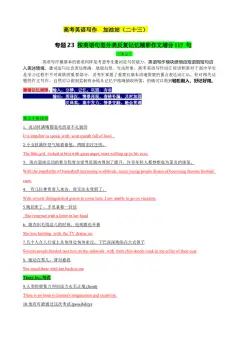
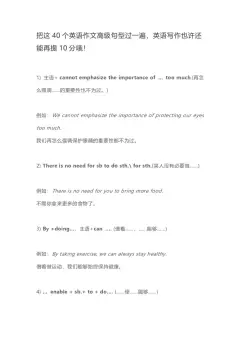
中考英语高频句型100句整理:按类型分组,语法考点+作文加分一次打包中考英语想把语法学扎实、作文想稳住基本盘,其实不用抱着厚厚的资料死背——把高频句型一个个吃透,阅读里能认出来,语法填空能判断对,作文里还能直接套用,一举三得。这篇按 5 大类型把 100 个高频句型排好队,每句都配了中文译文和括号里的语法标注,方便对照着背。 一、主干加分句型(1–20) 写作里最好上手的 20 个句子骨架 | 20 句 01 Doing morning exercises keeps us healthy and energetic. 晨练让我们保持健康、充满活力。 (动名词作主语) 02 Our school is one of the most beautiful campuses in our city. 我们学校是全市最美丽的校园之一。 (one of + 最高级 + 复数名词) 03 More than one answer to the question is acceptable. 这道题不止一个答案可以接受。 (more than one + 单数名词) 04 We enjoyed a weekend full of laughter. 我们度过了一个充满欢笑的周末。 (形容词短语作后置定语) 05 The children got home safe and sound. 孩子们平平安安回到了家。 (形容词短语作状语) 06 Our hometown is becoming more and more beautiful. 我们的家乡变得越来越美。 (比较级 + and + 比较级) 07 The good news made all of us excited. 这个好消息让我们所有人兴奋不已。 (make + 宾语 + 形容词) 08 We should read English aloud as often as possible. 我们应该尽可能经常大声朗读英语。 (as ... as possible) 09 The harder you work, the luckier you will feel. 你越努力,就会越幸运。 (the + 比较级,the + 比较级) 10 Nothing is more important than keeping a good habit. 没有什么比养成好习惯更重要。 (否定词 + 比较级表最高级) 11 My mother cooks us a big dinner every Sunday. 妈妈每周日给我们做一顿丰盛的晚餐。 (动词双宾语) 12 I find it easy to get along with my new classmates. 我发现和新同学相处很容易。 (find + it 形式宾语) 13 The teacher's words left me with great confidence. 老师的话让我充满信心。 (leave + 宾语 + 宾补) 14 The heavy snow kept us indoors all day. 大雪让我们一整天都待在室内。 (keep + 宾语 + 宾补) 15 Hard work made him a top student in our class. 努力使他成为班里的尖子生。 (make + 宾语 + 名词) 16 Sorry to have kept you waiting for so long. 抱歉让你久等了。 (keep + 宾语 + doing) 17 Please keep the classroom clean and tidy. 请保持教室干净整洁。 (keep + 宾语 + 形容词) 18 By the time we arrived, the film had already begun. 我们到的时候,电影已经开始了。 (过去完成时) 19 The ball hit the boy on the nose. 球砸在了男孩的鼻子上。 (动词 + sb. + 介词 + the + 身体部位) 20 I would rather walk to school than take a bus. 我宁愿走路上学也不坐公交。 (would rather ... than) 二、不定式句型(21–40) to do 的八种用法全在这里 | 20 句 21 It's necessary for us to learn from each other. 我们互相学习很有必要。 (it 作形式主语) 22 My dream is to become a doctor like my mother. 我的梦想是成为像妈妈一样的医生。 (不定式作表语) 23 Summer vacation is a good time to develop new hobbies. 暑假是培养新爱好的好时机。 (不定式作定语) 24 To catch the early bus, he got up at six. 为了赶上早班车,他六点就起床了。 (不定式作目的状语) 25 We were surprised to see the changes in our town. 看到小镇的变化我们很惊讶。 (不定式作原因状语) 26 I don't know what to say at the meeting. 我不知道在会上说什么。 (疑问词 + 不定式) 27 There is still much homework to do before Friday. 周五前还有很多作业要做。 (there be + 名词 + to do) 28 Mom asked me to look after my little sister. 妈妈让我照顾妹妹。 (ask + 宾语 + to do) 29 He seems to be interested in science fiction. 他似乎对科幻小说感兴趣。 (seem to do) 30 It's never too late to start doing exercise. 开始锻炼永远都不晚。 (too ... to 结构的否定活用) 31 Li Ming is always the first to arrive at school. 李明总是第一个到校。 (the first + 名词 + to do) 32 In order to improve my writing, I keep a diary in English. 为了提高写作水平,我坚持用英语写日记。 (in order to do) 33 He got up so early as to catch the first train. 他起得很早,赶上了第一班火车。 (so ... as to do) 34 I happened to pass by the bookshop and met my teacher. 我碰巧路过书店,遇到了老师。 (happen to do) 35 Running is a healthy way to deal with stress. 跑步是缓解压力的健康方式。 (way to do) 36 She is old enough to take care of herself. 她已经长大了,能照顾自己了。 (enough to do) 37 We had no choice but to wait for the next train. 我们别无选择,只能等下一班火车。 (have no choice but to do) 38 I can't wait to visit the science museum. 我迫不及待想参观科技馆。 (can't wait to do) 39 When it comes to cooking, Dad is the best in my family. 说到做饭,爸爸是家里最棒的。 (when it comes to) 40 It's up to you to decide which club to join. 参加哪个社团由你自己决定。 (it's up to sb. to do) 三、动名词与分词句型(41–60) 语法填空的常客,作文的亮点 | 20 句 41 Collecting stamps brings me a lot of fun. 集邮给我带来很多乐趣。 (动名词作主语) 42 His job is cleaning the streets every morning. 他的工作是每天清晨清扫街道。 (动名词作表语) 43 The boy running on the playground is my brother. 在操场上跑步的男孩是我哥哥。 (现在分词作定语) 44 She sat by the window, listening to her favorite song. 她坐在窗边,听着自己最喜欢的歌。 (现在分词作伴随状语) 45 Having failed the exam twice, he began to work harder. 两次考试失利之后,他开始更加努力。 (现在分词作原因状语) 46 The car stopped suddenly, causing a long line of traffic. 汽车突然停下,造成了长长的车流。 (现在分词作结果状语) 47 Crossing the street, we must pay attention to the lights. 过马路时我们必须注意信号灯。 (现在分词作时间状语) 48 I saw some volunteers picking up litter in the park. 我看见一些志愿者在公园里捡垃圾。 (see + 宾语 + doing) 49 I can't help smiling when I see that photo. 每当看到那张照片,我都忍不住笑。 (can't help doing) 50 I have difficulty remembering so many new words. 我很难记住这么多新单词。 (have difficulty doing) 51 On hearing the bell, the students rushed out of the classroom. 铃声一响,学生们冲出了教室。 (on / upon doing) 52 Once finished, the report must be handed in at once. 一旦完成,报告必须立刻上交。 (once + 过去分词) 53 The novel written by Mo Yan is well worth reading. 莫言写的这部小说很值得一读。 (过去分词作定语;be worth doing) 54 Given more practice, you will speak English better. 多加练习,你的英语口语会更好。 (过去分词作条件状语) 55 There is no point in worrying about things we can't change. 担心无法改变的事情毫无意义。 (there's no point in doing) 56 Being late for school again, he apologized to the teacher. 上学又一次迟到,他向老师道了歉。 (being + 形容词作原因状语) 57 Not knowing the answer, she kept silent. 不知道答案,她保持了沉默。 (现在分词的否定形式作状语) 58 Greatly moved by the film, we all decided to help the old man. 深受那部电影感动,我们都决定帮助那位老人。 (过去分词作原因状语) 59 He stood at the door, his eyes fixed on the notice board. 他站在门口,眼睛盯着布告栏。 (独立主格结构) 60 Having been told many times, Jack still forgets to clean his room. 被提醒了多次,杰克仍然忘记打扫房间。 (having been done) 四、并列句与三大从句(61–80) 从句是中考语法的半壁江山 | 20 句 61 I was doing my homework when the lights went out. 我正在写作业,突然灯灭了。 (be doing ... when) 62 Some students like team sports, while others prefer quiet activities. 有些学生喜欢团体运动,而另一些偏爱安静的活动。 (while 表对比) 63 Neither the teacher nor the students knew the truth. 老师和学生都不知道真相。 (neither ... nor) 64 You can either come with us or wait at home. 你要么跟我们来,要么在家等着。 (either ... or) 65 It is not talent but hard work that makes a winner. 成就赢家的不是天赋,而是努力。 (not ... but 结构) 66 Not only did we visit the museum, but we also learned a lot. 我们不仅参观了博物馆,还学到了很多。 (not only ... but also(倒装)) 67 We should keep trying rather than give up halfway. 我们应该坚持尝试,而不是半途而废。 (rather than) 68 I still remember the small town where I spent my childhood. 我仍然记得那个度过童年时光的小镇。 (where 引导定语从句) 69 This is the book that changed my way of thinking. 这就是那本改变我思维方式的书。 (that 引导定语从句) 70 The boy whose hobby is photography took these photos. 那个爱好摄影的男孩拍了这些照片。 (whose 引导定语从句) 71 Our class won the match, which made everyone proud. 我们班赢了这场比赛,这让每个人都很骄傲。 (which 引导非限制性定语从句) 72 As we all know, the Yellow River is the mother river of China. 众所周知,黄河是中国的母亲河。 (as 引导非限制性定语从句) 73 There is no doubt that our team will win the game. 毫无疑问,我们队会赢得比赛。 (there is no doubt that) 74 I have no idea when the train will arrive. 我不知道火车什么时候到。 (同位语从句) 75 That's why I love reading before bedtime. 这就是我喜欢睡前阅读的原因。 (this / that is why) 76 The reason why he was late is that he missed the bus. 他迟到的原因是错过了公交车。 (the reason why ... is that) 77 What makes our school special is its friendly atmosphere. 让我们学校与众不同的是它友好的氛围。 (what 引导主语从句) 78 It is clear that everyone can make a difference. 很明显,每个人都能带来改变。 (it 作形式主语 + that 从句) 79 I wonder whether it will rain tomorrow. 我想知道明天会不会下雨。 (wonder + whether) 80 Make sure that you bring your student card tomorrow. 明天务必带上你的学生证。 (make sure that) 五、状语从句与特殊句式(81–100) 让句子高级起来的收尾武器 | 20 句 81 It won't be long before we graduate from junior high. 不久之后我们就要初中毕业了。 (before 引导时间从句) 82 The first time I cooked a meal, I burnt the vegetables. 第一次做饭的时候,我把菜炒糊了。 (the first time 作连词) 83 I won't stop trying until I solve this problem. 解决这个问题之前,我不会停止尝试。 (not ... until) 84 The moment she saw her name on the list, she jumped with joy. 看到名单上自己名字的那一刻,她高兴得跳了起来。 (the moment 作连词) 85 Now that you have finished your homework, let's play badminton. 既然你写完了作业,我们来打羽毛球吧。 (now that 引导原因从句) 86 We set out early so that we could avoid the heavy traffic. 我们早早出发,以便避开拥堵的车流。 (so that 引导目的从句) 87 He was so careful that he made few mistakes in the exam. 他非常细心,考试中几乎没有出错。 (so ... that) 88 It was such an interesting book that I read it twice. 这本书太有趣了,我读了两遍。 (such ... that) 89 As long as you keep practicing, your spoken English will improve. 只要坚持练习,你的英语口语就会进步。 (as long as 引导条件从句) 90 You can't improve your writing unless you write often. 除非经常动笔,否则写作无法提高。 (unless 引导条件从句) 91 Although the task was hard, we finished it on time. 虽然任务艰巨,我们还是按时完成了。 (although 引导让步从句) 92 Even if we lose the game, we should keep our heads up. 即使输了比赛,我们也要抬起头来。 (even if 引导让步从句) 93 Whatever difficulties you meet, never say die. 无论遇到什么困难,都不要放弃。 (whatever 引导让步从句) 94 No matter how busy she is, Mom reads with me for half an hour. 无论多忙,妈妈都会陪我阅读半小时。 (no matter how) 95 It turned out that the answer was much simpler than we thought. 结果证明,答案比我们想的简单得多。 (it turned out that) 96 No wonder he got full marks in the English test. 难怪他英语考试得了满分。 (no wonder) 97 It was my English teacher who helped me find my interest. 正是我的英语老师帮我找到了兴趣所在。 (强调句型) 98 Only by working together can we finish the task on time. 只有齐心协力,我们才能按时完成任务。 (only + 状语引起的倒装) 99 Never should we stop learning new things. 我们永远不应该停止学习新事物。 (否定词置于句首的倒装) 100 Work hard, and your dream will come true. 努力奋斗,梦想终会实现。 (祈使句 + and) 怎么用才不浪费 1. 别按顺序死背。先扫一遍五组标题,哪组语法最弱先攻哪组——大部分考生是第三组(分词)和第五组(倒装、强调)最薄。
2. 背句子不是背单词。每句读到「脱口而出但不假思索」才算过关,读不顺就说明结构没吃透,回头看标注。
3. 作文里每篇用上 3–5 句就够了,用得准比用得多重要——阅卷老师看的是句子对不对、贴不贴题,不是堆了多少个从句。
建议用法:先把每句读顺,再看括号里的语法点回头理解句子结构;背熟之后,试着把句子里的主语和宾语换成自己的事,一句变十句。
2. 背句子不是背单词。每句读到「脱口而出但不假思索」才算过关,读不顺就说明结构没吃透,回头看标注。
3. 作文里每篇用上 3–5 句就够了,用得准比用得多重要——阅卷老师看的是句子对不对、贴不贴题,不是堆了多少个从句。
相关文档
- 八年级上册英语一至十单元短语语法句型及作文整理
- 专八写作开头句型及五类加分句专八作文备考
- 2024高考英语语法词汇专项·重点句型高频考点解读与巩固
- 高中英语100个加分句型6
- 英语四六级写作25个加分句型
- 英语四六级写作25个加分句型
- 加分宝初中英语语法
- 2024年高考英语语法词汇专项突破 第十四组重点句型高频考点解读与巩固练习(含答案)
- 2024高考英语语法词汇专项突破重点句型展示高频考点解读巩固练习含答案
- 2024高考英语语法词汇专项突破重点句型展示高频考点解读加巩固练习加答案
- 2024年高考英语语法词汇专项突破重点句型展示高频考点解读加巩固练习加答案
- 初中英语作文模板 加分宝
- 高考英语语法词汇专项突破:06重点句型展示高频考点解读+巩固练习+答案2024年
- 高考英语语法词汇专项突破:04重点句型展示高频考点解读+巩固练习+答案2024年
- 高考英语语法词汇专项突破:02重点句型展示高频考点解读+巩固练习+答案2024年
- 高考英语语法词汇专项突破:01重点句型展示高频考点解读+巩固练习+答案2024年
- 中考英语高频词汇整理
- 2024高考英语语法词汇专项突破05重点句型展示高频考点解读加巩固练习加答案
- 2024高考英语语法词汇专项突破03重点句型展示高频考点解读加巩固练习加答案
- 作文万能模板(作文加分+评分标准)
- 2023高考英语二轮复习高频语法状语从句并列句特殊句型与语法填空专题06解析版
- 2023高考英语二轮复习高频语法状语从句并列句特殊句型与语法填空专题06原卷版
- 小学作文加分素材 奥运乒乓热点人物
- 初中英语高频词汇精解(含词汇、语法、作文)
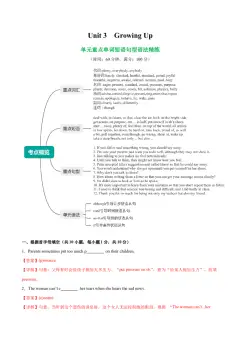
- 英语Unit3GrowingUp单词短语句型语法(教材考点精练)解析版
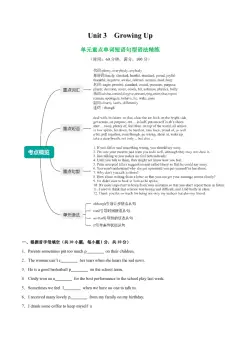
- 英语Unit3GrowingUp单词短语句型语法(教材考点精练)原卷版
- 高频考点136特殊的农业类型
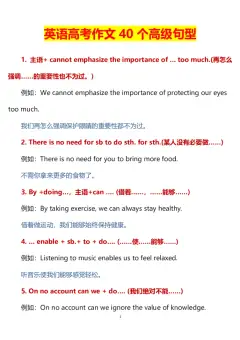
- 高考英语作文40个高级句型
- 初中英语重点短语语法句型复习大全(内蒙古中考赠品)
- 英语四级翻译解题技巧—作文万能加分句式
- 四选修地理高频考点整理
- 四选修地理高频考点整理
- 高中英语重点语法句型和例句
- 初中英语中考满分作文与词汇语法作文资料
- 2024高考英语语法词汇专项突破07高考热点句型考点设置解密3-1
- 加分宝初中物理考点清单
- 加分宝初中地理考点清单
- 2024届高考英语写作加油站专题23按英语句型分类反复记忆精彩作文增分117句讲义
- 高中英语40个英语作文高级句型
- 高考热点句型考点设置解密(3-3)·2024年高考英语语法词汇专项突破
- 高考热点句型考点设置解密(3-2)·2024年高考英语语法词汇专项突破
- 高考英语语法词汇专项突破:09高考热点句型考点设置解密(3-3)2024年
- 高考英语语法词汇专项突破:08高考热点句型考点设置解密(3-2)2024年
- 英语高分作文必备万能句型
- 英语六级作文常见句型归纳
- 英语六级作文常见句型归纳
- 初中加分宝语文考点清单
- 初中加分宝数学考点清单
- 加分宝初中历史考点清单
- 初中化学加分宝考点清单