资讯 / 正文
高考英语写作读后续写中如何将大动作拆分来增强文章的画面感?
高考英语写作读后续写中如何将大动作拆分来增强文章的画面感?在英语“读后续写”里,把“大动作”拆分,本质是把一个笼统动作写成按时间顺序展开的动作链:让读者像看慢镜头一样,看到人物“先做什么—再做什么—同时有什么反应—最后结果如何”。不是堆动词,而是有顺序、有重点、有细节、有情感。
一、拆分原则
1. 按时间顺序拆:先—然后—接着—最后。
2. 按身体部位拆:眼、手、脚、肩、呼吸、心跳。
3. 按因果链拆:因为看到/听到什么,所以做出什么反应。
4. 抓关键2—4个动作:不要把所有小动作都写,选最能表现紧张、害怕、决心、关爱的。
5. 动作+感官/心理/环境:不要只写“他跑”,可写“他咬紧牙,冲进雨里,泥水溅到裤脚”。
6. 长短句结合:动作链用短句推进,关键处用分词、with结构补充细节。
二、常用拆分方法
1. 时间切片法
把大动作切成几个时间点。
大动作:He rushed into the burning house.
拆分:He heard a cry. → He grabbed a wet towel. → He covered his mouth. → He bent low and dashed in.
示例:
Hearing a cry from the burning house, he grabbed a wet towel, covered his mouth and dashed in, bending low to avoid the smoke.
2. 身体部位分解法
写“手做什么、脚做什么、眼做什么、呼吸怎样”。
大动作:She went on stage to give a speech.
拆分:She clenched the speech draft. → She took a deep breath. → She stepped onto the stage. → She grasped the microphone. → She scanned the audience. → She began.
示例:
Clenching the speech draft, she took a deep breath and stepped onto the stage. She grasped the microphone, scanned the audience, and finally opened her mouth.
3. 感官触发法
用“听到/看到/闻到/感觉到”触发动作。
大动作:He rescued the boy.
拆分:He heard a weak cry. → He spotted a small hand in the smoke. → He crawled toward it. → He seized the hand. → He pulled the boy out.
示例:
A weak cry reached his ears. Through the smoke, he spotted a small hand. Crawling toward it, he seized the hand and pulled the boy out.
4. 伴随动作法
用 doing、with + 名词 + 分词/介词短语、as 等把同时发生的动作合并。
She ran to her mother.
拆分+合并:Tears rolling down her cheeks, she dashed to her mother and threw her arms around her.
5. 因果反应法
动作不是孤立的,要有“刺激—反应”。
The dog barked → she froze → her heart raced → she backed away → she turned and ran.
示例:
The dog barked fiercely. She froze, her heart racing. Before she could think, she backed away and broke into a run.
6. 慢镜头法
关键动作放慢,非关键动作一笔带过。
大动作:He caught the ball.
拆分:He fixed his eyes on the ball. → He sprinted forward. → He dived. → His fingers touched the ball. → He held it tight.
示例:
Fixing his eyes on the ball, he sprinted forward, dived, and caught it—just before it hit the ground.
三、可套用的句型工具
1. 分词开头:Hearing the scream, he...
2. 分词伴随:She ran downstairs, holding the baby tightly.
3. with结构:With tears in her eyes, she... / With his hands trembling, he...
4. as/while:As she stepped forward, her legs shook.
5. before/after:Before he could react, the door burst open.
6. as soon as/no sooner...than:As soon as he heard the noise, he jumped up.
7. 独立主格:Her heart pounding, she opened the door.
8. 动作链短句:He grabbed the rope. He pulled. He climbed.
四、一个完整例子
大动作:She saved the drowning child.
普通写法:
She jumped into the river and saved the child.
拆分写法:
She heard a splash and a desperate cry. Without hesitation, she kicked off her shoes, dashed to the riverbank and dived into the water. The cold water hit her like a wall, but she kept swimming toward the small figure. She grabbed the boy by the arm, pulled him close and struggled back to the shore.
这里拆成了:听到—踢鞋—跑—跳—受冷水刺激—继续游—抓住—拉近—挣扎上岸。动作有顺序,也有感官和心理。
五、注意事项
· 不要拆得太碎:2—4个关键动作即可,否则像流水账。
· 动词要精准:grab/seize/snatch 比 take 更有画面感;dash/rush/sprint 比 go 更好。
· 主次分明:最关键的动作放慢写,次要动作用从句或分词带过。
· 动作服务情节和人物:紧张时短句多,危险时感官多,感动时动作轻。
· 避免每句都以He/She开头:可用分词、with结构、副词开头调整节奏。
一句话总结:把大动作拆成“触发—反应—关键动作—结果”的动作链,用时间顺序推进,用分词和with结构补充伴随细节,关键处慢写,次要处快写。
相关文档
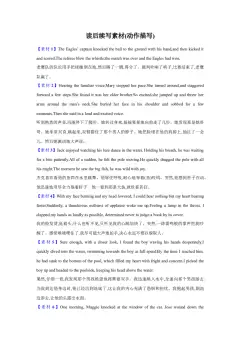
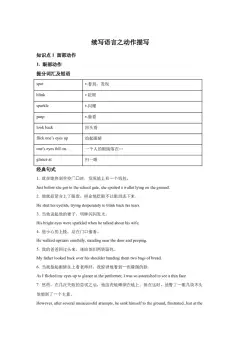
- 2024年高考英语写作常考题型全面突破 专题27 读后续写之写出画面感 动作刻画
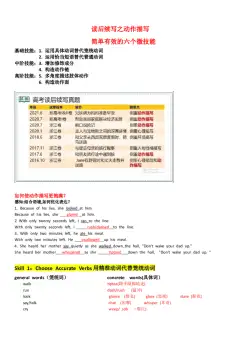
- 高考英语读后续写动作链与画面描写专练(2027届三轮复习句式仿写)
- 2025年高考英语读后续写高分技能提升专项复习:画面感塑造技巧(9页)
- 2025年高考英语读后续写高分技能提升专项复习:画面感塑造技巧9页
- 2026年高考英语读后续写复习动作姿态暗示法让情感可感学生版
- 2026年新高考英语读后续写考前冲刺读背素材:专题01读后续写之人物手上动作描写(专项复习)
- 2026年高考英语读后续写复习动作姿态暗示法让情感可感教师版
- 2025高考英语写作专项训练:读后续写素材3动作描写(英语2)
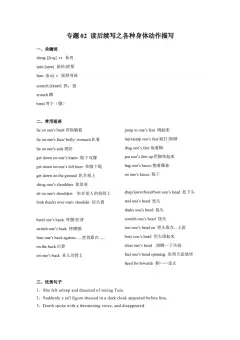
- 2026年新高考英语读后续写考前冲刺读背素材:专题02读后续写之各种身体动作描写(高考一二三轮复习)
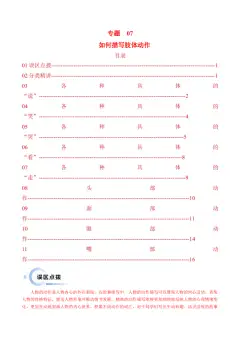
- 2026版新高考英语读后续写提分宝典专题07读后续写如何描述肢体动作写作专练
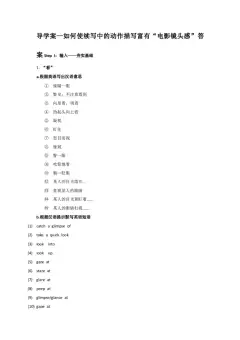
- 2024年高考英语读后续写手册专题06导学案答案:如何使续写中的动作描写富有电影镜头感(全国通用)
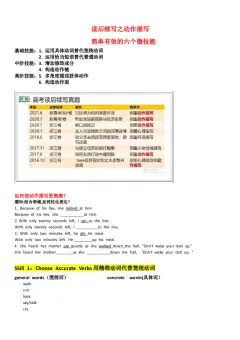
- 读后续写之动作描写学案(学生版)2023届高三英语写作专项
- 2026届高考英语二轮写作复习专项:读后续写动作描写50句清单(英语2)
- 新高考英语读后续写技巧与训练:动作链构造大法(2024年例题讲解与练提升写作)
- 2024年新高考英语读后续写技巧与训练第15讲动作与情感分类速记
- 2025年高考英语一轮复习应用文写作与读后续写精讲精练 读后续写素材3 动作描写 英语(2)
- 2025年高考英语一轮复习应用文写作与读后续写精讲精练:读后续写素材3动作描写(英语2)
- 读后续写之动作描写学案答案(教师版)2023届高三英语写作专项
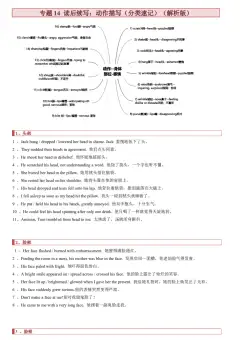
- 2024年高考英语读后续写核心素养与实战演练写作能力提升专题14读后续写:动作描写分类速记解析版
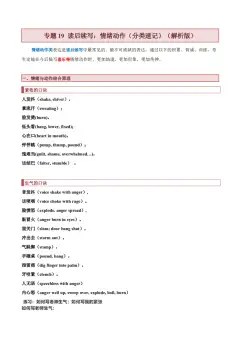
- 2024年高考英语读后续写核心素养与实战演练写作能力提升 专题19 读后续写情绪动作分类速记 解析版
- 2026年新高考英语读后续写提分宝典专题10读后续写如何写好文章的结尾写作专练
- 2024年高考英语读后续写核心素养与实战演练写作能力提升 专题14读后续写:动作描写(分类速记)(原卷版)
- 2025年新高考英语读后续写提分宝典 专题25 读后续写构造“动作链”“动作面”仿写(精讲+精练+真题+模拟)学生版
- 2025年新高考英语读后续写提分宝典 专题25 读后续写构造“动作链”“动作面”仿写(精讲+精练+真题+模拟)教师版
- 2026李辉英语读后续写动作描写语言讲义
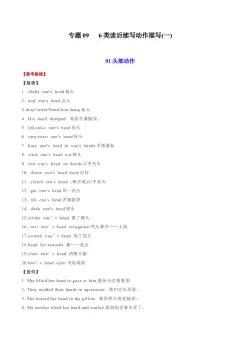
- 2024年高考英语考前45天写作备考特辑:专题096类读后续写动作描写(一)(全国通用)
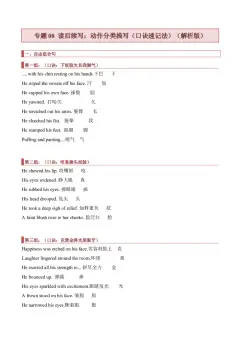
- 2024年高考英语读后续写核心素养与实战演练专题08动作分类描写口诀速记法(解析版)
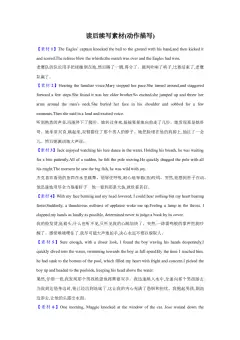
- 读后续写素材3动作描写
- 2024年高考英语读后续写核心素养与实战演练写作能力提升 专题08读后续写动作分类描写(口诀速记法)原卷版
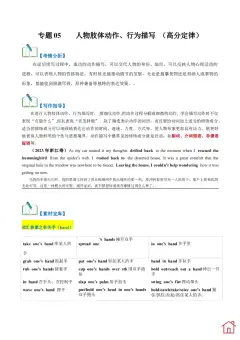
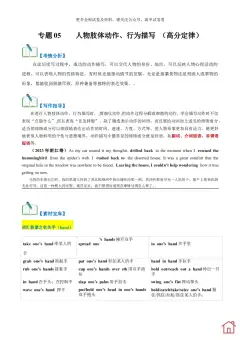
- 2024年高考英语话题写作通关必备:读后续写人物肢体动作与行为举止描写专题05(高分定律,原卷版)
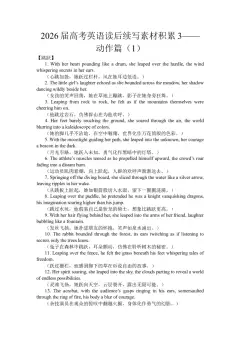
- 2026届高考英语读后续写素材积累清单:动作篇(2)
- 2024高考英语一轮复习读后续写动作描写之说讲义
- 2024高考英语读后续写人物肢体动作行为举止描写(解析版)
- 2026年新高考英语读后续写提分宝典 专题09读后续写如何写好文章的开头写作专练 高考一二三轮复习
- 2024年新高考英语读后续写能力提升微讲座四读精-精析语言(含名校模拟真题训练)
- 新高考英语读后续写能力提升微讲座二:读通情节发展(含名校模拟演练)
- 新高考英语读后续写能力提升微讲座三:读通情感发展(含名校模拟演练)
- 2025年高考英语写作提分秘籍 专题05 读后续写人物肢体动作与行为举止描写(高分定律+)学生版
- 2024年高考英语读后续写高分微技能专题15:人物描写与动作描写(新题型专项复习讲练测及写作技巧真题汇编)
- 新高考英语读后续写能力提升微讲座五:读深——深挖知识点(含名校模拟演练)
- 2025年高考英语写作提分秘籍 专题05读后续写人物肢体动作与行为举止描写(高分定律+)教师版
- 2026届高考英语读后续写素材积累清单3:动作篇(1)
- 2024高考英语读后续写人物肢体动作行为举止描写(原卷版)
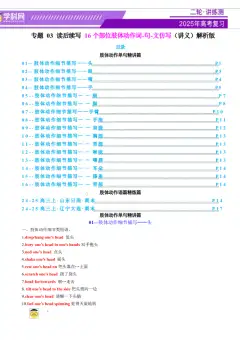
- 2025高考英语二轮复习读后续写16个部位肢体动作词句文仿写讲义专题03解析版
- 2025高考英语二轮复习读后续写16个部位肢体动作词句文仿写测试专题03解析版
- 2024年高考英语一轮复习读后续写素材3(动作描写)
- 2025高考英语一轮复习应用文写作与读后续写精讲精练动作与行为的描写方法32
- 2025高考英语二轮复习读后续写16个部位肢体动作词句文仿写讲义专题03原卷版
- 2025高考英语二轮复习读后续写16个部位肢体动作词句文仿写测试专题03原卷版
- 2024高考英语一轮复习读后续写动作描写之说练答案版