资讯 / 正文
中考英语每日练 | 街头钢琴与「口袋公园」(完形+阅读)
英语试界瓜坊 · 中考英语
今天的中考练习由两篇原创短文组成:「街头钢琴 The Street Piano」与「口袋公园 Pocket Parks」。前者讲一个害羞的女孩在车站角落重新弹起旧钢琴,从害怕被围观,到发现路人只想在忙碌的日子里享受片刻美好;后者介绍城市里如何把边角空地变成小小的"口袋公园",以及它给街坊带来的改变。完形填空 10 空、阅读理解 5 题,难度适配全国多数省份中考,全文原创。建议限时 18 分钟完成。
完形填空(共 10 题)
阅读下面短文,掌握其大意,然后从每题所给的 A、B、C、D 四个选项中选出可以填入空白处的最佳选项。
At a busy train station, people usually hurry past without looking at one another. But in the corner near the ticket machines, there is an old piano. Anyone is free to play it.
When Lisa first saw the piano, she stopped in her tracks. She had learned to play as a child but had not touched a keyboard for years. "I felt too (1)______ to sit down," she remembers. "There were so many people around." So she walked on, but she could not stop thinking about the piano.
The next week, she came back early in the morning, when the station was almost (2)______ . Her fingers felt stiff at first, and she made several mistakes. But slowly the music came back. A cleaner stopped to listen. Then a businessman put down his coffee and (3)______ , too. When Lisa finished, several people were standing around the piano. They did not know her, but they (4)______ .
Since that morning, Lisa has played at the station every week. She says the piano has changed her. "I used to be afraid of making mistakes in front of others," she says. "Now I know that people are (5)______ than I thought. They just want to enjoy a moment of beauty on a (6)______ day."
The station is not the only place with such a piano. In many cities, old pianos are painted in bright colours and left in (7)______ places — parks, markets and hospital halls. The idea is to make music (8)______ to everyone, not just to those who can afford concerts. Some of these pianos have been played by thousands of different (9)______ .
Lisa has a simple message for anyone who sees a street piano: "Don't walk past. Sit down and play. You never know whose day you might (10)______ ."
1. A. excited B. nervous C. angry D. tired
2. A. empty B. crowded C. noisy D. bright
3. A. left B. complained C. listened D. shouted
4. A. clapped B. laughed C. argued D. hurried
5. A. colder B. kinder C. stranger D. busier
6. A. rainy B. lonely C. busy D. cold
7. A. secret B. public C. quiet D. private
8. A. available B. expensive C. difficult D. famous
9. A. colours B. hands C. songs D. keys
10. A. break B. brighten C. spend D. remember
阅读理解(共 5 题)
阅读下面短文,从每题所给的 A、B、C、D 四个选项中选出最佳选项。
Pocket Parks
In crowded cities, space is precious. Yet in recent years, many cities have found a surprising way to create more green areas: they turn tiny unused pieces of land into "pocket parks".
A pocket park is exactly what its name suggests — a very small park, sometimes no bigger than a single car park. It might be built on an empty corner, beside a bus stop, or on the roof of an old building. Benches, a few trees, some flowers and perhaps a children's play area are enough to change a forgotten space into a welcoming one.
The first pocket parks appeared in New York in the 1960s, when local residents cleared rubbish from empty lots and planted trees. Today the idea has spread around the world. In Shanghai, more than a hundred pocket parks have opened since 2016, many of them created from narrow strips of land between buildings.
The benefits are greater than the size of the parks suggests. Studies show that even a small green space can lower the temperature of a neighbourhood in summer, clean the air and reduce noise. Just as importantly, pocket parks give people a place to meet. Elderly residents sit on the benches, children play after school, and office workers eat lunch outside. In a neighbourhood where few people know their neighbours, a pocket park can be where friendships begin.
Creating one is not always easy. Organisers must find land, raise money and persuade local people that a small park is worth having. But where a pocket park succeeds, it often encourages residents to care more about their whole neighbourhood.
1. What is a pocket park?
A. A park inside a shopping centre.
B. A very small park on a tiny piece of land.
C. A park built only for children.
D. A large park near a bus stop.
2. Where did the first pocket parks appear?
A. In Shanghai. B. In London. C. In New York. D. In Tokyo.
3. According to Paragraph 4, which is NOT a benefit of pocket parks?
A. Making neighbourhoods cooler in summer.
B. Cleaning the air.
C. Reducing noise.
D. Providing more car parking space.
4. What does the last sentence of Paragraph 4 suggest?
A. Pocket parks help people get to know each other.
B. Pocket parks are usually very quiet.
C. Children should not play in pocket parks.
D. Neighbours often argue about pocket parks.
5. What is the writer's main purpose?
A. To explain why pocket parks are worth creating.
B. To complain about the lack of green space in cities.
C. To compare parks in different countries.
D. To teach readers how to build a park.
答案与解析
完形填空
1. B "我觉得太______而不敢坐下",下文"周围那么多人"说明她害羞紧张,nervous,选 B。excited「兴奋」与"walked on"(走开了)矛盾;angry/sad 情绪过重,与"多年没碰琴、怕被看"的心理不符。
2. A "她清晨回来,那时车站几乎______"——清晨人少,才能让她敢弹,empty(空的),选 A。crowded/noisy 与她特意早来、怕被围观相反;bright「明亮」与"人少好弹琴"的因果无关。
3. C "一位清洁工停下来听,然后一个商人放下咖啡也______"——与前句 stopped to listen 并列,listened(听),选 C。left「离开」/complained「抱怨」/shouted「喊叫」都与"被音乐吸引"的温情画面相反。
4. A "他们不认识她,但还是______"——弹完后围站的人鼓掌,clapped,选 A。laughed「大笑」/argued「争吵」/hurried「匆忙离开」都不能表达陌生人对演奏的欣赏与善意。
5. B "现在我知道人们比我想的更______"——从被围观到被鼓掌,她觉得别人更友善,kinder,选 B。colder「更冷漠」/stranger「更陌生」与她心态转变相反;busier「更忙」不回应"怕出错却被包容"的感悟。
6. C "他们只想在______的日子里享受片刻美好"——车站是匆忙忙碌之地,busy day 与开头"people usually hurry past"呼应,选 C。rainy/lonely/cold 都无上下文支撑,"忙碌日子里的片刻美好"正是街头钢琴的意义。
7. B "旧琴被漆成亮色,放在______场所——公园、集市、医院大厅"——这些对所有人开放,public(公共的),选 B。secret/private「私密」与列举地点矛盾;quiet「安静」与公园、集市的开放热闹不符。
8. A "让音乐对每个人都______,而不只是买得起音乐会门票的人"——available to everyone(人人可及),选 A。expensive/difficult 与"人人可享"相反;famous「著名」与"免费公开"的无门槛立意无关。
9. B "有些琴已被成千上万只不同的______弹过"——hands(手)形象地表示"无数不同的人弹过",选 B。colours/songs/keys 都不能搭配"be played by thousands of different…"表达"弹奏者"的意思。
10. B "坐下弹吧,你永远不知道你会点亮谁的一天"——brighten one's day(使某人的一天变得美好)是固定搭配,呼应前文"a moment of beauty",选 B。break「毁掉」语义相反;spend「花费」/remember「记住」都不能与 day 构成"让他人开心"的表达。
阅读理解
1. B 第二段:"a very small park, sometimes no bigger than a single car park" → 口袋公园建在很小的地块上,选 B。A「商场内的公园」/C「只为儿童而建」文中未限定;D「公交站旁的大公园」把"小"说成"大",且公交站只是可能地点之一。
2. C 第三段首句:"The first pocket parks appeared in New York in the 1960s" → 最早出现在纽约,选 C。上海是后来推广的例子(since 2016),伦敦、东京文中未提。
3. D 第四段列举好处:"lower the temperature… clean the air and reduce noise" → 降温、净化空气、降噪,A/B/C 都是;D「提供更多停车位」文中无据,且与"tiny unused land 改造成公园"相反,选 D。
4. A 第四段末句:"In a neighbourhood where few people know their neighbours, a pocket park can be where friendships begin." → 在邻里互不相识的社区,口袋公园成为友谊开始的地方,即帮助人们互相认识,选 A。B「通常很安静」/C「孩子不该玩」/D「邻居常争吵」均与原文温情立意不符。
5. A 全文先介绍什么是口袋公园、起源与推广,再讲好处与意义,末段说"值得拥有" → 写作目的是说明口袋公园为何值得创建,选 A。B「抱怨城市缺绿地」不是目的;C「比较各国公园」只是顺带举例;D「教读者如何建造」文中只说"找地、筹钱、说服居民",未给步骤教程。
觉得有用点个【在看】,明天继续更~想看哪类题型,留言告诉我。
相关文档
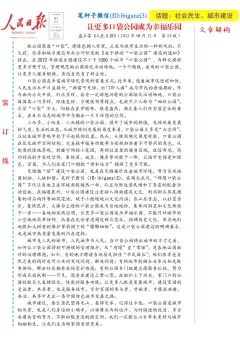
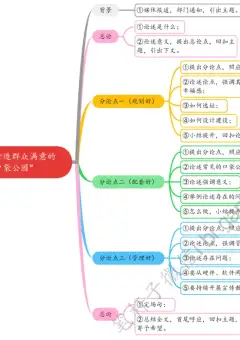
- 笔杆子每日晨读2022年9月:让更多口袋公园成为幸福乐园思维导图(社会民生、城市建设话题)
- 笔杆子每日晨读2022年9月:让更多口袋公园成为幸福乐园标注绿(社会民生、城市建设话题)
- 笔杆子每日晨读2022年9月 让更多口袋公园成为幸福乐园(话题:社会民生、城市建设)
- 笔杆子每日晨读2022年9月:让更多口袋公园成为幸福乐园(社会民生、城市建设话题)
- 笔杆子每日晨读2022年9月:让更多口袋公园成为幸福乐园(社会民生、城市建设话题)
- 笔杆子每日晨读0813思维导图用匠心打造群众满意的“口袋公园” 话题:社会民生、城市建设
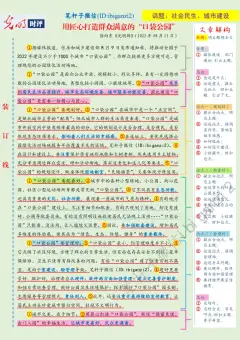
- 笔杆子每日晨读2022年8月:用匠心打造群众满意的“口袋公园”(社会民生、城市建设)
- 笔杆子每日晨读2022年8月:用匠心打造群众满意的“口袋公园”(社会民生、城市建设)
- 2022年8月笔杆子每日晨读 用匠心打造群众满意的“口袋公园”(社会民生、城市建设)
- 2022年8月笔杆子每日晨读 用匠心打造群众满意的“口袋公园”
- 街头艺人弹得真好影视主题曲钢琴曲谱
- 2025高考英语刷题训练 语法完形千题万词 补充 语法完形101
- 万唯中考完形阅读基础版九年级微技能讲练
- 2026考研英语全程班(高途李旭等)讲义 2023考研英语一完形试题 完形复盘课用
- 英语70高考完形固定搭配452个
- 中考完形与阅读150篇答案25年
- 万唯中考完形阅读基础版八年级微技能讲练
- 万唯中考完形阅读基础版七年级微技能讲练
- 9天背完英语完形高频词汇 中小学精品资料高清可打印
- 2024高考英语专题08完形埴空(学生版)
- 考研英语二2025年完形逐词翻译版本三
- 考研英语一2025年完形逐词翻译版本三
- 万唯中考完形阅读基础版九年级
- 完形红花绿叶词
- 完形固定搭配短语
- 学而思高三英语第2讲补充完形
- 2024高考英语专题08完形埴空(教师版)
- 2024年中考英语真题分类汇编03完形阅读(10题题型)(解析版)
- 学而思高二英语完形阅读一词多义
- 星火英语巅峰训练完形与语法填空二千六百题
- 2025高考英语专题08完形埴空(北京专用)(学生版)
- 2026版高考英语临考终极必记词汇&必练题型 专题04完形词汇(清单+专项训练)学生版
- 2024年中考英语真题分类汇编03完形阅读(10题题型)(原卷版)
- 万唯中考完形阅读基础版九年级答案解析
- 万唯中考完形阅读基础版八年级
- 万唯中考完形阅读基础版七年级
- 2026届高考英语完形阅读长难句分析(共20句)讲义
- 高中英语高考完形阅读高频短语汇总(PDF版)
- 人教PEP五年级下英语完形与阅读
- 2025高考英语专题08完形埴空(北京专用)(教师版)
- 完形与阅读·单元测试
- 2026考研英语二完形方法论讲义(高途英语全程班 李旭等)
- 2026考研英语全程班王江涛英语一完形基础讲义:2025年完形填空讲义
- 万唯中考完形阅读基础版八年级答案解析
- 万唯中考完形阅读基础版七年级答案解析
- OOPS海洋公园
- 2026版高考英语临考终极必记词汇与必练题型:专题04完形词汇清单及专项训练(教师版)
- 2024年高考英语真题新高考I卷完形解读分析学案
- 2024高考英语复习冲刺过关完形查漏补缺专题03解析版(全国通用)
- 13六旬退休教师骑行逾10万千米、南京大楼进化、新宿街头3D猫(原卷版)