资讯 / 正文
交互版最新五年高考真题分类优化卷·英语(十六)语法填空(二)——12 篇 120 空,原文答案解析一次配齐
试卷讲评 · 优化卷十六
2026 年 11 月 · 湖南 · 高三英语 · 2027 届
优化卷十六 · 语法填空(二)
2027 最新五年高考真题分类优化卷 · 英语(十六)| 12 篇真题 · 120 个空
2021—2026 高考真题 | 黄底 = 重点词 | 【红】 = 空位
💬 这一卷把 2021—2026 年的 12 篇语法填空真题拉通整理:海洋塑料、西安城墙、乡村大集、太极课、围棋与艺术、服装租赁……120 个空,逐空给答案、考点和定位句。想玩完整版——点空位直接弹解析、点单词查词典、导出 PDF,去文末“阅读原文”打开交互版讲评工具,手机电脑都能用。
语法填空是很多同学“最有感觉也最没底”的题:文章读得懂,一填就错。这一卷 12 篇全是大考真题,考点重复率极高——把 120 个空按考点归拢一遍你会发现,翻来覆去考的就是那几类。
建议的用法:先把 12 篇的答案速查表遮住,自己填一遍;填不出的空,先回原文把那一整句读完再判断词性,最后才看解析。语法填空拼的不是语感,是“先定结构、再定词性、最后定形式”这三步。
一、120 个空,考的是什么
先看清考点分布,再逐篇精讲
▫️ 词性转换(形/名/副) 27 个
▫️ 非谓语动词 22 个
▫️ 时态与主谓一致 12 个
▫️ 介词 10 个
▫️ 连词 8 个
▫️ 从句引导词 10 个
▫️ 冠词 8 个
▫️ 名词的数与所有格 6 个
▫️ 被动语态 6 个
▫️ 比较等级 4 个
▫️ 代词 3 个
▫️ 固定搭配与句式 3 个
▫️ 数词 1 个
词性转换+非谓语动词,两项加起来 49 个空、超过四成。这告诉我们一件事:见到提示词,先别急着填原形——先问自己“它在句子里干什么活”,再决定变形。
二、十二篇语篇逐篇精讲
原文 · 逐空答案 · 考点 · 定位句
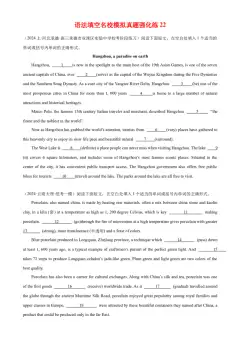
P1 · 海洋塑料垃圾
2021·全国新高考Ⅱ卷 | 第 1—10 空
命题路径:一个初中生从报告厅讲到企业邮箱的故事——全篇靠“动作链”推进,动词的主动/被动关系是主要考点。
—— 原文(【红】=空位,黄底=重点词)
I've always loved the ocean. In the 【1】 (seven) grade, I started volunteering at the Monterey Bay Aquarium in California. I was upset to learn that many sea animals eat plastic garbage, 【2】 (think) it is food.
I decided to do something 【3】 (educate) people about this problem. I held presentations at schools to teach kids about plastic waste. I wanted to reach businesses too. I decided that if I learned of a company 【4】 used a lot of plastic, I'd send it an email urging it to cut back.
One day, I saw a commercial for a health-care company. People in the ad were using plastic straws (吸管). I found the contact information of the company 【5】 emailed its president. I told him how 【6】 (harm) plastic could be to the environment and asked him to consider using more eco-friendly options. I was so 【7】 (excite) when he wrote back to me. He said he would make sure that the company cut its use of plastic straws in half.
I kept going. Whenever I heard of businesses using plastic, I'd send an email. One of the biggest companies I wrote to 【8】 (be) Alaska Airlines Paris. A company 【9】 (represent) wrote back and told me the airline was switching over【10】 plastic to paper cups on all of its 1,200 daily flights.
—— 逐空答案与考点
1seventh序数词表示“七年级”用序数词,
2thinking非谓语动词分析句子结构,______ (think)it is food.用作状语,think与其逻辑主语many sea animals之间是主动关系,用现在分词,
3to educate非谓语动词分析句子结构,______ (educate) people about this problem.用作目的状语,用不定式,
4which/that定语从句分析句子结构,________ used a lot of plastic是一个定语从句,修饰先行词a company,关系词在从句中作主语,指物,用which或that引导该从句,所以填which或that。
5and连词“found”和“emailed”之间是并列关系,用and连接两个并列的谓语动词,
6harmful形容词该处为how引导的感叹句,how之后接形容词,
7excited形容词该空作was之后的表语,用形容词,修饰人,用v+ed形式的形容词,
8was时态和主谓一致根据定语从句的谓语动词“wrote”可知这里描述发生在过去的事情,用一般过去时;one of + 形容词最高级 + 可数名词复数结构中,谓语动词用单数,
9representative名词该空作句子主语,用名词,前面有不定冠词修饰,用名词单数,
10from介词from sth to sth从……到……,
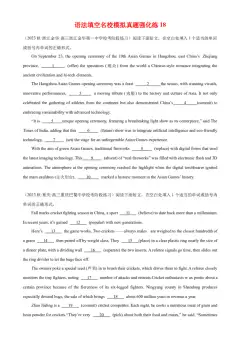
P2 · 西安城墙骑行
2021·全国甲卷 | 第 11—20 空
命题路径:游记体:先介绍城墙,再写“我们”租车绕城。时态在“客观介绍(现在)”与“个人经历(过去)”之间来回切换,是本篇最大的陷阱。
—— 原文(【红】=空位,黄底=重点词)
The Xi'an City Wall is the most complete city wall that has survived China's long history. It 【11】 (build) originally to protect the city 【12】 the Tang dynasty and has now been completely restored (修复). It is possible 【13】 (walk) or bike the entire 14 kilometers.
We accessed the wall through the South Gate. The wall is 12 meters high and from here you can see streams of people moving inside and outside the City Wall. After 【14】 (spend) some time looking at all the defensive equipment at the wall, we decided it was time for some action and what 【15】 (good) than to ride on a piece of history!
We 【16】 (hire) our bikes from the rental place at the South Gate. My bike was old and shaky 【17】 did the job. It took us about 3 hours to go all 【18】 way around the Xi'an City Wall. Supposedly you can do it in two hours, but we stopped at the different gates and 【19】 (watchtower) to take pictures or just to watch the local people going about their 【20】 (day) routines.
—— 逐空答案与考点
11was built被动语态分析句子可知,空格处为谓语,动词build和主语之间是被动关系,应用被动语态(be done),根据句意和时间状语the Tang dynasty可知,用一般过去时,谓语动词用过去式,主语it为第三人称单数,主谓一致,
12in/during介词根据句意可知,表示“在某个朝代”可用介词in/during。
13to walk动词不定式分析句子可知, 此处为句型“it +be+adj+to do sth.”,it为形式主语,动词walk的不定式短语作真正主语。
14spending动名词分析句子可知,此处After为介词,故spend应用其动名词形式作介词宾语。
15better形容词比较级根据后文比较连(介)词than可知,此处应用形容词good的比较级。
16hired时态分析句子可知,此处为谓语动词,根据上下文可知,此处描述过去发生的事情,用一般过去时,谓语动词用过去式。
17but连词后文“did the job”和前文“My bike was old and shaky”之间存在转折关系,故用表示转折的连词but连接。
18the冠词结合句意表示“一直;完全地”可知短语为all the way,故用定冠词the限定名词way。
19watchtowers名词复数根据句意以及前文形容词different可知,此处可数名词watchtower是复数概念,应用其复数形式。
20daily形容词修饰后文名词routines应用day的形容词daily,作定语,修饰名词。
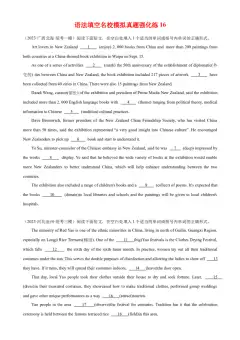
P3 · 生态旅游
2021·全国乙卷 | 第 21—30 空
命题路径:说明文,先下定义、再讲历史、后列四原则。四原则用了并列的动词原形开头(Minimize / Build / Provide / Make sure),注意这种排比结构里的空。
—— 原文(【红】=空位,黄底=重点词)
Ecotourism is commonly regarded as low impact (影响) travel to undisturbed places. It is different from traditional tourism because it allows the traveler to become 【21】 (educate) about the areas—both in terms ofgeographical conditions and cultural characteristics, and often provides money for conservation and benefits the 【22】 (develop) of the local areas.
Ecotourism has 【23】 (it) origin with the environmental movement of the 1970s. It was not widely accepted as a travel concept 【24】 the late 1980s. During that time, increasing environmental awareness made it desirable.
Due to 【25】 growing popularity of environmentally-related and adventure travel, various types 【26】 trips are now being classified as ecotourism. Actually, a true eco-friendly trip must meet the following principles: · Minimize the impact of 【27】 (visit) the place. · Build respect for and awareness of the environment and cultural practices. · Provide 【28】 (finance) aid and other benefits for local peoples. · Make sure that the tourism provides experiences for both the visitors and the hosts.
Komodo National Park, officially recognized in 1980, is popular for ecotourism because of its unique biodiversity. 【29】 (activity) there range from whale watching to hiking (远足) and accommodations aim 【30】 (have) a low impact on the natural environment.
—— 逐空答案与考点
21educated形容词分析句子成分可知,此处考查固定搭配become educated about表示“对……有所了解”。
22development名词根据空格前的定冠词the可知,此处填入名词development来做动词benefits的宾语。
23its代词根据空格后名词origin可知,此处应用形容词性物主代词来修饰名词origin。
24until固定句型根据句意可知,此处表示“直到20世纪80年代晚期才作为旅游观念被广泛接受”,表示“直到……才……”使用固定句型“not ... until ...”。
25the冠词分析句子结构可知,空格处应填冠词。再结合空格后“growing popularity of environmentally-related and adventure travel”可知,此处特指与环境相关的探险旅行越来越受欢迎,所以应填定冠词the。
26of介词various types of 为固定搭配表示“各种各样的”,所以空格处应填of。
27visiting动名词根据空格前介词of可知,空格处应填动名词形式来作介词of的宾语。
28financial形容词根据空后名词aid可知,空格处应填形容词来修饰名词aid,finance的形容词形式为financial。
29Activities名词根据谓语动词range可知,空格处应填用可数名词activity的复数形式作主语。
30to have非谓语动词固定短语aim to do译为“旨在,目的是”。
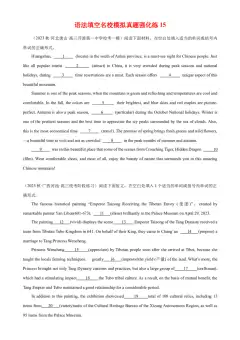
P4 · 乡村大集
2026·全国Ⅰ卷 | 第 31—40 空
命题路径:中国文化题材说明文:起源—功能—现场。段末“价格比超市便宜得多”一句是全篇唯一带 than 的比较级,几乎白送。
—— 原文(【红】=空位,黄底=重点词)
Daji, or big open-air fairs, typically take place on specific dates of the lunar calendar, for example, on dates with five or seven as the last digit. It is also common for them 【31】 (hold) during traditional Chinese holidays such as the Spring Festival and the Mid-Autumn Festival, as well as other local festivals. The exact dates and 【32】 (frequent) of daji vary from region to region.
Daji originated from the ancient folk custom of trading goods, which dates back to【33】 Han Dynasty. As transportation and communication 【34】 (be) underdeveloped at that time, it was very difficult for households to obtain daily 【35】 (necessity). As a solution, people gathered at specific locations on set days to trade their surplus (剩余的) items 【36】 what they needed.
In addition to being venues for buying and selling, daji are occasions for socializing and entertainment. People from near and far crowd into these markets on daji days. 【37】 (draw) by the aroma (香味) of street food, they line up in front of stands 【38】 are selling dumplings and hot noodle soup. While eating and enjoying street performances, they chat with each other and share stories of their daily lives. Before 【39】 (head) home, they fill their shopping bags with fresh fruit and vegetables from local farmers, at prices significantly 【40】 (cheap) than those found in supermarkets.
—— 逐空答案与考点
31to be held非谓语动词(不定式的被动语态)句意:在春节、中秋节等中国传统节日以及其他地方节日期间举办大集也很常见。分析:本句使用固定句型 It is +形容词+ for sth.to do sth.,其中形式主语是It,真正的主语是后面的不定式短语。逻辑主语 them 指代前文的 daji(大集),大集与动词 hold(举办)之间是被动关系,因此要用不定式的被动形式。
32frequency词性转换(形容词变名词)句意:大集的确切日期和举办频率因地而异。分析:空格前有并列连词 and,连接两个并列的名词作句子主语。前面的 dates 是名词,因此此处需要将形容词 frequent 转换为名词形式 frequency(频率),与 dates 构成并列结构。
33the冠词(定冠词)句意:大集起源于古代民间的商品交易习俗,这一习俗可以追溯到汉代。分析:表示朝代的专有名词 Han Dynasty(汉代)属于特指,前面必须加定冠词 the。
34were动词时态和主谓一致句意:当时交通和通讯都不发达,家家户户很难获得日常必需品。分析:时间状语 at that time(在那时)表明本句要用一般过去时;主语是并列名词短语 transportation and communication(交通和通讯),表示复数概念,因此 be 动词要用复数过去式 were。
35necessities名词单复数句意:当时交通和通讯都不发达,家家户户很难获得日常必需品。分析:necessity 表示“必需品”时是可数名词,daily necessities 是固定搭配,意为“日常必需品”,此处指各类生活必需品,因此要用复数形式。
36for介词(固定搭配)句意:作为解决办法,人们在固定的日子聚集在特定地点,用自己多余的物品交换所需的东西。分析:本句考查固定短语 trade sth.for sth.,意为“用某物交换某物”,因此填介词 for。
37Drawn非谓语动词(过去分词作状语)句意:被街头小吃的香味吸引,他们在卖饺子和热汤面的摊位前排起了队。分析:空格处作句子的状语,逻辑主语是后面的 they(人们)。人们与动词 draw(吸引)之间是被动关系,因此要用过去分词表示被动;且空格位于句首,首字母需要大写。
38that/which定语从句:被街头小吃的香味吸引,他们在卖饺子和热汤面的摊位前排起了队。分析:本句是定语从句,先行词是 stands(摊位),指物,且关系代词在从句中作主语,因此可以用关系代词 that 或 which 引导定语从句。
39heading非谓语动词(动名词)句意:在回家之前,他们的购物袋里装满了当地农民种的新鲜水果和蔬菜,价格比超市里的便宜得多。分析:空格前是介词 Before , 介词后面需要接动名词形式作宾语 , 因此将动词 head 变为动名词 heading。
40cheaper形容词比较级句意:在回家之前,他们的购物袋里装满了当地农民种的新鲜水果和蔬菜,价格比超市里的便宜得多。分析:空格后有比较级的标志词 than,因此需要将形容词 cheap 变为比较级形式 cheaper。
P5 · 北京胡同与四合院
2023·浙江高考卷·1月 | 第 41—50 空
命题路径:文化说明文,句式偏“正式书面”:被动语态 44、过去分词作定语 43、比较级并列 47,三处都是同一类“结构意识”题。
—— 原文(【红】=空位,黄底=重点词)
During China's dynastic period, emperors planned the city of Beijing 【41】 arranged the residential areas according to social classes. The term "hutong", 【42】 (original) meaning "water well" in Mongolian, appeared first during the Yuan Dynasty.
In the Ming Dynasty, the center was the Forbidden City, 【43】 (surround) in concentric (同心的) circles by the Inner City and Outer City. Citizens of higher social classes 【44】 (permit) to live closer to the center of the circles. The large siheyuan of these high-ranking officials and wealthy businessmen often 【45】 (feature) beautifully carved and painted roof beams and pillars (柱子). The hutongs they formed were orderly, lined by 【46】 (space) homes and walled gardens. Farther from the center lived the commoners and laborers. Their siheyuan were far smaller in scale and 【47】 (simple) in design and decoration, and the hutongs were narrower.
Hutongs represent an important cultural element of the city of Beijing. Thanks to Beijing's long history 【48】 capital of China, almost every hutong has its stories, and some are even associated with historic 【49】 (event). In contrast to the court life and upper-class culture represented by the Forbidden City, the Summer Palace, and the Temple of Heaven, the hutongs reflect 【50】 culture of grassroots Beijingers.
—— 逐空答案与考点
41and连词分析句子结构可知,planned和arranged是并列的谓语动词,表示并列关系应用连词and连接。
42originally副词空格处修饰动词meaning需要填副词形式。
43surrounded非谓语动词分析句子结构,was是谓语动词,空格处需要填非谓语动词作后置定语,主语the Forbidden City和surround之间是动宾关系,需填过去分词形式。
44were permitted动词的被动语态分析句子结构可知,空格处在句中作谓语,和主语Citizens of higher social classes构成被动关系,因为是对过去事实的陈述应用一般过去时。
45featured动词时态分析句子结构可知,空格处需要填谓语动词,再结合上下文时态可知,空格处应用一般过去时。
46spacious形容词空格处需要填形容词作定语修饰空格后的名词homes。
47simpler形容词比较级根据句子结构和and可知,空格处需要填形容词比较级和前面的smaller构成并列结构作表语。
48as介词根据句意可知,空格处译为“作为”,as是介词意为“作为”,符合句意。
49events名词的数根据空格前的形容词historic可知,空格处需要填名词,且event为可数名词,应用复数形式。
50the冠词根据名词culture后面的介词短语of grassroots Beijingers可知,此处culture表示特指概念,应用定冠词the修饰。
P6 · 第一次上太极课
2026·全国Ⅱ卷 | 第 51—60 空
命题路径:第一人称体验文,带小标题。口语化引语多(Angela 的原话),注意引语里的名词复数与连词;结尾那句咖啡的玩笑是全文的“文眼”。
—— 原文(【红】=空位,黄底=重点词)
My first time doing tai chi
For the first 15 minutes of my tai chi (太极) class, we remain 【51】 (entire) in one spot to warm up. Angela, a tai chi 【52】 (instruct) with twenty-eight years of experience, says that a successful hour of tai chi is an hour with no negative thoughts. "Your mind 【53】 body go together. That's all that matters." Although not a morning person, I begin my lesson with Angela and about twenty others at a Sydney community centre courtyard at 7 am. "Put your 【54】 (foot) parallel (平行), and use your dan tian to hold up your body," she says.
In tai chi, the dan tian is your qi core and qi in Chinese means life force. Now, I 【55】 (suppose) to feel the weight on my legs and sink my dan tian. We move on to tai chi positions, of 【56】 there are forty-two in the style that Angela teaches. Today, we will only be doing the first nine. The movements have 【57】 (describe) names like "holding the bowl" and "grabbing the bird's tail". During most of the class, we follow Angela and concentrate on making tiny, isolated (单独) movements. Then, Angela gets us to try the nine movements on our own. I keep my eyes 【58】 a woman to my right and try to copy her movements, but unfortunately I soon lose focus.
At the end of the lesson, I feel wide awake, despite it still 【59】 (be) early at 8 am. It's time for my dan tian 【60】 (meet) another life force: coffee.
—— 逐空答案与考点
51entirely副词句意:太极课的前十五分钟,我们全程待在原地热身。本空修饰动词remain,作状语,用副词entirely“完全地,全程地”。
52instructor名词句意:拥有二十八年经验的太极老师安吉拉说,一节圆满的太极课是无杂念的一课。本空为指代人Angela的同位语,用名词instructor“教练,老师”。
53and连词句意:你的身心合一。本空连接并列名词mind和body,用并列连词and。
54feet名词复数句意:她说:“双脚平行站立,用丹田支撑身体。”foot为可数名词,此处指双脚,用复数形式feet作宾语。
55am supposed固定搭配和时态句意:现在,我应该感受双腿受力,并将意念集中于丹田。固定搭配be supposed to do“应该做某事”,主语为I,描述现在的状态,用一般现在时,be动词用am。
56which定语从句句意:我们继续学习太极招式,安吉拉教授的这种风格共有四十二式。逗号后为非限制性定语从句,先行词positions,在从句中作介词of的宾语,用关系代词which。
57descriptive形容词句意:这些招式有着形象生动的名字,如“捧碗”和“揽雀尾”。本空修饰名词names,作定语,用形容词descriptive“描绘性的,形象的”。
58on介词句意:我盯着右边的一位女士,试图模仿她的动作,但不幸的是,我很快就走神了。固定搭配keep one's eyes on sb./sth.“紧盯某人/某物”,本空用介词on。
59being非谓语动词句意:课程结束时才早上八点,天色尚早,我却感觉十分清醒。despite为介词,后接动名词作宾语,be的动名词形式为being。
60to meet非谓语动词句意:是时候让我的丹田迎接另一股活力——咖啡。固定句型It's time for sth to do sth.“是某物做某事的时间了”,本空用不定式to meet。
P7 · 森林散步 / 做选择 / 旅行与浪费
2025·北京高考卷 | 第 61—70 空
命题路径:北京卷特色:一篇里套三段各自独立的小短文(A/B/C)。三段共 10 空,平均每篇 3—4 空,段落短,考的全是“一句话里找结构”。
—— 原文(【红】=空位,黄底=重点词)
A
Most days after school, I love walking in the forest with my dog Nick. It's 【61】 (peace), especially around sunset. Nick has a fun time smelling the leaves and running after rabbits. When Nick runs ahead, I hear him barking excitedly. I sometimes call him back, worried that he might have someone 【62】 (scare). The truth, though, is 【63】 could be guessed — there's never anyone else here. Just me, Nick, and the quiet forest.
B
When was the last time you took on a tough choice? Maybe this morning you debated whether to get up or stay in bed slightly 【64】 (long). Making choices is part of life. By the time you brushed your teeth, you 【65】 (make) several decisions even without noticing. Some choices are quick, while others take more thought. Usually, better outcomes 【66】 (achieve) through a thorough understanding of strategies like risk tolerance.
C
When 【67】 (travel), we engage with cultures and experiences. However, according to a report by the World Wildlife Fund, tourists 【68】 (leave) over 1.3 billion tons of food waste last year, 【69】 accounted for about 8% of the total global gas release in 2024. To reduce our impact, we can take simple steps: empty the fridge before heading out, and choose sustainable dining options. These efforts help us travel more responsibly. After all, exploring the world shouldn't come 【70】 the planet's expense.
—— 逐空答案与考点
61peaceful形容词“is”后接形容词作表语,“peace”的形容词形式是“peaceful”,意为“宁静的”。
62scared非谓语动词“have sb.done”表示“使某人被……”,“someone”与“scare”之间是被动关系,即某人被吓到,用过去分词作宾语补足语。
63what表语从句引导词“is”后接表语从句,从句中缺少主语,指物,用what引导,what在从句中作主语,意为“…… 的事情”。
64longer比较级此处表示“多睡一会儿”,应用比较级longer,表示“更久”。
65had made时态根据时间状语“By the time you brushed your teeth”可知,此处表示在过去某一时间点之前已经完成的动作,时态应用过去完成时,谓语用had made。
66are achieved时态、语态和主谓一致根据时间状语“Usually”可知,此处表示经常性、习惯性的动作,时态应用一般现在时;主语better outcomes和动词achieve“实现”之间是被动关系,应用一般现在时的被动语态;主语better outcomes是复数,be动词应用are。
67traveling非谓语动词句子主语“we”与“travel”之间是主动关系,用现在分词,构成“when+现在分词”的状语从句省略结构。
68left时态句意:根据“last year”可知,描述过去发生的事情,用一般过去时,“leave”的过去式是“left”。
69which定语从句关系代词此句为非限制性定语从句,先行词是“1.3 billion tons of food waste”,指物,关系词在从句中作主语,用which引导。
70at固定搭配at one's expense“以…… 为代价”是固定搭配。
P8 · 超市包装与“一人份”消费
2024·浙江高考卷·1月 | 第 71—80 空
命题路径:议论文:从“家庭装不合理”到“商家为什么这么做”再到“已经有商家在改”。逻辑连词 either…or、that's what 两处是理解型考点。
—— 原文(【红】=空位,黄底=重点词)
The shelves in most supermarkets are full of family-size this and multi-buy that. However, if you're shopping for one, buying extra 【71】 (benefit) from price reductions doesn't make sense. Either your shopping is then too heavy to carry home 【72】 you can't use what you've bought while it's still fresh. Of course, shops are not charities—they price goods in the way 【73】 will make them the most money. If most of their customers are happy to buy larger quantities, that's 【74】 they'll promote. But that leaves the solo (单独) customers out of pocket and disappointed.
Many supermarkets are no longer doing "buy one get one free" promotions because of the 【75】 (criticize) that they lead to waste. Consumers prefer money off individual items. However, though it's nice to get a few cents off a pack of sausages, it would help even more if they could sometimes 【76】 (offer) in smaller packs. Even the biggest sausage fan doesn't want to eat them every day. If your supermarket sells loose produce, then buying smaller quantities is easier. Over the last two years, some supermarkets 【77】 (start) selling chicken or salad in packs 【78】 (design) with two halves containing separate portions (份). Then, when you use one section, 【79】 other stays fresh.
Who knows, perhaps some of the more forward-looking【80】 (one) may yet come out with a whole range of "just for you" pack sizes with special offers as well.
—— 逐空答案与考点
71to benefit动词不定式根据“buying extra”和“from price reductions”可知,此处是指多买一件来享受降价,所以应用to do不定式作目的状语。
72or固定句式either...or...意为“要么……要么……”,为固定句式,所以此处应用连词or。
73that/which定语从句在定语从句中缺少主语,且先行词为way,所以应用关系代词that或which。
74what名词性从句在表语从句中缺少宾语,且是指事物,所以应用连接代词what。
75criticism名词根据“that they lead to waste”可知,此处应用名词criticism表示“批评”作宾语。
76be offered被动语态动词offer意为“提供”,和主语构成被动关系,主语they代指前文中的sausages。在情态动词could后动词应用原形。
77have started现在完成时根据“Over the last two years”可知,此处应用现在完成时。动词start意为“开始”。
78designed过去分词动词design意为“设计”,和谓语之间没有连词,和逻辑主语packs构成被动关系,且动作已完成,所以应用过去分词形式作后置定语。
79the冠词the other意为“另一个”,为固定搭配,所以此处应用定冠词the。
80ones代词代词one意为“一个人”,在some of后应用复数形式。
P9 · 围棋文化展
2025·全国Ⅰ卷 | 第 81—90 空
命题路径:文化+科技题材,引语占了大半。三处“引语内”的考点(84 名词、86 主谓一致、87 介词)必须回到引语内部找主语,不要在引语外找。
—— 原文(【红】=空位,黄底=重点词)
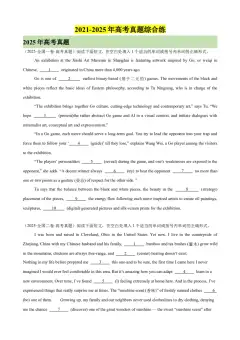
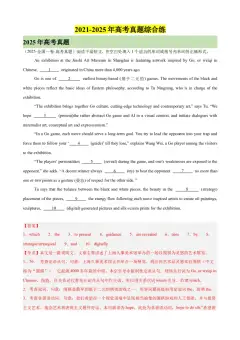
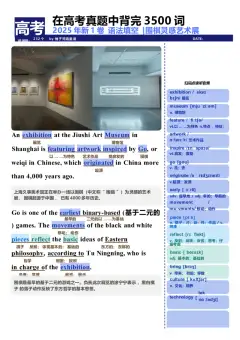
An exhibition at the Jiushi Art Museum in Shanghai is featuring artwork inspired by Go, or weiqi in Chinese, 【81】originated in China more than 4,000 years ago. Go is one of 【82】 earliest binary-based (基于二元的) games. The movements of the black and white pieces reflect the basic ideas of Eastern philosophy, according to Tu Ningning, who is in charge of the exhibition.
"The exhibition brings together Go culture, cutting-edge technology and contemporary art," says Tu. "We hope 【83】 (present) the rather abstract Go game and AI in a visual context, and initiate dialogues with minimalist art, conceptual art and expressionism." "In a Go game, each move should serve a long-term goal. You try to lead the opponent into your trap and force them to follow your '【84】 (guide)' till they lose," explains Wang Wei, a Go player among the visitors to the exhibition.
"The players' personalities【85】 (reveal) during the game, and one's weaknesses are exposed to the opponent," she adds. "A decent winner always 【86】 (try) to beat the opponent【87】 no more than one or two points as a gesture (姿态) of respect for the other side." Tu says that the balance between the black and white pieces, the beauty in the 【88】 (strategy) placement of the pieces, 【89】 the energy flow following each move inspired artists to create oil paintings, sculptures, 【90】 (digital) generated pictures and silk-screen prints for the exhibition.
—— 逐空答案与考点
81which定语从句本空引导非限制性定语从句,修饰先行词为Go,or weiqi in Chinese,指物,且关系词代替先行词在从句中作主语,所以用关系代词which引导。
82the冠词形容词最高级前用定冠词the。
83to present非谓语动词本句谓语为hope,此处为非谓语动词,hope to do sth,所以此处需用动词present的不定式,作宾语。
84guidance名词此处作follow的宾语,用名词guidance,不可数名词。
85are revealed动词语态本句描述一般事实,时态用一般现在时,且主语The players' personalities与动词reveal为被动关系,所以空处需用一般现在时态的被动语态,主语为复数,be动词用are。
86tries时态和主谓一致根据always可知,本句描述一般事实,时态用一般现在时,主语a decent winner为第三人称单数,所以谓语需用try的第三人称单数tries。
87by介词“by+具体数值”表示“以(某一差值)”,此处指“以一到两分的优势”。
88strategic/strategical形容词此处修饰名词placement,需用形容词strategic或者strategical,作定语。
89and连词the balance between the black and white pieces,the beauty in the strategic placement of the pieces,the energy flow following each move三者为并列关系,作并列主语,所以空处需用连词and。
90digitally副词此处修饰形容词generated,需用副词digitally,作状语。
P10 · 美国人在浙江乡村
2025·全国Ⅱ卷 | 第 91—100 空
命题路径:跨文化体验文,主题是“晒过的衣服有阳光的味道”。定语从句 91、代词 95、名词 98 三处都在同一个长句群里,读的时候先把主句找出来。
—— 原文(【红】=空位,黄底=重点词)
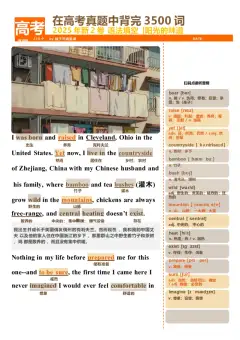
I was born and raised in Cleveland, Ohio in the United States. Yet now, I live in the countryside of Zhejiang, China with my Chinese husband and his family, 【91】 bamboo and tea bushes (灌木) grow wild in the mountains, chickens are always free-range, and 【92】 (center) heating doesn't exist.
Nothing in my life before prepared me 【93】 this one—and to be sure, the first time I came here I never imagined I would ever feel comfortable in this area. But it's amazing how you can adapt 【94】 learn in a new environment. Over time, I've found 【95】 (I) feeling extremely at home here. And in the process, I've experienced things that really surprise me at times. The "sunshine scent (香味)" of freshly sunned clothes 【96】 (be) one of them.
Growing up, my family and our neighbors never used clotheslines to dry clothing, denying me the chance 【97】 (discover) one of the great wonders of sunshine—the sweet "sunshine scent" after sunning clothes for an entire day. The sun-dried clothes smell especially pleasant where I live, thanks to the 【98】 (absent) of smog and plenty of blue sky 【99】 (afternoon) with lots of fresh air. If you've never experienced the "sunshine scent" from a sheet or shirt 【100】 (leave) to sun for a day, well, you're missing out on one of life's wonders.
—— 逐空答案与考点
91where定语从句本空引导非限制性定语从句,修饰先行词the countryside of Zhejiang,China关系词代替先行词在从句中作地点状语,应用关系副词where引导。
92central形容词本空修饰名词heating,应用形容词central“中央的,中心的”,作定语。
93for介词prepare sb. for...“使某人为……做好准备”,固定搭配。
94and连词句意:但令人惊讶的是,你是如何适应并在新环境中学习的。adapt和learn是并列关系,应用连词and连接。
95myself反身代词本空指代主语I,表示“我自己”,应用反身代词myself。
96is时态和主谓一致本句描述的是一般事实,时态用一般现在时,且主语The “sunshine scent” of freshly sunned clothes为第三人称单数,be动词用is。
97to discover非谓语动词本句已有谓语used,此处应用非谓语动词, chance to do sth.“做某事的机会”,本空用discover的不定式,作定语。
98absence名词本空作thanks to的宾语,应用名词absence“缺乏,没有”,不可数名词。
99afternoons名词的数afternoon“下午”是可数名词,此处指不止一个下午,应用复数形式afternoons。
100left非谓语动词本句已有谓语have experienced,此处应用非谓语动词,a sheet or shirt和leave“使处于某种状态”之间是逻辑动宾关系,应用过去分词,作后置定语。
P11 · 服装租赁与共享经济
2025·浙江高考卷·1月 | 第 101—110 空
命题路径:商业说明文 + 店主访谈。109 的名词所有格 people's 是“提示词给名词”的典型陷阱——提示词不一定变词性,也可能只加 's。
—— 原文(【红】=空位,黄底=重点词)
The price of fashion—economically and environmentally—has led to the rise of 【101】 new way of dressing, and it's beginning to take off in Australia, too. As people now choose to wear more clothes fewer 【102】 (time), clothing rental services have become increasingly popular. "I think it's an amazing idea," says Tanya Perilli, who owns a clothing rental shop. "Customers today look past the fact that something is secondhand and focus instead 【103】 the fact that they have something unique to wear 【104】 are not overstuffing their own wardrobes (衣柜) or contributing to landfill."
Tanya's shop offers fashion clothes for women 【105】 (rent) rather than purchase them outright, providing a less expensive 【106】 (solve) to one-time event dressing. The concept 【107】 (be) certainly not new—men have been renting good suits for decades—but for female shoppers, it is just taking off. This clothing-as-service model follows the broader societal movement towards shared economies. Tanya is also looking beyond special-occasion dresses to less formal clothing, 【108】 she plans to package as capsule wardrobes and offer to travellers, such as those headed to weddings abroad, with a longer-term rental period. "I really want to make this work for 【109】 (people) lives today, and I know that doesn't always mean 【110】 (return) a dress on the Monday after a special weekend," she says.
—— 逐空答案与考点
101a冠词可数名词way在句中表示“一种方式”,泛指,且new发音以辅音音素开头,应用不定冠词a修饰。
102times名词time表示“次数”时是可数名词,fewer修饰可数名词复数形式。
103on介词focus on是固定短语,意为“关注,聚焦于”。
104and连词“have something unique to wear”和“are not overstuffing their own wardrobes...”是并列关系,have和are是谓语动词,应用连词and连接。
105to rent非谓语动词“for women ______ (rent)”作后置定语,修饰名词词组fashion clothes,意为“女性租赁的衣服”,用不定式to rent作后置定语,主动表被动。
106solution名词提示词作宾语,用名词solution,意为“解决方案”,有冠词a修饰,用单数形式。
107is时态和主谓一致系动词be作谓语,句子陈述的是客观事实,用一般现在时,主语The concept是单数名词,谓语动词用单数形式is。
108which定语从句“________ she plans to package as capsule wardrobes”是非限定性定语从句,修饰先行词less formal clothing,指物,关系词将其代入从句中作宾语,应用关系代词which引导从句。
109people's名词所有格提示词修饰名词lives,需用名词所有格people's,作定语。
110returning非谓语动词根据句意,表示“意味着……”,用固定搭配mean doing sth.,意为“意味着做某事”,用动名词作宾语。
P12 · 可触摸的油画
2022·浙江高考卷·6月 | 第 111—120 空
命题路径:科技说明文 + 一个十三岁男孩的故事。111 是含情态动词的被动语态,116 sighted 与 114 the blind 是同一组“the + 形容词表一类人”的呼应。
—— 原文(【红】=空位,黄底=重点词)
To understand a painting, we're taught to look for color, composition, and light. But how can a painting 【111】 (appreciate) by someone who's blind? Through touch, the one thing gallery signs tell you not 【112】 (do). John Olson, a former 【113】 (photograph) and his team turn paintings into fully textured 3D models.
The tactile (可触知的) paintings work as a way to show art to 【114】 blind because we don't see with just our eyes: we see with our brains. Research in the field of neuroplasticity (神经可塑性)—the brain's adaptability—shows that the visual cortex (大脑皮层) is made active by touch. "Blind people recognize shapes with their 【115】 (exist) senses, in a way similar to that of 【116】 (sight) people," says Ella Striem-Amit, a Harvard scientist.
Luc Gandarias, who's now thirteen, went blind suddenly 【117】 age seven. When he felt a 3D version of Leonardo da Vinci's "Mona Lisa", he 【118】 (notice) her smile right away. "I can actually feel what you see when you look at it," he said. For Luc, this means 【119】 (independent). "The feeling of being able to see it 【120】 to form my opinion is like breaking down another wall as a blind person."
—— 逐空答案与考点
111be appreciated含有情态动词的被动语态主语a painting与谓语appreciate为被动关系,且置于情态动词can 之后,所以本句为含有情态动词的被动语态。
112to do不定式tell sb not to do sth“告诉某人不要做某事”为固定短语。
113photographer名词单数名词做主语,根据句意表示“摄影师”,此处为单数概念,
114the冠词the blind“盲人”,the+形容词表示一类人。
115existing形容词形容词existing作定语,修饰senses。
116sighted形容词形容词sighted作定语修饰名词people,表示“能看见的、不盲的”。
117at介词表示在多大年龄时,用介词at。
118noticed时态根据“he felt”可知,本句为一般过去时。
119independence名词不可数名词independence作mean的宾语。
120and连词根据句意可知,前后为并列关系,所以用and来连接。
📋 答案速查
对完答案再回去看解析,效率最高
P1 · 海洋塑料垃圾(1-10) seventh / thinking / to educate / which/that / and / harmful / excited / was / representative / from
P2 · 西安城墙骑行(11-20) was built / in/during / to walk / spending / better / hired / but / the / watchtowers / daily
P3 · 生态旅游(21-30) educated / development / its / until / the / of / visiting / financial / Activities / to have
P4 · 乡村大集(31-40) to be held / frequency / the / were / necessities / for / Drawn / that/which / heading / cheaper
P5 · 北京胡同与四合院(41-50) and / originally / surrounded / were permitted / featured / spacious / simpler / as / events / the
P6 · 第一次上太极课(51-60) entirely / instructor / and / feet / am supposed / which / descriptive / on / being / to meet
P7 · 森林散步 / 做选择 / 旅行与浪费(61-70) peaceful / scared / what / longer / had made / are achieved / traveling / left / which / at
P8 · 超市包装与“一人份”消费(71-80) to benefit / or / that/which / what / criticism / be offered / have started / designed / the / ones
P9 · 围棋文化展(81-90) which / the / to present / guidance / are revealed / tries / by / strategic/strategical / and / digitally
P10 · 美国人在浙江乡村(91-100) where / central / for / and / myself / is / to discover / absence / afternoons / left
P11 · 服装租赁与共享经济(101-110) a / times / on / and / to rent / solution / is / which / people's / returning
P12 · 可触摸的油画(111-120) be appreciated / to do / photographer / the / existing / sighted / at / noticed / independence / and
三、讲评时怎么用这一卷
给同行的三条实操建议
▫️ 课前:把 12 篇的答案速查发群里自测,每个同学只订正自己错的空——先回原文读三遍,再看解析;
▫️ 课中:按考点投屏讲,不讲题号讲类型——词性转换先定“干什么活”,非谓语先找“主句谓语”,从句先找“先行词”;
▫️ 课后:让每人在错题旁边抄一遍定位句(交互版点空位就能看),一周后把错得最多的那一篇重做一遍。
12 篇做下来你会发现,语法填空考的从来不是“背了多少条规则”,而是拿到一个空,能不能先冷静地问一句:这个位置在句子里干什么活?结构定了,词性就定了;词性定了,形式就只剩最后一步。
交互版里每个空都能点开看解析、每个重点词都能点开查。下一次考前,把错过的空自己再填一遍——不是看答案,是把空自己填一遍。
👉 完整交互版在这里
点左下角“阅读原文”。
本文答案与解析据《2027最新五年高考真题分类优化卷·英语(十六)》整理,仅用于教学讲评;如有笔误,以原卷答案为准。
— 完 —
「小英子的春夏秋和冬」
相关文档
- 2021-2024年高考英语语法填空真题综合练习(含名校模拟真题·2025版专项分类训练)
- 语法填空名校模拟真题强化练20-备战2024高考英语语法填空专项分类训练(高考真题+名校模拟真题)
- 2020-2023年语法填空高考真题练
- 语法填空名校最新模拟真题强化练31-备战2024高考英语语法填空专项分类训练(高考真题+名校模拟真题)
- 语法填空名校最新模拟真题强化练29-备战2024高考英语语法填空专项分类训练(高考真题+名校模拟真题)
- 语法填空名校最新模拟真题强化练25-备战2024高考英语语法填空专项分类训练(高考真题+名校模拟真题)
- 语法填空名校最新模拟真题强化练23-备战2024高考英语语法填空专项分类训练(高考真题+名校模拟真题)
- 语法填空名校最新模拟真题强化练21-备战2024高考英语语法填空专项分类训练(高考真题+名校模拟真题)
- 语法填空名校最新模拟真题强化练12-备战2024高考英语语法填空专项分类训练(高考真题+名校模拟真题)
- 语法填空名校最新模拟真题强化练10-备战2024高考英语语法填空专项分类训练(高考真题+名校模拟真题)
- 语法填空名校最新模拟真题强化练08-备战2024高考英语语法填空专项分类训练(高考真题+名校模拟真题)
- 语法填空名校最新模拟真题强化练06-备战2024高考英语语法填空专项分类训练(高考真题+名校模拟真题)
- 语法填空名校最新模拟真题强化练04-备战2024高考英语语法填空专项分类训练(高考真题+名校模拟真题)
- 语法填空名校最新模拟真题强化练02-备战2024高考英语语法填空专项分类训练(高考真题+名校模拟真题)
- 语法填空名校模拟真题强化练19
- 语法填空名校最新模拟真题强化练30
- 语法填空名校最新模拟真题强化练28
- 语法填空名校最新模拟真题强化练27
- 语法填空名校最新模拟真题强化练26
- 语法填空名校最新模拟真题强化练24
- 语法填空名校最新模拟真题强化练22
- 语法填空名校最新模拟真题强化练18
- 语法填空名校最新模拟真题强化练16
- 语法填空名校最新模拟真题强化练15
- 语法填空名校最新模拟真题强化练14
- 语法填空名校最新模拟真题强化练13
- 语法填空名校最新模拟真题强化练11
- 语法填空名校最新模拟真题强化练09
- 语法填空名校最新模拟真题强化练07
- 语法填空名校最新模拟真题强化练05
- 语法填空名校最新模拟真题强化练03
- 语法填空名校最新模拟真题强化练01
- 2021-2025高考英语语法填空真题综合练(学生版)2026专项分类训练
- 2021-2025高考英语语法填空真题综合练(教师版)2026专项分类训练
- 2026年高考英语语法填空分类强化100题(高考真题+名校模拟)专题07语法填空之名词100题(学生版)
- 2026年高考英语语法填空分类强化100题(高考真题+名校模拟)专题09语法填空之冠词100题 学生版
- 2026年高考英语语法填空分类强化100题 专题08语法填空之代词100题 学生版(高考真题+名校模拟)
- 2026高考英语一卷二卷语法填空真题及答案详细解析版
- 2026年高考英语语法填空分类强化100题(高考真题+名校模拟)专题07语法填空之名词100题(教师版)
- 2026年高考英语语法填空分类强化100题:专题06语法填空之过去分词100题(学生版)
- 2026年高考英语语法填空专项复习:专题05 语法填空之现在分词100题(学生版,含高考真题与名校模拟)
- 2026年高考英语语法填空分类强化100题专题16语法填空之特殊句式100题(学生版)
- 2026年高考英语语法填空分类强化100题(高考真题+名校模拟)专题09语法填空之冠词100题 教师版
- 2026年高考英语语法填空分类强化100题(高考真题+名校模拟)专题08 语法填空之代词100题(教师版)
- 2026年高考英语语法填空分类强化100题专题22语法填空之开学考试专辑2(学生版)
- 2026高考英语语法填空分类强化100题 专题22语法填空之开学考试专辑2 教师版
- 2026年高考英语语法填空分类强化100题专题21语法填空之开学考试专辑1教师版
- 2026年高考英语语法填空分类强化100题专题21语法填空之开学考试专辑1学生版
- 2026年高考英语语法填空分类强化100题(高考真题+名校模拟)专题02语法填空之主谓一致100题教师版
- 2026年高考英语语法填空分类强化100题(高考真题+名校模拟)专题15 并列句和状语从句100题(学生版)
- 2026届高考英语一轮复习文章精读:25年新2卷语法填空(含文章+音频+视频)
- 2026届高考英语一轮复习文章精读:25年新2卷语法填空(含文章+音频+视频)
- 2026届高考英语一轮复习文章精读 25年新1卷语法填空(文章+音频+视频)
- 2026年高考英语语法填空专项复习:非谓语易混对比40组80例及真题67例(教师版),语法填空分类强化100题
- 2026年高考英语语法填空专项复习:非谓语易混对比40组80例及真题67例(学生版),语法填空分类强化100题
- 2026年高考英语专题19语法填空之三大从句易混对比50组100例及真题60例教师版(语法填空分类强化100题)
- 2027届高考英语语法填空热点话题综合练习15篇(全国通用)教师版
- 2027届高考英语语法填空热点话题综合练习15篇(全国通用)学生版
- 2027届高考英语语法填空热点话题综合练习15篇(浙江专用)学生版
- 2027届高考英语语法填空热点话题综合练习15篇(江苏专用)学生版
- 2027届高考英语语法填空热点话题综合练习15篇(全国通用)学生版
- 星火英语巅峰训练完形填空与语法填空高考真题速递
- 专题23语法填空说明文解析卷十年高考英语真题分项汇编
- 学易金卷十年高考真题英语分项汇编专题24语法填空记叙文解析卷(2014-2023全国通用)
- 高考字典2024年高考英语一轮复习语法填空专题应对策略专题24之2022-2023高考英语8套语法填空真题(原卷版·通用版)
- 2026年中考英语真题分类汇编全国通用02期 专题08选词填空和语法填空1年汇编 解析版
- 2026年中考英语真题分类汇编全国通用02期 专题08选词填空和语法填空1年汇编 答案版
- 2027届高考英语语法填空热点话题综合练习15篇(浙江专用)教师版
- 2027届高考英语语法填空热点话题综合练习15篇(江苏专用)教师版
- 2027届高考英语语法填空热点话题综合练习15篇(全国通用)(教师版)
- 第一百九十四号适当形式填空一百题十答案解析
- 第一百九十三号适当形式填空一百题九答案解析
- 第一百九十二号适当形式填空一百题八答案解析
- 第一百九十一号适当形式填空一百题七答案解析
- 第一百九十号适当形式填空一百题六答案解析
- 第一百八十九号适当形式填空一百题五答案解析
- 第一百八十八号适当形式填空一百题四答案解析
- 第一百八十七号适当形式填空一百题三答案解析
- 第一百八十六号适当形式填空一百题二答案解析
- 第一百八十五号适当形式填空一百题一答案解析
- 星火英语巅峰训练完形填空与语法填空高考答案
- 2026年高考英语语法填空分类强化100题(高考真题+名校模拟)专题29语法填空之传统节日(设立台湾光复纪念日+24节气)教师版
- 2026年高考英语语法填空分类强化100题(高考真题+名校模拟)专题29语法填空之传统节日(设立台湾光复纪念日+24节气)学生版
- 专题01语法填空20篇(解析版·另版)
- 专题3.1+语法填空(一)(考情分析+真题回顾+最新模拟试题)(解析版)
- 2023版新高考英语5·3A版专题七语法填空十年高考真题分类题组
- 2026年高考英语语法填空分类强化100题专题31语法填空之中外文化交流20篇教师版(中国文化百科+老外看中国)
- 2026年高考英语语法填空分类强化100题专题31语法填空之中外文化交流20篇学生版(中国文化百科+老外看中国)
- 2024年高考一模试题分类汇编英语语法填空(解析版·全国卷专用)
- 高考字典2024年高考英语一轮复习语法填空专题应对策略专题24之2022-2023高考英语8套语法填空真题(解析版·通用版)
- 专题01语法填空20篇(解析版)
- 第一百六十四号语法专练选词填空答案解析
- 2024高考英语二轮复习第三部分语法填空专题3.2.1语法填空二动词考情分析真题回顾最新模拟试题解析版
- 2024版新高考版英语5·3A版题型四语法填空:10年高考真题分类题组
- 2026年中考英语真题分类汇编专题08选词填空和语法填空一年汇编(全国通用02期)原卷版
- 备战2024高考英语语法填空专项分类训练专题19特殊句式100题高考真题加名校模拟
- 专题01语法填空20篇(原卷版)
- 2024年中考英语真题分类汇编09词汇运用(选词填空、语法填空、单词拼写)解析版
- 2024高考英语语法填空专项分类训练状语从句100题专题12
- 备战2024高考英语语法填空冠词100题专题09